
Market Report · July 31, 2026

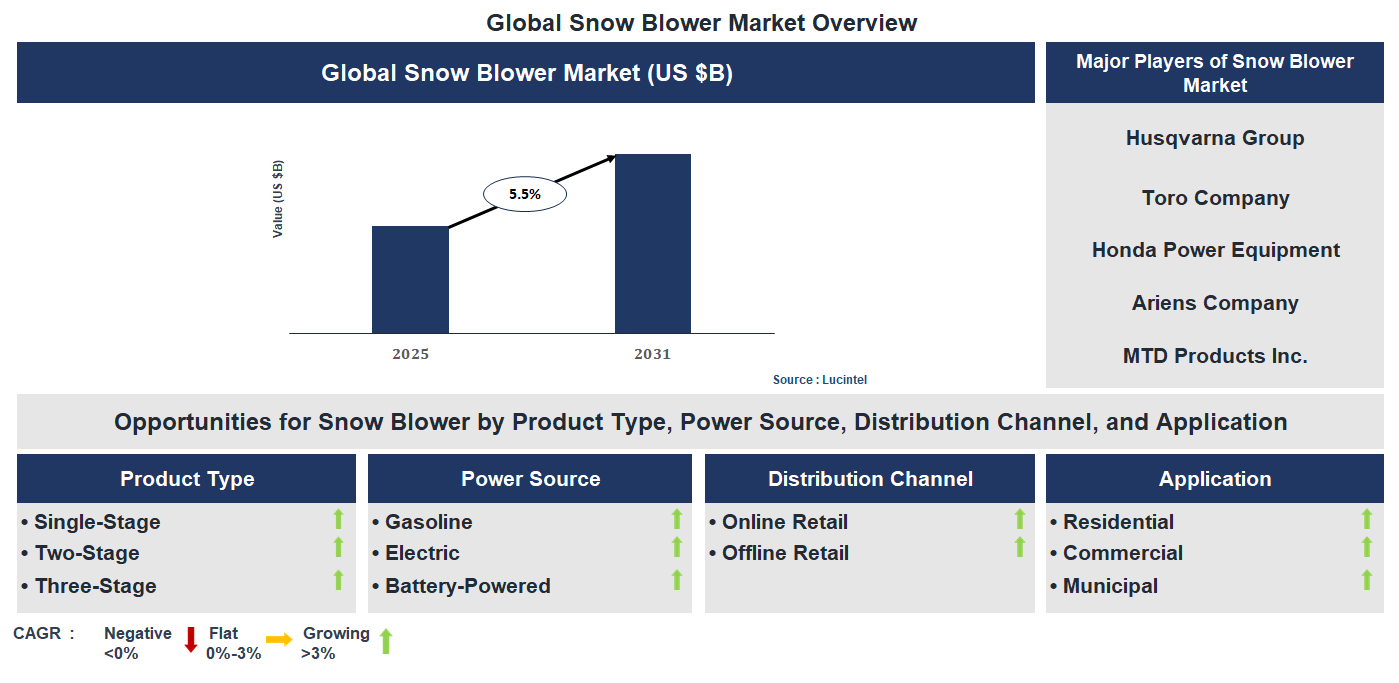
Key data points: The growth forecast = 5.5% annually for the next 7 years. Scroll below to get more insights. This market report covers trends, opportunities and forecasts in snow blower market to 2031 by product type (single-stage, two-stage, and three-stage), power source (gasoline, electric, and battery-powered), distribution channel (online retail and offline retail), application (residential, commercial, and municipal), and region (North America, Europe, Asia Pacific, and the Rest of the World)
We'll send your sample report shortly.
• Lucintel forecasts that, within the product type category, single-stage is expected to witness the highest growth over the forecast period.
• Within the application category, residential is expected to witness the highest growth.
• In terms of region, North America is expected to witness the highest growth over the forecast period. Gain valuable insights for your business decisions with our comprehensive 150+ page report. Sample figures with some insights are shown below.
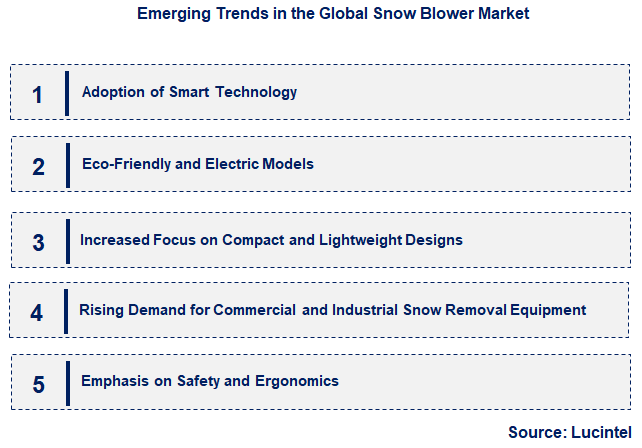
• Adoption of Smart Technology: The integration of IoT and automation features is revolutionizing snow blowers by enabling remote operation, real-time diagnostics, and adaptive performance. Smart snow blowers can be controlled via mobile apps, providing convenience and precision. Sensors detect snow depth and adjust the clearing mechanism accordingly, improving efficiency and reducing manual effort. This trend enhances user experience, minimizes operational errors, and allows for predictive maintenance, reducing downtime. As consumers seek more connected and intelligent equipment, manufacturers are investing heavily in smart features, making this a key growth driver in the market.
• Eco-Friendly and Electric Models: Increasing environmental awareness and stricter regulations are pushing the market toward electric and battery-powered snow blowers. These models produce zero emissions, operate more quietly, and require less maintenance compared to traditional gas-powered units. Advances in battery technology have extended runtime and improved performance, making electric snow blowers suitable for larger residential and light commercial applications. This shift not only aligns with sustainability goals but also appeals to eco-conscious consumers. The growth of electric models is expected to significantly reduce the markets carbon footprint and expand adoption in urban and environmentally sensitive areas.
• Increased Focus on Compact and Lightweight Designs: Consumers and professionals demand snow blowers that are easier to handle, store, and transport. Manufacturers are developing compact, lightweight models without compromising power and efficiency. These designs are ideal for small to medium-sized driveways, sidewalks, and urban environments where space is limited. Innovations in materials and engineering have enabled the production of durable yet lightweight units, improving maneuverability and reducing fatigue during operation. This trend broadens the market by making snow removal equipment accessible to a wider demographic, including elderly users and those with limited storage space.
• Rising Demand for Commercial and Industrial Snow Removal Equipment: As urbanization and infrastructure development accelerate, there is a growing need for heavy-duty snow removal solutions in commercial and industrial sectors. Larger, more powerful snow blowers with enhanced capacity and durability are being developed to handle extensive snow accumulation efficiently. These machines often feature advanced features like track drives, larger augers, and heated handles for operator comfort. The demand is driven by the need for reliable, high-performance equipment to ensure safety and operational continuity during harsh winter conditions, thereby expanding the market beyond residential use.
• Emphasis on Safety and Ergonomics: Safety features such as ergonomic handles, adjustable controls, and anti-vibration systems are increasingly incorporated into snow blower designs. Manufacturers focus on reducing operator fatigue and preventing injuries, especially for professional users who operate equipment for extended periods. Features like heated grips, easy-start mechanisms, and improved visibility contribute to safer operation. This trend enhances user confidence and broadens the appeal of snow blowers to a wider audience, including elderly users and commercial operators. Improved safety and ergonomics are critical for market growth and customer satisfaction. In summary, these emerging trends are fundamentally reshaping the snow blower market by fostering innovation, promoting sustainability, and enhancing user safety and convenience. The integration of smart technology, eco-friendly designs, and ergonomic features is expanding market opportunities and driving growth across various segments. As these trends continue to evolve, they will lead to more efficient, sustainable, and user-centric snow removal solutions, ensuring the market remains dynamic and competitive.
• Technological Innovation: Introduction of smart snow blowers with GPS and remote control features enhances user convenience and operational efficiency, attracting tech-savvy consumers and reducing labor costs.
• Eco-Friendly Products: Growing demand for electric and battery-powered snow blowers reduces emissions and noise pollution, aligning with environmental regulations and consumer preferences for sustainable solutions.
• Market Expansion: Increasing adoption in emerging markets due to rising infrastructure development and urbanization broadens the customer base and drives sales growth.
• Product Diversification: Manufacturers are offering a wider range of models, including compact, lightweight, and multi-functional snow blowers, catering to diverse customer needs and increasing market penetration.
• Strategic Partnerships and Mergers: Collaborations and acquisitions among key players foster innovation, expand distribution channels, and strengthen market positioning, accelerating overall industry growth. These developments are collectively transforming the snow blower market by enhancing product offerings, expanding geographic reach, and aligning with sustainability goals. The market is becoming more competitive, innovative, and customer-centric, promising sustained growth and technological advancement in the coming years.
• Residential Application: Growing demand for user-friendly, compact snow blowers is expanding the residential segment. This increases market penetration among homeowners seeking efficient winter solutions, boosting sales and brand loyalty.
• Commercial Application: The commercial sector benefits from high-capacity, durable snow blowers designed for retail outlets, parking lots, and small businesses. This drives revenue growth and encourages product innovation tailored to commercial needs.
• Municipal Application: Governments and municipalities are investing in advanced snow removal equipment to ensure public safety and mobility. This creates opportunities for large-scale, automated snow blowers and integrated snow management systems.
• Industrial Application: The industrial sector requires heavy-duty snow removal equipment for factories, warehouses, and construction sites. The demand for rugged, high-performance snow blowers enhances market diversification and technological development.
• Agricultural Application: Snow management in agricultural settings is gaining importance, especially in colder regions. Specialized snow blowers designed for farms and rural areas open new markets and promote sector-specific innovations. In summary, these growth opportunities across key applications are significantly impacting the snow blower market by expanding its scope, encouraging technological advancements, and fostering regional growth. As demand increases across diverse sectors, the market is poised for sustained expansion, driven by innovation and tailored solutions to meet specific needs.
• Technological Innovation: The development of advanced snow blower features such as electric start, increased power, and ergonomic designs enhances user experience and efficiency. Innovations like battery-powered models reduce emissions and noise, appealing to environmentally conscious consumers. These technological improvements make snow blowers more accessible and reliable, encouraging higher adoption rates across residential and commercial sectors. As technology continues to evolve, manufacturers are able to introduce smarter, more durable products, further fueling market growth.
• Increasing Urbanization and Infrastructure Development: Rapid urbanization in cold regions necessitates efficient snow removal solutions to maintain transportation and safety. Governments and private entities invest heavily in infrastructure, including roads, airports, and public spaces, which require reliable snow clearing equipment. The expansion of urban areas and the need for year-round accessibility drive demand for snow blowers, especially in commercial and municipal applications. This trend ensures a steady market growth trajectory, supported by ongoing infrastructure projects.
• Seasonal Weather Patterns and Climate Change: Variability in snowfall amounts and patterns directly influence the demand for snow blowers. Heavy snowfall seasons lead to increased sales, while milder winters may temporarily reduce demand. Climate change is causing unpredictable weather, prompting consumers and businesses to invest in more versatile and efficient snow removal equipment to adapt to changing conditions. This unpredictability encourages manufacturers to innovate and diversify product offerings to meet fluctuating market needs.
• Growing Consumer Awareness and Preference for DIY Solutions: Increasing awareness about the benefits of owning personal snow removal equipment encourages consumers to purchase snow blowers for residential use. The convenience, time-saving, and cost-effectiveness of owning a snow blower compared to manual shoveling make it an attractive option. Marketing campaigns and product demonstrations further boost consumer confidence, expanding the customer base beyond commercial users. This trend supports sustained market growth, especially in regions with frequent snowfall.
• Expansion of E-commerce and Distribution Channels: The rise of online retail platforms has made snow blowers more accessible to a broader audience. E-commerce enables consumers to compare products, read reviews, and purchase from the comfort of their homes, increasing sales volume. Additionally, improved distribution networks ensure availability in remote and rural areas, broadening market reach. Manufacturers leveraging digital marketing and direct-to-consumer sales strategies are gaining competitive advantages, fostering market expansion. The challenges facing this snow blower market include:-
• Environmental Regulations and Emission Standards: Stricter regulations aimed at reducing emissions from gasoline-powered snow blowers pose challenges for manufacturers. Compliance requires significant R&D investments to develop cleaner, more efficient engines or shift towards electric models. These regulatory pressures can increase production costs and limit product offerings, potentially slowing market growth. Additionally, regulatory uncertainty in different regions complicates product development and market entry strategies.
• Seasonal and Weather Dependency: The markets reliance on seasonal snowfall makes it vulnerable to climate variability. Mild winters or inconsistent snowfall patterns can lead to decreased sales, impacting revenue stability for manufacturers and retailers. This seasonal dependency necessitates strategic inventory management and diversification of product lines to mitigate risks associated with unpredictable weather conditions.
• High Initial Investment and Cost Sensitivity: The cost of high-quality snow blowers can be prohibitive for some consumers, especially in price-sensitive markets. This limits market penetration among lower-income groups and in developing regions. Additionally, the high initial investment discourages frequent upgrades or replacements, potentially affecting long-term sales growth. Manufacturers must balance product features with affordability to sustain demand across diverse economic segments. In summary, the snow blower market is shaped by technological advancements, urbanization, climate variability, consumer preferences, and distribution innovations. However, it faces challenges from environmental regulations, weather dependency, and cost sensitivity. These drivers foster growth by enhancing product offerings and expanding market reach, while challenges necessitate strategic adaptations to sustain long-term development. Overall, the markets future depends on how effectively stakeholders can leverage technological innovations and navigate regulatory and climatic uncertainties to meet evolving consumer needs.
• Husqvarna Group
• Toro Company
• Honda Power Equipment
• Ariens Company
• MTD Products Inc.
• Briggs & Stratton Corporation
• STIGA Group
• Yard Machines
• Cub Cadet
• John Deere
• Single-Stage
• Two-Stage
• Three-Stage
• Gasoline
• Electric
• Battery-Powered
• Online Retail
• Offline Retail
• Residential
• Commercial
• Municipal
• North America
• Europe
• Asia Pacific
• The Rest of the World
• United States: The U.S. market has seen a surge in electric and battery-powered snow blowers, driven by consumer demand for eco-friendly options. Major brands are introducing smart features like remote control and app connectivity. The adoption of lightweight, ergonomic designs has increased, catering to a broader demographic. Additionally, winter storms have prompted increased sales, and rental services are expanding in urban areas. Government initiatives promoting energy efficiency are also influencing product development, making the market more innovative and sustainable.
• China: China’s snow blower market is rapidly expanding due to urbanization and rising disposable incomes. Local manufacturers are focusing on affordable, compact models suitable for smaller residential spaces. The government’s push for green technology has accelerated the adoption of electric snow blowers. E-commerce platforms are playing a crucial role in distribution, making products more accessible nationwide. Innovations include multi-functional units that combine snow removal with other outdoor tasks. The market is also witnessing increased R&D investment to develop more durable and efficient products tailored to diverse climatic conditions.
• Germany: Germany’s snow blower market emphasizes high-quality, durable, and energy-efficient products. The focus is on electric and hybrid models that meet strict environmental standards. Technological advancements include the integration of smart sensors for better snow clearing efficiency. The market benefits from a strong tradition of outdoor equipment innovation and a preference for sustainable solutions. Retailers are offering a wide range of premium products, and there is a growing trend toward automation and ergonomic designs. The market is also influenced by EU regulations promoting eco-friendly manufacturing practices.
• India: The Indian snow blower market is in its nascent stage but shows promising growth potential. The focus is on affordable, lightweight, and portable models suitable for smaller households and semi-urban areas. Increasing awareness about winter preparedness and rising disposable incomes are driving demand. Local manufacturers are introducing cost-effective electric and manual snow removal tools. The market is also benefiting from government initiatives promoting rural and semi-urban infrastructure development. As urban centers experience more snowfall, demand for efficient snow removal equipment is expected to rise, encouraging innovation and market expansion.
• Japan: Japan’s snow blower market is highly advanced, with a strong emphasis on automation and smart technology. The country’s heavy snowfall has led to continuous innovation in snow removal solutions, including robotic and semi-automatic models. Energy-efficient electric and hybrid snow blowers are popular, aligning with Japan’s environmental goals. Manufacturers focus on compact, lightweight designs suitable for small spaces and easy handling. The market also benefits from a well-established distribution network and consumer preference for high-quality, reliable products. Ongoing R&D efforts aim to develop more intelligent, weather-adaptive snow removal systems, maintaining Japan’s leadership in this sector.


• Husqvarna Group
• Toro Company
• Honda Power Equipment
• Ariens Company
• MTD Products Inc.
• Briggs & Stratton Corporation
• STIGA Group
• Yard Machines
• Cub Cadet
• John Deere Q5. Which snow blower market segment will be the largest in future? Answer: Lucintel forecasts that, within the product type category, single-stage is expected to witness the highest growth over the forecast period. Q6. In snow blower market, which region is expected to be the largest in next 5 years? Answer: In terms of region, North America is expected to witness the highest growth over the forecast period. Q7. Do we receive customization in this report? Answer: Yes, Lucintel provides 10% customization without any additional cost.


Choose a license that fits your team. Instant PDF delivery.
Prices exclude taxes. Instant delivery. Custom licensing available on request.
Market Report · July 31, 2026
Market Report · July 22, 2026
Market Report · July 20, 2026
Trusted partner for strategic intelligence and business growth


Receive a complimentary market analysis tailored to your industry. Our analysts will identify key growth opportunities and competitive dynamics specific to your business.

Market size, growth rate, and key trend analysis for your specific sector.

Top competitor positioning and market share analysis.

Strategic recommendations backed by data-driven insights.
Get curated market intelligence and competitive moves straight to your inbox.
By subscribing, you agree to receive our monthly insights. Unsubscribe anytime.
Receive a complimentary market analysis tailored to your industry. Our analysts will identify key growth opportunities and competitive dynamics specific to your business.
Market size, growth rate, and key trend analysis for your specific sector.
Top competitor positioning and market share analysis.
Strategic recommendations backed by data-driven insights.
Get curated market intelligence, emerging trends, and competitive moves straight to your inbox each month.
By subscribing, you agree to receive our monthly insights. Unsubscribe anytime.
We'll send your sample report shortly.