
Market Report · May 18, 2026

This market report covers trends, opportunities, and forecasts in the global smart visor market to 2031 by technology (augmented reality (ar) integration, virtual reality (vr) integration, heads-up display (hud), and advanced display technologies), application (automotive, aerospace, military and defense, sports and fitness, and others), and region (North America, Europe, Asia Pacific, and the Rest of the World)
We'll send your sample report shortly.
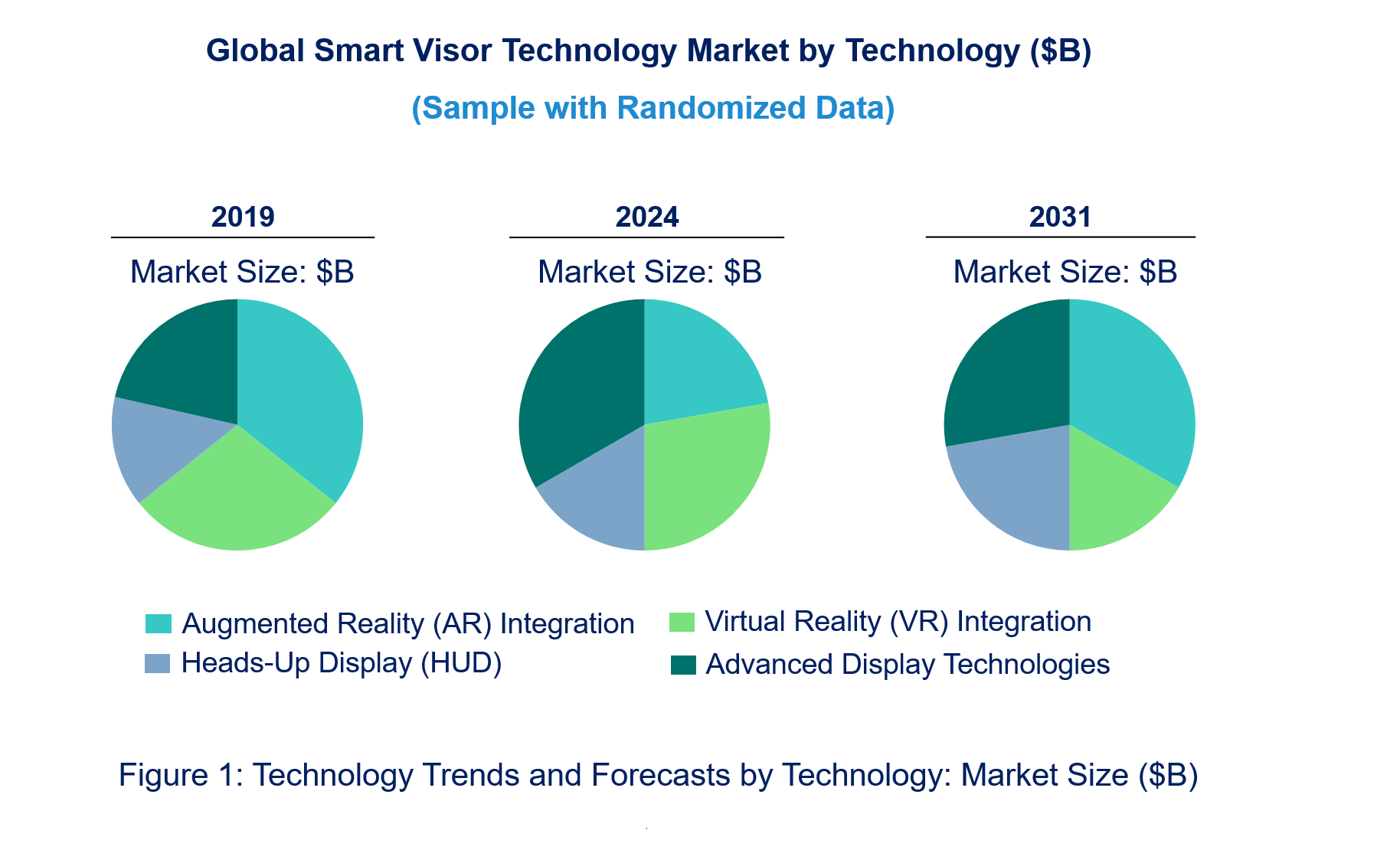
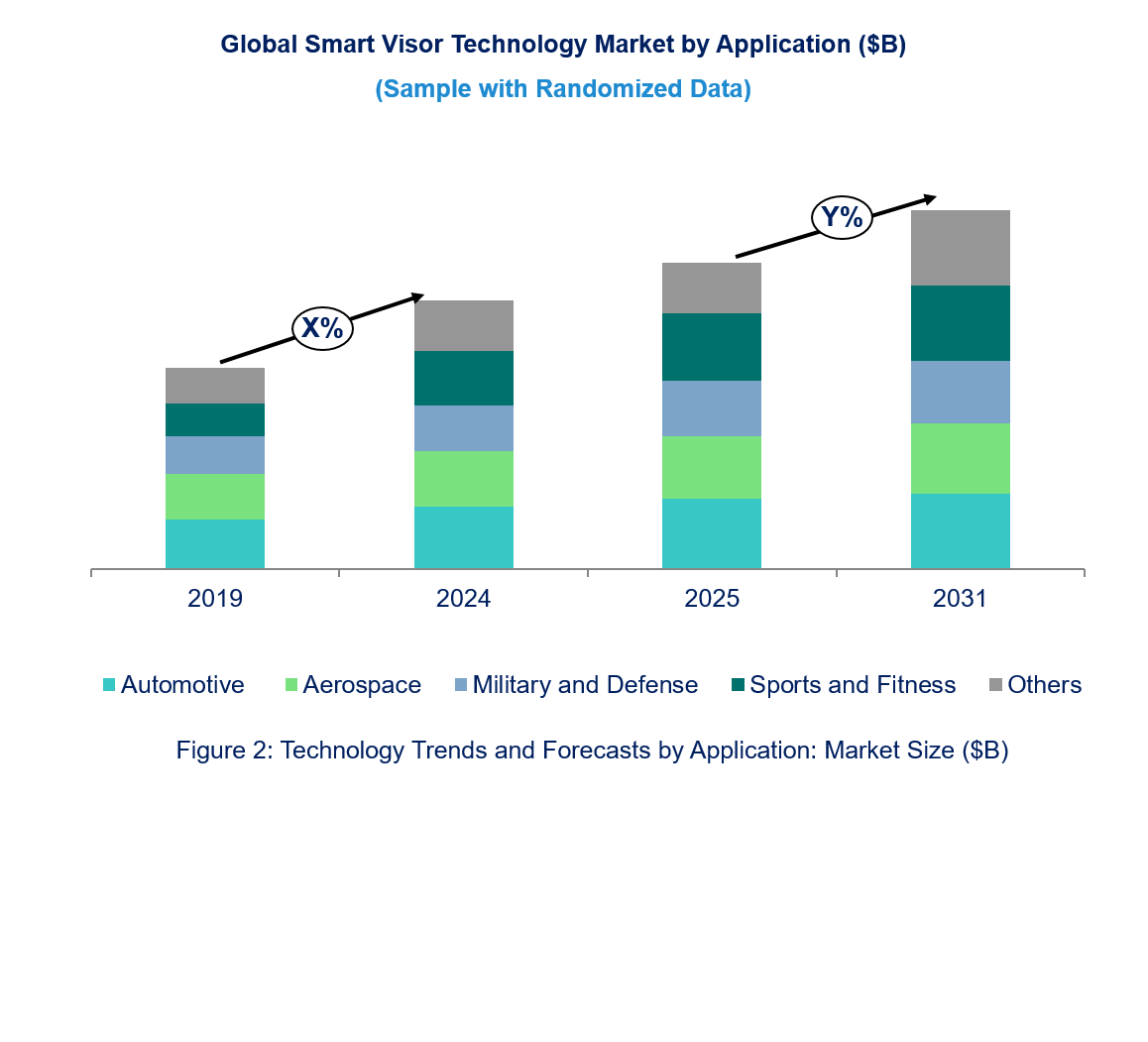
• AR and VR Integration for Enhanced Immersion: The integration of AR and VR technologies enables visors to overlay real-time navigation, object detection, and other critical data, significantly enhancing the user experience for drivers and pilots.
• AI-Driven HUDs: AI-driven HUDs are becoming mainstream, offering predictive alerts, personalized suggestions, and adaptive brightness control for improved safety and convenience.
• Miniaturization and Lightweight Designs: Advances in material science and microelectronics are driving the development of lightweight, compact visors for sports, fitness, and automotive applications.
• Sustainability and Energy Efficiency: Visors powered by low-energy components and renewable sources are addressing environmental concerns.
• Integration with IoT and Connected Ecosystems: Smart visors are increasingly integrated with IoT systems, enabling communication with other devices for real-time data sharing and enhanced functionality. These trends are pushing the boundaries of innovation, leading to safer, more intelligent, and interactive visor solutions.
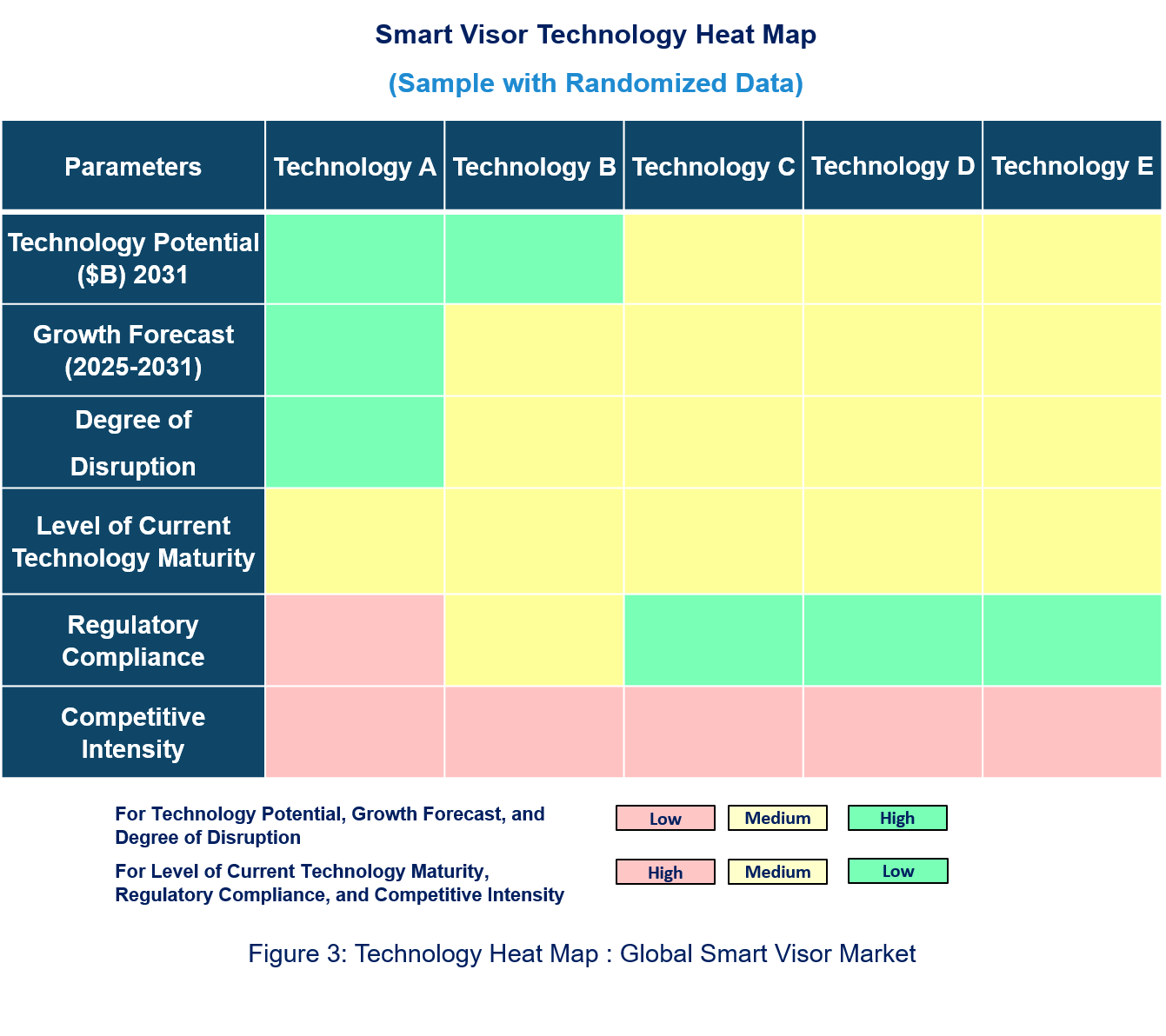
• Potential in Technology: Smart Visors integrate artificial intelligence (AI), augmented reality (AR), and dynamic tinting technologies to improve driving safety by reducing glare, providing real-time navigation overlays, and enhancing visibility in varying light conditions. Their potential spans diverse applications, from automotive to aviation and industrial vehicles, as they redefine the driving experience.
• Degree of Disruption: This technology disrupts traditional sun visors by replacing static components with intelligent systems. By addressing long-standing issues like inadequate glare reduction and limited functionality, smart visors are reshaping consumer expectations and creating new industry benchmarks.
• Current Technology Maturity Level: The current maturity level varies. Early adoption is evident in luxury automotive models, where partial integration with other advanced driver-assistance systems (ADAS) exists. However, full-scale adoption in mid-tier and commercial vehicles remains in the developmental phases.
• Regulatory Compliance: Adhering to safety and privacy regulations is crucial for widespread adoption. Compliance with automotive standards, such as UNECE regulations and regional safety norms, will dictate market growth. Smart visors hold transformative potential but require advancements in technology adoption and regulatory alignment to achieve mainstream success.
• Bosch: Launched AI-enabled smart visors with augmented navigation features that improve driver awareness and safety in challenging conditions.
• Continental AG: Developing HUDs with AR capabilities that integrate with vehicle sensors for real-time hazard detection and display customization.
• Denso Corporation: Introduced lightweight visors with energy-efficient OLED screens to enhance visibility and reduce power consumption.
• Gentex Corporation: Partnering with automobile manufacturers to embed smart visors with biometric authentication and advanced safety features.
• Magna International Inc.: Emphasizing adaptive dimming technologies that adjust visibility based on ambient lighting and user preferences.
• Panasonic Corporation: Developing AR visors suitable for aerospace and military applications to enhance situational awareness.
• Valeo: Designed eco-friendly visors using renewable materials powered by solar energy.
• Visteon Corporation: Creating smart visors with wireless connectivity to enable over-the-air diagnostics.
• Nippon Seiki Co., Ltd.: Utilizing IoT technologies to link visors to smart city ecosystems.
• Ficosa International S.A.: Working on holographic projections for sports and fitness applications to provide immersive experiences. These developments highlight the industry commitment to innovation in the smart visor market and its future direction.
• Increasing Safety Needs for Drivers and Pilots: Adaptive dimming and live hazard warnings drive adoption in automotive and aerospace sectors.
• Increased Adoption of AR and VR Technologies: The demand for immersive experiences in gaming, training, and navigation is increasing the adoption of AR/VR-enabled visors.
• Increased Connected Devices and IoT Integration: Integration with IoT ecosystems provides new capabilities, attracting tech-savvy users.
• Increasing Environmental Awareness: Regulatory measures support demand for energy-efficient and eco-friendly visor technologies. Challenges in the smart visor market include:
• High Initial Costs: Expensive advanced components and technologies limit extensive use in cost-sensitive markets.
• Technical Complexities: Compatibility, connectivity issues, and software bugs challenge developers and users.
• Lack of Awareness in Emerging Markets: Limited awareness of smart visor advantages hinders adoption in developing regions. Drivers such as growing potential in the smart visor market and challenges calling for emerging solutions together provide a roadmap for industry growth. This allows stakeholders to address barriers and capitalize on new opportunities effectively.
• Bosch
• Continental AG
• Denso Corporation
• Gentex Corporation
• Magna International Inc.
• Panasonic Corporation
• Technology Readiness by Technology Type: AR is moderately mature for high-end navigation. VR is less mature and focused on luxury and training. HUDs are widely deployed in semi-autonomous vehicles under strict safety regulations. Advanced displays are production-ready, enabling energy-efficient and durable designs for various applications.
• Competitive Intensity and Regulatory Compliance: The market is highly competitive, driven by AR and VR innovations. Product designs are shaped by safety and environmental regulations, while adherence to data privacy and energy efficiency standards determines market leadership.
• Disruption Potential by Technology Type: Technologies integrating augmented and virtual reality are transforming the smart visor market by improving navigation, safety, and entertainment. Heads-up displays ensure safety with real-time data, while OLED advanced displays offer vibrant visibility and energy efficiency.
• Augmented Reality (AR) Integration
• Virtual Reality (VR) Integration
• Heads-Up Display (HUD)
• Advanced Display Technologies
• Automotive
• Aerospace
• Military and Defense
• Sports and Fitness
• Others
• North America
• Europe
• Asia Pacific
• The Rest of the World
• Latest Developments and Innovations in the Smart Visor Technologies
• Companies / Ecosystems
• Strategic Opportunities by Technology Type




Choose a license that fits your team. Instant PDF delivery.
Prices exclude taxes. Instant delivery. Custom licensing available on request.
Market Report · May 18, 2026
Market Report · May 18, 2026
Market Report · May 18, 2026
Trusted partner for strategic intelligence and business growth


Receive a complimentary market analysis tailored to your industry. Our analysts will identify key growth opportunities and competitive dynamics specific to your business.

Market size, growth rate, and key trend analysis for your specific sector.

Top competitor positioning and market share analysis.

Strategic recommendations backed by data-driven insights.
Get curated market intelligence and competitive moves straight to your inbox.
By subscribing, you agree to receive our monthly insights. Unsubscribe anytime.
Receive a complimentary market analysis tailored to your industry. Our analysts will identify key growth opportunities and competitive dynamics specific to your business.
Market size, growth rate, and key trend analysis for your specific sector.
Top competitor positioning and market share analysis.
Strategic recommendations backed by data-driven insights.
Get curated market intelligence, emerging trends, and competitive moves straight to your inbox each month.
By subscribing, you agree to receive our monthly insights. Unsubscribe anytime.
We'll send your sample report shortly.