
Market Report · July 31, 2026

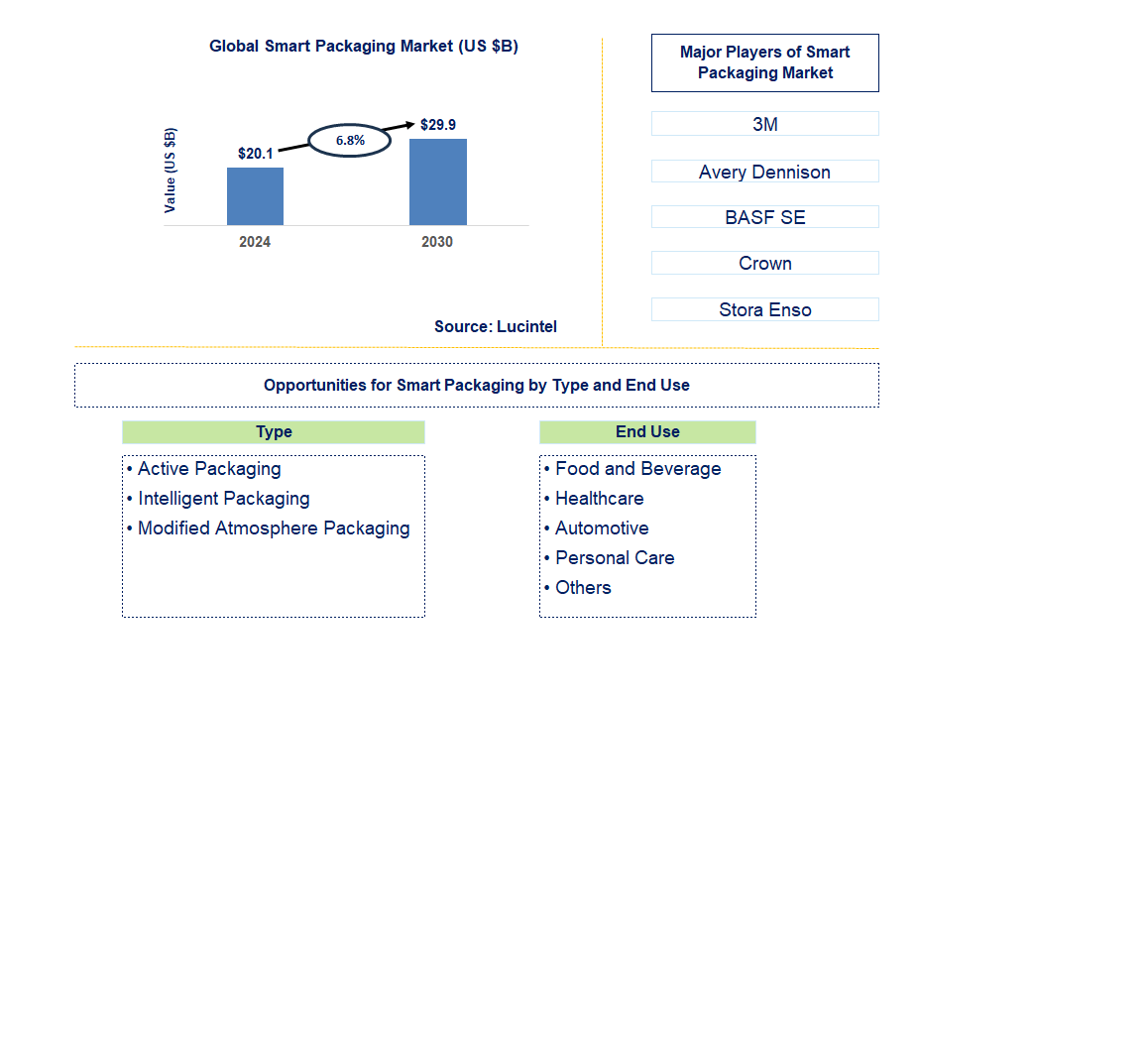
Key data points: The market size in 2030 = $29.9 billion, growth forecast = 6.8% annually for the next 6 years. Scroll below to get more insights. This market report covers trends, opportunities, and forecasts in the global smart packaging market to 2030 by type (active packaging, intelligent packaging, and modified atmosphere packaging), end use (food and beverage, healthcare, automotive, personal care, and others), and region (North America, Europe, Asia Pacific, and the Rest of the World)
We'll send your sample report shortly.
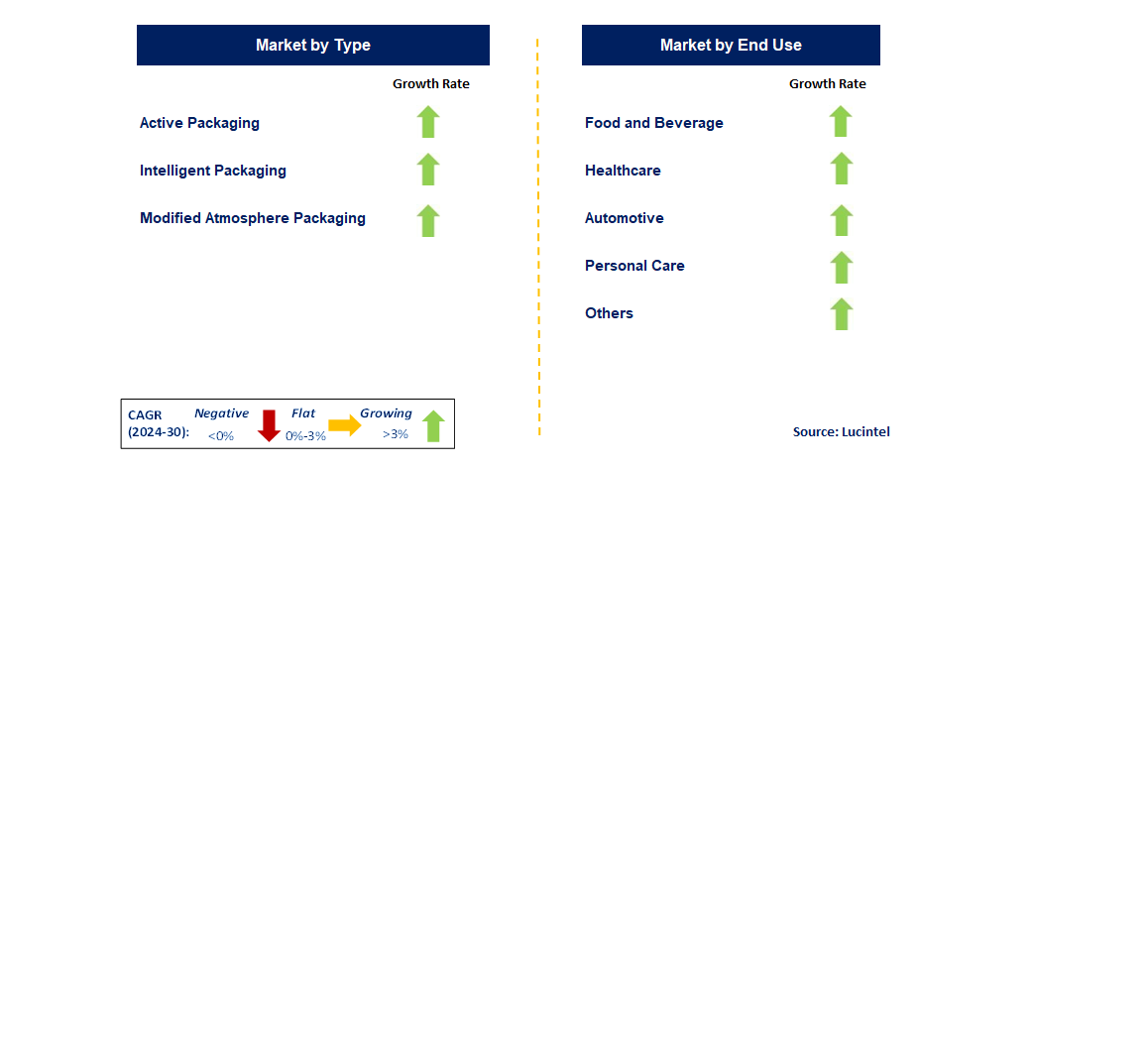
• Lucintel forecasts that,within the type category, modified atmosphere packaging is expected to witness the highest growth over the forecast period.
• Within the end use category, food and beverage is expected to witness the highest growth over the forecast period.
• In terms of regions, APAC is expected to witness the highest growth over the forecast period. Gain valuable insights for your business decisions with our comprehensive 150+ page report.
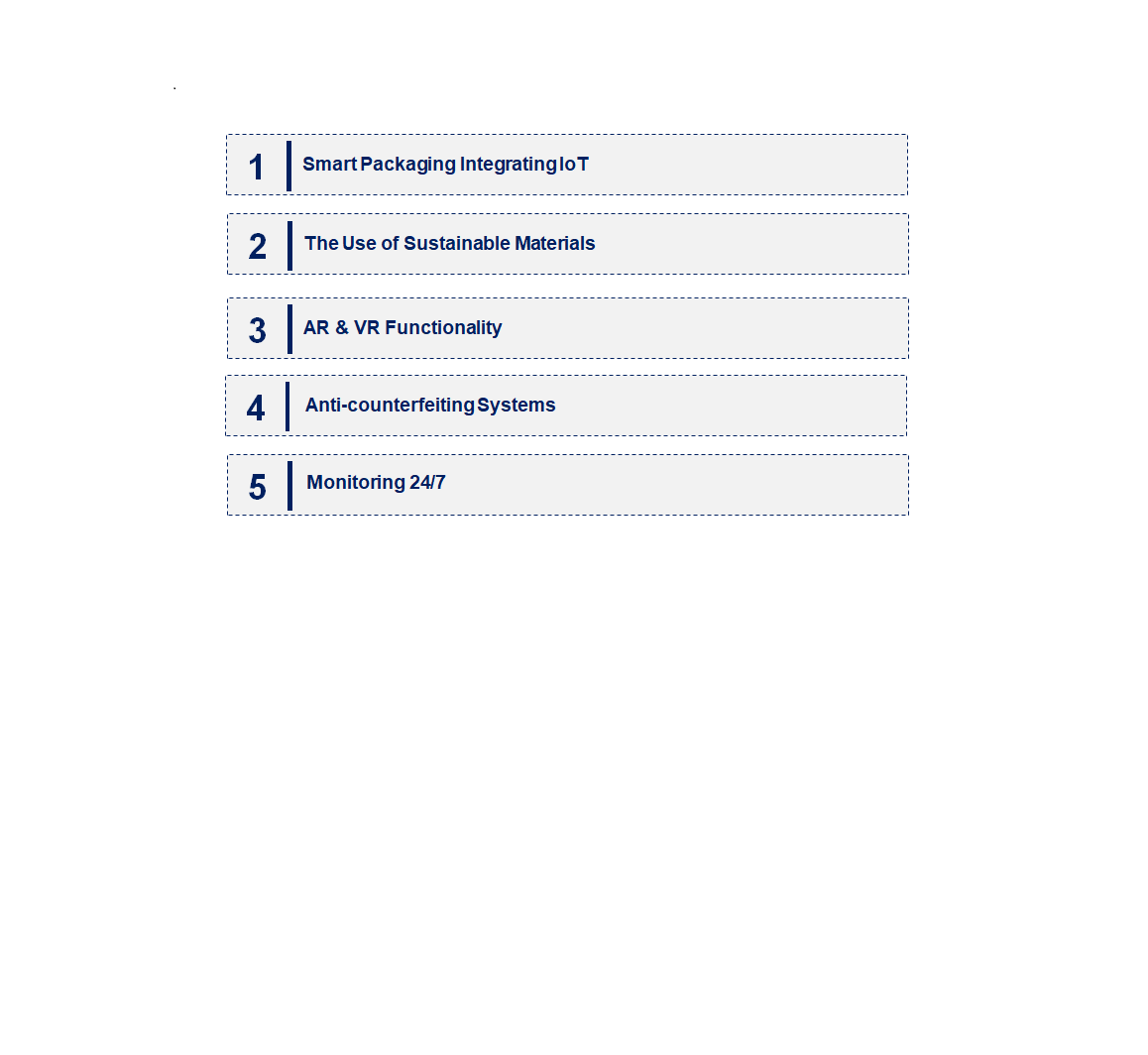
• Smart Packaging Integrating IoT: It has become increasingly common to integrate the Internet of Things (IoT) into smart packaging. This allows products to be tracked and monitored in real time through the supply chain using IoT-enabled smart packaging. Additionally, this technology enhances inventory management, reduces losses, and provides valuable data that can be used to optimize operations. Furthermore, it leads to better consumer insights and personalized experiences that can be achieved through the collection and analysis of data.
• The Use of Sustainable Materials: There is an emerging focus on sustainable materials that are eco-friendly for use in smart packaging. Innovations have led to biodegradable materials that are compostable, thus reducing the environmental footprint associated with waste disposal. Consequently, companies are developing packaging solutions that align with global sustainability goals and meet regulatory requirements. This trend arises from higher consumer demand for environmentally friendly products, coupled with tougher regulations governing packaging waste.
• AR & VR Functionality: Augmented reality (AR) and virtual reality (VR) features are being integrated into smart packaging for increased consumer participation and interaction. By using AR-enabled packaging, customers can access additional product information or engage in interactive experiences from their phones. At the same time, VR is utilized as a tool for virtual product demonstrations or immersive brand experiences, among other related applications. These technologies change how brands engage their customers by adding value.
• Anti-counterfeiting Systems: With growing concerns about the authenticity and safety of products, anti-counterfeiting technologies are a major trend in smart packaging today. Holograms, RFID tags, and blockchain solutions enable verification of whether merchandise is genuine, thereby preventing fraud, such as counterfeit drugs. Hence, they ensure brand integrity, fostering trust, especially in industries like pharmaceuticals and luxury goods.
• Monitoring 24/7: Real-time monitoring features are increasingly becoming part of smart packaging, helping track factors such as temperature, humidity, and even freshness of the products. This is especially important for perishable goods and other sensitive items. Real-time monitoring prevents spoilage, ensures product quality, and enhances supply chain efficiency. Conversely, this provision boosts customer confidence in their purchases, leading to sustained repeat buying. These trends are driving significant changes in the smart packaging market, emphasizing the need for enhanced functionality, sustainability, and consumer engagement. The future of smart packaging is shaped by the integration of advanced technologies and environmental responsibility through novel opportunities that arise to confront emerging issues.
• IoT Advancements: Recent innovations have led to real-time data and analytics that are shaping smart packaging with IoT integration. It uses sensors enabled with IoT connectivity to enhance tracking throughout the supply chain, resulting in better inventory management and reducing wastage, thereby cutting down on losses. Furthermore, companies are investing in these IoT-related technologies, which can respond dynamically, unlike traditional packaging options, benefiting both commercial entities and consumers.
• Growth of Sustainable Packaging: A major development within the smart packaging industry has been an emphasis on sustainability. Moreover, firms are increasingly using materials that do not harm but preserve nature when designing their packages, making them eco-friendly. Some examples include biodegradable products that can be recycled and may also be designed based on circular economy concepts. This trend has been driven by consumer demand for sustainable products as well as regulations that require companies to minimize waste from packaging material use.
• Rising Anti-counterfeiting Technologies: The use of technology such as holograms, blockchain, and RFID is improving anti-counterfeiting measures. These solutions enhance the security and genuineness of products across different sectors to combat fake items. This is pivotal in sustaining brand integrity and customer confidence, especially in pharmaceuticals and high-end luxury goods.
• Smart Packaging with AR/VR Integration: Smart packaging is increasingly utilizing augmented reality (AR) and virtual reality (VR) for interactive consumer engagement. These solutions are important elements of smart packaging, including smart labels or tags. They revolutionize how consumers interact with brands by providing an immersive experience that enables them to access more information about the product being sold. The application of VR and AR has transformed the buying experience, leading to distinctive marketing opportunities.
• Real-time Condition Monitoring: Progress in real-time condition monitoring has improved the usability of smart packaging systems. For instance, embedded sensors inside packaging materials can monitor temperature, humidity levels, and freshness of a product. This is essential for easily perishable goods and those requiring constant control, ensuring quality throughout the supply chain for safety purposes. In addition to enhancing supply chain efficiency, this will reduce spoilage risks. Focus on improving functionality, sustainability, and consumer engagement drives these advances in the smart packaging market, while innovation remains its key driver. The industry’s future lies in environmental responsibility combined with advanced technology adoption that shapes new horizons and addresses challenges head-on.
• Food and Beverage Sector: Smart packaging offers substantial growth opportunities for the food and beverage sector. These include innovations such as freshness indicators, temperature sensors, and interactive labels that contribute to product safety and customer engagement. The trend in food products is toward convenience and transparency, leading to the adoption of smart packages that offer real-time information on products, thus improving supply chain management.
• Healthcare and Pharmaceuticals: In the healthcare and pharmaceutical industry, there are significant potentials for smart packaging aimed at improving medication adherence rates and ensuring drug genuineness. For example, reminders about dosage quantities and tamper-proofing measures like seals or RFID tags are used to ensure patient care while avoiding counterfeit drugs. The healthcare sector emphasizes more secure and user-friendly packaging materials.
• E-Commerce and Retail: The proliferation of e-commerce has given rise to smart packaging solutions that improve consumer experience and optimize logistics processes in this domain, particularly in the online shopping environment. This includes technologies such as QR codes and near-field communication (NFC) that enable interactive packaging, providing more information on products and promotional deals. It also plays a role in minimizing loss during transit, thus enhancing inventory control for both retailers and customers.
• Luxury Goods: The luxury goods market is seeing a growing use of smart packaging to enhance brand protection and consumer engagement, creating loyalty among affluent clients in this segment. Premium packaging options often include features that prevent imitation through labels with holographic details or radio frequency identification (RFID) chips attached to them, safeguarding brand reputation, especially in cases relevant to high-end fashion houses selling couture garments. While interactive personalization can amplify buyer experiences, a focus on exclusivity and security are areas where businesses have recently been innovating within this category segment.
• Green Packaging Options: With an increasing focus on sustainability, there is considerable growth potential for eco-friendly intelligent packaging in this area. Innovations include biodegradable materials, recyclable designs, and environmentally friendly technologies. Companies are increasingly concentrating on manufacturing packaging products that conform to environmental objectives and inspire eco-conscious consumers, thus leading to the expansion of the market. Growth opportunities in the smart packaging market are numerous and evolving. Emerging trends in food and beverage, healthcare, e-commerce, luxury goods, and sustainability will enable companies to capitalize on them, thereby driving innovation through focusing on key applications. These trends shape the future of smart packaging and support overall market growth.
• Technological Advancements: Advances in technologies like IoT (Internet of Things), AR (Augmented Reality), and AI (Artificial Intelligence) have created new opportunities for smart packaging innovation. Ranging from real-time tracking to supply chain management improvements and better consumer engagement, all this is made possible by emerging technologies. Rapidly advancing technology leads to the constant introduction of novel smart packaging solutions that meet the specific needs of consumers and businesses striving toward adoption.
• Consumer Demand for Convenience: Consumer demands have revolutionized modern society’s call for smarter packaging due to growing expectations for convenience. Such consumer needs can be met using interactive tags, freshness indicators, and user-friendly features that allow quick access to information and enriched product experiences. Consequently, this is pushing the adoption of intelligent packaging across sectors.
• Regulatory Compliance: Strict regulations related to consumer protection, sustainability, and traceability are enhancing the growth of smart packaging. Therefore, industries such as food and pharmaceuticals are adopting advanced packaging technologies to ensure product integrity and safety as per regulatory requirements. In fact, these regulations are driving innovations, making the use of smart packaging solutions compulsory in some cases.
• Focus on Sustainability: The increasing focus on sustainability and environmental responsibility is a major driver for smart packaging. Companies are increasingly investing in sustainable materials and designs that aim to reduce waste and be more environmentally friendly. Sustainable smart packaging solutions help satisfy customer expectations while adhering to environmental norms, thereby expanding market size.
• E-Commerce Growth: The expansion of e-commerce has created a need for smarter packaging that enhances logistics and improves customer experience. Technologies such as QR codes and NFCs offer ways of tracking products, which also provide additional information to consumers. Growth in e-commerce presents new areas where intelligent packaging can address logistical bottlenecks and enhance customer involvement. Challenges in the smart packaging market include:
• High Costs: Initial investment costs and production fees associated with technologies used in producing smart packaging may be high. Factors such as the incorporation of complex characteristics and materials contribute to higher prices, affecting small to medium enterprises. Maintaining profitability amidst these costs remains a key challenge in the market.
• Technological Integration: Integrating new technologies with existing packaging systems can be challenging. Companies may face compatibility issues and the need for specialized expertise when implementing and maintaining smart packaging solutions. Therefore, overcoming these integration challenges is crucial for successful adoption and deployment.
• Consumer Privacy Concerns: As we engage in a technological revolution powered by smart packaging that gathers and analyzes consumer data, privacy concerns arise. Companies face difficulties in ensuring data security and addressing consumer concerns about data collection and usage. This necessitates balancing the benefits of smart packaging with the need for data protection to maintain consumer trust. Several factors influence the smart packaging market, such as technological advancements, consumer demand, regulatory compliance, sustainability, and e-commerce growth. Nonetheless, there are other market-determined issues, including high production costs associated with specific packaging needs, technology integration into existing products or lineups still at an early stage of development and implementation, and consumer concerns over privacy invasion risks. These issues can lead corporations to hesitate in offering additional features beyond their current offerings.
• 3M
• Avery Dennison
• BASF SE
• Crown
• Stora Enso
• Active Packaging
• Intelligent Packaging
• Modified Atmosphere Packaging
• Food and Beverage
• Healthcare
• Automotive
• Personal Care
• Others
• North America
• Europe
• Asia Pacific
• The Rest of the World
• United States: The US market has witnessed an upsurge in the adoption of smart packaging, particularly in food and beverage sectors, where recent improvements have included IoT-enabled sensors that offer augmented reality (AR) for enhancing consumer experience while providing real-time information about the product. Several leading firms are focusing on sustainability with smart packaging solutions capable of reducing waste and enhancing recycling procedures. Additionally, innovation is being driven by compliance with food safety regulations and anti-counterfeiting technologies.
• China: China’s smart packaging market is experiencing rapid growth due to an increased focus on efficient supply chain management, driven by a vibrant e-commerce sector. Interactive packaging through QR code applications and NFC technology provides the basis for utilizing this technology in the packaging industry for branding purposes and counteracting counterfeit products. Furthermore, there are concerted efforts toward incorporating environmentally friendly materials that align with China’s sustainability objectives. Additionally, big data analytics and AI allow for more detailed inventory management systems that provide deeper insights into consumers.
• Germany: Germany leads in sustainable smart packaging solutions, with trends including advanced recycling technologies and the use of biodegradable materials within the country. Additionally, smarter labels that track product freshness and sensory labels for environmental conditions exist. German businesses ensure their strategies comply with strict European Union laws and lead to innovations that match EU circular economy targets.
• India: Affordability and efficiency are driving India’s evolving smart packaging market, with key innovations including the use of RFID (Radio Frequency Identification) technology in inventory management and counterfeit prevention. The smart packaging sector is witnessing significant interest among pharmaceutical and food industries looking to incorporate supply chain transparency and product authenticity. The need for solutions targeting disparate price-sensitive consumer segments is driving these innovations.
• Japan: Smart packaging innovation is being spearheaded by Japan due to its technological expertise. Recent developments have included high-tech labels capable of monitoring a product’s state and human-computer interfaces for increased user engagement. There is also investment in smart packaging solutions targeting the aging population, thus improving accessibility and ease of use features. Moreover, there is an emphasis on combining advanced robotics and automation with intelligent packaging in manufacturing processes.


• 3M
• Avery Dennison
• BASF SE
• Crown
• Stora Enso Q6. Which smart packaging market segment will be the largest in future? Answer: Lucintel forecasts that modified atmosphere packaging is expected to witness the highest growth over the forecast period. Q7. In smart packaging market, which region is expected to be the largest in next 5 years? Answer: APAC is expected to witness highest growth over the forecast period. Q.8 Do we receive customization in this report? Answer: Yes, Lucintel provides 10% customization without any additional cost.


Choose a license that fits your team. Instant PDF delivery.
Prices exclude taxes. Instant delivery. Custom licensing available on request.
Market Report · July 31, 2026
Market Report · July 22, 2026
Market Report · July 20, 2026
Trusted partner for strategic intelligence and business growth


Receive a complimentary market analysis tailored to your industry. Our analysts will identify key growth opportunities and competitive dynamics specific to your business.

Market size, growth rate, and key trend analysis for your specific sector.

Top competitor positioning and market share analysis.

Strategic recommendations backed by data-driven insights.
Get curated market intelligence and competitive moves straight to your inbox.
By subscribing, you agree to receive our monthly insights. Unsubscribe anytime.
Receive a complimentary market analysis tailored to your industry. Our analysts will identify key growth opportunities and competitive dynamics specific to your business.
Market size, growth rate, and key trend analysis for your specific sector.
Top competitor positioning and market share analysis.
Strategic recommendations backed by data-driven insights.
Get curated market intelligence, emerging trends, and competitive moves straight to your inbox each month.
By subscribing, you agree to receive our monthly insights. Unsubscribe anytime.
We'll send your sample report shortly.