
Market Report · July 29, 2026

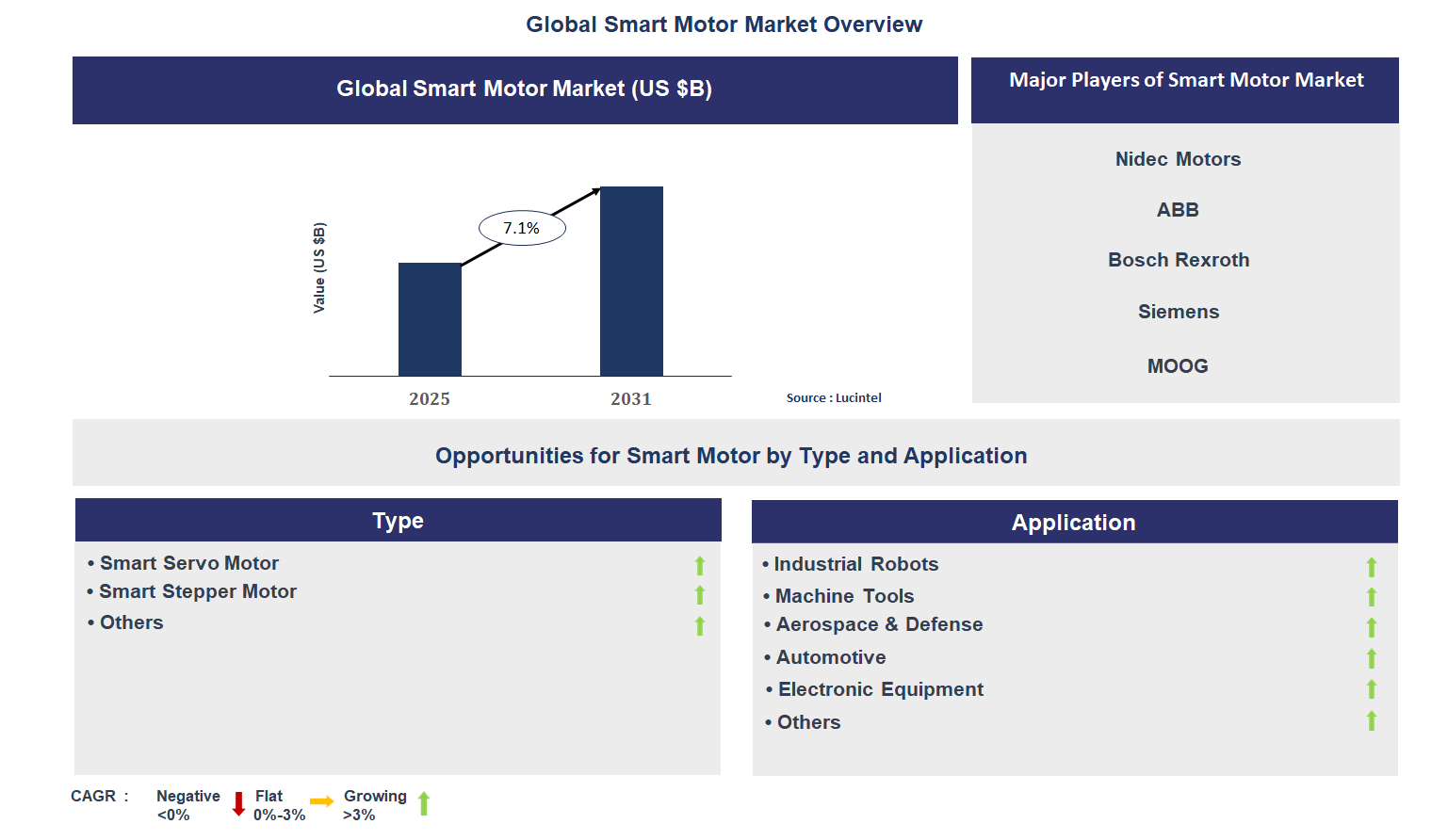
Key data points: The growth forecast = 7.1% annually for the next 7 years. Scroll below to get more insights. This market report covers trends, opportunities and forecasts in smart motor market to 2031 by type (smart servo motor, smart stepper motor, and others), application (industrial robots, machine tools, aerospace & defense, automotive, electronic equipment, and others), and region (North America, Europe, Asia Pacific, and the Rest of the World)
We'll send your sample report shortly.
• Lucintel forecasts that, within the type category, smart servo motor is expected to witness higher growth over the forecast period.
• Within the application category, industrial robot is expected to witness the highest growth.
• In terms of region, APAC is expected to witness the highest growth over the forecast period. Gain valuable insights for your business decisions with our comprehensive 150+ page report. Sample figures with some insights are shown below.
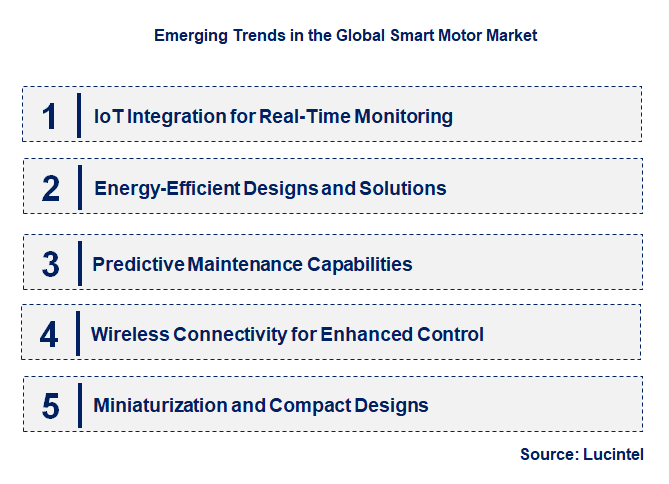
• IoT Integration for Real-Time Monitoring: IoT integration in smart motors enables real-time monitoring and performance tracking. This trend enhances operational efficiency by providing valuable data for predictive maintenance, improving motor lifespan, and preventing costly downtime. It’s becoming crucial for industries that rely on consistent performance, such as manufacturing and transportation.
• Energy-Efficient Designs and Solutions: Energy-efficient smart motors are gaining traction as industries push for sustainability and cost reduction. Motors that incorporate variable frequency drives (VFDs) or permanent magnet technology offer better energy utilization, reducing waste and operational costs. This trend aligns with stricter energy regulations and environmental goals set by governments worldwide.
• Predictive Maintenance Capabilities: Predictive maintenance using smart sensors and AI is a game-changer in the smart motor market. By identifying potential issues before they cause failures, businesses can avoid expensive repairs and system downtimes. This trend is particularly beneficial in industrial applications, where motor failure can lead to significant losses.
• Wireless Connectivity for Enhanced Control: The adoption of wireless connectivity in smart motors enables centralized control and seamless integration with other automation systems. This trend allows operators to remotely control and adjust motor performance, optimizing efficiency and reducing manual intervention. It is particularly useful in applications requiring constant adjustments or monitoring, like HVAC systems.
• Miniaturization and Compact Designs: With the demand for smart motors in smaller devices and applications, miniaturization is an emerging trend. Compact, efficient motors are being developed for use in robotics, electric vehicles, and consumer electronics. This trend is pushing the boundaries of motor design, enhancing flexibility and enabling new applications. These trends are revolutionizing the smart motor market by pushing the boundaries of efficiency, automation, and sustainability. As IoT, predictive maintenance, and energy-efficient solutions become increasingly prevalent, industries are adopting these technologies to reduce costs, enhance operational efficiency, and meet environmental standards. These trends are laying the groundwork for the future of motor technologies in the industrial and commercial sectors.
• IoT-Enabled Motor Systems: The integration of IoT in smart motors has revolutionized the market by enabling real-time performance monitoring and data analysis. This development allows businesses to optimize operations, track performance metrics, and schedule predictive maintenance, reducing downtime and extending motor lifespan.
• Enhanced Energy Efficiency Standards: With stricter energy regulations and a global push for sustainability, motor manufacturers are developing more energy-efficient solutions. Motors incorporating variable frequency drives (VFDs) and permanent magnet technologies are becoming increasingly popular, delivering better energy performance and cost savings for businesses.
• Advancements in Motor Control Technologies: Smart motor controllers now feature more sophisticated algorithms that enhance the precision of motor operations. These advancements allow for optimized speed control, torque management, and operational stability, benefiting industries that require high-performance motors, such as automotive and manufacturing.
• Integration with Renewable Energy Systems: As part of the broader push for sustainability, smart motors are being integrated into renewable energy systems. Motors used in wind turbines, solar energy systems, and electric vehicles (EVs) are improving efficiency and performance, contributing to cleaner, more sustainable energy solutions.
• Development of Autonomous Motors for Robotics: Robotics and automation sectors are driving innovations in autonomous smart motors. These motors are designed to work seamlessly with robotic systems, providing the precise control and efficiency needed in applications like manufacturing, logistics, and service robotics. These key developments in the smart motor market are shaping the future of motor technologies by enhancing energy efficiency, improving operational control, and integrating with advanced automation systems. As industries adopt these innovations, smart motors are becoming central to improving productivity, reducing costs, and meeting sustainability goals.
• Industrial Automation: Industrial automation is one of the fastest-growing sectors for smart motors. As manufacturing processes become more automated, the need for energy-efficient, high-performance motors with advanced control systems increases. This trend provides significant growth opportunities for companies offering tailored motor solutions for automation applications.
• Renewable Energy Integration: The shift toward renewable energy presents a major growth opportunity for smart motors, particularly in wind and solar power systems. Motors that optimize performance in renewable energy infrastructure are in demand, as they contribute to greater energy efficiency and sustainability, aligning with global green energy goals.
• Electric Vehicles: The electric vehicle market is a key growth area for smart motors. As EV adoption grows, there is an increasing need for energy-efficient motors that can deliver high performance while reducing energy consumption. Manufacturers have the opportunity to develop specialized motors tailored to the specific needs of electric vehicles.
• Robotics and Automation: Robotics, both in industrial and service applications, offers a major opportunity for the smart motor market. The need for precise, high-torque, and energy-efficient motors is growing as industries rely more on robotics for manufacturing, logistics, and other automated processes.
• HVAC Systems and Smart Buildings: The integration of smart motors into HVAC systems for energy optimization and improved performance in smart buildings offers significant market potential. These systems provide efficient temperature regulation and energy savings, addressing both environmental concerns and operational costs in commercial and residential spaces. These strategic growth opportunities are propelling the smart motor market by meeting the demands of automation, sustainability, and energy efficiency across key sectors. As industries seek smarter, more efficient solutions, the smart motor market is poised for continued growth, driving innovation and transformation in manufacturing, renewable energy, transportation, and building management systems.
• Nidec Motors
• ABB
• Bosch Rexroth
• Siemens
• MOOG
• MOONS Industries
• Schneider Electric
• OMRON
• Leadshine
• MinebeaMitsumi
• Smart Servo Motor
• Smart Stepper Motor
• Others
• Industrial Robots
• Machine Tools
• Aerospace & Defense
• Automotive
• Electronic Equipment
• Others
• North America
• Europe
• Asia Pacific
• The Rest of the World
• United States: In the U.S., the smart motor market is growing due to increasing industrial automation, demand for energy-efficient solutions, and integration with IoT. U.S. manufacturers are adopting variable frequency drives (VFDs) and advanced motor control systems to improve energy efficiency in industrial processes. Moreover, government regulations promoting energy conservation are pushing businesses toward more intelligent motor solutions.
• China: China’s smart motor market is expanding as part of the country’s broader push for green technology and industrial automation. With its rapidly growing manufacturing sector, China is focusing on integrating smart motor technologies to improve production efficiency and reduce energy consumption. There’s also a significant emphasis on developing motors that comply with sustainability standards and regulatory guidelines.
• Germany: Germany’s smart motor market is significantly influenced by Industry 4.0, as the country leads in industrial automation and digitalization. Advanced motor control technologies are increasingly used in sectors such as automotive, manufacturing, and energy. The integration of IoT with smart motors is improving system efficiency, predictive maintenance, and data-driven operations for German industries.
• India: India’s smart motor market is driven by growing industrial demand, especially in sectors like manufacturing and agriculture. Indian companies are increasingly adopting energy-efficient motors and automation systems to boost productivity and reduce energy costs. The government’s “Make in India” initiative also encourages local production of advanced motor technologies, creating opportunities for smart motor growth.
• Japan: Japan is at the forefront of robotics and automation, and its smart motor market reflects this trend. Japanese companies are adopting advanced motors for applications in robotics, automation, and electric vehicles (EVs). The demand for high-performance, energy-efficient motors is high, driven by both industrial needs and the countrys commitment to environmental sustainability.


• Nidec Motors
• ABB
• Bosch Rexroth
• Siemens
• MOOG
• MOONS Industries
• Schneider Electric
• OMRON
• Leadshine
• MinebeaMitsumi Q5. Which smart motor market segment will be the largest in future? Answer: Lucintel forecasts that, within the type category, smart servo motor is expected to witness higher growth over the forecast period. Q6. In smart motor market, which region is expected to be the largest in next 5 years? Answer: In terms of region, APAC is expected to witness the highest growth over the forecast period. Q7. Do we receive customization in this report? Answer: Yes, Lucintel provides 10% customization without any additional cost.


Choose a license that fits your team. Instant PDF delivery.
Prices exclude taxes. Instant delivery. Custom licensing available on request.
Market Report · July 29, 2026
Market Report · July 20, 2026
Market Report · July 20, 2026
Trusted partner for strategic intelligence and business growth


Receive a complimentary market analysis tailored to your industry. Our analysts will identify key growth opportunities and competitive dynamics specific to your business.

Market size, growth rate, and key trend analysis for your specific sector.

Top competitor positioning and market share analysis.

Strategic recommendations backed by data-driven insights.
Get curated market intelligence and competitive moves straight to your inbox.
By subscribing, you agree to receive our monthly insights. Unsubscribe anytime.
Receive a complimentary market analysis tailored to your industry. Our analysts will identify key growth opportunities and competitive dynamics specific to your business.
Market size, growth rate, and key trend analysis for your specific sector.
Top competitor positioning and market share analysis.
Strategic recommendations backed by data-driven insights.
Get curated market intelligence, emerging trends, and competitive moves straight to your inbox each month.
By subscribing, you agree to receive our monthly insights. Unsubscribe anytime.
We'll send your sample report shortly.