
Market Report · July 22, 2026

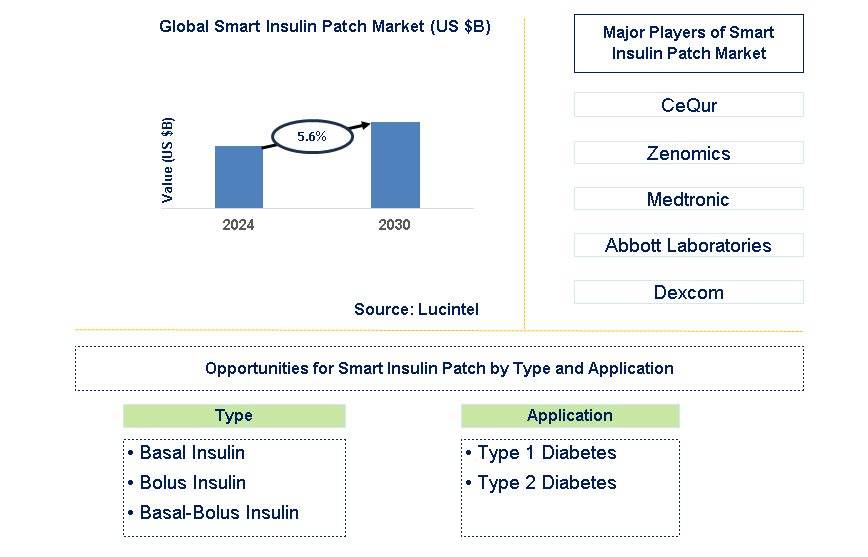
Key data points: The growth forecast = 5.6% annually for the next 6 years. Scroll below to get more insights. This market report covers trends, opportunities, and forecasts in the global smart insulin patch market to 2030 by type (basal insulin, bolus insulin, and basal-bolus insulin), application (type 1 diabetes and type 2 diabetes), and region (North America, Europe, Asia Pacific, and the Rest of the World)
We'll send your sample report shortly.
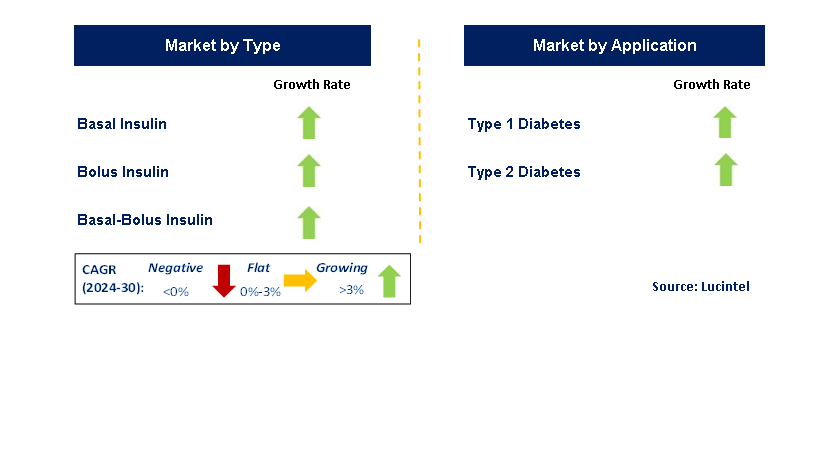
• Lucintel forecasts that, within the type category, basal-bolus insulin is expected to witness the highest growth over the forecast period due to comprehensive diabetes management, covering both basal and bolus needs.
• Within the application category, type 2 diabetes will remain the largest segment due to its higher prevalence and broader patient base.
• In terms of regions, North America is expected to witness the highest growth over the forecast period due to advanced healthcare infrastructure and high diabetes prevalenc. Gain valuable insights for your business decisions with our comprehensive 150+ page report.
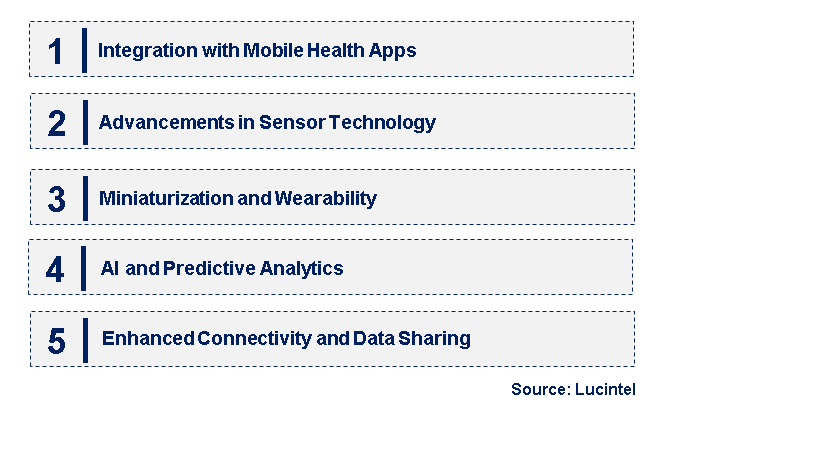
• Integration with mobile health apps: Smart insulin patches are increasingly integrating with mobile health applications. This trend allows for real-time monitoring, data sharing, and personalized treatment adjustments, improving patient engagement and management of diabetes through accessible and user-friendly platforms.
• Advancements in sensor technology: Recent trends include significant improvements in sensor technology within smart insulin patches. Enhanced accuracy and longer-lasting sensors provide more reliable glucose measurements, reducing the need for frequent calibrations and improving the effectiveness of insulin delivery.
• Miniaturization and wearability: The push for miniaturization is leading to more discreet and comfortable smart insulin patches. Smaller, lightweight designs enhance patient comfort and compliance, making it easier for users to wear the device continuously without discomfort or interference with daily activities.
• AI and predictive analytics: The integration of artificial intelligence and predictive analytics is becoming more common. These technologies enable smarter insulin delivery by predicting glucose levels and adjusting insulin doses accordingly, leading to more personalized and effective diabetes management.
• Enhanced connectivity and data sharing: Improved connectivity features are enabling better data sharing between smart insulin patches and healthcare providers. This trend facilitates more accurate monitoring and timely intervention, enhancing overall patient care and enabling more precise treatment adjustments based on real-time data. Emerging trends in the smart insulin patch market, including integration with mobile apps, advancements in sensor technology, miniaturization, AI analytics, and enhanced connectivity, are reshaping diabetes management. These innovations improve accuracy, user comfort, and data accessibility, leading to more effective and personalized treatment options.
• FDA approval of new devices: New smart insulin patches have received FDA approval, incorporating advanced glucose sensors and automated insulin delivery systems. These devices enhance treatment precision and patient convenience, contributing to better diabetes management and more reliable glucose control.
• Affordable solutions for emerging markets: Developments include cost-effective smart insulin patches designed for emerging markets. These innovations aim to increase accessibility and affordability, making advanced diabetes management tools available to a broader population, especially in regions with high diabetes prevalence.
• Integration with telemedicine platforms: Recent advancements feature smart insulin patches that integrate with telemedicine platforms. This integration allows for real-time data sharing and remote consultations, improving patient monitoring and enabling timely adjustments to treatment plans.
• Enhanced wearability features: New designs focus on improving the wearability of smart insulin patches. Innovations include more flexible and comfortable materials, longer wear times, and more discreet devices, enhancing user comfort and compliance with diabetes management routines.
• Advancements in data analytics: The incorporation of advanced data analytics in smart insulin patches is a key development. Enhanced analytics capabilities enable more accurate glucose monitoring and personalized treatment adjustments, improving overall diabetes management and patient outcomes. Recent developments in the smart insulin patch market, including FDA-approved devices, affordable solutions, telemedicine integration, enhanced wearability, and advanced data analytics, are improving the effectiveness and accessibility of diabetes management. These innovations enhance patient care and expand the reach of smart insulin technology.
• Expansion in emerging markets: There is significant growth potential in emerging markets where diabetes prevalence is high. Introducing affordable and accessible smart insulin patches in these regions can address unmet needs and expand market reach, improving diabetes management for a larger population.
• Integration with digital health platforms: Opportunities exist in integrating smart insulin patches with digital health platforms, such as mobile apps and telemedicine services. This integration enhances data management, patient monitoring, and treatment personalization, providing a more comprehensive approach to diabetes care.
• Development of advanced sensor technologies: Investing in advanced sensor technologies offers growth potential by improving the accuracy and reliability of glucose monitoring. Innovations in sensor design and functionality can enhance the effectiveness of smart insulin patches, driving demand for more precise and reliable solutions.
• Focus on personalized medicine: Strategic opportunities lie in developing smart insulin patches that support personalized medicine approaches. Customizable and adaptive patches that cater to individual patient needs and responses can offer more effective diabetes management and improve overall treatment outcomes.
• Partnerships with healthcare providers: Collaborating with healthcare providers and institutions presents growth opportunities. Partnerships can facilitate the adoption of smart insulin patches through integrated care programs, clinical trials, and patient education initiatives, driving market acceptance and expanding usage. Strategic growth opportunities in the smart insulin patch market include expansion into emerging markets, integration with digital health platforms, advanced sensor technologies, personalized medicine, and partnerships with healthcare providers. Leveraging these opportunities can drive market growth, improve patient care, and enhance the adoption of smart insulin technology.
• Technological advancements: Innovations in smart insulin patch technology, such as improved sensors and automated insulin delivery, drive market growth. These advancements enhance glucose monitoring accuracy and treatment effectiveness, meeting the needs of patients and healthcare providers.
• Increasing diabetes prevalence: The rising prevalence of diabetes globally fuels demand for effective diabetes management solutions. Smart insulin patches offer a convenient and advanced method for insulin delivery, addressing the growing need for innovative treatment options.
• Regulatory support: Supportive regulatory environments and approvals for new smart insulin patches facilitate market growth. Favorable regulations and guidelines help accelerate the development and adoption of these devices, ensuring their safety and efficacy.
• Focus on personalized medicine: The trend towards personalized medicine drives demand for smart insulin patches that can be customized to individual patient needs. Personalized solutions offer more effective diabetes management and improved patient outcomes, boosting market growth.
• Advancements in wearable technology: Growth in wearable technology and integration with digital health tools enhance the functionality of smart insulin patches. These advancements improve user experience, data management, and overall treatment effectiveness, driving market adoption. Challenges in the smart insulin patch market are:
• High development costs: The high costs associated with developing and manufacturing smart insulin patches can be a barrier to market entry. Reducing development costs and offering affordable solutions are essential for expanding market reach and accessibility.
• Regulatory hurdles: Navigating regulatory requirements and obtaining approvals for smart insulin patches can be challenging. Meeting stringent regulations and demonstrating safety and efficacy are crucial for successful market entry and acceptance.
• Patient acceptance and compliance: Ensuring patient acceptance and compliance with smart insulin patches can be challenging. Addressing concerns related to comfort, ease of use, and reliability is important for increasing adoption and adherence to diabetes management routines. Technological advancements, increasing diabetes prevalence, regulatory support, personalized medicine, and wearable technology are key drivers of the smart insulin patch market. Challenges include high development costs, regulatory hurdles, and patient acceptance. Addressing these challenges while leveraging drivers will be crucial for market growth and widespread adoption of smart insulin patches.
• CeQur
• Zenomics
• Medtronic
• Abbott Laboratories
• Dexcom
• Basal Insulin
• Bolus Insulin
• Basal-Bolus Insulin
• Type 1 Diabetes
• Type 2 Diabetes
• North America
• Europe
• Asia Pacific
• The Rest of the World
• United States: In the U.S., recent developments include FDA-approved smart insulin patches that offer real-time glucose monitoring and automated insulin delivery. Advances in technology have led to enhanced accuracy and integration with mobile health applications, enabling better patient management and personalized treatment plans. Companies are also focusing on improving the wearability and user comfort of these patches.
• China: China has seen significant progress with the introduction of affordable smart insulin patches tailored for large-scale use. Recent advancements focus on integrating AI for predictive analytics and real-time glucose data, which aids in early intervention and more precise insulin delivery. The government is supporting these developments with favorable regulations and subsidies.
• Germany: Germany’s smart insulin patch market is advancing with a focus on high precision and integration with existing health systems. Innovations include patches that synchronize with digital health records and telemedicine platforms, facilitating seamless communication between patients and healthcare providers. German companies are also investing in improving the durability and usability of these devices.
• India: In India, the market is experiencing growth driven by the introduction of cost-effective smart insulin patches. Recent developments focus on enhancing accessibility and affordability, making advanced diabetes management tools available to a larger population. Innovations also include patches with improved sensor accuracy and extended wear times suitable for the local market.
• Japan: Japan’s smart insulin patch market is seeing advancements in miniaturization and advanced sensor technologies. Recent developments feature patches with smaller, more discreet designs and enhanced functionality, including real-time glucose monitoring and integration with wearable health devices. Japanese companies are also focusing on advanced data analytics for improved diabetes management.


• CeQur
• Zenomics
• Medtronic
• Abbott Laboratories
• Dexcom Q5. Which smart insulin patch market segment will be the largest in future? Answer: Lucintel forecasts that basal-bolus insulin is expected to witness highest growth over the forecast period due to comprehensive diabetes management, covering both basal and bolus needs. Q6. In smart insulin patch market, which region is expected to be the largest in next 5 years? Answer: North America is expected to witness highest growth over the forecast period due to advanced healthcare infrastructure and high diabetes prevalenc. Q7. Do we receive customization in this report? Answer: Yes, Lucintel provides 10% customization without any additional cost.


Choose a license that fits your team. Instant PDF delivery.
Prices exclude taxes. Instant delivery. Custom licensing available on request.
Market Report · July 22, 2026
Market Report · July 22, 2026
Market Report · July 22, 2026
Trusted partner for strategic intelligence and business growth


Receive a complimentary market analysis tailored to your industry. Our analysts will identify key growth opportunities and competitive dynamics specific to your business.

Market size, growth rate, and key trend analysis for your specific sector.

Top competitor positioning and market share analysis.

Strategic recommendations backed by data-driven insights.
Get curated market intelligence and competitive moves straight to your inbox.
By subscribing, you agree to receive our monthly insights. Unsubscribe anytime.
Receive a complimentary market analysis tailored to your industry. Our analysts will identify key growth opportunities and competitive dynamics specific to your business.
Market size, growth rate, and key trend analysis for your specific sector.
Top competitor positioning and market share analysis.
Strategic recommendations backed by data-driven insights.
Get curated market intelligence, emerging trends, and competitive moves straight to your inbox each month.
By subscribing, you agree to receive our monthly insights. Unsubscribe anytime.
We'll send your sample report shortly.