
Market Report · May 18, 2026

This market report covers trends, opportunities, and forecasts in the global smart grid sensors market to 2031 by technology (voltage/temperature sensor, outage detection sensor, transformer monitoring sensor, dynamic line rating sensor, and others), application (advanced metering infrastructure, smart grid distribution management, supervisory control and data acquisition, smart energy meter, and others), and region (North America, Europe, Asia Pacific, and the Rest of the World)
We'll send your sample report shortly.
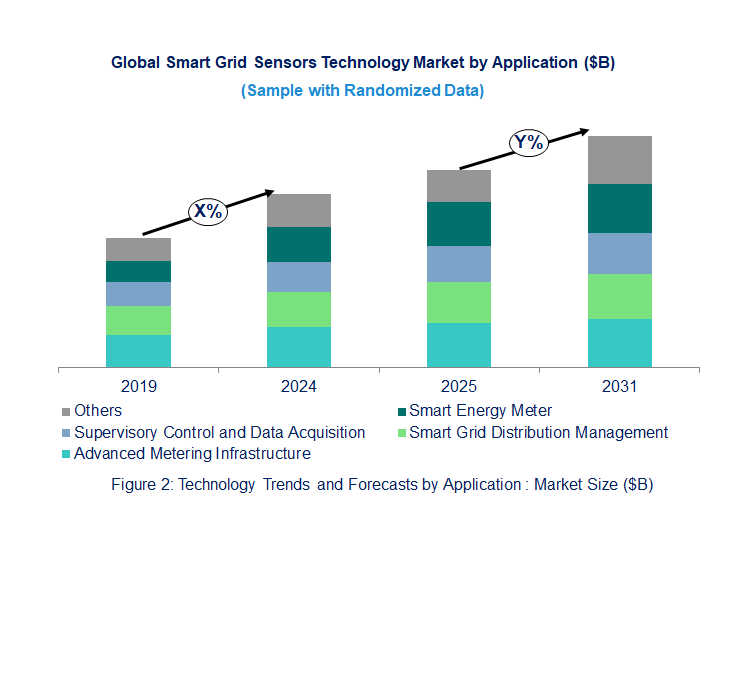
• IoT Integration in Sensors: IoT-enabled sensors allow real-time data collection and communication, enabling smarter energy management. These sensors enhance predictive maintenance and operational efficiency.
• AI and Machine Learning Applications: AI-driven analytics empower sensors to predict grid failures and optimize energy distribution, reducing downtime and operational costs.
• Miniaturization and Energy Harvesting: Compact and energy-efficient sensors powered by energy harvesting technologies offer sustainable solutions for remote grid monitoring.
• 5G Connectivity for Faster Communication: The adoption of 5G enhances the speed and reliability of data transmission between smart grid sensors and centralized systems, enabling instantaneous decision-making.
• Advanced Cybersecurity Features: As sensors become connected, robust cybersecurity protocols are being integrated to safeguard against data breaches and ensure grid stability. These technology trends are reshaping the smart grid sensors market by enhancing efficiency, resilience, and sustainability, paving the way for a more intelligent energy infrastructure.
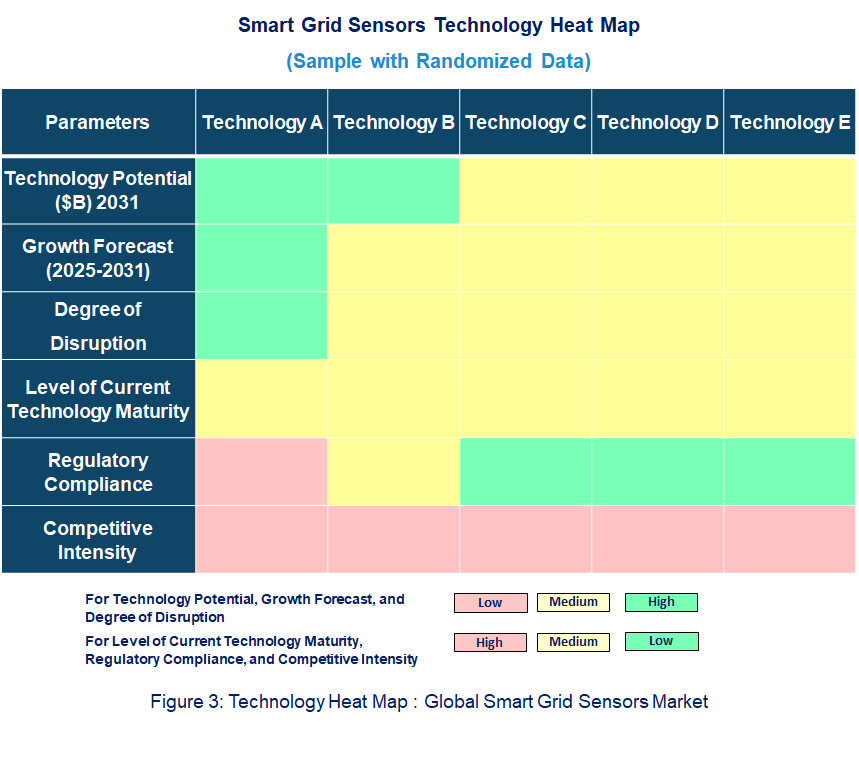
• Technology Potential: Smart grid sensors offer significant potential to revolutionize energy distribution networks. By enabling real-time monitoring, fault detection, and predictive maintenance, these sensors enhance grid efficiency, reduce energy losses, and optimize resource allocation. Their integration with IoT and AI unlocks advanced analytics, supporting the transition to decentralized and renewable energy sources. This capability makes smart grid sensors critical in achieving global sustainability goals.
• Degree of Disruption: The adoption of smart grid sensors represents a high degree of disruption in the energy sector. Traditional grid systems, reliant on periodic manual inspections and static monitoring, are being replaced by dynamic, data-driven operations. This shift challenges conventional practices, compelling utilities to rethink their operational and maintenance strategies to accommodate automation and digitization.
• Level of Current Technology Maturity: Smart grid sensor technology has reached a moderate to advanced maturity level. While developed regions have widely adopted solutions like IoT-enabled sensors and AI-driven analytics, deployment in emerging markets remains in the early stages. Advancements in energy harvesting and 5G connectivity are further refining these technologies, making them more scalable and accessible.
• Regulatory Compliance: Regulatory frameworks are evolving to promote smart grid adoption, driven by mandates for energy efficiency and grid modernization. Standards for interoperability, cybersecurity, and environmental impact are strengthening, providing a supportive ecosystem for market growth. Compliance remains crucial for widespread adoption and market expansion.
• ABB: ABB introduced advanced IoT-based grid sensors integrated with its ABB Ability™ platform. These sensors enable real-time data analytics, improving fault detection and predictive maintenance capabilities, thereby enhancing grid reliability.
• GE Grid Solutions: GE Grid Solutions launched next-generation dynamic line rating sensors, helping utilities maximize grid capacity and integrate renewable energy. This development supports the efficient management of fluctuating power loads.
• Siemens: Siemens unveiled AI-enabled sensors for smart distribution networks, enhancing energy efficiency and grid automation. These innovations significantly reduce energy losses and support renewable integration.
• Landis+Gyr: Landis+Gyr expanded its grid edge intelligence solutions by integrating data analytics with smart sensors. This advancement aids utilities in demand forecasting and energy optimization.
• Trilliant: Trilliant introduced end-to-end smart grid communication platforms with embedded sensors, improving interoperability and real-time data exchange across grid components.
• Itron: Itron developed advanced smart meters with embedded sensors for outage detection and energy usage optimization, enhancing customer satisfaction and operational efficiency.
• S&C Electric: S&C Electric advanced its fault-detection sensors for distribution automation, reducing outage response times and improving grid resilience. The recent developments by key players in the smart grid sensors market underscore the industry’s focus on enhancing grid efficiency, reliability, and sustainability. Innovations such as IoT integration, AI-enabled analytics, and advanced fault detection are enabling utilities to meet growing energy demands and transition toward renewable energy. These advancements are not only modernizing grid operations but also paving the way for a smarter, more resilient energy infrastructure globally.
• Rising Demand for Renewable Integration: The global shift toward renewable energy necessitates dynamic grid sensors to manage variable energy flows, supporting the efficient integration of wind and solar power.
• Growth in IoT and AI Adoption: IoT-enabled sensors paired with AI analytics enhance predictive maintenance and operational efficiency, reducing costs and improving reliability.
• Need for Grid Resilience: Increasing incidences of extreme weather events and grid outages drive demand for sensors that enable real-time monitoring and quicker response. Challenges in the smart grid sensors market are:
• High Initial Costs: The high upfront investment required for deploying smart grid sensors limits their adoption, particularly in emerging markets.
• Cybersecurity Risks: The digitalization of grid systems increases vulnerabilities to cyberattacks, necessitating robust security measures to protect data integrity and grid stability. These drivers and challenges collectively shape the smart grid sensors market, with drivers fueling technological innovation and challenges emphasizing the need for cost efficiency and robust cybersecurity. By addressing these areas, the market is poised to achieve broader adoption and transformative impact.
• Abb
• Ge Grid Solutions
• Siemens
• Landis+Gyr
• Trilliant
• Itron
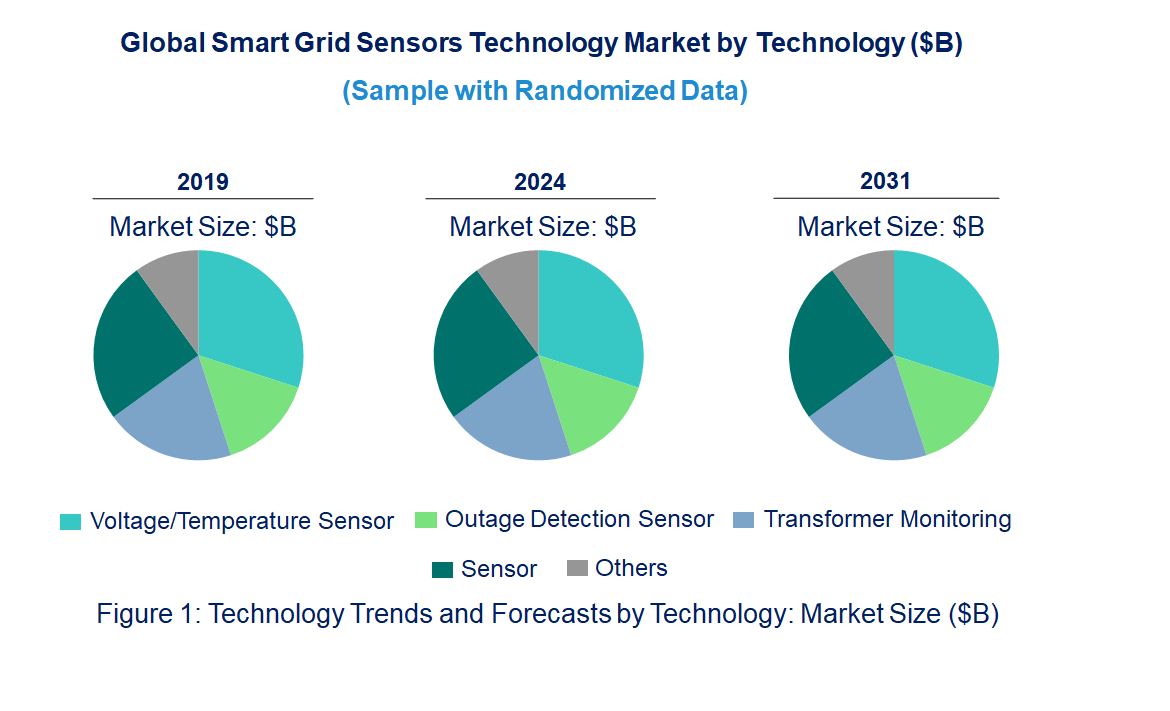
• Technology Readiness by Technology Type: The readiness of smart grid sensor technologies varies, influencing their adoption and application. voltage/temperature sensors are highly mature, widely used in energy distribution systems. Outage detection sensors are advanced, excelling in reducing grid downtimes. Transformer monitoring sensors are gaining traction with improved predictive maintenance capabilities. Dynamic line rating sensors, though emerging, show high potential for integrating renewables. Other technologies, such as IoT-enabled and AI-driven sensors, are progressing rapidly, though deployment challenges persist. Competitive intensity focuses on innovation and cost-efficiency, while regulatory frameworks ensure secure, interoperable, and sustainable sensor deployments across key energy applications.
• Competitive Intensity and Regulatory Compliance: The market for smart grid sensors is marked by intense competition and evolving regulatory standards. Voltage/temperature sensors compete on precision and affordability, while outage detection sensors are distinguished by their speed and accuracy. Transformer monitoring sensors emphasize reliability and advanced diagnostics to gain market traction. Dynamic line rating sensors face competitive pressures in scalability and compatibility with renewable energy sources. Other sensors, particularly IoT-enabled ones, compete on cybersecurity and integration capabilities. Regulatory compliance spans interoperability, cybersecurity, and environmental standards, ensuring alignment with global grid modernization initiatives and fostering a level playing field for all technologies.
• Disruption Potential of Technologies: The smart grid sensors market technologies demonstrate significant disruption potential in transforming energy infrastructure. Voltage/temperature sensors enhance operational efficiency by offering real-time monitoring and predictive analytics. Outage detection sensors revolutionize grid reliability by enabling swift fault identification and resolution. Transformer monitoring sensors mitigate system failures through proactive maintenance. Dynamic line rating sensors optimize grid capacity by adjusting to real-time conditions, crucial for renewable integration. Other emerging sensors, leveraging IoT and AI, automate grid management and support decentralized energy systems. Together, these technologies disrupt traditional grid models, fostering smarter, sustainable, and resilient energy systems.
• Voltage/Temperature Sensor
• Outage Detection Sensor
• Transformer Monitoring Sensor
• Dynamic Line Rating Sensor
• Others
• Advanced Metering Infrastructure
• Smart Grid Distribution Management
• Supervisory Control and Data Acquisition
• Smart Energy Meter
• Others
• North America
• Europe
• Asia Pacific
• The Rest of the World
• Latest Developments and Innovations in the Smart Grid Sensors Technologies
• Companies / Ecosystems
• Strategic Opportunities by Technology Type


Choose a license that fits your team. Instant PDF delivery.
Prices exclude taxes. Instant delivery. Custom licensing available on request.
Market Report · May 18, 2026
Market Report · May 18, 2026
Market Report · May 18, 2026
Trusted partner for strategic intelligence and business growth


Receive a complimentary market analysis tailored to your industry. Our analysts will identify key growth opportunities and competitive dynamics specific to your business.

Market size, growth rate, and key trend analysis for your specific sector.

Top competitor positioning and market share analysis.

Strategic recommendations backed by data-driven insights.
Get curated market intelligence and competitive moves straight to your inbox.
By subscribing, you agree to receive our monthly insights. Unsubscribe anytime.
Receive a complimentary market analysis tailored to your industry. Our analysts will identify key growth opportunities and competitive dynamics specific to your business.
Market size, growth rate, and key trend analysis for your specific sector.
Top competitor positioning and market share analysis.
Strategic recommendations backed by data-driven insights.
Get curated market intelligence, emerging trends, and competitive moves straight to your inbox each month.
By subscribing, you agree to receive our monthly insights. Unsubscribe anytime.
We'll send your sample report shortly.