
Market Report · July 31, 2026

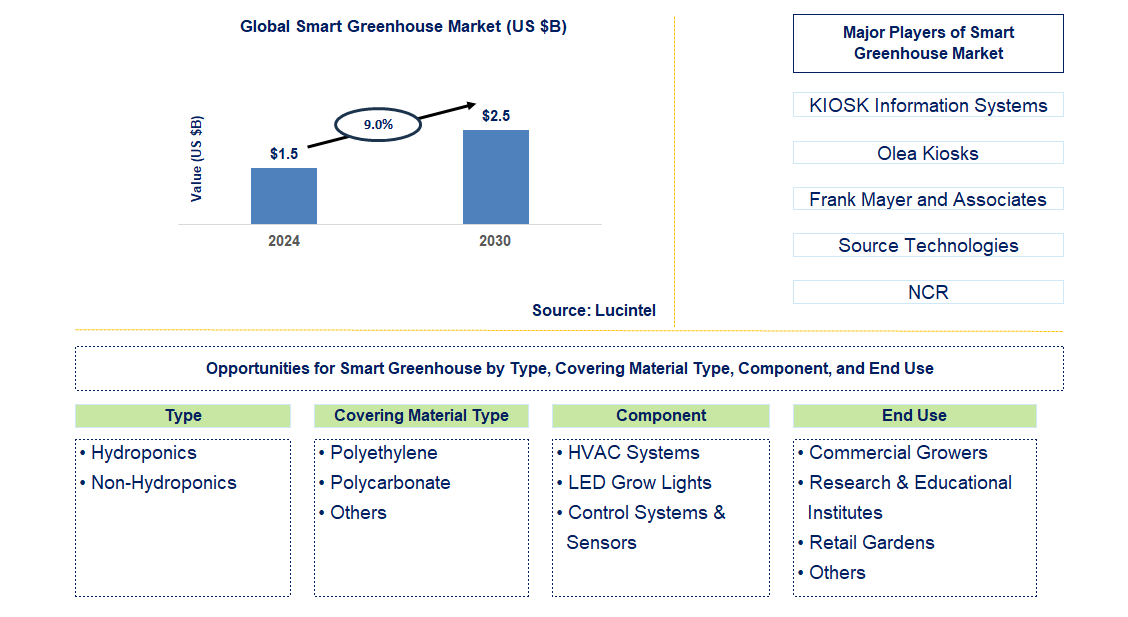
Key data points: The market size in 2030 = $2.5 billion, growth forecast = 9.0% annually for the next 6 years. Scroll below to get more insights. This market report covers trends, opportunities, and forecasts in the global smart greenhouse market to 2030 by type (hydroponics and non-hydroponics), covering material type (polyethylene, polycarbonate, and others), component (HVAC systems, LED grow lights, and control systems & sensors), end use (commercial growers, research & educational institutes, retail gardens, and others), and region (North America, Europe, Asia Pacific, and the Rest of the World)
We'll send your sample report shortly.
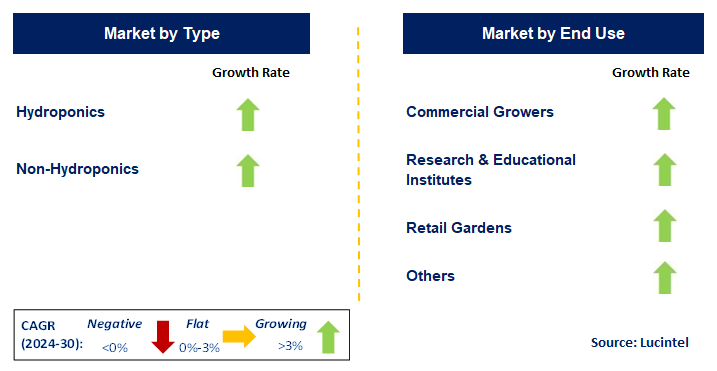
• Lucintel forecasts that, within the type category, hydroponic will remain the largest segment over the forecast period due to its ability to produce wholesome foods with less storage space needed.
• Within the end use category, research & educational institute will remain the largest segment due to growing adoption of smart greenhouses in this sector to conduct research on a variety of plants, flowers, fruits, and vegetables.
• In terms of regions, APAC is expected to witness the highest growth over the forecast period due to continual growth of population and existence of key smart greenhouse vendor in the region. Gain valuable insights for your business decisions with our comprehensive 150+ page report.
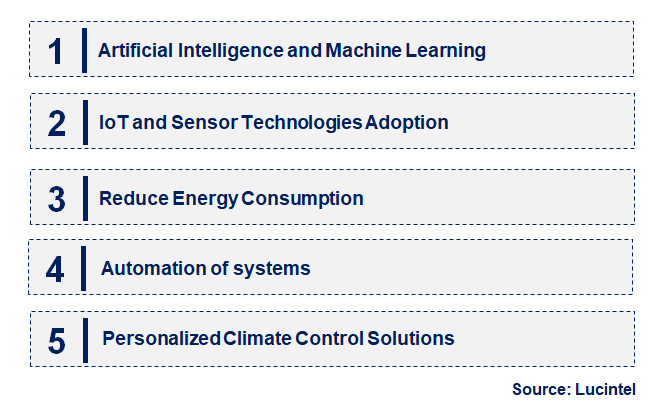
• Artificial Intelligence and Machine Learning: Artificial intelligence and machine learning are increasingly applied to optimize operations inside the greenhouse. Capable of predictive analytics for climate control and resource management, these technologies increase efficiency and crop yields by enabling data-driven decisions in real time.
• IoT and Sensor Technologies Adoption: IoT devices and sensors are being increasingly used to monitor and control greenhouse conditions in real time. The integration of these technologies enables better management of variables like temperature, humidity, and soil moisture, all leading to increased productivity through reduced resource wastage.
• Sustainability Focus: Another emphasis has been placed on sustainability in smart greenhouses, where technologies are designed to reduce energy consumption and minimize environmental impact. Innovations have been developed through the use of renewable energy sources and energy-efficient climate control systems.
• Automation of Systems: Automation is quickly becoming a trend, with smart greenhouses moving toward robotics for planting and harvesting activities. This helps address labor shortages and further enhances operational efficiency, creating more consistent and scalable production.
• Personalized Climate Control Solutions: Smart greenhouses are increasingly offering personalized climate control solutions tailored to specific crops and growing conditions. These systems use advanced data analytics to create optimal growing environments, resulting in higher yields and better crop quality. These trends are reshaping the Smart Greenhouse market in terms of efficiency, sustainability, and automation. They reflect the industry's response to the surge in technological development and rising environmental concerns, sparking innovation and driving rapid growth.
• High-tech climate control systems: There has been a substantial rise in demand for advanced climate control systems, especially those that provide professional solutions for managing greenhouse conditions. Advanced climate control systems include technology deployment to create an optimal atmosphere for various crops to grow and yield.
• Automation Growing Systems: The development and expansion of automated systems, including robotics and AI-powered solutions, show huge potential for growth. Most labor-intensive tasks are automated through this technology, making operations more efficient and bridging any workforce gaps in greenhouse operations.
• Energy-efficient Technologies: Energy-efficient technologies, including solar panels and advanced HVAC systems, offer significant potential for growth in the smart greenhouse market. These solutions reduce energy consumption and operational expenditure while supporting sustainability goals.
• Precision Farming Tools: Advanced tools that offer detailed information and analytics about plant health, soil conditions, and environmental variables show rapid growth in market demand. Precision farming tools help growers make better decisions regarding resource usage, resulting in better productivity with reduced resource wastage.
• Integration with Vertical Farming: The integration of vertical farming with smart greenhouse technology opens up new opportunities for growth. This offers a great opportunity to increase production in urban areas by utilizing space to its maximum, addressing food security and sustainability challenges. These growth opportunities highlight the growing demand and innovations in the smart greenhouse market. These changes mark a shift toward advanced technologies, sustainability, and efficiency that ensure growth and transform the face of the industry.
• High-tech climate control systems: There has been a substantial rise in demand for advanced climate control systems, especially those that can provide professional solutions for managing greenhouse conditions. These systems include technology deployment to create an optimal atmosphere for various crops to grow and yield.
• Automation growing systems: The development and expansion of automated systems, including robotics and AI-powered solutions, show significant growth potential. Many tasks that involve labor are automated through this technology, thus making operations more efficient and bridging any gaps in the workforce within greenhouse operations.
• Energy-efficient technologies: Energy-efficient technologies, such as solar panels and advanced HVAC systems, offer growth opportunities in the smart greenhouse market. These solutions reduce energy consumption and operational expenditures while supporting sustainability goals.
• Precision farming tools: Advanced tools that provide detailed information and analytics about plant health, soil conditions, and environmental variables are showing rapid growth in market demand. These tools help growers make better decisions regarding resource usage, resulting in improved productivity and reduced waste.
• Integration with vertical farming: The integration of vertical farming with smart greenhouse technology opens new avenues for growth. This offers a significant opportunity to increase production in urban areas, utilizing space to its maximum potential and addressing food security and sustainability challenges. These growth opportunities illustrate the growing demand for innovation in the Smart Greenhouse market. These changes mark a shift toward advanced technologies, sustainability, and efficiency, which will drive growth and transform the industry.
• Technology Improvement: This is one of the key factors that has contributed to rapid development and continuous innovation in technologies like AI, IoT, and robotics, driving growth in the smart greenhouse market. These innovations enhance the efficiency, precision, and productivity of greenhouse operations.
• Increased Demand for Sustainable Agriculture: The rising emphasis on sustainability and environmental protection accelerates the adoption of smart greenhouse technologies. These systems help reduce resource consumption, minimize environmental impacts, and align with global sustainability goals.
• Labor Costs: Increasing labor costs continue to rise, pushing the need to automate operations within greenhouses. Smart greenhouses, with integrated robotics and automated systems, help reduce labor requirements and lower operational costs.
• Government Policies and Incentives: Supportive government policies and incentives for high-tech agriculture and sustainable practices facilitate the growth of the smart greenhouse market. These policies encourage innovation and investment in advanced greenhouse technologies. Challenges in the smart greenhouse market include:
• Expensive Initial Investment Costs: The high cost of implementation associated with smart greenhouse technologies remains a deterrent for some growers. A major challenge is the initial investment required for advanced systems and infrastructure, which can hinder potential adopters and slow market growth.
• Integration and Compatibility Issues: Integrating new technologies with existing greenhouse systems can be complex. Various compatibility issues and the need for specialized knowledge may further restrain the adoption and implementation of smart greenhouse solutions.
• Regulatory Compliance: Meeting regulatory standards and environmental requirements can be cumbersome. Smart greenhouses must navigate a multitude of regulations related to energy use, emissions, data privacy, and other factors that affect operations and adoption. The smart greenhouse market is influenced by technological advancements, growing demand for sustainability, and economic factors. However, issues such as high costs, integration challenges, and regulatory requirements must be addressed for the market to reach its full potential and for smart greenhouse technologies to be implemented in all regions.
• KIOSK Information Systems
• Olea Kiosks
• Frank Mayer and Associates
• Source Technologies
• NCR
• Diebold Nixdorf
• Embross
• Meridian Kiosks
• REDYREF Interactive Kiosks
• Lilitab
• Hydroponics
• Non-Hydroponics
• Polyethylene
• Polycarbonate
• Others
• HVAC Systems
• LED Grow Lights
• Control Systems & Sensors
• Commercial Growers
• Research & Educational Institutes
• Retail Gardens
• Others
• North America
• Europe
• Asia Pacific
• The Rest of the World
• US: The adoption of AI and IoT technologies for smart greenhouses is increasing in the country. Using these technologies enables better accuracy in climate control and resource usage, improving yields and efficiency. Companies are also focusing on enhanced analytics to ensure better decision-making.
• China: Large-scale smart greenhouse projects are ongoing in China, focusing on automation and data-driven management. Government support for high-tech agriculture has been instrumental in facilitating these developments, with an ambitious goal of raising local food production to ensure food security.
• Germany: The German smart greenhouse market places great emphasis on energy efficiency and sustainability. Innovations include systems that integrate renewable energy sources and advanced climate control technologies, aligning with the country's strong commitment to environmental protection and resource efficiency.
• India: The smart greenhouse sector is booming in India, driven by increasing investments in technology and infrastructure. Innovations have focused on low-cost solutions that address the needs of small-scale farmers, offering accessible climate control systems and water-saving technologies.
• Japan: Japan is using robotics and sensor technologies in its intelligent greenhouses to help resolve labor shortages and achieve better operational efficiencies. These innovations contribute to the country's high-tech agricultural approaches, improving productivity levels while reducing operational costs.


• KIOSK Information Systems
• Olea Kiosks
• Frank Mayer and Associates
• Source Technologies
• NCR
• Diebold Nixdorf
• Embross
• Meridian Kiosks
• REDYREF Interactive Kiosks
• Lilitab Q6. Which smart greenhouse market segment will be the largest in future? Answer: Lucintel forecasts that hydroponic will remain the largest segment over the forecast period due to its ability to produce wholesome foods with less storage space needed. Q7. In smart greenhouse market, which region is expected to be the largest in next 5 years? Answer: APAC is expected to witness highest growth over the forecast period due to continual growth of population and existence of key smart greenhouse vendor in the region. Q.8 Do we receive customization in this report? Answer: Yes, Lucintel provides 10% customization without any additional cost.


Choose a license that fits your team. Instant PDF delivery.
Prices exclude taxes. Instant delivery. Custom licensing available on request.
Market Report · July 31, 2026
Market Report · July 31, 2026
Market Report · July 31, 2026
Trusted partner for strategic intelligence and business growth


Receive a complimentary market analysis tailored to your industry. Our analysts will identify key growth opportunities and competitive dynamics specific to your business.

Market size, growth rate, and key trend analysis for your specific sector.

Top competitor positioning and market share analysis.

Strategic recommendations backed by data-driven insights.
Get curated market intelligence and competitive moves straight to your inbox.
By subscribing, you agree to receive our monthly insights. Unsubscribe anytime.
Receive a complimentary market analysis tailored to your industry. Our analysts will identify key growth opportunities and competitive dynamics specific to your business.
Market size, growth rate, and key trend analysis for your specific sector.
Top competitor positioning and market share analysis.
Strategic recommendations backed by data-driven insights.
Get curated market intelligence, emerging trends, and competitive moves straight to your inbox each month.
By subscribing, you agree to receive our monthly insights. Unsubscribe anytime.
We'll send your sample report shortly.