
Market Report · May 18, 2026

This market report covers trends, opportunities, and forecasts in the global smart gas meter market to 2031 by technology (automated meter reading (amr) and advanced metering infrastructure (ami)), end use industry (commercial, industrial, and residential), and region (North America, Europe, Asia Pacific, and the Rest of the World)
We'll send your sample report shortly.
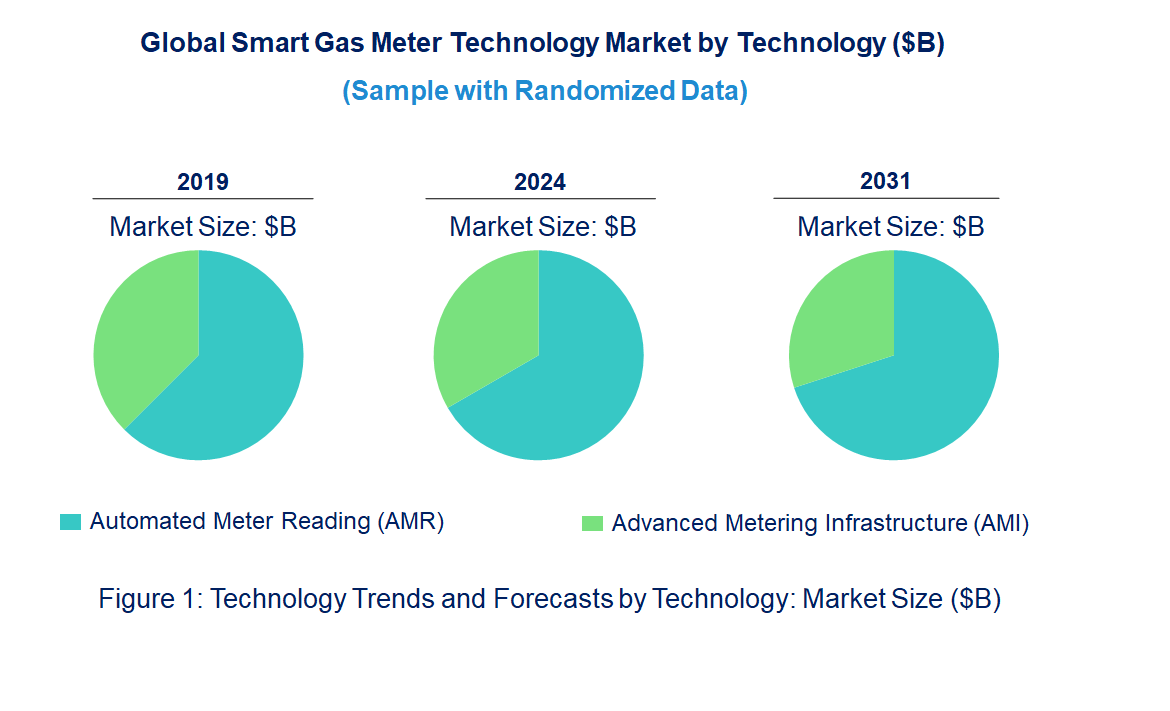
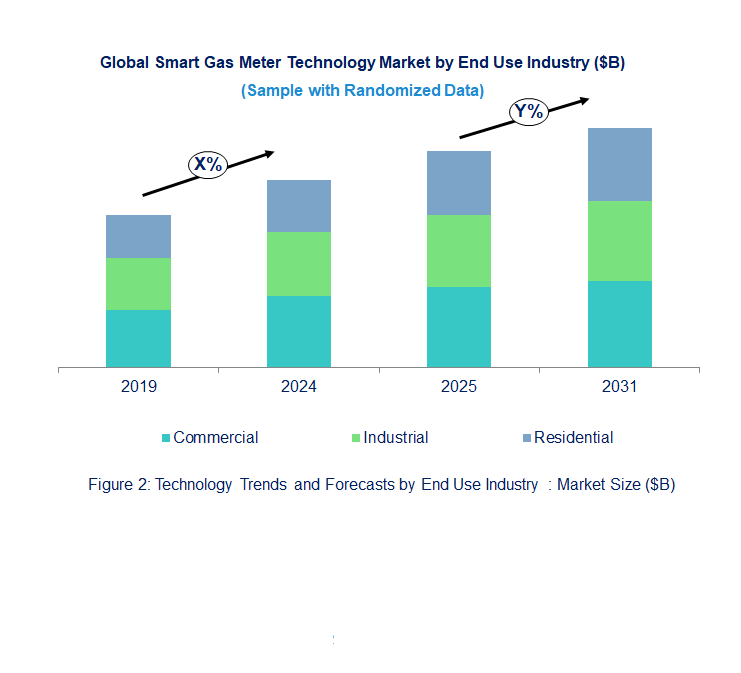
• Shift from AMR to AMI (Advanced Metering Infrastructure): One of the most important trends in the smart gas meter market is the transition from AMR (Automated Meter Reading) technology to AMI (Advanced Metering Infrastructure). AMI enables two-way communication between utility companies and gas meters, with real-time data monitoring, remote meter reading, and improved operational efficiency. This shift allows for more accurate billing, quicker detection of leaks and anomalies, and better demand management.
• IoT - Internet of Things Integration to Offer Smart Grid Connectivity: IoT integration continues to enhance the capabilities of smart gas meters. Through IoT, smart meters connect to larger smart grid systems and can interact with a variety of smart devices in the home or business. This connectivity leads to more accurate monitoring, predictive analytics, and greater consumer engagement with real-time energy consumption data, ultimately driving energy efficiency.
• Adoption of Wireless Communication Technologies (LoRa, NB-IoT): Low Power Wide Area Networks (LoRa) and Narrowband IoT (NB-IoT) are becoming increasingly prevalent in smart gas meter systems. These technologies allow for low-cost, low-power, long-range communication, which is ideal for utility companies seeking to cover large areas without the need for expensive infrastructure. This trend is making smart gas metering solutions more scalable and affordable, especially in rural or remote locations.
• Focus on Data Analytics and Predictive Maintenance: Data analytics plays an increasingly important role in the smart gas meter market. The collection of vast amounts of data from gas meters provides utilities with valuable insights into consumption patterns, enables immediate fault detection, and optimizes maintenance schedules. Predictive maintenance reduces system downtime, prevents failures, and maximizes the use of gas meters before their lifecycle ends, ultimately decreasing operational costs.
• Increased Consumer Engagement and Real-Time Tracking: Modern smart gas meters are designed to enhance consumer engagement by providing real-time data on gas usage. Consumers can access online dashboards or mobile apps to track their usage, receive alerts about unusual consumption patterns, and adjust their usage for greater energy efficiency. This trend empowers utility users to make consumption-oriented decisions, potentially reducing utility bills while promoting more conscious energy usage. Emerging trends are driving the smart gas meter market to become more efficient, accurate, and engaging for consumers. The integration of AMI, IoT connectivity, wireless technologies, data analytics, and consumer-facing platforms is pushing the market toward more advanced and interconnected solutions that improve the operational effectiveness of utility companies while providing consumers with greater control over their energy usage. As technology advances, the smart gas metering market is expected to play a significant role in the global shift toward more sustainable and smarter energy systems.
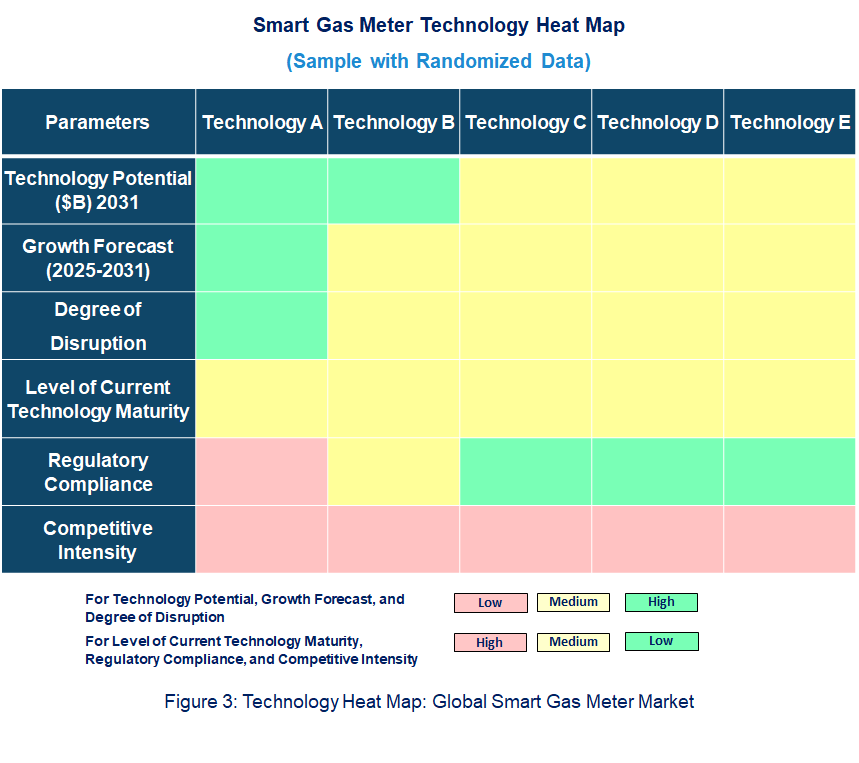
• Technological Potential: With advanced technologies such as IoT, AI, and machine learning, smart gas meters capture real-time data, monitor remotely, and enable predictive maintenance. These technologies have massive potential as they improve operational efficiency, optimize resource management, and enhance customer engagement. The integration of smart grid systems and data analytics takes this potential further, transforming gas meters from basic utilities into proactive, value-driven services.
• Degree of Disruption: The disruption in the smart gas meter market is intense. The shift from traditional mechanical meters to digital smart meters is significantly changing how energy data is collected and utilized. Moreover, the combined advancement of IoT and AMI (Advanced Metering Infrastructure) enables two-way communication, contributing to better leak detection, more efficient demand management, and real-time energy monitoring.
• Present Level of Technology Maturity: Smart gas metering technology has evolved to a fairly mature level, though variations still exist. AMR and AMI systems are dominant, with IoT-enabled smart meters becoming the standard for utilities worldwide. The continued advancements in wireless communication, data analytics, and AI will drive further market maturity.
• Regulatory Compliance: As smart gas meters collect sensitive data, they must comply with data protection regulations such as GDPR and CCPA. The industry faces ongoing challenges in meeting privacy standards while also adhering to safety and accessibility requirements, especially as smart gas meters are deployed more broadly across different regions.
• Landis+Gyr: Landis+Gyr furthered its leadership position in the smart gas meter market through an upgrade of its AMI solutions. These smart gas meters are equipped with IoT connectivity and data analytics capabilities, enabling real-time monitoring, remote diagnostics, and predictive maintenance. This results in more efficient operation and management of gas distribution networks.
• Itron: Itron has developed several advanced smart gas metering solutions focused on improving utility operations and enhancing consumer engagement. Itron's AMI and smart grid technologies enable real-time data collection and remote management, improving meter reading accuracy and enhancing demand response capabilities. Additionally, Itron’s collaboration with leading utilities on large-scale smart gas meter deployments has expanded its market reach.
• Honeywell International: Honeywell has focused on integrating its smart gas meters with smart grid systems. Using IoT and AI, Honeywell's smart meters provide utility companies with advanced data analytics, which in turn improve resource management and operational efficiency. Honeywell also launched advanced gas metering solutions that include predictive maintenance features, helping utility companies optimize their infrastructure.
• Apator Group: Apator Group has made significant progress in the development and deployment of smart gas meters equipped with IoT functionality for seamless integration with smart grids. Their latest solutions support two-way communication, providing utilities with real-time data for demand-side management, leak detection, and energy efficiency optimization. This enhances both operational control and customer engagement.
• DIEHL Metering: DIEHL Metering's new smart gas metering solutions combine advanced communication technologies, including NB-IoT and LoRa, with IoT capabilities. These solutions ensure accurate meter readings while transmitting data efficiently across long distances, especially in remote areas. Integration with smart grids and advanced analytics makes it easier for utility operators to utilize DIEHL's technology. These advancements in operational efficiency, customer engagement, and the adoption of more connected, intelligent gas metering systems are reshaping the smart gas meter market. By integrating IoT, AI, and advanced analytics, these key players are making significant strides toward optimizing energy consumption, improving service reliability, and contributing to more sustainable energy management solutions.
• IoT and AI Technological Advancements: Smart gas meters now incorporate IoT and AI for real-time data collection and predictive analytics, enabling remote diagnostics. This enhances operational efficiency and reduces downtime by quickly responding to issues such as leaks or service disruptions, thereby improving service reliability.
• Growing Need for Energy Efficiency: As global energy consumption continues to rise, the demand for efficient energy management is growing. Smart gas meters provide utilities and consumers with valuable information to address excessive energy consumption. Inefficiencies can be easily detected, leading to conservation efforts that save both costs and reduce environmental impact.
• Transition to Smart Metering Infrastructure: The migration from traditional mechanical meters to AMI systems is a major growth driver. AMI enables two-way communication, real-time data monitoring, and remote management of gas distribution systems. This improves billing accuracy, enhances demand response capabilities, and promotes more sustainable energy consumption.
• Increasing Use of Smart Grids: Smart grids integrated with smart gas meters enable smarter demand-side management, optimized resource allocation, and enhanced grid stability. The growing infrastructure for smart grids is driving demand for smart gas meters, allowing utilities to better manage their networks and support the transition to greener energy systems.
• Regulatory Push for Smart Meter Deployment: Governments and regulatory authorities are increasingly mandating the use of smart metering solutions to enhance energy efficiency, improve resource management, and contribute to sustainability goals. These regulations are driving growth, particularly in markets like Europe and North America. Challenges in the smart gas meter market are:
• High Upfront Costs: The initial investment required for deploying smart gas meters and related infrastructure remains a significant barrier, particularly in emerging markets. Although operational savings and efficiency gains make these systems cost-effective over time, the high upfront costs may deter adoption.
• Data Security and Privacy Concerns: Smart gas meters collect vast amounts of data, including consumer usage patterns and personal information. Ensuring compliance with data protection regulations such as GDPR and CCPA, while providing full privacy protection for consumers, is a major challenge that must be addressed before mass adoption can occur.
• Interoperability Issues: As smart gas meters integrate with various smart grid systems and other IoT devices, ensuring compatibility and interoperability between different technologies is a challenge. Utilities must ensure that these systems work seamlessly together to prevent disruptions and inefficiencies in service delivery. The growth trajectory of the smart gas meter market is shaped by several key drivers and challenges. Demand for energy efficiency, regulatory support, and technological advancements in IoT and AI are fueling market expansion. However, addressing the high initial costs, data security concerns, and interoperability challenges is crucial to unlocking the full potential of the market. With these issues in mind, smart gas meters are set to play a major role in the future of energy management.
• Landis+Gyr
• Itron
• Honeywell International
• Apator Group
• DIEHL Metering
• Technology Readiness, Competitive Level, Regulatory Compliance, and Key Applications for AMR and AMI in the Smart Gas Meter Market: AMR technology is widely deployed but increasingly considered outdated due to its limited functionality. It is ready for use, particularly in regions where cost-efficiency and basic automation are prioritized, such as rural or underserved areas. However, AMR faces stiff competition from AMI systems, which offer greater scalability and integration with modern IoT and smart grid technologies. AMI, on the other hand, is fully mature and offers superior features like two-way communication, real-time data monitoring, and predictive analytics. AMI's readiness is high, and it is increasingly being adopted by utilities worldwide. Regulatory compliance for AMI systems is more complex due to the need for cybersecurity, data protection, and integration with evolving smart grid standards. AMI’s key applications include real-time monitoring, remote diagnostics, and advanced demand-side management, offering utilities deeper insights into energy consumption patterns and more efficient resource management. While AMR has a lower competitive level and regulatory burden, AMI is driving the future of smart gas metering, especially in urban and commercial applications, due to its advanced capabilities and regulatory alignment with sustainability and efficiency goals.
• Competitive Intensity and Regulatory Compliance of AMR and AMI in the Smart Gas Meter Market: The competitive intensity in the smart gas meter market is driven by the increasing demand for more advanced, automated systems like AMI, which offer greater capabilities than AMR. AMR technologies are becoming less competitive due to their limited functionality compared to AMI, which can integrate with smart grids and IoT platforms. As a result, AMI is emerging as the industry standard, with utilities favoring its comprehensive data collection and enhanced demand-side management features. Regulatory compliance is also an essential factor in the adoption of both AMR and AMI technologies. Regulations such as GDPR and CCPA govern data privacy, while industry standards ensure interoperability. AMI systems, with their advanced capabilities, must comply with more complex regulations, including cybersecurity standards and smart grid integration rules, which adds complexity and cost. In contrast, AMR systems face less stringent regulatory requirements but are limited in scope. Ultimately, the regulatory landscape favors AMI systems, driving their adoption over AMR.
• Disruption Potential of AMR and AMI in the Smart Gas Meter Market: The disruption potential of automated meter reading (AMR) and advanced metering infrastructure (AMI) in the smart gas meter market is significant. AMR enables utilities to remotely collect gas meter readings, reducing manual labor and human error. However, it lacks the two-way communication of AMI, which allows for real-time data collection, fault detection, and remote management. AMI systems support more complex applications, including advanced analytics and predictive maintenance, which improve operational efficiency and enhance customer service. As a result, AMI's ability to integrate with IoT, AI, and smart grid systems is transforming the energy landscape. The evolution from AMR to AMI is shifting the market from simple data collection to proactive energy management, with improved demand response, leak detection, and energy conservation. This technology shift is pushing the market toward greater automation and smarter resource optimization. The ongoing deployment of AMI systems will likely phase out traditional AMR systems, especially as utilities demand more comprehensive, real-time data capabilities.
• Automated Meter Reading (AMR)
• Advanced Metering Infrastructure (AMI)
• Commercial
• Industrial
• Residential
• North America
• Europe
• Asia Pacific
• The Rest of the World
• Latest Developments and Innovations in the Smart Gas Meter Technologies
• Companies / Ecosystems
• Strategic Opportunities by Technology Type


Choose a license that fits your team. Instant PDF delivery.
Prices exclude taxes. Instant delivery. Custom licensing available on request.
Market Report · May 18, 2026
Market Report · May 18, 2026
Market Report · May 18, 2026
Trusted partner for strategic intelligence and business growth


Receive a complimentary market analysis tailored to your industry. Our analysts will identify key growth opportunities and competitive dynamics specific to your business.

Market size, growth rate, and key trend analysis for your specific sector.

Top competitor positioning and market share analysis.

Strategic recommendations backed by data-driven insights.
Get curated market intelligence and competitive moves straight to your inbox.
By subscribing, you agree to receive our monthly insights. Unsubscribe anytime.
Receive a complimentary market analysis tailored to your industry. Our analysts will identify key growth opportunities and competitive dynamics specific to your business.
Market size, growth rate, and key trend analysis for your specific sector.
Top competitor positioning and market share analysis.
Strategic recommendations backed by data-driven insights.
Get curated market intelligence, emerging trends, and competitive moves straight to your inbox each month.
By subscribing, you agree to receive our monthly insights. Unsubscribe anytime.
We'll send your sample report shortly.