
Market Report · May 18, 2026

This market report covers trends, opportunities, and forecasts in the global smart conveyors market to 2031 by technology (belt conveyors, roller conveyors, and others), application (food & beverage, airport, mining, construction, transportation, and others), and region (North America, Europe, Asia Pacific, and the Rest of the World)
We'll send your sample report shortly.
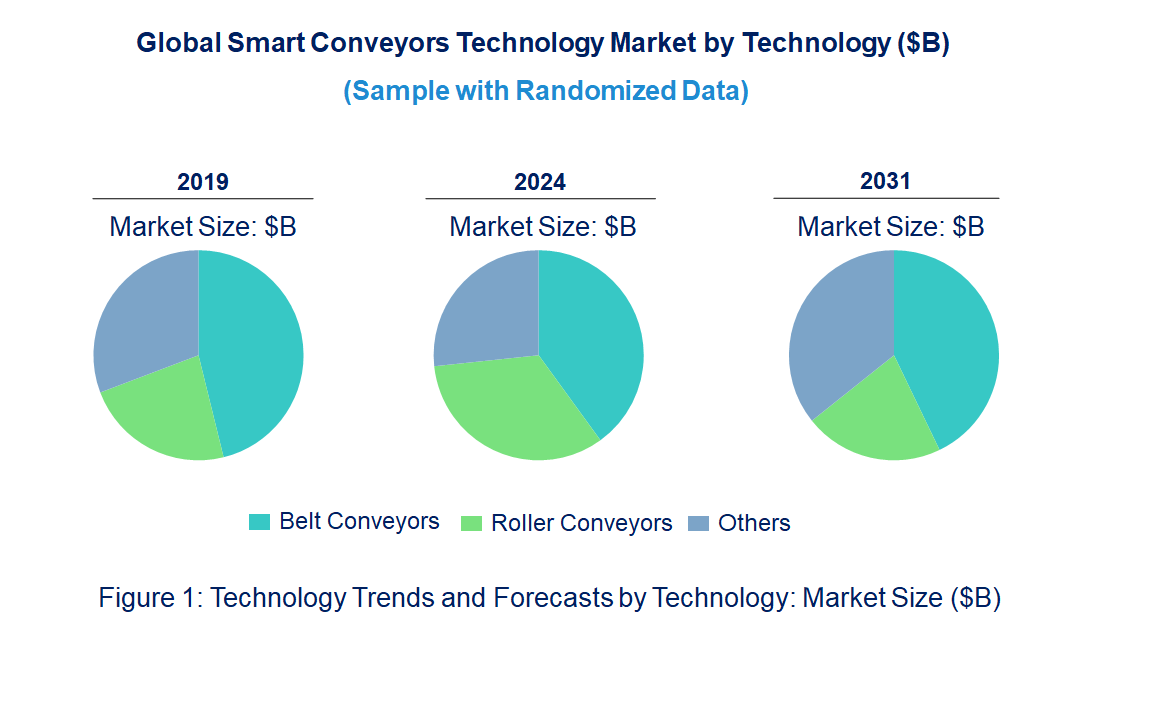
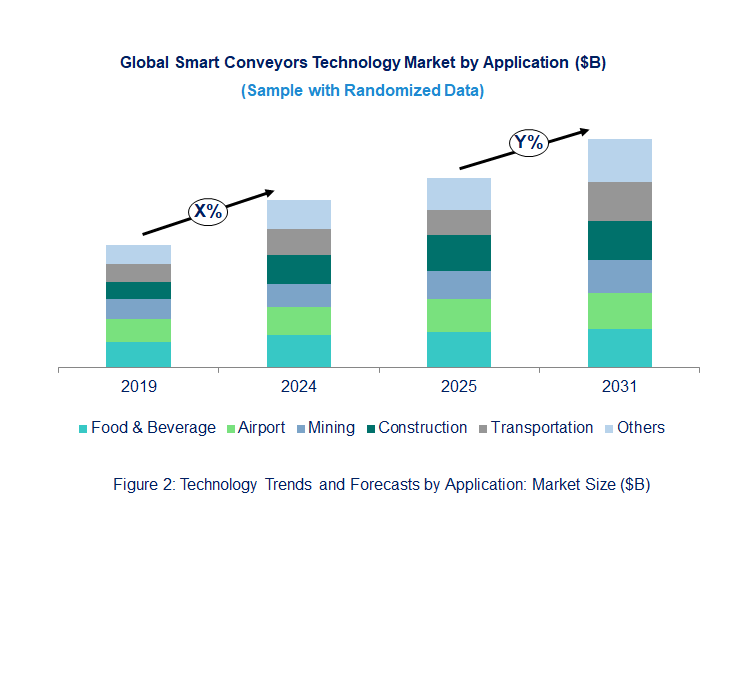
• IoT and AI in Conveyor Systems: IoT and AI technologies are changing conveyor systems with real-time monitoring, predictive maintenance, and automated decision-making. IoT sensors collect information on the performance of conveyors, and AI analyzes such data to predict failures, optimize workflows, and enhance system efficiency.
• Autonomous Conveyors Increased Adoption: With the industry trying to move towards more automation, there is increasing demand for autonomous conveyors. They use advanced robotics and AI in an application to move material with as much human input as possible being eliminated. This technology of autonomous conveyors proves useful for mining environments and applications with higher precision and speed.
• Modularity and flexibility through modular conveyor design: There is a move to modular conveyor designs. They facilitate easy alteration and extension of a business conveyor system to keep abreast of any changes in production. Modular designs provide greater versatility in the movement of varying items in the system. For this reason, food and beverage-related manufacturing units are adopting these designs in their conveyors.
• Energy-Efficient Conveyor Solutions: In recent times, with growing attention towards sustainability, energy efficiency is an important aspect in the design of smart conveyors. Energy-efficient motors, variable frequency drives, and regenerative braking systems are being integrated into conveyor designs to save energy, reduce operational costs, and support green initiatives within construction and transportation industries.
• Cloud-Based Conveyor Monitoring and Control Systems: Cloud technology enables remote monitoring and controlling of conveyor systems across multiple locations. The cloud-based platform allows businesses to monitor conveyor performance, manage scheduled maintenance, and make the necessary adjustments in real-time and therefore provide significant operational advantages-especially for large-scale operations such as airports or mining operations. These new trends of IoT and AI integration, autonomous conveyors, modular designs, energy efficiency, and cloud-based monitoring are transforming the smart conveyors market through improved automation, flexibility, and operational efficiency. These developments help industries achieve better performance, reduce costs, and adapt to changes in the operation.
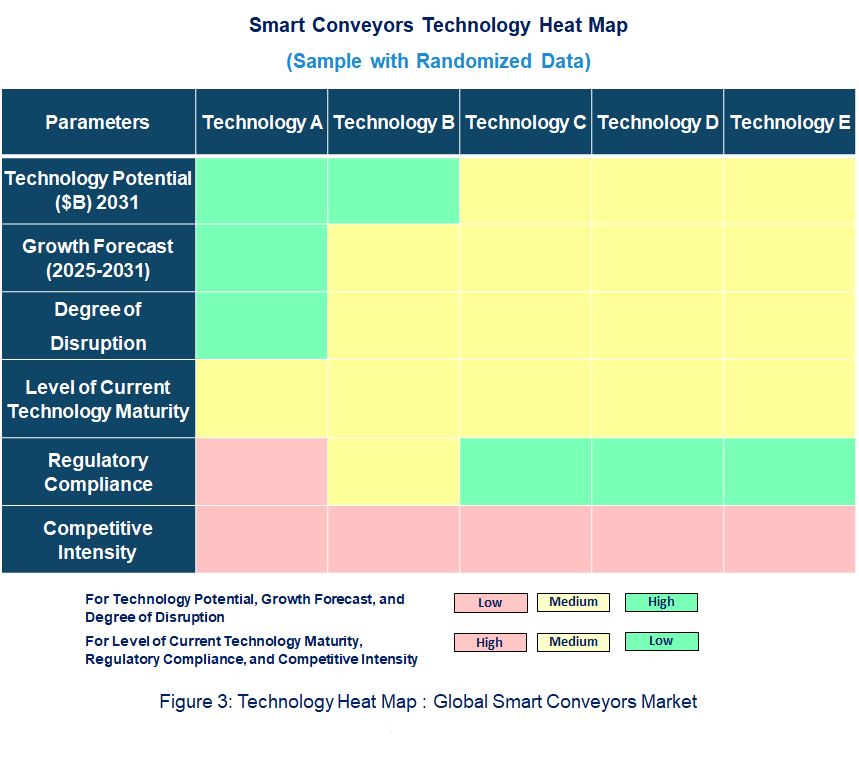
• Technology Potential: The potential of smart conveyor technology is immense, as it enables real-time monitoring, predictive maintenance, and adaptive systems that can adjust to varying production demands. With the integration of AI, machine learning, and robotics, these systems can autonomously manage workflows, improve energy efficiency, and reduce human intervention. Future innovations may include advanced robotics, automated sorting systems, and full integration with other smart factory technologies, enabling seamless end-to-end automation.
• Degree of Disruption: Smart conveyors represent a major disruption in traditional material handling by offering real-time data analytics, predictive maintenance, and increased flexibility. These systems optimize production schedules, improve operational efficiency, and can be easily adapted to changing business needs, transforming industries reliant on manual and static conveyor systems.
• Maturity Level of Currently Extant Technology: This technology is mature in the context of the automotive and logistics industries. Automated conveyor systems have been in place for decades. Still, continuous advancements in sensor technology, machine learning, and wireless communications also enhance capability continuously.
• Regulatory Compliance: Safety regulations, such as OSHA standards, must be followed in smart conveyors to ensure worker safety. Further, data privacy regulations, for example, GDPR, also need to be considered due to the collection and analysis of operation data by these systems.
• Dorner: Dorner has been an industry leader in the development of advanced modular conveyor systems. Dorner offers customized and flexible solutions to the industries such as food and beverage, pharmaceuticals, and manufacturing. Their Dorner 2200 Series comprises conveyors offering high precision, which provide reliability and flexibility in design, thereby adhering to the strict specifications of various product types of different industries.
• Smartmove: Smartmove has focused on creating ergonomic conveyor systems that use lightweight materials and energy-efficient motors. Their SmartMove conveyors are designed to reduce operator strain and improve throughput. The company has been expanding its offerings with conveyor systems that integrate IoT sensors for real-time monitoring and performance analysis.
• BE&E: BE&E has innovated with its automated conveyor solutions, especially in high-demand applications such as mining and airport baggage handling. Its systems are designed with AI-based predictive analytics tools that enable the foreseen needs of maintenance, reducing downtime and improving reliability, making its offerings very attractive to industries that need to be running continuously.
• Kengic Intelligent Technology: This company develops intelligent conveyors integrating robotics and AI to increase material handling efficiency. Their advanced solutions enable operations, and performance modifications in real time, which enhance the overall productivity in industries like food processing, packaging, and e-commerce.
• Damon: Damon is focusing on high-efficiency, energy-saving conveyors for the construction and automotive industries. Their use of variable frequency drives and energy-efficient motors allows businesses to reduce energy consumption while maintaining operational speed and efficiency, making them highly competitive in environmentally-conscious markets.
• Changheng Intelligent Technology: Changheng is famous for smart conveyor belts that integrate IoT and automation to make warehouse and logistics operations efficient. Their focus on developing cloud-connected solutions ensures real-time monitoring and predictive maintenance, thereby ensuring operational efficiency for industries like e-commerce and distribution.
• Hubei Guorui: Hubei Guorui specializes in intelligent conveyor solutions for heavy industries such as mining and logistics. They focus on developing conveyors with advanced AI-based control systems that enable precise material handling, reduce wear and tear, and extend the lifespan of the equipment. All these newer trends by leading industrial firms illustrate the ongoing development of intelligent conveyor systems along the lines of AI, IoT, and energy efficiency in the form of modular designs. Improvements in automation, sustainability, and reliability make such technologies place a firm foundation in the competitive sectors of the food and beverages, construction, and transport industries.
• Rising Demand for Automation in Manufacturing: The rising need for automation in the manufacturing industry increases the adoption of smart conveyors, which have led to significant developments in industries like the automotive and food & beverage. These systems ensure the automated movement of materials with greater throughput and less human error.
• Emphasis on Energy Efficiency and Sustainability: The focus of companies worldwide in achieving sustainability targets has raised the demand for energy-efficient conveyor systems. Solutions that conserve energy and aid green initiatives are now major drivers of growth, especially in construction and transportation activities.
• Key Drivers of the Market: This market is driven by the growing requirement to implement real-time monitoring and predictive maintenance due to advancements in IoT and AI technologies. Companies are increasingly adopting smart conveyor systems to reduce downtime, improve reliability, and lower costs on maintenance.
• New Modular and Customizable Systems: There is an increasing demand for modular conveyor systems that can be reconfigured to serve changing production needs. Modular systems have provided businesses in industries such as food processing and logistics with flexibility and adaptability in scaling up operations. Challenges in the smart conveyors market are:
• High Initial Cost of Smart Conveyor Systems: The high upfront investment to establish advanced, smart conveyor systems can be a significant barrier for SMEs. The integration of sensors, robotics, and AI technologies adds to the cost, and this may deter some companies from adopting these solutions.
• Integrate the smart conveyor with older existing infrastructure because the integration with current production lines could be cost and complex in nature. Several firms face issues when integrating new automation technology into their present structure.
• Data Security and Privacy Concerns: With the increasing integration of IoT and cloud-based solutions in smart conveyors, concerns about data security and privacy are rising. Companies need to ensure that their systems are secure from cyber threats and comply with industry regulations, which can add complexity to the adoption process. The smart conveyors market is driven by the need for automation, energy efficiency, and real-time monitoring, while challenges such as high initial costs, integration complexities, and data security concerns persist. Despite these challenges, the market is expanding as businesses seek to optimize material handling operations and enhance productivity.
• Dorner
• Smartmove
• BE&E
• Kengic Intelligent Technology
• Damon
• Changheng Intelligent Technology
• Disruption Potential of Different Technologies for Smart Conveyors Market: The disruption potential in the Smart Conveyors market is mainly driven by innovations such as AI and IoT integration. Belt conveyors remain flexible but are increasingly challenged by roller conveyors, which offer better load handling and energy efficiency. Technologies like pneumatic and modular conveyors with smart sensors for predictive maintenance are also gaining traction. These advancements improve efficiency, reduce downtime, and enable seamless integration with Industry 4.0 systems, reshaping sectors like manufacturing, logistics, and distribution.
• Competition Intensity and Regulatory Compliance of Various Technologies for Smart Conveyors Market: The competition in the Smart Conveyors market is high, and leaders have more concentration towards artificial intelligence, IoT, and automation in upgrading belt and roller conveyors. Roller conveyors are widely used nowadays due to their efficiency and flexibility in e-commerce and production. There is a basic need for regulatory compliance, primarily in food and pharma, where safety and hygiene standards are prominent. Conveyor systems need to adapt to standards at ISO, OSHA, and environmental levels while being innovative yet as complacent to maintain competitiveness.
• Technology Readiness by Technology Type for Smart Conveyors Market: Belt conveyors are mature with improvements in automation and energy efficiency, and the roller conveyor is more adaptive and combines smart technologies. Emerging systems like modular conveyors and AGVs are promising and just initiated in the early adoption phase. In heavy duty, roller conveyors are best suited, and in a flexible, dynamic environment, modular conveyors are highly effective. Competitive levels vary, with roller conveyors being more suitable for smart applications, and regulatory compliance, especially in energy consumption and safety, is crucial across all types.
• Belt Conveyors
• Roller Conveyors
• Others
• Food & Beverage
• Airport
• Mining
• Construction
• Transportation
• Others
• North America
• Europe
• Asia Pacific
• The Rest of the World
• Latest Developments and Innovations in the Smart Conveyors Technologies
• Companies / Ecosystems
• Strategic Opportunities by Technology Type


Choose a license that fits your team. Instant PDF delivery.
Prices exclude taxes. Instant delivery. Custom licensing available on request.
Market Report · May 18, 2026
Market Report · May 18, 2026
Market Report · May 18, 2026
Trusted partner for strategic intelligence and business growth


Receive a complimentary market analysis tailored to your industry. Our analysts will identify key growth opportunities and competitive dynamics specific to your business.

Market size, growth rate, and key trend analysis for your specific sector.

Top competitor positioning and market share analysis.

Strategic recommendations backed by data-driven insights.
Get curated market intelligence and competitive moves straight to your inbox.
By subscribing, you agree to receive our monthly insights. Unsubscribe anytime.
Receive a complimentary market analysis tailored to your industry. Our analysts will identify key growth opportunities and competitive dynamics specific to your business.
Market size, growth rate, and key trend analysis for your specific sector.
Top competitor positioning and market share analysis.
Strategic recommendations backed by data-driven insights.
Get curated market intelligence, emerging trends, and competitive moves straight to your inbox each month.
By subscribing, you agree to receive our monthly insights. Unsubscribe anytime.
We'll send your sample report shortly.