
Market Report · July 31, 2026

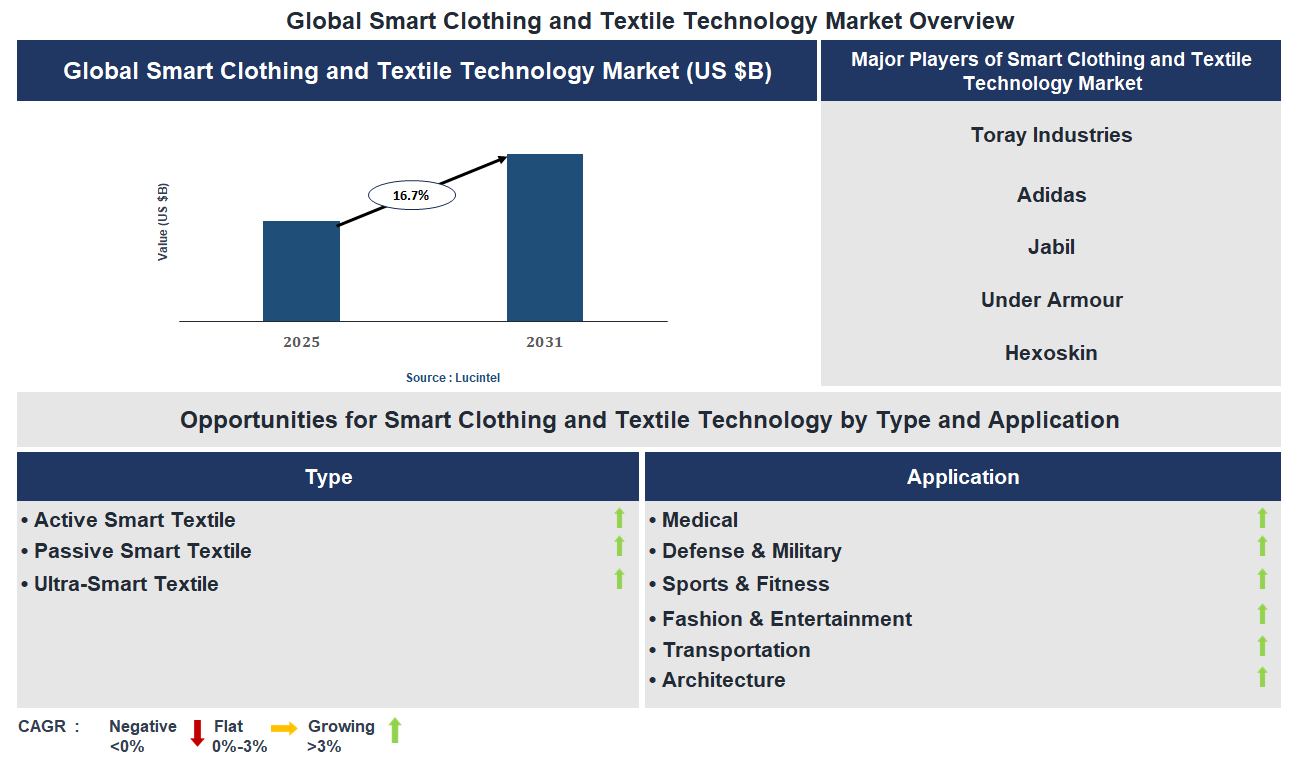
Key data points: The growth forecast = 16.7% annually for the next 7 years. Scroll below to get more insights. This market report covers trends, opportunities and forecasts in smart clothing and textile technology market to 2031 by type (active smart textile, passive smart textile, and ultra-smart textile), application (medical, defense & military, sports & fitness, fashion & entertainment, transportation, and architecture), and region (North America, Europe, Asia Pacific, and the Rest of the World)
We'll send your sample report shortly.
• Lucintel forecasts that, within the type category, ultra-smart textile is expected to witness the highest growth over the forecast period.
• Within the application category, sport & fitness is expected to witness the highest growth.
• In terms of region, APAC is expected to witness the highest growth over the forecast period. Gain valuable insights for your business decisions with our comprehensive 150+ page report. Sample figures with some insights are shown below.
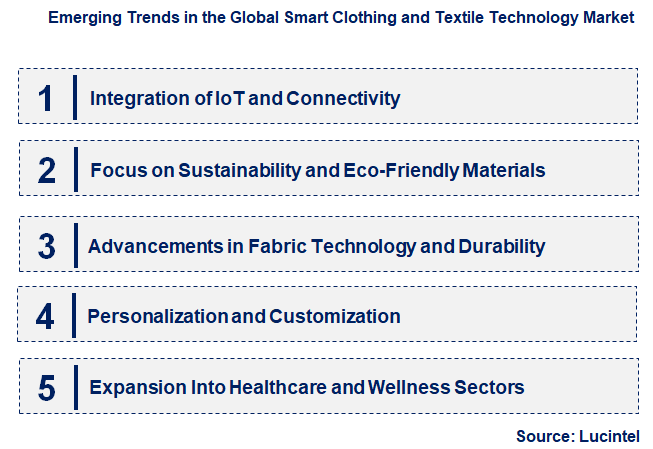
• Integration of IoT and Connectivity: The incorporation of Internet of Things (IoT) technology into textiles is enabling garments to connect seamlessly with smartphones and other devices. This trend enhances user experience by providing real-time data on health, activity, and environmental conditions. It also facilitates remote monitoring and personalized feedback, making clothing more functional and interactive. As connectivity becomes more reliable and affordable, smart clothing is expected to become an integral part of daily life, especially in healthcare, fitness, and sports sectors.
• Focus on Sustainability and Eco-Friendly Materials: Consumers and regulators are increasingly demanding sustainable products, prompting manufacturers to develop eco-friendly smart textiles. Innovations include biodegradable fibers, recycled materials, and energy-efficient production processes. These sustainable textiles reduce environmental impact while maintaining high performance. The trend is driving research into new materials and manufacturing techniques, aligning smart clothing with global sustainability goals. This shift not only appeals to environmentally conscious consumers but also helps brands meet regulatory standards and improve their corporate social responsibility profiles.
• Advancements in Fabric Technology and Durability: Continuous improvements in fabric technology are making smart textiles more durable, flexible, and comfortable. Innovations such as washable electronics, stretchable sensors, and lightweight components are expanding the usability of smart clothing. These advancements ensure that garments can withstand regular wear and washing without losing functionality, which is crucial for consumer adoption. Enhanced durability also reduces replacement costs and waste, supporting sustainable consumption. As fabric technology advances, smart clothing will become more versatile, appealing to a broader consumer base seeking reliable, long-lasting wearable tech.
• Personalization and Customization: The market is witnessing a shift towards highly personalized smart clothing tailored to individual needs and preferences. Using data analytics and AI, manufacturers can create customized designs that optimize comfort, performance, and aesthetics. This trend enhances user engagement and satisfaction by offering products that adapt to specific health metrics, activity levels, or style preferences. Personalization also enables brands to differentiate themselves in a competitive market, fostering brand loyalty. As technology enables more precise customization, consumers will increasingly expect smart clothing that reflects their unique lifestyles and requirements.
• Expansion into Healthcare and Wellness Sectors: Smart textiles are increasingly being integrated into healthcare and wellness applications, such as remote patient monitoring, rehabilitation, and fitness tracking. These textiles can monitor vital signs, detect early health issues, and provide real-time feedback to users and healthcare providers. The integration of sensors and data analytics is making healthcare more proactive and personalized. This expansion is driven by aging populations, rising healthcare costs, and the demand for non-invasive health monitoring solutions. As a result, the market is witnessing significant growth opportunities, with smart clothing becoming a vital tool in preventive healthcare and wellness management. In summary, these emerging trends are fundamentally reshaping the smart clothing and textile technology market by enhancing functionality, sustainability, durability, personalization, and healthcare integration. They are driving innovation, expanding application areas, and creating new value propositions for consumers and industry players. As these trends continue to evolve, the market is poised for substantial growth and transformation, making smart textiles an integral part of everyday life.
• Integration of Wearable Technology: The incorporation of sensors and electronics into textiles has advanced significantly, enabling real-time health monitoring, fitness tracking, and enhanced user interaction. This development has expanded the functionality of smart clothing, making it more appealing for sports, healthcare, and everyday use. It has also driven demand among consumers seeking seamless, connected experiences, thereby boosting market growth and encouraging new product launches.
• Sustainable and Eco-Friendly Smart Textiles: Companies are focusing on developing sustainable smart fabrics using biodegradable, recycled, and eco-friendly materials. Innovations include energy-harvesting textiles and washable, durable smart fibers that reduce environmental impact. This shift towards sustainability not only aligns with global environmental goals but also appeals to eco-conscious consumers, fostering market expansion and encouraging regulatory support for greener solutions.
• Advancements in Textile Manufacturing Processes: New manufacturing techniques such as 3D knitting, digital printing, and nanotechnology are enabling the production of more complex, lightweight, and durable smart textiles. These innovations improve product performance and reduce production costs, making smart clothing more accessible and affordable. Enhanced manufacturing efficiency is also facilitating rapid product development cycles, thus accelerating market penetration.
• Expansion of Application Areas: The market is witnessing diversification into sectors like healthcare, military, sports, fashion, and entertainment. For example, smart textiles are used for remote patient monitoring, military uniforms with integrated communication systems, and interactive fashion. This broadening of applications is creating new revenue streams, increasing market size, and encouraging cross-industry collaborations.
• Growing Consumer Awareness and Adoption: Increased awareness of health, safety, and convenience benefits has led to higher consumer adoption of smart clothing. Marketing campaigns, product innovations, and endorsements have contributed to mainstream acceptance. As consumers become more familiar with the advantages of smart textiles, demand continues to rise, driving further innovation and market expansion. In summary, these developments are transforming the smart clothing and textile technology market by enhancing product functionality, sustainability, manufacturing efficiency, and application diversity. The market is experiencing accelerated growth, driven by technological innovation and increasing consumer acceptance, positioning it for sustained expansion in the coming years.
• Improved patient monitoring and personalized care: Smart textiles enable continuous health monitoring, such as heart rate, temperature, and hydration levels, facilitating early diagnosis and personalized treatment plans. This application enhances patient comfort and reduces hospital stays, driving demand in medical and wellness sectors.
• Enhanced performance tracking and injury prevention: Wearable smart clothing provides athletes with real-time data on biomechanics, muscle activity, and hydration, improving training efficiency. This application boosts sports performance, reduces injury risks, and appeals to fitness enthusiasts seeking advanced tracking solutions.
• Advanced tactical gear and soldier safety: Smart textiles are used in military uniforms for real-time communication, environmental sensing, and protection against chemical or biological threats. These innovations improve soldier safety, operational efficiency, and situational awareness in challenging environments.
• Interactive and customizable apparel: The integration of smart textiles into fashion allows for dynamic designs, color-changing fabrics, and embedded displays. This creates personalized, interactive clothing that appeals to tech-savvy consumers and enhances brand differentiation.
• Enhanced safety and productivity: Smart textiles in industrial settings offer features like temperature regulation, impact resistance, and location tracking. These applications improve worker safety, comfort, and operational efficiency in hazardous environments. In summary, these growth opportunities are significantly impacting the smart clothing and textile technology market by expanding its application scope, fostering innovation, and meeting diverse consumer and industry needs. As these applications mature, they are driving market expansion, attracting investments, and setting new standards for wearable technology integration across sectors.
• Technological Innovation: The continuous development of advanced sensors, fabrics, and connectivity solutions enhances the functionality and appeal of smart textiles. Innovations like flexible electronics, nanotechnology, and embedded sensors enable real-time health monitoring, fitness tracking, and interactive clothing, attracting consumers and industries alike. These technological breakthroughs are expanding application areas from sportswear to medical textiles, fostering market expansion and encouraging investment in R&D.
• Rising Health and Wellness Awareness: Increasing consumer focus on health, fitness, and personalized wellness solutions drives demand for smart clothing that offers real-time health monitoring, activity tracking, and biometric data collection. Wearable textiles integrated with sensors help users manage their health proactively, especially in the context of the COVID-19 pandemic, which heightened awareness around health monitoring. This trend boosts adoption across sports, healthcare, and everyday apparel sectors, fueling market growth.
• Growing Adoption in Sports and Fitness Industries: The sports and fitness sectors are rapidly adopting smart textiles for performance enhancement, injury prevention, and recovery. Athletes and fitness enthusiasts seek apparel embedded with sensors to monitor vital signs, muscle activity, and hydration levels. This integration improves athletic performance and provides valuable data for training optimization. The increasing popularity of smart sportswear is a significant driver, encouraging manufacturers to innovate and expand their product lines.
• Technological Integration with IoT and AI: The integration of Internet of Things (IoT) and Artificial Intelligence (AI) with smart textiles enables advanced functionalities such as predictive maintenance, personalized user experiences, and seamless connectivity. These technologies facilitate data collection, analysis, and real-time feedback, making smart clothing more intelligent and user-centric. The proliferation of IoT devices and AI-driven analytics is creating new opportunities for market players to develop innovative products and services, thereby accelerating market growth.
• Supportive Regulatory Environment and Government Initiatives: Governments worldwide are promoting the adoption of wearable and smart textile technologies through funding, grants, and regulatory frameworks. Policies aimed at fostering innovation, ensuring safety standards, and encouraging sustainable practices are creating a conducive environment for market expansion. Such initiatives reduce barriers for manufacturers and boost consumer confidence, further propelling the growth of the smart clothing and textile industry. The challenges facing this smart clothing and textile technology market include:-
• High Production and Development Costs: Developing smart textiles involves advanced materials, sophisticated sensors, and complex manufacturing processes, leading to high costs. These expenses can hinder mass production and make products less affordable for consumers. Additionally, ongoing R&D investments are necessary to improve durability, washability, and comfort, further increasing costs. This financial barrier limits market penetration, especially in price-sensitive segments, and may slow overall growth.
• Data Privacy and Security Concerns: Smart clothing collects sensitive biometric and personal data, raising significant privacy issues. Consumers and regulatory bodies are increasingly concerned about data security, potential misuse, and breaches. Ensuring robust cybersecurity measures and compliance with data protection laws is challenging and costly. Failure to address these concerns can lead to consumer mistrust, legal repercussions, and hinder market adoption, especially in healthcare and personal wellness sectors.
• Regulatory and Standardization Challenges: The lack of uniform standards and clear regulations for smart textiles creates uncertainty for manufacturers and consumers. Variations in safety, quality, and data handling standards across regions complicate product development and market entry. Regulatory delays and ambiguities can slow innovation, increase compliance costs, and restrict international trade. Addressing these issues requires collaborative efforts among industry stakeholders and policymakers to establish comprehensive standards. In summary, the smart clothing and textile technology market is driven by rapid technological advancements, increasing health consciousness, and supportive policies, which collectively foster growth and innovation. However, high costs, data privacy issues, and regulatory uncertainties pose significant challenges that could impede market expansion. Balancing innovation with regulatory compliance and cost management will be crucial for sustained growth. Overall, the market holds substantial potential, provided stakeholders effectively navigate these drivers and challenges to capitalize on emerging opportunities.
• Toray Industries
• Adidas
• Jabil
• Under Armour
• Hexoskin
• Myant
• Outlast Technologies
• Xenoma
• NyokasTechnologies
• Sensoria
• Active Smart Textile
• Passive Smart Textile
• Ultra-Smart Textile
• Medical
• Defense & Military
• Sports & Fitness
• Fashion & Entertainment
• Transportation
• Architecture
• North America
• Europe
• Asia Pacific
• The Rest of the World
• United States: The US leads in smart textile innovation with significant investments from tech giants and startups. Advances include wearable health monitoring devices, smart athletic wear, and integration with IoT platforms. Companies focus on sustainability and user comfort, driving product development and commercialization. The government also supports research initiatives, fostering a competitive environment for new technologies.
• China: China is rapidly expanding its smart textile industry through government policies and large-scale manufacturing capabilities. Key developments include affordable smart clothing, integration of AI and big data for personalized experiences, and the adoption of eco-friendly materials. The country emphasizes mass production and export, positioning itself as a global leader in affordable smart textiles.
• Germany: Germanys focus is on high-quality, durable smart textiles for industrial and medical applications. Innovations include smart fabrics embedded with sensors for health monitoring, protective clothing, and wearable technology for professional use. The country emphasizes research collaborations between academia and industry, ensuring technological excellence and compliance with strict safety standards.
• India: India is witnessing growing interest in affordable smart textiles, especially in healthcare and sports sectors. Developments include low-cost wearable health devices, moisture-wicking fabrics, and sustainable materials. The market is driven by increasing awareness of health and fitness, along with government initiatives promoting textile innovation and manufacturing capabilities.
• Japan: Japan is known for its advanced research in smart textiles, focusing on robotics integration, sensory fabrics, and energy-harvesting textiles. Innovations include clothing with embedded sensors for elderly care, smart uniforms for military and industrial use, and textiles that adapt to environmental conditions. The country emphasizes technological sophistication and integration with robotics and AI.


• Toray Industries
• Adidas
• Jabil
• Under Armour
• Hexoskin
• Myant
• Outlast Technologies
• Xenoma
• NyokasTechnologies
• Sensoria Q5. Which smart clothing and textile technology market segment will be the largest in future? Answer: Lucintel forecasts that, within the type category, ultra-smart textile is expected to witness the highest growth over the forecast period. Q6. In smart clothing and textile technology market, which region is expected to be the largest in next 5 years? Answer: In terms of region, APAC is expected to witness the highest growth over the forecast period. Q7. Do we receive customization in this report? Answer: Yes, Lucintel provides 10% customization without any additional cost.


Choose a license that fits your team. Instant PDF delivery.
Prices exclude taxes. Instant delivery. Custom licensing available on request.
Market Report · July 31, 2026
Market Report · July 31, 2026
Market Report · July 31, 2026
Trusted partner for strategic intelligence and business growth


Receive a complimentary market analysis tailored to your industry. Our analysts will identify key growth opportunities and competitive dynamics specific to your business.

Market size, growth rate, and key trend analysis for your specific sector.

Top competitor positioning and market share analysis.

Strategic recommendations backed by data-driven insights.
Get curated market intelligence and competitive moves straight to your inbox.
By subscribing, you agree to receive our monthly insights. Unsubscribe anytime.
Receive a complimentary market analysis tailored to your industry. Our analysts will identify key growth opportunities and competitive dynamics specific to your business.
Market size, growth rate, and key trend analysis for your specific sector.
Top competitor positioning and market share analysis.
Strategic recommendations backed by data-driven insights.
Get curated market intelligence, emerging trends, and competitive moves straight to your inbox each month.
By subscribing, you agree to receive our monthly insights. Unsubscribe anytime.
We'll send your sample report shortly.