
Market Report · July 31, 2026

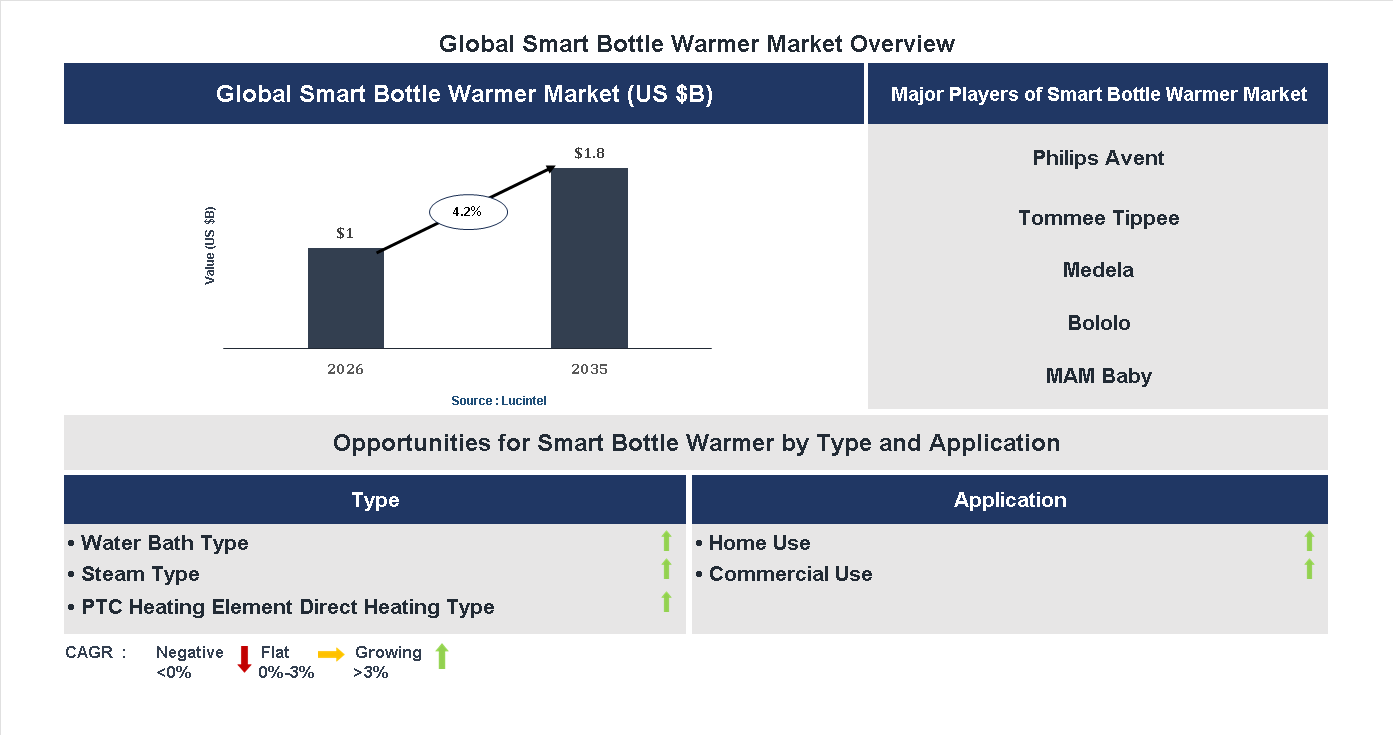
Key data points: The market size in 2035 = $1.8 billion, growth forecast = 4.2% annually for the next 8 years. Scroll below to get more insights. This market report covers trends, opportunities and forecasts in smart bottle warmer market to 2035 by type (water bath type, steam type, and PTC heating element direct heating type), application (home use and commercial use), and region (North America, Europe, Asia Pacific, and the Rest of the World)
We'll send your sample report shortly.
• Lucintel forecasts that, within the type category, PTC heating element direct heating type is expected to witness the highest growth over the forecast period.
• Within the application category, home use is expected to witness higher growth.
• In terms of region, APAC is expected to witness the highest growth over the forecast period. Gain valuable insights for your business decisions with our comprehensive 150+ page report. Sample figures with some insights are shown below.
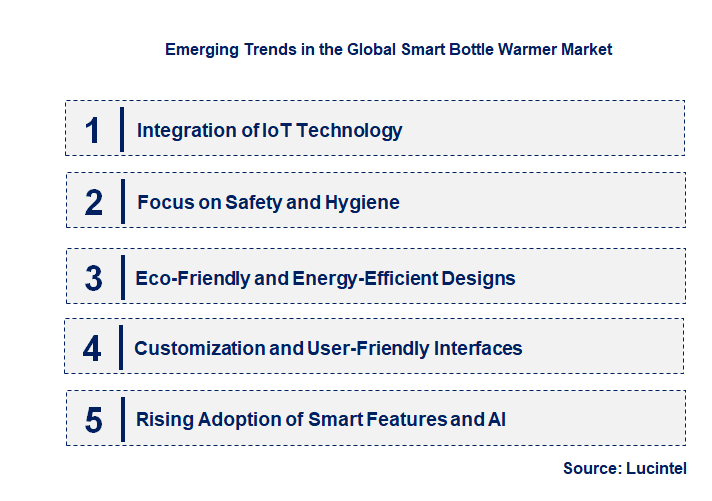
• Integration of IoT Technology: The adoption of Internet of Things (IoT) features allows users to control and monitor bottle warming remotely via smartphones. This connectivity provides real-time temperature adjustments, alerts, and usage tracking, enhancing convenience and safety. IoT integration also enables data collection for personalized feeding routines and maintenance alerts, making the device smarter and more user-friendly. As consumers increasingly seek connected devices, this trend is expected to drive market growth and innovation, positioning smart bottle warmers as essential infant care tools.
• Focus on Safety and Hygiene: Manufacturers are prioritizing safety features such as automatic shut-off, temperature regulation, and sterilization options to prevent overheating and bacterial contamination. Advanced materials and antimicrobial coatings are being incorporated to ensure hygiene. These safety enhancements address parental concerns about infant health, building trust and brand loyalty. The emphasis on safety standards is also influencing regulatory frameworks, encouraging companies to innovate and differentiate their products in a competitive market.
• Eco-Friendly and Energy-Efficient Designs: Sustainability is becoming a key consideration, with companies developing energy-efficient warmers that consume less power and utilize eco-friendly materials. Features like automatic power-off after use and recyclable components appeal to environmentally conscious consumers. These eco-friendly designs not only reduce environmental impact but also lower operating costs for users, making them attractive in a market increasingly driven by sustainability values. This trend aligns with broader environmental initiatives and consumer preferences for green products.
• Customization and User-Friendly Interfaces: The market is witnessing a shift towards customizable settings, intuitive controls, and user-friendly interfaces. Touchscreens, voice commands, and preset modes allow parents to personalize warming routines easily. Simplified operation reduces user errors and enhances overall experience. Customization options cater to diverse needs, such as different bottle sizes and temperature preferences, making devices more versatile. This trend improves customer satisfaction and differentiates products in a competitive landscape, fostering brand loyalty and repeat purchases.
• Rising Adoption of Smart Features and AI: Advanced features like AI-powered temperature regulation, predictive maintenance, and personalized feeding schedules are emerging. These smart features improve accuracy, efficiency, and convenience, reducing parental effort and stress. AI integration also enables learning user habits over time, optimizing device performance. As artificial intelligence becomes more accessible, its incorporation into bottle warmers is expected to revolutionize infant feeding routines, making devices more intelligent and responsive. This trend signifies a move towards highly sophisticated, connected infant care solutions. These trends are collectively transforming the smart bottle warmer market by making devices more intelligent, safe, eco-friendly, and user-centric. The integration of IoT, focus on safety, sustainability, customization, and AI-driven features are reshaping how parents care for their infants, leading to innovative products that meet evolving consumer expectations and regulatory standards. This evolution is poised to drive significant market growth and competitive differentiation in the coming years.
• Growing Adoption of IoT-Enabled Devices: The integration of Internet of Things (IoT) technology in smart bottle warmers allows remote control and real-time temperature monitoring. This connectivity enhances user convenience, safety, and customization, making devices more appealing to tech-savvy parents. As IoT adoption accelerates, manufacturers are developing smarter, more efficient warmers that can be controlled via smartphones, leading to increased sales and market penetration.
• Advances in Temperature Regulation Technology: Precise temperature control is critical for baby safety and nutrition. Recent developments include smart sensors and algorithms that automatically adjust warming levels to prevent overheating or underheating. These innovations improve product reliability and safety, fostering consumer trust. Enhanced temperature regulation technology also enables personalized warming profiles, catering to individual baby needs, thus expanding market opportunities for premium products.
• Rising Demand for Eco-Friendly and Energy-Efficient Products: Consumers are increasingly prioritizing sustainability, prompting manufacturers to develop eco-friendly smart bottle warmers. Features such as energy-saving modes, biodegradable materials, and low power consumption are gaining popularity. These environmentally conscious innovations not only reduce carbon footprints but also appeal to a broader customer base, driving market growth and encouraging brands to adopt sustainable practices.
• Expansion of E-Commerce and Direct-to-Consumer Sales: The proliferation of online retail channels has made smart bottle warmers more accessible globally. E-commerce platforms facilitate direct engagement with consumers, offering detailed product information, reviews, and customization options. This shift enables brands to reach wider audiences, reduce distribution costs, and gather valuable consumer insights, thereby accelerating market growth and fostering innovation in product design and marketing strategies.
• Integration of AI and Machine Learning for Personalized Warming: Artificial Intelligence (AI) and machine learning are being incorporated into smart bottle warmers to analyze user preferences and optimize warming processes. These technologies enable devices to learn from usage patterns, automatically adjust settings, and provide personalized recommendations. Such advancements improve user experience, safety, and efficiency, positioning AI-powered warmers as premium offerings and opening new avenues for market expansion and technological leadership. These developments are significantly transforming the smart bottle warmer market by enhancing product functionality, safety, and sustainability. The integration of IoT, AI, and eco-friendly features is driving consumer interest and expanding market reach. As technological innovations continue, the market is poised for sustained growth, with brands competing to deliver smarter, safer, and more sustainable solutions for modern parents worldwide.
• Integration of IoT Technology in Smart Bottle Warmers: Incorporating IoT connectivity allows remote control, real-time temperature monitoring, and usage analytics, enhancing user convenience and safety. This technology enables parents to manage feeding schedules via smartphone apps, ensuring optimal feeding conditions. IoT integration also facilitates data collection for health tracking and product maintenance, creating opportunities for personalized infant care solutions and predictive servicing, thereby increasing product value and consumer trust.
• Expansion of Smart Bottle Warmers in Healthcare and Hospitals: Hospitals and neonatal units require reliable, hygienic, and efficient warming solutions. Smart bottle warmers with advanced safety features, temperature regulation, and sterilization capabilities are increasingly adopted in clinical settings. These devices improve infant feeding protocols, reduce contamination risks, and streamline workflow for healthcare providers. Growing demand for such specialized warmers presents opportunities for market expansion, especially in neonatal intensive care units (NICUs) and pediatric wards.
• Development of Eco-Friendly and Energy-Efficient Smart Warmers: Consumers and institutions are prioritizing sustainability, prompting innovation in eco-friendly materials and energy-efficient designs. Solar-powered or low-energy smart warmers reduce environmental impact and operational costs. Incorporating biodegradable components and energy-saving modes appeals to environmentally conscious buyers. This segment offers growth potential by aligning product development with global sustainability goals, attracting eco-aware consumers and healthcare providers seeking green solutions.
• Introduction of Multi-Functional and Customizable Smart Bottle Warmers: Versatile warmers that support multiple bottle sizes, types, and feeding modes cater to diverse consumer needs. Customizable features such as adjustable temperature settings, timers, and safety alerts enhance user experience. Multi-functional devices that combine warming, sterilization, and storage functions provide added convenience. This approach broadens market appeal, especially among busy parents and caregivers seeking comprehensive infant feeding solutions, fostering brand loyalty and competitive differentiation.
• Increasing Adoption of Smart Bottle Warmers in E-Commerce and Retail Channels: Online platforms facilitate wider reach and direct consumer engagement. E-commerce enables detailed product information, reviews, and competitive pricing, accelerating adoption. Retail partnerships and specialty baby stores expand physical availability, boosting sales. Digital marketing strategies, including targeted advertising and virtual demonstrations, enhance consumer awareness. The growth of online sales channels offers significant opportunities for market penetration, especially in emerging markets where digital shopping is rapidly expanding. The overall market outlook is positively influenced by these growth opportunities, promising innovation, increased adoption, and expanded applications. Companies that leverage technological advancements, sustainability, and multi-functionality will be well-positioned to capitalize on the evolving needs of parents, healthcare providers, and retailers. This dynamic environment fosters competitive differentiation and long-term growth potential across the smart bottle warmer industry.
• Technological Innovation: The integration of IoT and smart features in bottle warmers enhances user convenience and safety. Features like remote temperature control, automatic shut-off, and app connectivity improve user experience and differentiate products in a competitive market. Continuous technological advancements enable manufacturers to develop more efficient, user-friendly, and energy-efficient warmers, fueling market growth. As consumers increasingly seek smart home solutions, the adoption of connected bottle warmers is expected to rise, further expanding the market.
• Rising Awareness of Infant Safety and Health: Parents are becoming more conscious of infant health and safety, leading to increased demand for reliable and safe feeding solutions. Smart bottle warmers that ensure precise temperature control and prevent overheating are preferred, reducing risks of burns or nutritional loss. Educational campaigns and pediatric recommendations reinforce this trend, encouraging parents to invest in advanced warming devices. This heightened awareness directly influences purchasing decisions, driving market growth as consumers prioritize safety and quality.
• Urbanization and Rising Disposable Incomes: Rapid urbanization and increasing disposable incomes, especially in emerging economies, are expanding the customer base for smart bottle warmers. Urban dwellers tend to prefer modern, convenient, and technologically advanced baby care products. Higher income levels enable consumers to afford premium, feature-rich warmers, boosting sales. Additionally, urban lifestyles demand time-saving solutions, making smart warmers an attractive choice for busy parents seeking efficiency and reliability in infant care.
• Product Innovation and Differentiation: Manufacturers are investing in R&D to develop innovative features such as rapid warming, portable designs, and compatibility with various bottle sizes. These innovations help brands differentiate themselves in a competitive market, attracting more consumers. Customizable and eco-friendly options are also gaining popularity, aligning with consumer preferences for sustainability. Continuous product innovation sustains consumer interest and encourages brand loyalty, thereby supporting market expansion.
• Growing E-commerce Penetration: The proliferation of online retail channels facilitates easy access to a wide range of smart bottle warmers. E-commerce platforms offer detailed product information, customer reviews, and competitive pricing, influencing purchasing decisions. The convenience of home delivery and the availability of exclusive online offers further boost sales. As digital penetration increases globally, especially in developing regions, e-commerce becomes a vital distribution channel, significantly contributing to market growth. The challenges facing the smart bottle warmer market are:
• High Product Costs: Advanced smart bottle warmers often involve sophisticated technology, increasing manufacturing costs. These higher prices can deter price-sensitive consumers, especially in emerging markets. Additionally, premium pricing may limit mass-market adoption, restricting growth potential. Balancing technological features with affordability remains a key challenge for manufacturers aiming to expand their customer base without compromising quality.
• Regulatory and Safety Standards: The infant care product market is heavily regulated to ensure safety and quality. Navigating diverse regulatory frameworks across regions can be complex and costly. Compliance with safety standards, certifications, and testing procedures may delay product launches and increase expenses. Non-compliance risks product recalls, legal penalties, and damage to brand reputation, making regulatory adherence a critical challenge for market players.
• Technological Adoption Barriers: Despite the benefits, some consumers, particularly in less developed regions, may be hesitant to adopt smart technology due to lack of awareness or technological literacy. Concerns about data privacy and security also hinder acceptance. Overcoming these barriers requires extensive consumer education and trust-building initiatives. Additionally, integrating new technology into existing product lines without compromising reliability poses technical challenges for manufacturers. The smart bottle warmer market is driven by technological advancements, safety awareness, urbanization, product innovation, and e-commerce growth. However, high costs, regulatory hurdles, and adoption barriers present significant challenges. These factors collectively influence market dynamics, requiring stakeholders to innovate strategically, ensure compliance, and educate consumers. Successfully navigating these drivers and challenges will determine the market’s future growth trajectory, with opportunities for expansion in both developed and emerging regions.
• Philips Avent
• Tommee Tippee
• Medela
• Bololo
• MAM Baby
• QuarkBaby
• Baby Brezza
• Dr. Browns Medical
• INTUITNO Home
• Midea
• Water Bath Type
• Steam Type
• PTC Heating Element Direct Heating Type
• Home Use
• Commercial Use
• North America
• Europe
• Asia Pacific
• The Rest of the World
• United States: The US market has seen rapid adoption of smart bottle warmers, driven by technological innovation and high disposable incomes. Major companies are launching products with app connectivity, temperature control, and safety features. The focus is on user convenience and safety, with increasing online sales channels and partnerships with pediatric brands. Regulatory standards are also influencing product development, ensuring safety and quality. The market is characterized by a high level of competition and consumer awareness, leading to continuous product upgrades and feature enhancements.
• China: Chinas market is expanding quickly due to rising urbanization and increasing disposable income among young parents. Local brands are innovating with affordable, feature-rich smart warmers tailored to local preferences. E-commerce platforms like Alibaba and JD.com facilitate rapid distribution and consumer access. The government’s support for smart health devices and growing awareness of baby safety are further propelling growth. Additionally, integration with popular Chinese social media and app ecosystems enhances user engagement. The market is also witnessing collaborations between domestic firms and international technology providers to improve product offerings.
• Germany: The German market emphasizes safety, quality, and eco-friendliness, aligning with strict EU regulations. Consumers prefer durable, energy-efficient smart warmers with advanced safety features. Brands are focusing on sustainable materials and minimal environmental impact. The market is driven by health-conscious parents seeking reliable and innovative solutions. Retail channels include specialty baby stores and online platforms, with a focus on premium products. Technological integration, such as app control and temperature monitoring, is gaining popularity. Overall, the market reflects a balance of innovation and sustainability, with a strong emphasis on product safety.
• India: The Indian market is witnessing rapid growth due to increasing awareness of modern baby care products and rising disposable incomes. Local manufacturers are offering affordable smart bottle warmers with essential features like temperature control and safety alerts. E-commerce platforms like Amazon India and Flipkart are key distribution channels, making products accessible to a broad demographic. The market is also influenced by rising urbanization and changing parental lifestyles. Innovations are focused on affordability, portability, and ease of use. Government initiatives promoting health and safety standards are encouraging product quality improvements, fostering market confidence.
• Japan: Japans market is characterized by high consumer demand for technologically advanced and safe baby care products. Japanese brands are integrating smart features such as app connectivity, precise temperature regulation, and energy efficiency. The focus is on safety, reliability, and minimal environmental impact. The market benefits from a mature retail infrastructure, including specialty stores and online channels. Consumer preferences lean towards compact, stylish, and eco-friendly designs. Continuous innovation and adherence to strict safety standards are driving product development. The market remains competitive, with a strong emphasis on quality, safety, and technological sophistication.


• Philips Avent
• Tommee Tippee
• Medela
• Bololo
• MAM Baby
• QuarkBaby
• Baby Brezza
• Dr. Browns Medical
• INTUITNO Home
• Midea Q6. Which smart bottle warmer market segment will be the largest in future? Answer: Lucintel forecasts that, within the type category, PTC heating element direct heating type is expected to witness the highest growth over the forecast period. Q7. In smart bottle warmer market, which region is expected to be the largest in next 5 years? Answer: In terms of region, APAC is expected to witness the highest growth over the forecast period. Q8. Do we receive customization in this report? Answer: Yes, Lucintel provides 10% customization without any additional cost.


Choose a license that fits your team. Instant PDF delivery.
Prices exclude taxes. Instant delivery. Custom licensing available on request.
Market Report · July 31, 2026
Market Report · July 31, 2026
Market Report · July 31, 2026
Trusted partner for strategic intelligence and business growth


Receive a complimentary market analysis tailored to your industry. Our analysts will identify key growth opportunities and competitive dynamics specific to your business.

Market size, growth rate, and key trend analysis for your specific sector.

Top competitor positioning and market share analysis.

Strategic recommendations backed by data-driven insights.
Get curated market intelligence and competitive moves straight to your inbox.
By subscribing, you agree to receive our monthly insights. Unsubscribe anytime.
Receive a complimentary market analysis tailored to your industry. Our analysts will identify key growth opportunities and competitive dynamics specific to your business.
Market size, growth rate, and key trend analysis for your specific sector.
Top competitor positioning and market share analysis.
Strategic recommendations backed by data-driven insights.
Get curated market intelligence, emerging trends, and competitive moves straight to your inbox each month.
By subscribing, you agree to receive our monthly insights. Unsubscribe anytime.
We'll send your sample report shortly.