
Report Feature
Sleep Economy Market Trends and Forecast
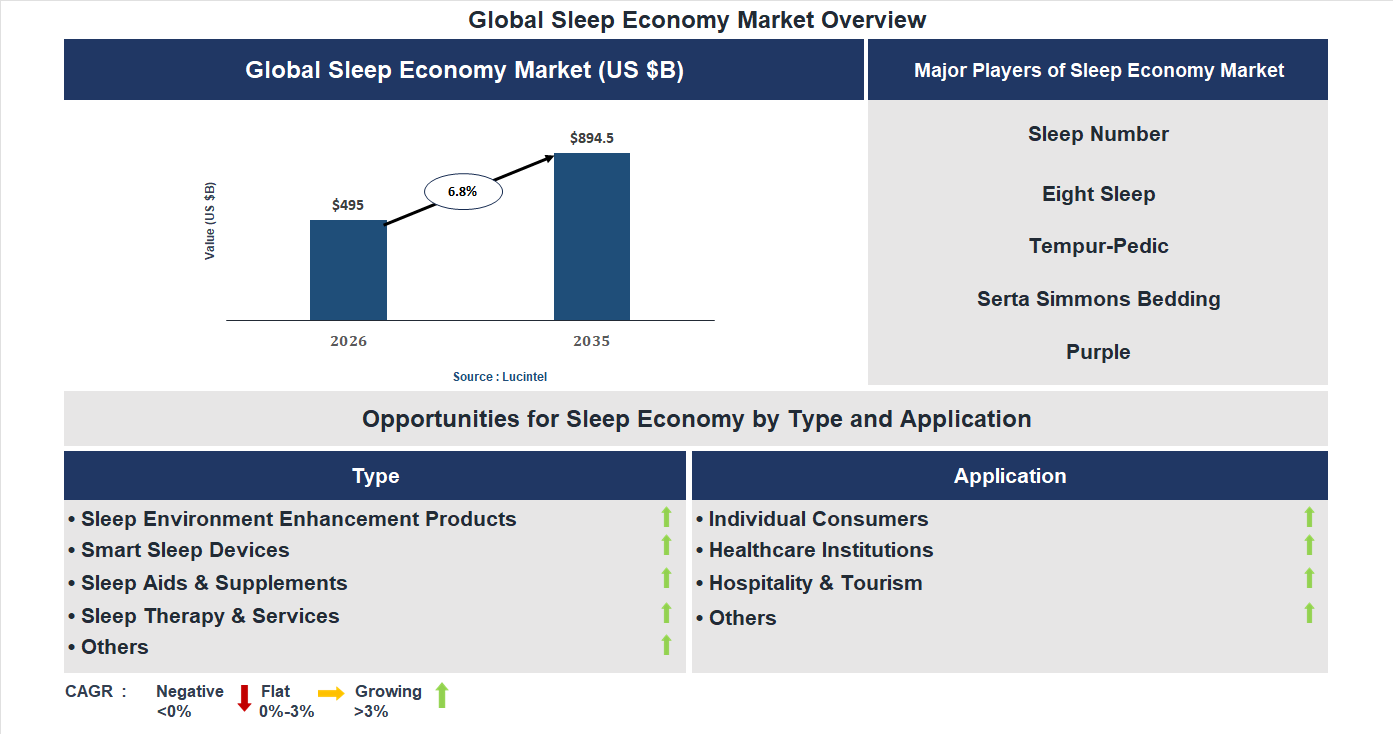
The future of the global sleep economy market looks promising with opportunities in the individual consumer, healthcare institution, and hospitality & tourism markets. The global sleep economy market is expected to reach an estimated $894.5 billion by 2035 with a CAGR of 6.8% from 2026 to 2035. The major drivers for this market are the increasing focus on sleep wellness, the rising prevalence of sleep disorders, and the growing demand for smart sleep solutions.• Lucintel forecasts that, within the type category, smart sleep device is expected to witness the highest growth over the forecast period.
• Within the application category, individual consumer is expected to witness the highest growth.
• In terms of region, APAC is expected to witness the highest growth over the forecast period. Gain valuable insights for your business decisions with our comprehensive 150+ page report. Sample figures with some insights are shown below.
Emerging Trends in the Sleep Economy Market
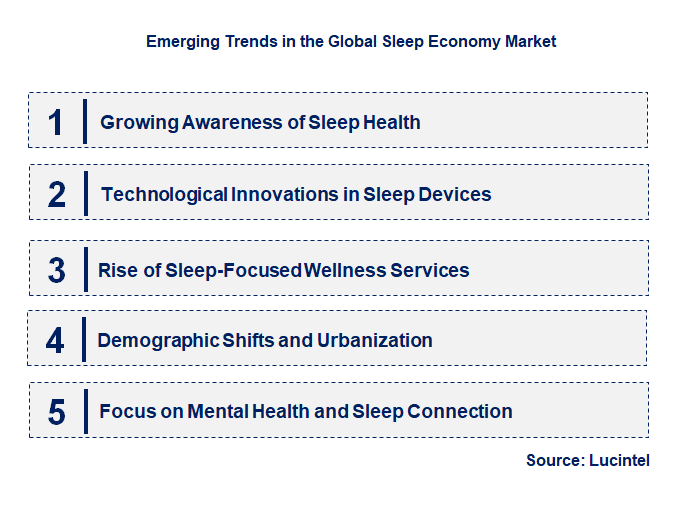
The sleep economy market is experiencing rapid growth driven by increasing awareness of sleep health, technological advancements, and changing consumer lifestyles. As people prioritize wellness and seek solutions for better sleep, innovative products and services are emerging to meet these demands. This evolving landscape reflects broader health trends and technological integration, transforming how consumers approach sleep. The markets expansion is also influenced by demographic shifts, urbanization, and a rising focus on mental health. These developments are creating new opportunities for businesses and reshaping consumer behaviors, making sleep not just a personal health issue but a significant economic sector.• Growing Awareness of Sleep Health: Increased public focus on sleep quality and its impact on overall health is driving demand for sleep-related products and services. Consumers are more informed about the importance of sleep for mental and physical well-being, leading to a surge in interest in sleep tracking devices, sleep clinics, and wellness programs. This trend encourages brands to develop targeted solutions, fostering innovation and expanding market reach. As health consciousness rises, sleep health is becoming a key component of holistic wellness, influencing purchasing decisions and lifestyle choices.
• Technological Innovations in Sleep Devices: Advancements in wearable technology, smart mattresses, and sleep monitoring apps are revolutionizing the market. These innovations provide real-time data, personalized insights, and improved sleep environments, enhancing user experience. The integration of AI and IoT enables more accurate diagnostics and tailored recommendations, making sleep management more accessible and effective. This trend not only boosts consumer engagement but also opens new revenue streams for tech companies, positioning sleep technology as a central pillar of the sleep economy.
• Rise of Sleep-Focused Wellness Services: The emergence of specialized sleep clinics, coaching, and online platforms reflects a shift toward proactive sleep management. These services offer personalized assessments, behavioral therapies, and lifestyle modifications to improve sleep quality. The convenience of telehealth and digital platforms broadens access, especially in urban areas. This trend emphasizes preventive health and positions sleep as a critical aspect of overall wellness, creating a new market segment that complements traditional healthcare and wellness industries.
• Demographic Shifts and Urbanization: Aging populations and urban lifestyles are increasing sleep-related health issues, fueling market growth. Older adults seek solutions for age-related sleep disturbances, while urban dwellers face challenges like noise, light pollution, and stress. This demographic shift drives demand for targeted products such as anti-snoring devices, sleep aids, and noise-canceling technology. Urbanization also fosters innovation in compact, portable sleep solutions suitable for small living spaces, further expanding market opportunities and emphasizing the importance of sleep health across diverse populations.
• Focus on Mental Health and Sleep Connection: Recognizing the link between sleep and mental health is prompting integrated approaches to wellness. Products and services now address anxiety, stress, and depression through sleep improvement strategies. Mindfulness, relaxation techniques, and sleep therapy are gaining popularity, supported by research highlighting their benefits. This trend encourages collaboration between mental health professionals and sleep experts, creating comprehensive solutions that enhance overall well-being. It also elevates sleep from a mere health issue to a vital component of mental health management, influencing market offerings and consumer priorities. In summary, these trends are fundamentally reshaping the sleep economy market by integrating technology, health awareness, and demographic insights. They are fostering innovation, expanding access, and emphasizing sleep as a cornerstone of overall wellness. As these developments continue, the market is poised for sustained growth, with new opportunities emerging for businesses and consumers alike.
Recent Development in the Sleep Economy Market
The sleep economy market is experiencing rapid growth driven by increasing awareness of sleep health, technological innovations, and lifestyle changes. Consumers are prioritizing better sleep quality, leading to a surge in demand for sleep-related products and services. This evolving landscape presents significant opportunities for businesses to innovate and expand. Recent developments reflect a shift towards personalized sleep solutions, digital health integration, and sustainable practices, shaping the future of the sleep economy and influencing market dynamics globally.• Advancements in Sleep Technology: Integration of AI and IoT Devices: The development of smart sleep devices equipped with AI and IoT technology is revolutionizing sleep monitoring and improvement. These devices provide real-time data, personalized insights, and adaptive solutions, enhancing user experience. This innovation enables companies to offer tailored sleep solutions, increasing customer engagement and loyalty. The market benefits from increased adoption of smart wearables and home sleep systems, driving revenue growth and competitive differentiation.
• Rise of Personalized Sleep Solutions: Customizable Sleep Products and Services: Personalized sleep products, including mattresses, pillows, and sleep plans, are gaining popularity. Companies leverage data analytics and consumer feedback to tailor offerings to individual needs, improving sleep quality. This trend fosters customer satisfaction and brand loyalty, while also opening new revenue streams. The market sees a shift from generic products to bespoke solutions, encouraging innovation and differentiation among competitors.
• Digital Health and Sleep Apps Expansion: Mobile Apps for Sleep Tracking and Improvement: The proliferation of sleep-focused mobile applications is transforming how consumers manage sleep health. These apps offer features like sleep tracking, relaxation techniques, and expert advice, making sleep management accessible and convenient. Their widespread adoption enhances consumer engagement and provides valuable data for further product development. The market benefits from an increased user base, partnerships with healthcare providers, and integration with wearable devices.
• Growing Emphasis on Sleep Wellness and Holistic Approaches: Wellness Programs Incorporating Sleep Health: The focus on holistic health has led to the integration of sleep wellness into broader wellness programs. Companies and healthcare providers promote sleep hygiene, stress reduction, and lifestyle modifications. This approach broadens market reach and encourages preventive health measures. It also stimulates demand for educational content, consulting services, and sleep-enhancing products, fostering a comprehensive sleep health ecosystem.
• Sustainability and Eco-Friendly Sleep Products: Environmentally Conscious Manufacturing and Materials: Sustainability is becoming a key factor in product development within the sleep economy. Brands are adopting eco-friendly materials, sustainable manufacturing practices, and recyclable packaging. This appeals to environmentally conscious consumers and enhances brand reputation. The market experiences growth driven by demand for green products, regulatory support, and corporate social responsibility initiatives, aligning profitability with environmental stewardship. These recent developments are significantly transforming the sleep economy market by fostering innovation, personalization, and sustainability. They enhance consumer engagement, improve sleep health outcomes, and promote market expansion. As these trends continue to evolve, they will shape a more dynamic, competitive, and health-conscious industry, offering substantial growth opportunities for businesses and positive impacts for consumers worldwide.
Strategic Growth Opportunities in the Sleep Economy Market
The sleep economy market is experiencing rapid expansion driven by increasing awareness of sleep health, technological advancements, and a growing focus on wellness. Consumers are seeking innovative solutions to improve sleep quality, leading to diverse product offerings and services. This growth presents significant opportunities for companies to capitalize on emerging trends, enhance customer experiences, and develop targeted marketing strategies. As the market evolves, understanding key growth opportunities will be essential for stakeholders aiming to establish a competitive edge and meet rising consumer demands.• Expansion of Smart Sleep Devices: The integration of IoT and AI in sleep technology is creating new opportunities for smart mattresses, sleep trackers, and personalized sleep solutions. These devices offer real-time data, insights, and tailored recommendations, improving sleep quality and user engagement. As consumers become more health-conscious, demand for connected sleep products is expected to surge, encouraging manufacturers to innovate and develop more sophisticated, user-friendly devices that seamlessly integrate into daily routines.
• Growth of Sleep Wellness Services: The rising awareness of sleep health is fueling demand for professional sleep coaching, therapy, and wellness programs. Clinics, online platforms, and app-based services are providing personalized sleep assessments and interventions. This trend allows healthcare providers and wellness companies to expand their offerings, target a broader audience, and capitalize on the increasing willingness of consumers to invest in sleep improvement solutions, ultimately fostering a holistic approach to sleep health.
• Development of Sleep-Enhancing Products and Supplements: The market for natural sleep aids, supplements, and aromatherapy products is expanding as consumers seek non-pharmacological options for better sleep. Companies are innovating with herbal remedies, melatonin-based products, and calming scents to meet this demand. This opportunity enables brands to differentiate through quality, transparency, and scientific backing, tapping into the wellness movement and the desire for safe, effective sleep enhancement solutions.
• Integration of Sleep Solutions in Hospitality and Travel: Hotels, resorts, and airlines are increasingly incorporating sleep-focused amenities and services to enhance guest experiences. Innovations include sleep-friendly bedding, blackout curtains, soundproof rooms, and sleep concierge services. This trend offers growth potential for hospitality providers to attract health-conscious travelers and differentiate their offerings, creating new revenue streams and strengthening brand loyalty through superior sleep experiences.
• Adoption of Data-Driven Sleep Market Strategies: Leveraging big data and analytics allows companies to better understand consumer preferences, optimize product development, and personalize marketing efforts. Data-driven insights can identify emerging trends, improve customer engagement, and enhance product efficacy. This strategic approach enables stakeholders to make informed decisions, allocate resources efficiently, and stay ahead of competitors in a rapidly evolving sleep economy landscape, ultimately driving sustained growth and innovation. The overall impact of these opportunities will significantly shape the future of the sleep economy market, fostering innovation, expanding consumer choices, and driving industry growth. Companies that effectively capitalize on these trends will be positioned to meet increasing demand and establish leadership in this dynamic sector. As awareness and technological integration deepen, the market is poised for continued expansion and diversification.
Sleep Economy Market Driver and Challenges
The sleep economy market is influenced by a complex interplay of technological advancements, economic shifts, and regulatory frameworks. As consumer awareness about sleep health increases, innovations in sleep technology and wellness products are fueling growth. Economic factors such as rising disposable incomes and healthcare spending further propel market expansion. Simultaneously, regulatory policies around health and safety standards shape product development and marketing strategies. These drivers and challenges collectively determine the markets trajectory, requiring stakeholders to adapt swiftly to changing consumer preferences, technological innovations, and regulatory landscapes. Understanding these factors is essential for strategic planning and sustainable growth in the sleep economy market. The factors responsible for driving the sleep economy market include:• Technological Innovations: The advent of smart sleep devices, wearable technology, and AI-driven sleep analysis tools has revolutionized sleep health management. These innovations enable personalized sleep tracking, improving user engagement and outcomes. As technology becomes more accessible and affordable, consumer adoption accelerates, expanding the market. Companies investing in R&D are developing advanced solutions that address sleep disorders and enhance overall sleep quality, thus fueling market growth. The integration of IoT and data analytics further enhances product capabilities, making sleep health management more precise and user-friendly.
• Rising Awareness of Sleep Health: Increasing awareness about the importance of sleep for overall well-being is a significant driver. Consumers are now more informed about sleep disorders, their health implications, and the benefits of good sleep hygiene. This awareness has led to higher demand for sleep-related products and services, including mattresses, sleep aids, and wellness programs. Healthcare providers and wellness brands are also promoting sleep health, contributing to market expansion. The growing focus on preventive health and holistic wellness encourages consumers to invest in sleep solutions, thereby boosting market growth.
• Economic Growth and Disposable Income: Economic development in various regions has increased disposable incomes, enabling consumers to spend more on health and wellness products. The willingness to invest in premium sleep solutions, such as high-end mattresses and sleep technology devices, is rising. This economic upliftment supports the growth of premium segments within the sleep economy market. Additionally, corporate wellness programs emphasizing employee sleep health are contributing to market expansion. As consumers prioritize health and comfort, the market benefits from increased spending on sleep-related products and services.
• Impact of COVID-19 Pandemic: The pandemic heightened awareness of health and wellness, emphasizing the importance of quality sleep for immune function and mental health. Lockdowns and remote work increased focus on home-based wellness solutions, including sleep products. The surge in demand for sleep aids, mattresses, and sleep tracking devices reflects this shift. Moreover, the pandemic accelerated digital health adoption, fostering innovation in sleep technology. This period also highlighted gaps in sleep health management, prompting increased investment and research, which continue to drive market growth post-pandemic.
• Regulatory and Standardization Developments: Evolving regulatory frameworks around health and safety standards influence product development and marketing strategies. Governments and industry bodies are establishing guidelines for sleep products, ensuring quality and safety. Compliance with these standards enhances consumer trust and market credibility. Additionally, regulatory support for sleep health initiatives and funding for research promote innovation. These developments create a structured environment that encourages responsible growth, while also presenting challenges for companies to meet evolving compliance requirements, impacting market dynamics. The challenges facing this sleep economy market include:
• Regulatory Uncertainties: Rapid technological advancements often outpace regulatory frameworks, creating uncertainties. Companies face challenges in navigating complex approval processes, especially for medical-grade sleep devices. Inconsistent regulations across regions can hinder market expansion and product launches. Additionally, evolving standards may require costly modifications, impacting profitability. Regulatory uncertainties can delay product introduction and increase compliance costs, posing risks to innovation and competitiveness within the sleep economy market.
• Market Saturation and Intense Competition: As the market matures, saturation in key segments like mattresses and sleep aids leads to intense competition. Established brands dominate, making it difficult for new entrants to gain market share. Price wars and marketing battles can erode profit margins. Differentiating products becomes challenging, requiring continuous innovation and branding efforts. This competitive landscape pressures companies to invest heavily in R&D and marketing, which may strain resources and impact overall profitability.
• Consumer Awareness and Adoption Barriers: Despite rising awareness, some consumers remain skeptical about sleep products efficacy or are hesitant to adopt new technologies due to cost or lack of understanding. This limits market penetration, especially in emerging regions. Cultural differences and misconceptions about sleep health can also hinder adoption. Overcoming these barriers requires targeted education and affordable solutions, which can be resource-intensive. Resistance to change and skepticism may slow market growth and limit the reach of sleep health initiatives. In summary, the sleep economy market is shaped by technological progress, increased health consciousness, economic factors, and supportive regulatory developments. However, challenges such as regulatory uncertainties, market saturation, and consumer adoption barriers pose significant hurdles. These drivers propel growth by fostering innovation and consumer engagement, while challenges necessitate strategic navigation to sustain market expansion. Overall, the markets future depends on balancing innovation with regulatory compliance and consumer trust, ensuring long-term, sustainable growth.
List of Sleep Economy Companies
Companies in the market compete on the basis of product quality offered. Major players in this market focus on expanding their manufacturing facilities, R&D investments, infrastructural development, and leverage integration opportunities across the value chain. With these strategies sleep economy companies cater increasing demand, ensure competitive effectiveness, develop innovative products & technologies, reduce production costs, and expand their customer base. Some of the sleep economy companies profiled in this report include-• Sleep Number
• Eight Sleep
• Tempur-Pedic
• Serta Simmons Bedding
• Purple
• Natrol
• Pharmavite
• Natures Bounty
• Jameison
• Rexall Sundown
Sleep Economy Market by Segment
The study includes a forecast for the global sleep economy market by type, application, and region.Sleep Economy Market by Type [Value from 2019 to 2035]:
• Sleep Environment Enhancement Products
• Smart Sleep Devices
• Sleep Aids & Supplements
• Sleep Therapy & Services
• Others
Sleep Economy Market by Application [Value from 2019 to 2035]:
• Individual Consumers
• Healthcare Institutions
• Hospitality & Tourism
• Others
Sleep Economy Market by Region [Value from 2019 to 2035]:
• North America
• Europe
• Asia Pacific
• The Rest of the World
Country Wise Outlook for the Sleep Economy Market
The sleep economy market has experienced significant growth globally, driven by increasing awareness of sleep health, technological innovations, and a rising focus on wellness. Countries are adopting new products, services, and research initiatives to improve sleep quality and capitalize on this expanding industry. The United States leads with advanced technology integration, while China shows rapid market expansion. Germany emphasizes research and development, India focuses on affordability and accessibility, and Japan continues to innovate with traditional and modern sleep solutions. These developments reflect diverse strategies tailored to each countrys unique demographic and economic landscape, shaping the future of the sleep economy worldwide.• United States: The US market has seen a surge in sleep tracking devices, smart mattresses, and sleep-focused apps, driven by technological innovation and consumer demand for personalized sleep solutions. Major companies are investing in research to develop advanced sleep monitoring systems, and there is a growing trend of integrating sleep health into overall wellness programs. The rise of telehealth services also facilitates sleep disorder diagnosis and treatment, making sleep health more accessible. Additionally, startups are exploring AI-driven sleep coaching, further expanding market offerings.
• China: China’s sleep economy is rapidly expanding, with a focus on affordable sleep aids and smart sleep products. The market benefits from a large, tech-savvy population eager for innovative solutions, including smart pillows, sleep masks, and mobile apps. E-commerce platforms facilitate quick distribution, and local companies are investing heavily in R&D to develop culturally tailored sleep products. The government is also promoting sleep health awareness and encouraging industry growth. Urbanization and increased work stress are driving demand for convenient sleep solutions, making China a key growth region.
• Germany: Germany emphasizes research and development in sleep medicine and technology, with a focus on clinical validation and scientific rigor. The market features high-quality sleep products, including ergonomic mattresses and advanced sleep monitoring devices. German companies are collaborating with healthcare providers to integrate sleep solutions into medical treatments. There is also a strong emphasis on sustainable and eco-friendly sleep products, aligning with environmental values. The country’s regulatory framework supports innovation, fostering a competitive environment for premium sleep solutions.
• India: The Indian sleep economy is characterized by affordability and accessibility, with a growing middle class seeking better sleep solutions. Local startups are offering budget-friendly mattresses, pillows, and sleep aids, often through online channels. Increasing awareness of sleep health and lifestyle-related disorders is driving demand for sleep clinics and teleconsultations. Traditional practices like Ayurveda are also influencing product development, blending modern technology with cultural preferences. The market is expected to grow rapidly as urbanization and stress levels increase, making sleep health a priority for consumers.
• Japan: Japan continues to innovate with a blend of traditional and modern sleep solutions, including high-tech mattresses, sleep environment optimization, and sleep therapy devices. The market benefits from an aging population concerned with sleep quality and health. Companies are developing products that address specific issues like insomnia and sleep apnea, often incorporating advanced sensors and AI. There is also a focus on sleep research and clinical trials, supported by government initiatives. Japan’s emphasis on quality and precision ensures that products meet high standards, maintaining its position as a leader in sleep technology innovation.

Features of the Global Sleep Economy Market
Market Size Estimates: Sleep economy market size estimation in terms of value ($B). Trend and Forecast Analysis: Market trends (2019 to 2025) and forecast (2026 to 2035) by various segments and regions. Segmentation Analysis: Sleep economy market size by type, application, and region in terms of value ($B). Regional Analysis: Sleep economy market breakdown by North America, Europe, Asia Pacific, and Rest of the World. Growth Opportunities: Analysis of growth opportunities in different types, applications, and regions for the sleep economy market. Strategic Analysis: This includes M&A, new product development, and competitive landscape of the sleep economy market. Analysis of competitive intensity of the industry based on Porter’s Five Forces model.
FAQ
Q1. What is the market size and growth forecast for sleep economy market? Answer: The global sleep economy market is expected to reach an estimated $894.5 billion by 2035 and grow with a CAGR of 6.8% from 2026 to 2035. Q2. What are the major drivers influencing the growth of the sleep economy market? Answer: The major drivers for this market are the increasing focus on sleep wellness, the rising prevalence of sleep disorders, and the growing demand for smart sleep solutions. Q3. What are the major segments for sleep economy market? Answer: The future of the sleep economy market looks promising with opportunities in the individual consumer, healthcare institution, and hospitality & tourism markets. Q4. Who are the key sleep economy market companies? Answer: Some of the key sleep economy companies are as follows:• Sleep Number
• Eight Sleep
• Tempur-Pedic
• Serta Simmons Bedding
• Purple
• Natrol
• Pharmavite
• Natures Bounty
• Jameison
• Rexall Sundown Q5. Which sleep economy market segment will be the largest in future? Answer: Lucintel forecasts that, within the type category, smart sleep device is expected to witness the highest growth over the forecast period. Q6. In sleep economy market, which region is expected to be the largest in next 5 years? Answer: In terms of region, APAC is expected to witness the highest growth over the forecast period. Q7. Do we receive customization in this report? Answer: Yes, Lucintel provides 10% customization without any additional cost.
Table of Contents
List of Figures
List of Tables
Methodology
- In-depth interviews of the major players in this market
- Detailed secondary research from competitors’ financial statements and published data
- Extensive searches of published works, market, and database information pertaining to industry news, company press releases, and customer intentions
- A compilation of the experiences, judgments, and insights of Lucintel’s professionals, who have analyzed and tracked this market over the years.


Buy Now
Choose a license that fits your team. Instant PDF delivery.
Prices exclude taxes. Instant delivery. Custom licensing available on request.
Key Questions
- • What are some of the most promising, high-growth opportunities for the sleep economy market by type (sleep environment enhancement products, smart sleep devices, sleep aids & supplements, sleep therapy & services, and others), application (individual consumers, healthcare institutions, hospitality & tourism, and others), and region (North America, Europe, Asia Pacific, and the Rest of the World)?
- • Which segments will grow at a faster pace and why?
- • Which region will grow at a faster pace and why?
- • What are the key factors affecting market dynamics? What are the key challenges and business risks in this market?
- • What are the business risks and competitive threats in this market?
- • What are the emerging trends in this market and the reasons behind them?
- • What are some of the changing demands of customers in the market?
- • What are the new developments in the market? Which companies are leading these developments?
- • Who are the major players in this market? What strategic initiatives are key players pursuing for business growth?
- • What are some of the competing products in this market and how big of a threat do they pose for loss of market share by material or product substitution?
- • What M&A activity has occurred in the last 7 years and what has its impact been on the industry? For any questions related to Sleep Economy Market, Sleep Economy Market Size, Sleep Economy Market Growth, Sleep Economy Market Analysis, Sleep Economy Market Report, Sleep Economy Market Share, Sleep Economy Market Trends, Sleep Economy Market Forecast, Sleep Economy Companies, write Lucintel analyst at email: helpdesk@lucintel.com. We will be glad to get back to you soon.


