
Market Report · July 16, 2026

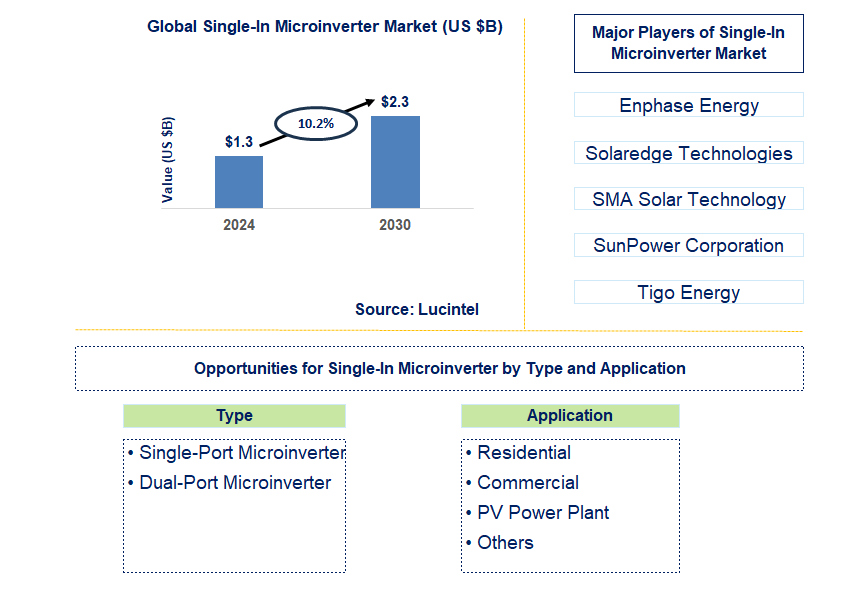
Key data points: The market size in 2030 = $2.3 billion, growth forecast = 10.2% annually for the next 6 years. Scroll below to get more insights. This market report covers trends, opportunities, and forecasts in the global single-in microinverter market to 2030 by type (single-port microinverter and dual-port microinverter), application (residential, commercial, PV power plant, and others), and region (North America, Europe, Asia Pacific, and the Rest of the World)
We'll send your sample report shortly.
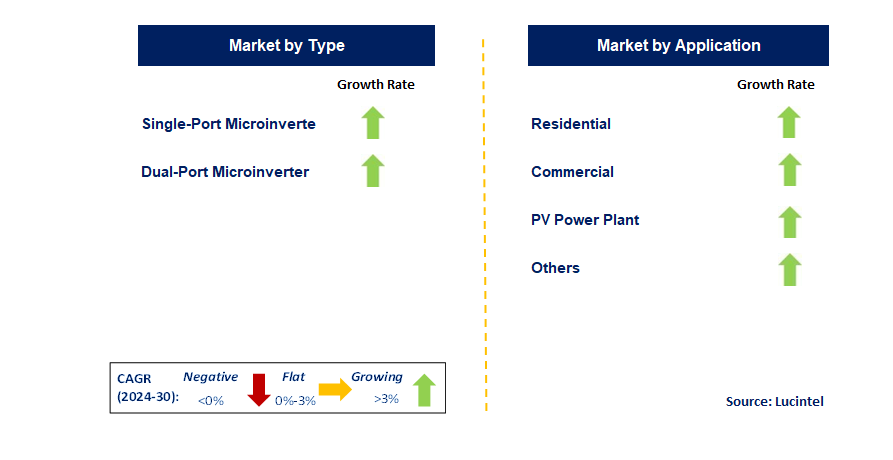
• Lucintel forecasts that within the type category, single-port is expected to witness the highest growth over the forecast period because of its cost-effective option for a wide range of solar applications.
• In terms of regions, APAC is expected to witness the highest growth over the forecast period due to growth in residential rooftop solar PV installations in India and Japan. Gain valuable insights for your business decisions with our comprehensive 150+ page report.
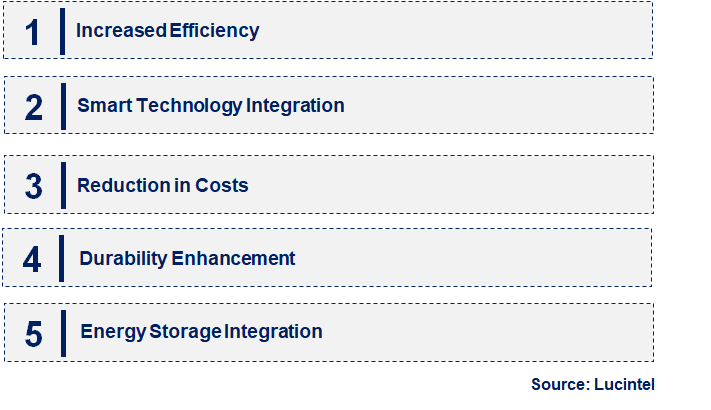
• Increased Efficiency: Recent years have seen microinverters increasingly designed to maximize energy conversion efficiency. This improvement is due to advancements in semiconductor devices and better inverter design. High efficiency ensures optimal solar installations, yielding more energy from solar panels to meet energy needs.
• Smart Technology Integration: There is a growing integration of these devices into smart homes or buildings. Consequently, modern microinverters have advanced communication capabilities, allowing them to interact with home automation systems and provide real-time operating information. This trend makes solar power systems more user-friendly and intelligent, enabling more effective management.
• Cost Reduction Focus: Manufacturers are focused on minimizing the cost of single-in microinverters through economies of scale and improved production techniques. Lowering costs makes solar power systems more affordable, encouraging a broader range of customers and businesses to adopt them, thus driving the growth of solar energy sources and the entire sector.
• Durability Enhancement: The durability and lifespan of microinverters are increasing due to advancements in materials and design. This enables these devices to perform efficiently across different climatic conditions without requiring frequent maintenance or replacement, which is particularly significant in regions with severe weather or abrupt climate changes.
• Energy Storage Integration: Energy storage systems are being integrated with microinverters, fostering efficient solar energy management. For instance, this enables optimal utilization of excess power generated during the day to achieve power supply self-sufficiency. Compatibility between battery storage systems and solar energy installations is emphasized to ensure maximum efficiency.
• Advancements in Efficiency: The efficiency of single-in microinverters has greatly improved through recent developments. New designs and materials have increased power output from each solar panel by improving energy conversion rates. This development is vital for maximizing energy harvest potential and enhancing system performance.
• Enhanced Communication Capabilities: Modern microinverters now include embedded communication technologies that allow real-time monitoring and optimization. For example, these capabilities enable better integration with home automation systems, providing customers with detailed feedback to manage their photovoltaic systems more efficiently.
• Cost Reduction Initiatives: Manufacturers are reducing the cost of single-in microinverters through streamlined production processes and economies of scale. These cost-cutting measures have lowered the price of single-in microinverters, making them more affordable for residential and commercial solar installations, facilitating rapid market expansion.
• Improved Durability and Reliability: Recent advancements focus on enhancing the longevity and reliability of microinverters. Newer models use tougher materials and advanced engineering, allowing them to withstand harsh weather conditions. This increase in durability reduces maintenance requirements and extends device lifespan.
• Integration with Energy Storage: More advanced energy storage systems are being integrated with microinverters, allowing for better energy management and storage, optimizing solar power usage, and providing greater energy independence. Improved compatibility with energy storage is key to maximizing the benefits of solar installations.
• Residential Solar Installations: The growing adoption of residential solar systems presents a major growth opportunity for single-in microinverters. As more homeowners aim to reduce energy costs and gain energy independence, there is increasing demand for efficient and reliable microinverters, driving innovation and market expansion in the residential sector.
• Commercial Solar Projects: Increasingly, commercial projects are adopting single-in microinverters for enhanced system performance and reliability. The demand for effective energy management in business environments requires advanced microinverter technologies capable of supporting larger and more complex installations.
• Integration with Smart Grid Technology: Integrating smart grid technology with microinverters has significant growth potential. For grids to be smart, they require advanced communication and monitoring capabilities that current microinverters provide. This integration supports better grid management and maintains energy distribution systems at peak efficiency.
• Energy Storage Solutions: The rising focus on energy storage solutions creates an opportunity for microinverters to improve compatibility with battery systems. Enhanced interaction with energy storage enables better energy management and utilization, driving growth in markets where energy self-sufficiency and storage are essential.
• Developing Markets: Emerging markets, especially those in regions with high solar potential, offer substantial expansion opportunities for single-in microinverters. These markets will require low-cost yet efficient microinverters as they build solar infrastructure, supporting market penetration and growth.
The market trends for single-in microinverters are influenced by several drivers and challenges, including technological advancements, economic factors, and regulatory constraints. Understanding these aspects is essential for successfully navigating the market and capitalizing on available opportunities. The factors responsible for driving the single-in microinverter market include:• Technological Advancements: A primary driver for the single-in microinverter market is advancements in technology. Higher efficiency and reliability achieved through semiconductor technology, materials, and design have led to significant breakthroughs. These advances enable microinverters to meet the demands of modern solar installations, encouraging the adoption of such technologies and driving up usage.
• Economic Factors: Cost implications related to raw materials and manufacturing processes are among the economic factors shaping the microinverter market. Reduced production costs and improved economies of scale are making microinverters more affordable, increasing accessibility and, consequently, demand.
• Regulatory Support: Supportive regulatory policies and incentives are key drivers for the single-in microinverter market. Government subsidies, tax credits, and renewable energy mandates encourage the use of solar technologies, including microinverters. Such measures reduce financial barriers associated with solar installations, fostering growth in the industry.
• Increased Demand for Solar Energy: A major driver for microinverters is the rising demand for solar energy due to environmental concerns and the desire for energy independence. As more individuals and businesses adopt solar power, the need for efficient and reliable products like microinverters increases, creating room for market expansion.
• Energy Storage Integration: The integration of microinverters with energy storage systems is also driving market growth. Compatibility with more storage solutions allows users to better manage and utilize energy, making solar power more appealing and practical for a broader range of applications. Challenges in the single-in microinverter market include:
• Regulatory Barriers: The market faces challenges due to regulatory barriers. Varying regional policies require manufacturers to obtain approval in different markets, which can complicate entry. Overcoming these regulatory challenges is essential for market success.
• Technological Complexity: Increasingly sophisticated microinverter technology poses challenges for both producers and users. Evolving features require expertise and technical support, which can complicate adoption and introduce technical demands.
• Market Competition: Intense competition within the microinverter industry impacts price levels and profit margins. As more companies enter the market, the need for price competitiveness and product differentiation grows. To maintain their market position, companies must continually introduce products with unique value propositions. The single-in microinverter industry results from the active interplay between drivers and constraints. Technological advancements, economic factors, regulatory support, and increased solar energy demand are key drivers of market growth. Conversely, challenges such as regulatory barriers, technological complexities, and competition shape the industry's development. These factors will determine how microinverters evolve and get adopted, influencing the future of solar energy systems and their integration into larger energy infrastructures.
• Enphase Energy
• SolarEdge Technologies
• SMA Solar Technology
• SunPower Corporation
• Tigo Energy
• Apsystems
• Hoymiles Power Electronics
• Chilicon Power
• Growatt Energy Technology
• Huawei
• Single-Port Microinverter
• Dual-Port Microinverter
• Residential
• Commercial
• PV Power Plant
• Others
• North America
• Europe
• Asia Pacific
• The Rest of the World
• United States: In the US, recent advancements focus on boosting efficiency and integration with smart home networks. Manufacturers are introducing monitoring-rich systems that yield higher energy compared to previous models. Companies have made significant strides in technologies like Bluetooth 4 and ZigBee protocols, enabling real-time data analysis for superior optimization. The increasing adoption of residential solar panels has created demand for these types of microinverters.
• China: In China, rapid advancements in single-in microinverter technology aim to reduce costs and improve production efficiency. Significant investments in research and development have led to more efficient and durable microinverters. Local producers are expanding globally, leveraging China's competitive manufacturing to reduce costs and increase market share.
• Germany: Germany prioritizes high-efficiency microinverters that meet stringent European standards, with improvements in durability and adaptation to various weather conditions. The goal is to achieve higher energy yields and enhanced integration with Germany's robust renewable energy grid. Germany’s energy transition goals also involve integrating advances in energy storage with microinverter technology to optimize power usage.
• India: In India, the focus is on cost-effective single-in microinverters suited to various climatic conditions. Recent advancements have improved microinverter efficiency in high-temperature environments. Supportive government policies and subsidies have fostered the adoption of these microinverters, particularly within India’s growing solar sector.
• Japan: In Japan, priorities for microinverters include enhanced efficiency and reliability, especially in response to the country’s frequent natural disasters. Technological advancements have improved resilience and performance under adverse weather conditions. Additionally, there is greater integration with advanced monitoring systems that provide detailed performance data, maximizing renewable energy utilization and grid stability in Japan.


• Enphase Energy
• SolarEdge Technologies
• SMA Solar Technology
• SunPower Corporation
• Tigo Energy
• Apsystems
• Hoymiles Power Electronics
• Chilicon Power
• Growatt Energy Technology
• Huawei Q6. Which single-in microinverter market segment will be the largest in future? Answer: Lucintel forecasts that single-port is expected to witness the highest growth over the forecast period because of its cost-effective option for a wide range of solar applications. Q7. In single-in microinverter market, which region is expected to be the largest in next 5 years? Answer: APAC is expected to witness the highest growth over the forecast period due to growth in residential rooftop solar PV installations in India and Japan. Q.8 Do we receive customization in this report? Answer: Yes, Lucintel provides 10% customization without any additional cost.


Choose a license that fits your team. Instant PDF delivery.
Prices exclude taxes. Instant delivery. Custom licensing available on request.
Market Report · July 16, 2026
Market Report · May 18, 2026
Market Report · May 18, 2026
Trusted partner for strategic intelligence and business growth


Receive a complimentary market analysis tailored to your industry. Our analysts will identify key growth opportunities and competitive dynamics specific to your business.

Market size, growth rate, and key trend analysis for your specific sector.

Top competitor positioning and market share analysis.

Strategic recommendations backed by data-driven insights.
Get curated market intelligence and competitive moves straight to your inbox.
By subscribing, you agree to receive our monthly insights. Unsubscribe anytime.
Receive a complimentary market analysis tailored to your industry. Our analysts will identify key growth opportunities and competitive dynamics specific to your business.
Market size, growth rate, and key trend analysis for your specific sector.
Top competitor positioning and market share analysis.
Strategic recommendations backed by data-driven insights.
Get curated market intelligence, emerging trends, and competitive moves straight to your inbox each month.
By subscribing, you agree to receive our monthly insights. Unsubscribe anytime.
We'll send your sample report shortly.