
Report Feature
Single-cell Transcriptome Sequencing Kit Market Trends and Forecast
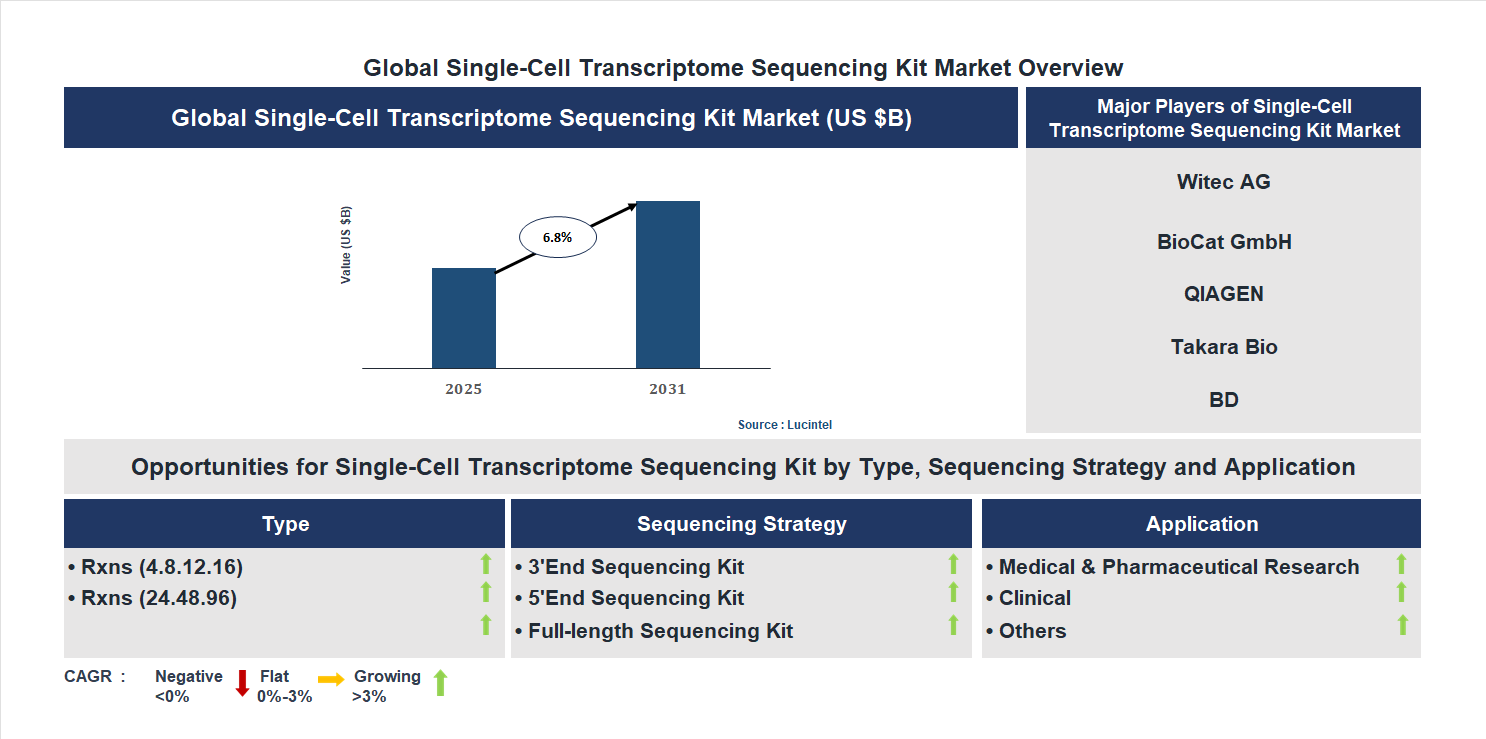
The future of the global single-cell transcriptome sequencing kit market looks promising with opportunities in the medical & pharmaceutical research and clinical markets. The global single-cell transcriptome sequencing kit market is expected to grow with a CAGR of 6.8% from 2025 to 2031. The major drivers for this market are the increasing demand for single cell research, the rising adoption of precision medicine studies, and the growing use in genomics research labs.• Lucintel forecasts that, within the type category, rxns (24.48.96) is expected to witness higher growth over the forecast period.
• Within the application category, medical & pharmaceutical research is expected to witness higher growth.
• In terms of region, APAC is expected to witness the highest growth over the forecast period. Gain valuable insights for your business decisions with our comprehensive 150+ page report. Sample figures with some insights are shown below.
Emerging Trends in the Single-cell Transcriptome Sequencing Kit Market
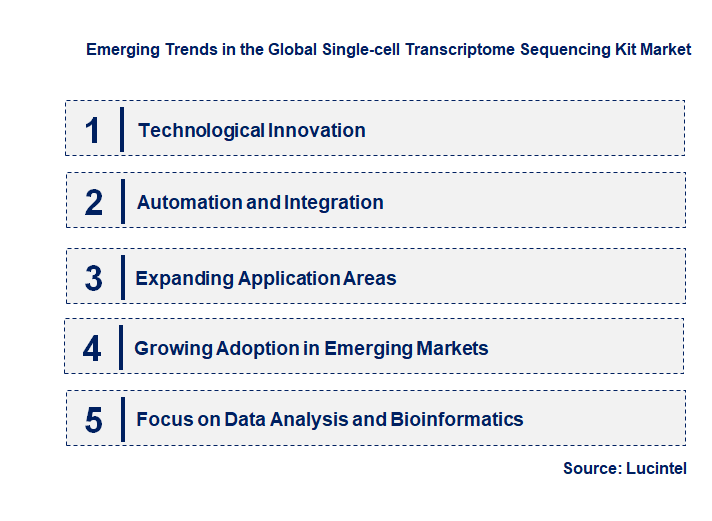
The single-cell transcriptome sequencing kit market is experiencing rapid growth driven by technological advancements and increasing demand for detailed cellular analysis. As researchers seek to understand cellular heterogeneity and gene expression at an unprecedented level, innovative tools and methods are emerging. These developments are transforming biomedical research, personalized medicine, and drug discovery. The market is characterized by a surge in new product launches, integration of automation, and expanding applications across various fields. Staying ahead of these trends is crucial for stakeholders aiming to capitalize on the evolving landscape and meet the growing needs of the scientific community.• Technological Innovation: The market is witnessing continuous advancements in sequencing technologies, such as high-throughput and more accurate kits. These innovations enable researchers to analyze larger cell populations with greater precision, reducing costs and turnaround times. Enhanced sensitivity and resolution are allowing for more detailed insights into cellular functions, which accelerate discoveries in disease mechanisms and developmental biology. As technology evolves, the demand for more sophisticated, user-friendly kits is expected to rise, further driving market growth.
• Automation and Integration: Automation is becoming a key trend, with companies developing kits compatible with robotic systems and automated workflows. This reduces manual errors, increases throughput, and improves reproducibility of results. Integration of single-cell sequencing with other omics technologies, such as proteomics and epigenomics, is also gaining traction. These integrated platforms provide comprehensive cellular profiles, enabling more holistic biological insights. The shift towards automation and integration is making single-cell transcriptomics more accessible and scalable for large-scale studies.
• Expanding Application Areas: The applications of single-cell transcriptome sequencing are broadening beyond basic research to include clinical diagnostics, personalized medicine, and drug development. In oncology, for example, it helps identify tumor heterogeneity and resistance mechanisms. In immunology, it aids in understanding immune cell diversity and responses. The increasing use in regenerative medicine and rare disease research is also notable. This diversification is expanding the market scope and creating new revenue streams for industry players.
• Growing Adoption in Emerging Markets: Emerging economies are increasingly adopting single-cell sequencing technologies due to rising investments in healthcare and research infrastructure. Governments and the private sector are funding projects that utilize these kits for disease research and diagnostics. This trend is opening new markets and driving demand for cost-effective, scalable solutions tailored to local needs. As awareness and technical expertise grow, these regions are expected to become significant contributors to global market expansion.
• Focus on Data Analysis and Bioinformatics: As sequencing becomes more accessible, the importance of robust data analysis tools is rising. Companies are developing integrated bioinformatics solutions to handle large datasets generated by single-cell sequencing. These tools facilitate data interpretation, visualization, and sharing, making the technology more user-friendly. The emphasis on data analysis is crucial for translating raw data into actionable biological insights, thereby increasing the value proposition of sequencing kits and fostering broader adoption across research and clinical settings. In summary, these emerging trends are collectively reshaping the single-cell transcriptome sequencing kit market by enhancing technological capabilities, expanding applications, and increasing accessibility. The integration of automation, focus on data analysis, and growth in emerging markets are driving innovation and market expansion. As these trends continue to evolve, they will enable more precise, comprehensive, and scalable cellular analyses, ultimately transforming biomedical research and personalized healthcare.
Recent Development in the Single-cell Transcriptome Sequencing Kit Market
The single-cell transcriptome sequencing kit market is experiencing rapid growth driven by advancements in genomics, personalized medicine, and biotechnology. As researchers seek more precise insights into cellular functions, the demand for innovative sequencing solutions increases. Technological improvements, decreasing costs, and expanding applications across healthcare and research sectors are fueling this expansion. These developments are transforming how scientists analyze cellular heterogeneity, disease mechanisms, and therapeutic targets, ultimately shaping the future landscape of biomedical research and clinical diagnostics.• Growing Adoption of Single-Cell Technologies: The increasing use of single-cell transcriptome sequencing kits in research and clinical settings is expanding market opportunities. This growth is driven by the need for detailed cellular analysis to understand complex biological systems, disease progression, and treatment responses. As more laboratories adopt these technologies, demand for reliable, efficient, and cost-effective kits rises, fostering innovation and competition within the industry.
• Technological Advancements in Sequencing Platforms: Innovations in sequencing hardware and software are enhancing the accuracy, speed, and affordability of single-cell transcriptome analysis. These improvements enable researchers to generate higher-quality data with lower input material, broadening the application scope. Enhanced platforms facilitate large-scale studies, accelerate discovery, and reduce turnaround times, thereby increasing market penetration and supporting the development of next-generation sequencing solutions.
• Expansion of Applications in Disease Research: The application of single-cell transcriptomics in understanding diseases such as cancer, neurodegenerative disorders, and infectious diseases is expanding rapidly. These kits help identify cellular heterogeneity, uncover novel biomarkers, and inform targeted therapies. As research uncovers new insights, the demand for specialized kits tailored to specific diseases grows, driving market growth and encouraging product innovation.
• Rising Investment in Personalized Medicine: The shift towards personalized medicine is fueling demand for single-cell sequencing kits that enable precise cellular profiling. These kits support the development of individualized treatment plans by revealing unique cellular signatures. Increased funding from government agencies, biotech firms, and healthcare providers accelerates market expansion, fostering the creation of more sophisticated, user-friendly kits that cater to clinical diagnostics and therapeutic development.
• Increasing Focus on Data Analysis and Bioinformatics: The complexity of single-cell transcriptomic data necessitates advanced bioinformatics tools and software. Market growth is driven by the development of integrated analysis platforms that streamline data processing, visualization, and interpretation. These innovations improve usability, reduce analysis time, and enhance insights, making single-cell transcriptomics more accessible and valuable for researchers and clinicians alike. The recent developments in single-cell transcriptome sequencing kits are significantly impacting the market by enhancing technological capabilities, expanding application areas, and supporting personalized medicine. These advancements are driving increased adoption across research and clinical sectors, fostering innovation, and reducing costs. As a result, the market is poised for sustained growth, with more sophisticated, accessible solutions enabling deeper biological insights and improved healthcare outcomes worldwide.
Strategic Growth Opportunities in the Single-cell Transcriptome Sequencing Kit Market
The single-cell transcriptome sequencing kit market is experiencing rapid expansion driven by advancements in genomics, personalized medicine, and biotechnology. Increasing demand for high-resolution cellular analysis is fueling innovation and adoption across research and clinical settings. Companies are investing in developing more efficient, cost-effective, and scalable solutions to meet the growing needs of scientists and healthcare providers. This dynamic environment presents numerous opportunities for growth, collaboration, and technological breakthroughs that will shape the future of cellular research and diagnostics.• Growing Adoption in Precision Medicine: Single-cell transcriptome sequencing kits are increasingly used in precision medicine to identify cellular heterogeneity, enabling tailored treatments. This technology allows for detailed analysis of individual cells within tumors or tissues, improving disease understanding and therapy development. As healthcare shifts toward personalized approaches, demand for these kits is expected to rise significantly, especially in oncology and immunology. The ability to detect rare cell populations enhances diagnostic accuracy and treatment efficacy, creating substantial market growth opportunities.
• Expansion into Clinical Diagnostics and Disease Monitoring: The integration of single-cell sequencing into clinical diagnostics offers new avenues for early disease detection and monitoring. These kits facilitate detailed cellular profiling in blood, tissue, and other samples, aiding in the diagnosis of cancers, infectious diseases, and autoimmune disorders. As regulatory approvals increase and clinical validation progresses, the market for diagnostic applications is poised for rapid growth. This expansion will improve patient outcomes through more precise and minimally invasive testing, driving demand for specialized sequencing kits.
• Technological Innovations Enhancing Kit Performance: Advances in microfluidics, automation, and sequencing technologies are improving the efficiency, accuracy, and affordability of single-cell transcriptome kits. These innovations enable higher throughput, reduced sample requirements, and faster turnaround times. Companies investing in R&D are developing next-generation kits that offer better sensitivity and broader gene coverage. Such technological progress will attract more users from the academic, biotech, and pharmaceutical sectors, fostering market expansion and enabling new research possibilities.
• Increasing Investment in Research and Development Activities: Governments, private investors, and biotech firms are significantly increasing funding for single-cell research projects. This financial support accelerates the development of innovative kits and methodologies, broadening application scopes. R&D investments facilitate the creation of more versatile, user-friendly, and cost-effective solutions, expanding accessibility. As research outputs translate into commercial products, the market will benefit from a continuous pipeline of advanced kits, supporting scientific discovery and clinical translation.
• Rising Demand for Multi-Omics and Multi-Modal Single-Cell Analysis: The trend toward integrated multi-omics approaches combines transcriptomics with genomics, proteomics, and epigenomics at the single-cell level. Kits capable of multi-modal analysis provide comprehensive insights into cellular functions and states. This holistic view enhances understanding of complex biological systems and disease mechanisms. Growing interest from research institutions and pharma companies in multi-omics solutions will drive the development and adoption of versatile, multi-purpose sequencing kits, opening new avenues for discovery and personalized medicine. In conclusion, these growth opportunities are set to significantly influence the single-cell transcriptome sequencing kit market, fostering innovation, expanding applications, and accelerating scientific and clinical breakthroughs. The market’s evolution will be driven by technological advancements, increased investments, and the expanding need for detailed cellular insights, ultimately transforming biomedical research and healthcare delivery.
Single-cell Transcriptome Sequencing Kit Market Driver and Challenges
The single-cell transcriptome sequencing kit market is influenced by a variety of technological, economic, and regulatory factors. Advances in sequencing technology and bioinformatics have significantly enhanced the ability to analyze individual cells, driving market growth. Increasing investments in biomedical research and personalized medicine further propel demand for these kits. However, challenges such as high costs, complex workflows, and regulatory hurdles impact market expansion. The evolving landscape requires continuous innovation and adaptation to meet scientific and regulatory standards. Understanding these drivers and challenges is essential for stakeholders aiming to capitalize on the markets potential and navigate its complexities effectively. The factors responsible for driving the single-cell transcriptome sequencing kit market include:• Technological Advancements: The rapid development of sequencing technologies, such as next-generation sequencing (NGS), has revolutionized single-cell analysis. These innovations enable higher throughput, greater accuracy, and reduced costs, making single-cell transcriptomics more accessible. Improved bioinformatics tools facilitate data interpretation, expanding research possibilities. As technology continues to evolve, the market benefits from increased adoption across academic, clinical, and pharmaceutical sectors, fostering innovation and new applications.
• Rising Prevalence of Chronic Diseases: The increasing incidence of cancer, neurological disorders, and autoimmune diseases has heightened the demand for detailed cellular analysis. Single-cell transcriptomics provides insights into disease mechanisms at an unprecedented resolution, aiding in biomarker discovery and personalized treatment strategies. This growing healthcare burden encourages investment in advanced diagnostic tools, including sequencing kits, to improve patient outcomes and facilitate targeted therapies.
• Growing Focus on Personalized Medicine: The shift towards personalized medicine emphasizes tailored treatments based on individual genetic profiles. Single-cell transcriptome sequencing enables precise characterization of cellular heterogeneity, crucial for developing personalized therapies. This trend drives pharmaceutical and biotech companies to adopt single-cell technologies, fueling market growth. Regulatory support and funding initiatives further promote the integration of these kits into clinical research and practice.
• Increasing Research Funding and Collaborations: Governments, academic institutions, and private organizations are investing heavily in biomedical research, particularly in genomics and single-cell analysis. Strategic collaborations foster innovation, accelerate product development, and expand market reach. Funding programs and grants specifically targeting single-cell technologies stimulate market growth by enabling extensive research projects and commercialization efforts.
• Expansion of Clinical Applications: The application of single-cell transcriptomics in clinical diagnostics, drug development, and regenerative medicine is expanding rapidly. These kits are increasingly used for tumor profiling, immune cell analysis, and stem cell research. The clinical adoption enhances the market by opening new revenue streams and establishing single-cell sequencing as a standard tool in precision medicine, thereby broadening its scope and impact. The challenges facing this single-cell transcriptome sequencing kit market include:
• High Cost and Complex Workflow: Single-cell transcriptome sequencing kits involve expensive reagents, sophisticated instrumentation, and specialized expertise, making them costly and complex to implement. This limits accessibility for smaller laboratories and developing regions. The intricate workflows require extensive training and quality control, which can delay research timelines and increase operational costs, hindering widespread adoption.
• Regulatory and Ethical Concerns: The clinical application of single-cell sequencing raises regulatory challenges related to data privacy, ethical considerations, and standardization. Regulatory frameworks are still evolving, creating uncertainty for market players. Ensuring compliance with data protection laws and establishing standardized protocols are essential but challenging, potentially delaying product approval and market entry.
• Data Management and Interpretation Challenges: Single-cell transcriptomics generates vast amounts of complex data requiring advanced computational tools for analysis. Managing, storing, and interpreting this data pose significant challenges, especially for smaller organizations lacking bioinformatics expertise. The need for robust data infrastructure and skilled personnel increases operational costs and can impede rapid commercialization and clinical translation. In summary, the single-cell transcriptome sequencing kit market is driven by technological innovations, rising disease prevalence, personalized medicine trends, increased research funding, and expanding clinical applications. However, high costs, regulatory hurdles, and data management challenges pose significant barriers. These factors collectively influence the markets growth trajectory, requiring stakeholders to innovate continuously and address regulatory and operational complexities to capitalize on emerging opportunities. The overall impact is a dynamic landscape with substantial potential for growth, provided these challenges are effectively managed.
List of Single-cell Transcriptome Sequencing Kit Companies
Companies in the market compete on the basis of product quality offered. Major players in this market focus on expanding their manufacturing facilities, R&D investments, infrastructural development, and leverage integration opportunities across the value chain. With these strategies single-cell transcriptome sequencing kit companies cater increasing demand, ensure competitive effectiveness, develop innovative products & technologies, reduce production costs, and expand their customer base. Some of the single-cell transcriptome sequencing kit companies profiled in this report include-• Witec AG
• BioCat GmbH
• QIAGEN
• Takara Bio
• BD
• Thermo Fisher Scientific
• Fluidigm
• Illumina
• Mission Bio
• Bio-Rad
Single-cell Transcriptome Sequencing Kit Market by Segment
The study includes a forecast for the global single-cell transcriptome sequencing kit market by type, sequencing strategy, application, and region.Single-cell Transcriptome Sequencing Kit Market by Type [Value from 2019 to 2031]:
• Rxns (4.8.12.16)
• Rxns (24.48.96)
Single-cell Transcriptome Sequencing Kit Market by Sequencing Strategy [Value from 2019 to 2031]:
• 3End Sequencing Kit
• 5End Sequencing Kit
• Full-length Sequencing Kit
Single-cell Transcriptome Sequencing Kit Market by Application [Value from 2019 to 2031]:
• Medical & Pharmaceutical Research
• Clinical
• Others
Single-cell Transcriptome Sequencing Kit Market by Region [Value from 2019 to 2031]:
• North America
• Europe
• Asia Pacific
• The Rest of the World
Country Wise Outlook for the Single-cell Transcriptome Sequencing Kit Market
The single-cell transcriptome sequencing kit market has experienced rapid growth driven by advancements in genomics, personalized medicine, and biotechnology. As researchers seek more precise insights into cellular functions and disease mechanisms, innovations in sequencing technologies and kit efficiencies have emerged globally. Countries are investing heavily in research infrastructure, fostering collaborations, and developing new products to meet increasing demand. These developments reflect a broader trend toward precision medicine and innovative diagnostics, shaping the future landscape of biomedical research and healthcare. The following summarizes recent key developments in this market across the United States, China, Germany, India, and Japan.• United States: The US market has seen significant advancements with major biotech firms launching next-generation sequencing kits that offer higher accuracy and throughput. Increased government funding for genomic research and collaborations between academia and industry have accelerated innovation. Companies are also focusing on developing cost-effective kits to expand accessibility for clinical applications and research institutions. The US remains a leader in single-cell transcriptomics, with ongoing efforts to integrate these technologies into personalized medicine and cancer research.
• China: China has rapidly expanded its capabilities in single-cell sequencing, driven by government initiatives supporting biotech innovation. Several domestic companies have introduced affordable, high-quality sequencing kits, boosting adoption in research and clinical settings. China is also investing in developing multi-omics platforms that combine transcriptomics with other data types, enhancing comprehensive cellular analysis. The country’s focus on translational research is fostering new applications in disease diagnosis and drug development.
• Germany: Germany’s market is characterized by strong academic and industrial collaborations, leading to innovative kit development. The country emphasizes quality and regulatory compliance, especially for clinical applications. German companies are advancing in automation and miniaturization of sequencing kits, making single-cell analysis more accessible and efficient. There is also a focus on integrating single-cell transcriptomics with other omics technologies to improve disease understanding and personalized treatment strategies.
• India: India is witnessing a growing demand for single-cell sequencing kits driven by expanding research infrastructure and increasing investments in biotech startups. Local companies are developing cost-effective kits tailored for academic and clinical research. The government’s initiatives to promote innovation and research in genomics are fostering a conducive environment for market growth. India is also focusing on training and capacity building to support the adoption of advanced sequencing technologies across the healthcare and research sectors.
• Japan: Japan’s market is characterized by technological innovation and a focus on precision medicine. Japanese firms are developing advanced sequencing kits with enhanced sensitivity and reduced costs. The country is also investing in integrating single-cell transcriptomics with AI and machine learning for data analysis. Japan’s emphasis on regulatory standards and quality assurance ensures the clinical applicability of these kits. The market is also seeing collaborations between academia and industry to develop novel applications in regenerative medicine and disease research.

Features of the Global Single-cell Transcriptome Sequencing Kit Market
Market Size Estimates: Single-cell transcriptome sequencing kit market size estimation in terms of value ($B). Trend and Forecast Analysis: Market trends (2019 to 2024) and forecast (2025 to 2031) by various segments and regions. Segmentation Analysis: Single-cell transcriptome sequencing kit market size by type, sequencing strategy, application, and region in terms of value ($B). Regional Analysis: Single-cell transcriptome sequencing kit market breakdown by North America, Europe, Asia Pacific, and Rest of the World. Growth Opportunities: Analysis of growth opportunities in different types, sequencing strategies, applications, and regions for the single-cell transcriptome sequencing kit market. Strategic Analysis: This includes M&A, new product development, and competitive landscape of the single-cell transcriptome sequencing kit market. Analysis of competitive intensity of the industry based on Porter’s Five Forces model.
FAQ
Q1. What is the growth forecast for single-cell transcriptome sequencing kit market? Answer: The global single-cell transcriptome sequencing kit market is expected to grow with a CAGR of 6.8% from 2025 to 2031. Q2. What are the major drivers influencing the growth of the single-cell transcriptome sequencing kit market? Answer: The major drivers for this market are the increasing demand for single cell research, the rising adoption of precision medicine studies, and the growing use in genomics research labs. Q3. What are the major segments for single-cell transcriptome sequencing kit market? Answer: The future of the single-cell transcriptome sequencing kit market looks promising with opportunities in the medical & pharmaceutical research and clinical markets. Q4. Who are the key single-cell transcriptome sequencing kit market companies? Answer: Some of the key single-cell transcriptome sequencing kit companies are as follows:• Witec AG
• BioCat GmbH
• QIAGEN
• Takara Bio
• BD
• Thermo Fisher Scientific
• Fluidigm
• Illumina
• Mission Bio
• Bio-Rad Q5. Which single-cell transcriptome sequencing kit market segment will be the largest in future? Answer: Lucintel forecasts that, within the type category, rxns (24.48.96) is expected to witness higher growth over the forecast period. Q6. In single-cell transcriptome sequencing kit market, which region is expected to be the largest in next 5 years? Answer: In terms of region, APAC is expected to witness the highest growth over the forecast period. Q7. Do we receive customization in this report? Answer: Yes, Lucintel provides 10% customization without any additional cost.
Table of Contents
List of Figures
List of Tables
Methodology
- In-depth interviews of the major players in this market
- Detailed secondary research from competitors’ financial statements and published data
- Extensive searches of published works, market, and database information pertaining to industry news, company press releases, and customer intentions
- A compilation of the experiences, judgments, and insights of Lucintel’s professionals, who have analyzed and tracked this market over the years.


Buy Now
Choose a license that fits your team. Instant PDF delivery.
Prices exclude taxes. Instant delivery. Custom licensing available on request.
Key Questions
- • What are some of the most promising, high-growth opportunities for the single-cell transcriptome sequencing kit market by type (rxns (4.8.12.16) and rxns (24.48.96)), sequencing strategy (3end sequencing kit, 5end sequencing kit, and full-length sequencing kit), application (medical & pharmaceutical research, clinical, and others), and region (North America, Europe, Asia Pacific, and the Rest of the World)?
- • Which segments will grow at a faster pace and why?
- • Which region will grow at a faster pace and why?
- • What are the key factors affecting market dynamics? What are the key challenges and business risks in this market?
- • What are the business risks and competitive threats in this market?
- • What are the emerging trends in this market and the reasons behind them?
- • What are some of the changing demands of customers in the market?
- • What are the new developments in the market? Which companies are leading these developments?
- • Who are the major players in this market? What strategic initiatives are key players pursuing for business growth?
- • What are some of the competing products in this market and how big of a threat do they pose for loss of market share by material or product substitution?
- • What M&A activity has occurred in the last 6 years and what has its impact been on the industry? For any questions related to Single-cell Transcriptome Sequencing Kit Market, Single-cell Transcriptome Sequencing Kit Market Size, Single-cell Transcriptome Sequencing Kit Market Growth, Single-cell Transcriptome Sequencing Kit Market Analysis, Single-cell Transcriptome Sequencing Kit Market Report, Single-cell Transcriptome Sequencing Kit Market Share, Single-cell Transcriptome Sequencing Kit Market Trends, Single-cell Transcriptome Sequencing Kit Market Forecast, Single-cell Transcriptome Sequencing Kit Companies, write Lucintel analyst at email: helpdesk@lucintel.com. We will be glad to get back to you soon.


