
Market Report · July 22, 2026

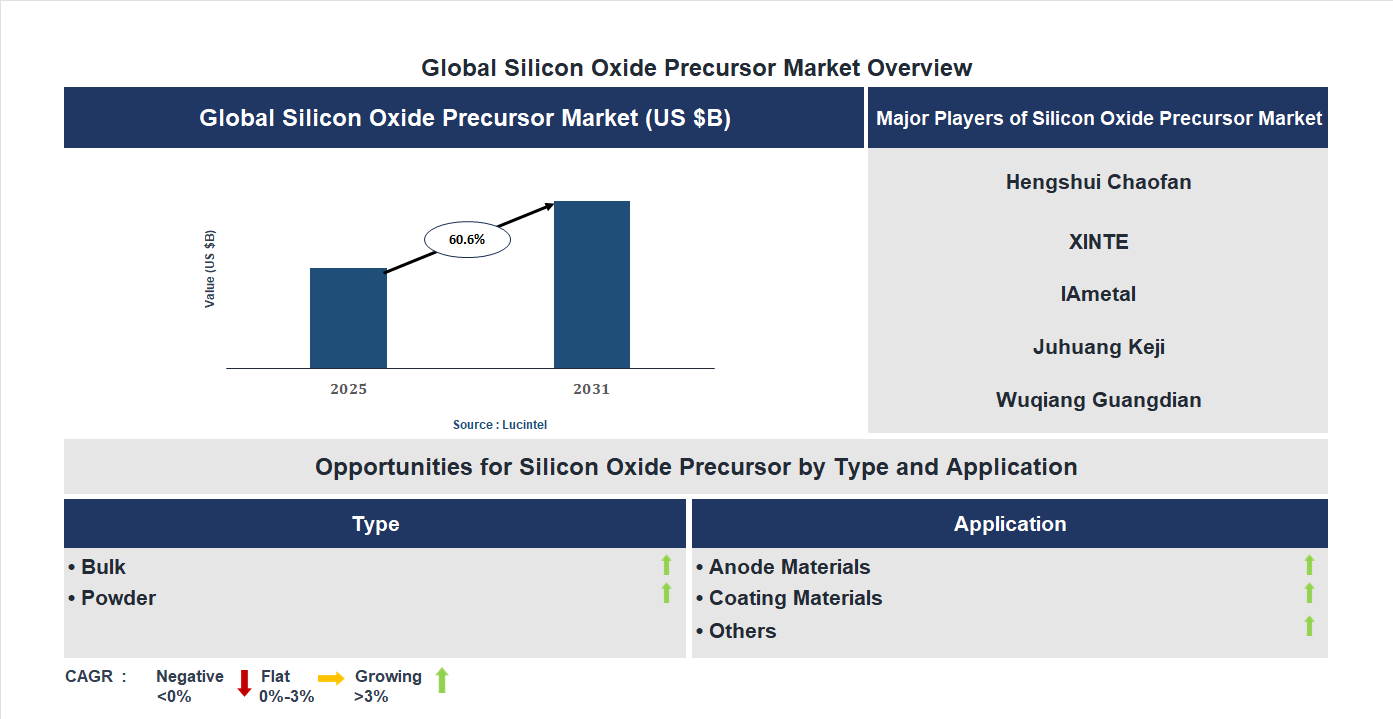
Key data points: The growth forecast = 60.6% annually for the next 7 years. Scroll below to get more insights. This market report covers trends, opportunities and forecasts in silicon oxide precursor market to 2031 by type (bulk and powder), application (anode materials, coating materials, and others), and region (North America, Europe, Asia Pacific, and the Rest of the World)
We'll send your sample report shortly.
• Lucintel forecasts that, within the type category, powder is expected to witness higher growth over the forecast period.
• Within the application category, anode material is expected to witness the highest growth.
• In terms of region, APAC is expected to witness the highest growth over the forecast period. Gain valuable insights for your business decisions with our comprehensive 150+ page report. Sample figures with some insights are shown below.
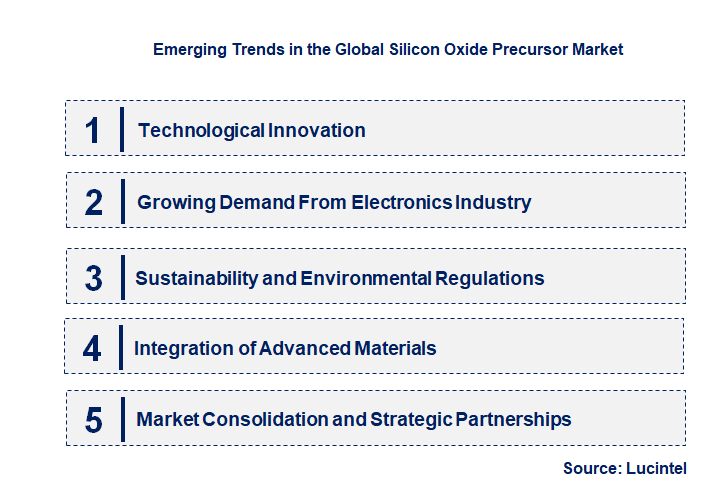
• Technological Innovation: Advancements in production methods such as chemical vapor deposition and sol-gel processes are improving precursor quality and efficiency. These innovations enable manufacturers to produce higher purity silicon oxide precursors with better control over particle size and morphology, which are essential for high-tech applications like semiconductors and optical devices. The focus on innovation is also reducing costs and environmental impact, making the market more sustainable and competitive.
• Growing Demand from Electronics Industry: The expansion of the electronics sector, especially in semiconductors, displays, and sensors, is significantly boosting the demand for silicon oxide precursors. As electronic devices become more sophisticated and miniaturized, the need for high-purity, reliable precursors increases. This trend is driving manufacturers to develop specialized products tailored for specific electronic applications, thereby expanding market opportunities and encouraging R&D investments.
• Sustainability and Environmental Regulations: Increasing environmental concerns and stricter regulations are pushing the market toward greener production processes. Companies are adopting eco-friendly methods such as low-emission manufacturing and recycling of silicon waste. These initiatives not only reduce the environmental footprint but also align with consumer preferences for sustainable products. Compliance with regulations is becoming a key factor influencing product development, supply chain management, and market competitiveness.
• Integration of Advanced Materials: The incorporation of advanced materials like nanomaterials and composites into silicon oxide precursors is opening new avenues for high-performance applications. These materials enhance properties such as thermal stability, mechanical strength, and optical clarity. The trend toward integrating advanced materials is driven by the demand for innovative solutions in industries like aerospace, automotive, and healthcare, thereby expanding the scope and functionality of silicon oxide precursors.
• Market Consolidation and Strategic Partnerships: The market is witnessing increased mergers, acquisitions, and collaborations among key players to strengthen their market position and expand product portfolios. Strategic partnerships facilitate technology sharing, joint R&D efforts, and access to new markets. This consolidation trend helps companies optimize resources, reduce competition, and accelerate innovation, ultimately shaping a more resilient and competitive market landscape. In summary, these emerging trends are transforming the silicon oxide precursor market by enhancing product quality, expanding application areas, promoting sustainability, and fostering innovation. They are driving market growth, encouraging strategic collaborations, and reshaping supply chains, positioning the industry for sustained development in the coming years.
• Technological Innovations: Development of advanced synthesis methods has improved precursor purity and efficiency, reducing production costs and enhancing product performance, which boosts market competitiveness and broadens application scope.
• Sustainability Initiatives: Companies are adopting eco-friendly production processes, such as using renewable energy and reducing hazardous waste, aligning with global environmental standards and increasing market appeal to eco-conscious consumers.
• Expansion in Semiconductor Industry: Rising demand for semiconductors has driven increased consumption of silicon oxide precursors, supporting the growth of electronics manufacturing and enabling the development of more sophisticated devices.
• Growing Solar Industry: The expansion of solar panel manufacturing has led to higher demand for silicon oxide precursors, fueling market growth and encouraging investments in renewable energy technologies.
• Regional Market Dynamics: Asia-Pacific remains dominant due to large-scale electronics and solar industries, while North America and Europe are focusing on innovation and sustainability, influencing global supply chains and competitive strategies. These developments are collectively propelling the silicon oxide precursor market toward higher growth trajectories, fostering innovation, sustainability, and regional expansion, which are reshaping industry dynamics and creating new opportunities for stakeholders.
• Electronics Industry: Enhanced Semiconductor Production : The increasing demand for semiconductors in consumer electronics, automotive, and industrial applications is driving the need for high-purity silicon oxide precursors. Innovations in chip manufacturing processes require advanced materials that improve performance and reliability. This growth opportunity impacts the market by expanding the supply chain for electronic components and fostering the development of next-generation devices, ultimately boosting overall market revenue.
• Solar Energy Sector: Improved Photovoltaic Cell Efficiency : Silicon oxide precursors are crucial in manufacturing solar panels, particularly in anti-reflective coatings and encapsulants. As the solar industry expands globally, there is a rising demand for materials that enhance cell efficiency and durability. This opportunity influences the market by encouraging the development of specialized precursors that meet the stringent quality standards of solar applications, thereby supporting sustainable energy growth.
• Glass and Ceramics Industry: Advanced Coatings and Materials : The use of silicon oxide precursors in producing high-performance glass and ceramic materials is increasing. These materials are essential for architectural, automotive, and consumer products requiring durability and clarity. The growth in this application drives innovation in precursor formulations, leading to improved product quality and expanding market reach into new sectors such as smart glass and high-strength ceramics.
• Chemical Manufacturing: Specialty Silicates and Coatings : Silicon oxide precursors are vital in producing specialty silicates and protective coatings used in various industrial processes. The demand for environmentally friendly and high-performance coatings is rising, creating opportunities for tailored precursor solutions. This growth impacts the market by fostering the development of sustainable chemical products and expanding the application scope in industrial maintenance and protection.
• Healthcare and Biotechnology: Advanced Diagnostic and Medical Devices : The healthcare sector is increasingly utilizing silicon oxide-based materials for diagnostic devices, biosensors, and medical implants. The need for biocompatible and high-purity precursors is driving innovation in this field. This opportunity influences the market by enabling the development of more precise and reliable medical technologies, thereby opening new avenues for growth in medical applications. In summary, these growth opportunities across key applications are significantly shaping the silicon oxide precursor market. They are fostering innovation, expanding application scopes, and driving demand for specialized materials. As industries adopt advanced silicon oxide solutions, the market is poised for sustained growth, with increased competitiveness and technological progress serving as key outcomes.
• Technological Innovation: The rapid development of manufacturing technologies enhances the quality and efficiency of silicon oxide precursors, enabling manufacturers to meet the increasing demand from electronics, solar, and automotive industries. Innovations such as advanced chemical synthesis and process automation reduce costs and improve product consistency, fostering market growth. As industries seek more sustainable and high-performance materials, technological advancements will continue to be a primary driver, supporting the development of new applications and expanding market reach.
• Growing Electronics and Semiconductor Industry: The surge in demand for semiconductors, driven by the proliferation of consumer electronics, IoT devices, and 5G infrastructure, significantly boosts the need for silicon oxide precursors. These materials are essential in manufacturing integrated circuits and electronic components, making their demand directly proportional to the growth of the electronics sector. As technological adoption accelerates globally, this sector remains a vital growth driver for the market, encouraging investments and innovation.
• Expansion of Solar Energy Sector: The increasing adoption of solar photovoltaic (PV) technology to meet renewable energy targets is fueling demand for high-quality silicon oxide precursors. These materials are critical in producing solar panels with enhanced efficiency and durability. Government incentives and falling costs of solar installations further stimulate market expansion. As the world shifts towards sustainable energy solutions, the solar sectors growth directly impacts the demand for silicon oxide precursors, creating new opportunities for manufacturers.
• Regulatory and Environmental Standards: Stringent regulations aimed at reducing environmental impact and ensuring safety standards influence the production and use of silicon oxide precursors. Compliance with environmental regulations, such as emission controls and waste management, necessitates technological upgrades and process modifications. While these regulations may increase operational costs, they also promote the development of greener and more sustainable production methods, ultimately shaping the markets evolution towards eco-friendly practices. The challenges facing this silicon oxide precursor market include:-
• Fluctuating Raw Material Prices: The silicon oxide precursor industry heavily depends on raw materials like silica and chemicals, whose prices are subject to volatility due to supply chain disruptions, geopolitical tensions, and market speculation. These fluctuations can lead to increased production costs and reduced profit margins for manufacturers. Managing raw material procurement efficiently and hedging against price volatility are critical challenges that impact overall market stability and competitiveness.
• Environmental and Regulatory Constraints: While regulations promote sustainability, they also impose significant compliance costs and operational constraints. Stricter emission standards, waste disposal regulations, and safety protocols require substantial investments in technology upgrades and process modifications. Navigating these regulatory landscapes can be complex and costly, potentially delaying project timelines and increasing overall expenses, which may hinder market growth if not managed effectively.
• Technological Disruptions and Competition: Rapid technological changes and the emergence of alternative materials pose a threat to the silicon oxide precursor market. Companies must continuously innovate to stay competitive, facing challenges related to research and development costs and the risk of obsolescence. Additionally, intense competition from established players and new entrants can lead to price wars and reduced profit margins, impacting overall industry stability and growth prospects. In summary, the silicon oxide precursor market is shaped by significant technological advancements and expanding end-use sectors like electronics and solar energy. However, it faces challenges such as raw material price volatility, stringent environmental regulations, and technological disruptions. These factors collectively influence market stability, growth potential, and strategic decision-making. Stakeholders must navigate these drivers and challenges carefully to capitalize on emerging opportunities while mitigating risks, ensuring sustainable growth in this dynamic industry.
• Hengshui Chaofan
• XINTE
• IAmetal
• Juhuang Keji
• Wuqiang Guangdian
• Guangde Advanced Optoelectronic Material Corporation
• Luoyang Lianchuang lithium energy technology Co
• BTR
• Daejoo Electronic
• Tera Technos
• Bulk
• Powder
• Anode Materials
• Coating Materials
• Others
• North America
• Europe
• Asia Pacific
• The Rest of the World
• United States: The US market has seen increased investment in sustainable production methods and innovations in high-purity silicon oxide precursors for electronics and semiconductor applications. Regulatory pressures are encouraging companies to adopt environmentally friendly processes, leading to advancements in low-emission manufacturing techniques. Additionally, collaborations between industry leaders and research institutions are fostering new product development, especially in the field of advanced coatings and composites. The US also benefits from a robust supply chain and technological expertise, which support rapid commercialization of new silicon oxide precursor products.
• China: China continues to dominate the global silicon oxide precursor market through substantial capacity expansions and technological upgrades. The country is focusing on reducing reliance on imports by developing indigenous production capabilities, driven by government policies supporting the semiconductor and electronics sectors. Innovations in process efficiency and waste management are also emerging, aligning with environmental standards. China’s large-scale manufacturing infrastructure and increasing domestic demand for electronics, solar panels, and construction materials are fueling market growth. Strategic investments are aimed at enhancing product quality and expanding into high-value applications.
• Germany: Germany’s market developments are characterized by a focus on high-performance and specialty silicon oxide precursors used in automotive, electronics, and industrial applications. The country emphasizes sustainable manufacturing practices, including energy-efficient processes and waste reduction. German companies are investing in research to develop advanced precursors with enhanced properties such as higher purity and better thermal stability. The integration of Industry 4.0 technologies is improving production precision and supply chain management. Germany’s strong emphasis on quality and innovation positions it as a leader in specialized silicon oxide precursor solutions within Europe.
• India: India is witnessing rapid growth in the silicon oxide precursor market driven by expanding electronics manufacturing, solar energy projects, and infrastructure development. The government’s initiatives to promote Make in India and renewable energy are boosting demand for silicon-based materials. Local manufacturers are investing in capacity expansion and technological upgrades to meet rising domestic needs. There is also a focus on developing cost-effective and environmentally friendly production processes. Collaborations with international firms are facilitating technology transfer and innovation. Overall, India’s market is poised for significant growth, supported by favorable policies and increasing industrialization.
• Japan: Japan maintains a strong position in the silicon oxide precursor market through continuous innovation and high-quality production standards. The country is advancing in the development of specialty precursors for electronics, semiconductors, and automotive applications, emphasizing miniaturization and performance. Japanese firms are adopting eco-friendly manufacturing techniques to comply with stringent environmental regulations. Investment in R&D is leading to the creation of new materials with improved thermal and chemical stability. Japan’s focus on precision engineering and sustainable practices ensures its competitiveness in the global market, with a growing emphasis on high-value, specialized silicon oxide precursors.


• Hengshui Chaofan
• XINTE
• IAmetal
• Juhuang Keji
• Wuqiang Guangdian
• Guangde Advanced Optoelectronic Material Corporation
• Luoyang Lianchuang lithium energy technology Co
• BTR
• Daejoo Electronic
• Tera Technos Q5. Which silicon oxide precursor market segment will be the largest in future? Answer: Lucintel forecasts that, within the type category, powder is expected to witness higher growth over the forecast period. Q6. In silicon oxide precursor market, which region is expected to be the largest in next 5 years? Answer: In terms of region, APAC is expected to witness the highest growth over the forecast period. Q7. Do we receive customization in this report? Answer: Yes, Lucintel provides 10% customization without any additional cost.


Choose a license that fits your team. Instant PDF delivery.
Prices exclude taxes. Instant delivery. Custom licensing available on request.
Market Report · July 22, 2026
Market Report · July 22, 2026
Market Report · July 22, 2026
Trusted partner for strategic intelligence and business growth


Receive a complimentary market analysis tailored to your industry. Our analysts will identify key growth opportunities and competitive dynamics specific to your business.

Market size, growth rate, and key trend analysis for your specific sector.

Top competitor positioning and market share analysis.

Strategic recommendations backed by data-driven insights.
Get curated market intelligence and competitive moves straight to your inbox.
By subscribing, you agree to receive our monthly insights. Unsubscribe anytime.
Receive a complimentary market analysis tailored to your industry. Our analysts will identify key growth opportunities and competitive dynamics specific to your business.
Market size, growth rate, and key trend analysis for your specific sector.
Top competitor positioning and market share analysis.
Strategic recommendations backed by data-driven insights.
Get curated market intelligence, emerging trends, and competitive moves straight to your inbox each month.
By subscribing, you agree to receive our monthly insights. Unsubscribe anytime.
We'll send your sample report shortly.