
Report Feature
shRNA Clone Market Trends and Forecast
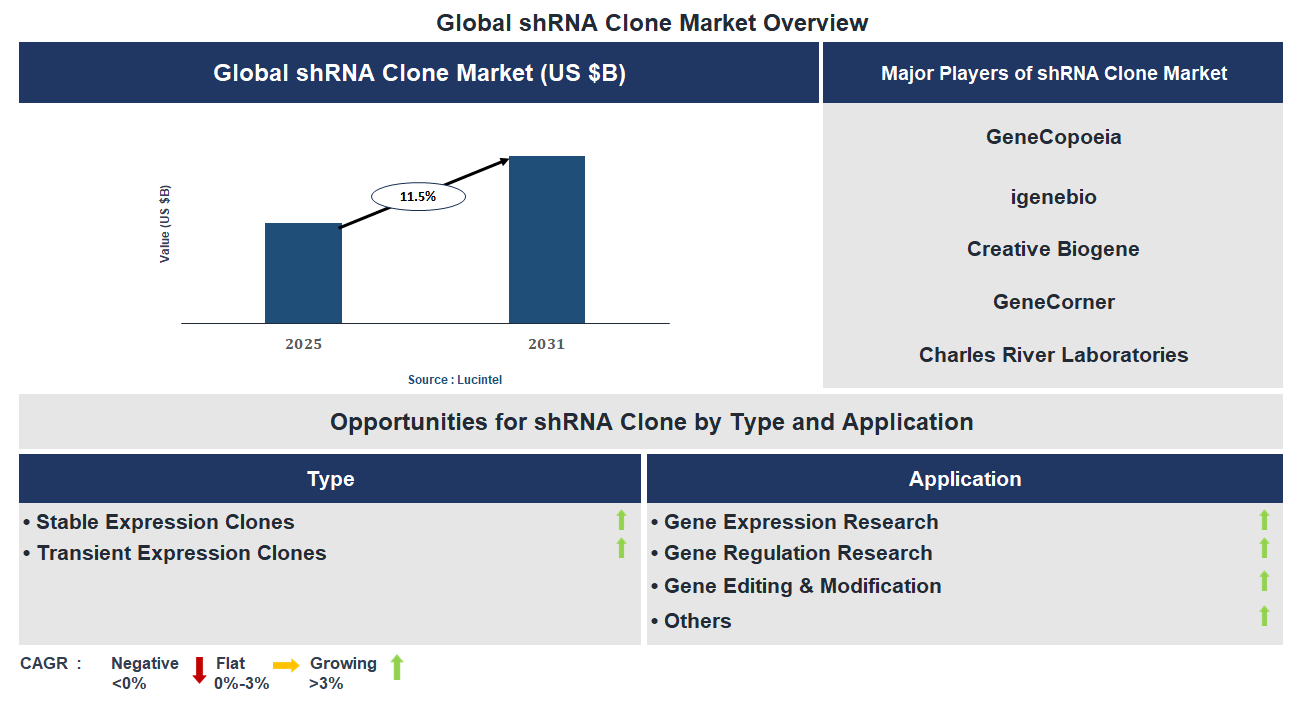
The future of the global shRNA clone market looks promising with opportunities in the gene expression research, gene regulation research, and gene editing & modification markets. The global shRNA clone market is expected to grow with a CAGR of 11.5% from 2025 to 2031. The major drivers for this market are the increasing demand for gene silencing tools, the rising adoption of RNA interference therapies, and the growing focus on personalized medicine solutions.• Lucintel forecasts that, within the type category, stable expression clone is expected to witness higher growth over the forecast period.
• Within the application category, gene editing & modification is expected to witness the highest growth.
• In terms of region, APAC is expected to witness the highest growth over the forecast period. Gain valuable insights for your business decisions with our comprehensive 150+ page report. Sample figures with some insights are shown below.
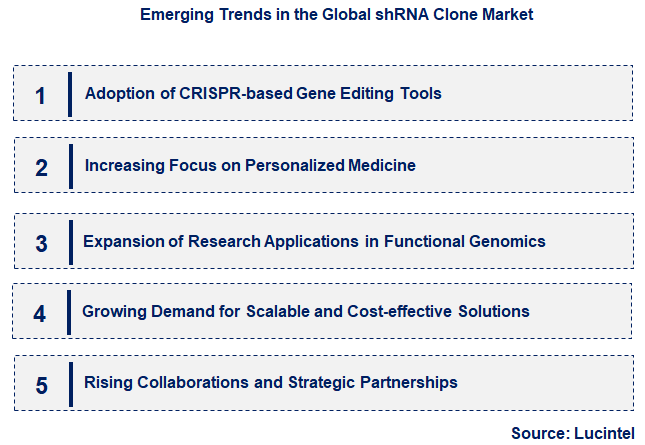
Emerging Trends in the shRNA Clone Market
The shRNA clone market is experiencing rapid growth driven by advances in gene silencing technologies, increasing demand for targeted therapies, and expanding research applications. As researchers and pharmaceutical companies seek more precise genetic tools, the market is evolving with innovative solutions and strategic collaborations. Emerging trends are shaping the landscape, influencing product development, market dynamics, and investment patterns. These developments are not only enhancing the efficiency and scope of gene silencing but also opening new avenues for personalized medicine and therapeutic interventions. Understanding these trends is crucial for stakeholders aiming to capitalize on the markets potential and navigate its future trajectory.• Adoption of CRISPR-based Gene Editing Tools: This trend signifies a shift towards more precise and efficient gene manipulation techniques. CRISPR technology complements shRNA approaches by enabling targeted gene modifications, which enhances research capabilities and therapeutic potential. The integration of CRISPR with shRNA platforms is fostering hybrid solutions that improve gene silencing accuracy and reduce off-target effects. This trend is attracting significant investment and collaboration, accelerating product innovation. As a result, the market is witnessing a convergence of gene editing and silencing technologies, broadening the scope of genetic research and personalized medicine.
• Increasing Focus on Personalized Medicine: The market is moving towards tailored therapeutic solutions based on individual genetic profiles. shRNA clones are being developed to target specific gene mutations associated with various diseases, including cancer and genetic disorders. This trend is driven by advancements in genomics and bioinformatics, enabling precise identification of therapeutic targets. Personalized shRNA therapies promise higher efficacy and fewer side effects, appealing to clinicians and patients alike. The growth of this trend is encouraging pharmaceutical companies to invest in customized gene silencing products, thereby expanding market opportunities and fostering innovation in precision medicine.
• Expansion of Research Applications in Functional Genomics: Researchers are increasingly utilizing shRNA clones to explore gene functions and interactions at a genome-wide scale. This trend is supported by the decreasing costs of high-throughput screening and the development of comprehensive shRNA libraries. It allows for systematic gene knockdown studies, facilitating discoveries in disease mechanisms and potential drug targets. The expansion of functional genomics applications is driving demand for diverse and high-quality shRNA clones, leading to market growth. This trend enhances our understanding of complex biological systems and accelerates the development of novel therapeutic strategies.
• Growing Demand for Scalable and Cost-effective Solutions: As research and clinical applications expand, there is a rising need for affordable, high-throughput shRNA cloning platforms. Companies are investing in automation, standardization, and cost reduction to meet this demand. Scalable solutions enable large-scale screening and therapeutic development, making gene silencing more accessible to a broader range of users. This trend is crucial for accelerating research timelines and reducing costs, thereby increasing market adoption. The focus on affordability and scalability is transforming the market landscape, making shRNA technology more mainstream and widely applicable across various sectors.
• Rising Collaborations and Strategic Partnerships: The market is witnessing an increase in collaborations between biotech firms, academic institutions, and pharmaceutical companies. These partnerships aim to develop innovative shRNA platforms, share expertise, and accelerate product commercialization. Such collaborations facilitate access to advanced technologies, funding, and market channels, fostering innovation and reducing time-to-market. This trend is vital for overcoming technical challenges and expanding the application scope of shRNA clones. As partnerships grow, they are driving market expansion, enhancing product pipelines, and strengthening the overall ecosystem for gene silencing technologies. In summary, these emerging trends are collectively reshaping the shRNA clone market by fostering innovation, enhancing precision, and expanding application horizons. They are enabling more targeted, efficient, and affordable solutions, which are crucial for advancing research and therapeutic development. As these trends continue to evolve, the market is poised for significant growth, driven by technological integration, personalized approaches, and strategic collaborations.
Recent Development in the shRNA Clone Market
The shRNA clone market is experiencing rapid growth driven by advancements in gene silencing technologies and increasing demand for targeted therapies. Innovations in delivery systems and expanding applications across research and clinical settings are fueling market expansion. As genetic research progresses, the need for efficient, reliable, and scalable shRNA solutions becomes critical. This evolving landscape presents significant opportunities for biotech companies, researchers, and healthcare providers to develop novel treatments and enhance understanding of gene functions, ultimately transforming personalized medicine and therapeutic strategies.• Growing Demand for Gene Silencing Tools: The increasing need for precise gene regulation in research and therapy is boosting the shRNA clone market. Advances in genetic editing and functional genomics require reliable shRNA clones for gene knockdown studies. This demand is driven by the rise in cancer, genetic disorder research, and personalized medicine initiatives. As a result, manufacturers are expanding their product portfolios to include diverse, high-quality shRNA clones, which enhance research capabilities and accelerate drug discovery processes.
• Innovations in Delivery Technologies: Development of novel delivery systems such as viral vectors, nanoparticles, and lipid-based carriers is improving shRNA stability and cellular uptake. These innovations enable more efficient gene silencing in vitro and in vivo, broadening the scope of therapeutic applications. Enhanced delivery methods reduce off-target effects and increase treatment efficacy, making shRNA-based therapies more viable. This progress is attracting investments and fostering collaborations between biotech firms and research institutions, further propelling market growth.
• Expansion of Therapeutic Applications: The application of shRNA clones in treating diseases like cancer, viral infections, and genetic disorders is expanding rapidly. Clinical trials utilizing shRNA-based therapies are demonstrating promising results, encouraging further development. This expansion is driven by the need for targeted, less invasive treatment options with fewer side effects. As regulatory approvals increase, the market for therapeutic shRNA clones is expected to grow significantly, opening new revenue streams for biotech companies and healthcare providers.
• Increasing Adoption in Research and Diagnostics: The use of shRNA clones in functional genomics, drug target validation, and diagnostic development is rising. Researchers rely on these tools to understand gene functions and identify potential therapeutic targets. The integration of shRNA technology into high-throughput screening platforms enhances research efficiency. This widespread adoption is fueling demand for standardized, high-quality clones and is fostering innovation in diagnostic assays, ultimately strengthening the market’s overall growth trajectory.
• Rising Investments and Strategic Collaborations: Investments in gene silencing technologies and strategic partnerships are accelerating market development. Biotech firms are acquiring or collaborating with smaller innovators to expand their product offerings and technological capabilities. Funding from venture capital and government grants supports research and commercialization efforts. These collaborations facilitate the development of next-generation shRNA clones with improved specificity and delivery, ensuring sustained market growth and increased competitiveness in the global biotech landscape. The overall impact of these developments is a robust, expanding market characterized by technological innovation, increased therapeutic applications, and greater research integration. This growth is expected to lead to more effective gene therapies, personalized medicine solutions, and advanced research tools, ultimately transforming healthcare and scientific discovery.
Strategic Growth Opportunities in the shRNA Clone Market
The shRNA clone market is experiencing rapid expansion driven by advancements in gene silencing technologies and increasing demand for targeted genetic research. Growing applications in therapeutics, functional genomics, and personalized medicine are fueling market growth. Innovations in delivery methods and vector development further enhance opportunities. As research institutions and biotech companies invest heavily, the market is poised for significant growth, offering numerous strategic opportunities for stakeholders to capitalize on emerging trends and technological advancements.• Expansion in Therapeutic Applications: The increasing use of shRNA clones for gene therapy and disease treatment presents substantial growth potential. As research progresses, more targeted therapies for cancer, genetic disorders, and infectious diseases are being developed, driving demand for specialized clones. This expansion is supported by regulatory approvals and clinical trials, making shRNA clones a vital component in personalized medicine and precision therapeutics.
• Growing Adoption in Functional Genomics Research: Researchers are leveraging shRNA clones to understand gene functions and interactions at a deeper level. The ability to silence specific genes enables detailed functional studies, accelerating discoveries in biology and medicine. The rising need for high-throughput screening and gene function validation is boosting demand for diverse and high-quality shRNA clone libraries.
• Technological Advancements in Delivery and Vector Systems: Innovations in delivery methods, such as viral vectors and nanoparticle-based systems, are improving the efficiency and safety of shRNA clone applications. These advancements facilitate better gene silencing in difficult-to-transfect cells and in vivo models. Enhanced vector design and delivery techniques are expanding the scope of research and therapeutic applications, making shRNA clones more accessible and effective.
• Increasing Investment in Personalized Medicine: The shift towards personalized treatment strategies is propelling the demand for customized shRNA clones tailored to individual genetic profiles. This trend is supported by advancements in genomic sequencing and bioinformatics, enabling precise targeting of disease-causing genes. Investment from biotech firms and research institutions is accelerating the development of personalized shRNA-based therapies, opening new avenues for market growth.
• Rising Use in Agricultural Biotechnology: The application of shRNA clones in crop improvement and pest resistance is gaining traction. Genetic modification using shRNA technology offers sustainable solutions for agriculture by enhancing yield, stress tolerance, and disease resistance. Growing awareness of environmental benefits and regulatory support is further encouraging adoption, creating new opportunities for market expansion into agricultural biotech sectors. In conclusion, these strategic growth opportunities are set to significantly influence the shRNA clone market by fostering innovation, expanding application areas, and attracting investments. The combined effect of technological progress and increasing demand across diverse sectors will likely propel market growth, making it a promising landscape for industry players and researchers alike.
shRNA Clone Market Driver and Challenges
The shRNA clone market is influenced by a variety of technological, economic, and regulatory factors that shape its growth and development. Advances in gene silencing technologies, increasing demand for targeted therapies, and expanding research in molecular biology are key drivers. Conversely, challenges such as regulatory hurdles, high costs, and ethical concerns pose significant barriers. Understanding these drivers and challenges is essential for stakeholders to navigate the evolving landscape effectively. The interplay of innovation, market dynamics, and compliance requirements will determine the future trajectory of the shRNA clone market, impacting research institutions, biotech companies, and healthcare providers alike. The factors responsible for driving the shRNA clone market include:• Technological Advancements: The continuous development of more efficient and specific shRNA delivery systems has significantly propelled market growth. Innovations such as viral vectors and nanoparticle-based delivery enhance gene silencing efficacy, making shRNA clones more viable for research and therapeutic applications. These technological improvements reduce off-target effects and increase stability, encouraging broader adoption across laboratories and clinics. As research tools become more sophisticated, demand for high-quality shRNA clones rises, fueling market expansion. The ongoing evolution of gene editing and silencing technologies further supports this growth trajectory, attracting investments and fostering innovation within the industry.
• Rising Research and Development Activities: Increasing investments in genetic research and molecular biology are major drivers. Academic institutions, biotech firms, and pharmaceutical companies are intensively exploring gene silencing for disease treatment, especially in cancer, viral infections, and genetic disorders. The need for reliable, customizable shRNA clones to facilitate these studies boosts market demand. Additionally, collaborations between research organizations and biotech companies accelerate product development and commercialization. The expanding pipeline of gene-based therapies and diagnostics underscores the importance of shRNA clones, making them a critical component in advancing personalized medicine and targeted treatments.
• Growing Prevalence of Genetic Disorders: The rising incidence of genetic diseases globally is a significant market driver. As understanding of gene functions deepens, shRNA technology offers promising therapeutic solutions for conditions like cancer, HIV, and hereditary disorders. The demand for gene-silencing tools to develop personalized treatments is increasing, prompting pharmaceutical companies to invest heavily in shRNA clone development. This trend is further supported by government initiatives and funding aimed at rare disease research. The ability to precisely target disease-causing genes with shRNA enhances the potential for effective therapies, thereby expanding the market scope and encouraging innovation in gene therapy approaches.
• Increasing Adoption of Precision Medicine: The shift towards personalized healthcare is a key driver. shRNA clones enable targeted gene silencing, aligning with the goals of precision medicine to tailor treatments to individual genetic profiles. This approach improves therapeutic efficacy and reduces side effects, making it highly attractive to clinicians and researchers. The integration of shRNA technology into clinical workflows is facilitated by advancements in genomics and bioinformatics, which help identify suitable gene targets. As healthcare systems worldwide emphasize personalized treatment strategies, the demand for customizable shRNA clones is expected to grow, further fueling market expansion and technological innovation. The challenges facing this shRNA clone market include:
• Regulatory and Ethical Concerns: Stringent regulatory frameworks governing gene therapy and genetic research pose significant hurdles. Approval processes are lengthy and complex, often delaying product commercialization. Ethical debates surrounding gene silencing, especially in human applications, create additional barriers, impacting market growth. Concerns about off-target effects and long-term safety also necessitate rigorous testing and validation, increasing costs and timeframes. Navigating these regulatory landscapes requires substantial expertise and resources, which can be challenging for smaller firms and startups. These factors collectively slow down innovation and market penetration, limiting the rapid adoption of shRNA clones in clinical settings.
• High Costs of Development and Production: The expenses associated with developing, validating, and manufacturing high-quality shRNA clones are substantial. Advanced technologies, quality control measures, and regulatory compliance add to the costs, making products expensive for end-users. This financial barrier restricts access for smaller research institutions and developing markets, limiting market growth. Additionally, the costs of clinical trials for therapeutic applications further escalate expenses, impacting profitability and investment. The high cost structure necessitates significant funding and strategic partnerships, which can be challenging to secure, thereby constraining market expansion.
• Technical Limitations and Off-Target Effects: Despite technological advancements, off-target gene silencing remains a concern, affecting the specificity and safety of shRNA clones. These unintended effects can lead to inaccurate research results or adverse therapeutic outcomes, hindering clinical adoption. Overcoming these technical limitations requires ongoing research and refinement, which can be time-consuming and costly. The complexity of gene regulation and variability among different cell types further complicates the development of universally effective shRNA clones. Addressing these challenges is critical for ensuring the reliability and safety of shRNA-based therapies, but it remains a significant hurdle for market growth. In summary, the shRNA clone market is driven by rapid technological innovations, increasing research activities, and the rising prevalence of genetic disorders, all aligned with the trend toward personalized medicine. However, regulatory complexities, high development costs, and technical limitations pose substantial challenges. These factors collectively influence the pace of market growth, requiring stakeholders to balance innovation with compliance and cost management. The future of the market hinges on overcoming these hurdles through technological improvements, strategic collaborations, and regulatory advancements, ultimately enabling more effective gene-silencing solutions for research and therapeutic applications.
List of shRNA Clone Companies
Companies in the market compete on the basis of product quality offered. Major players in this market focus on expanding their manufacturing facilities, R&D investments, infrastructural development, and leverage integration opportunities across the value chain. With these strategies shRNA clone companies cater increasing demand, ensure competitive effectiveness, develop innovative products & technologies, reduce production costs, and expand their customer base. Some of the shRNA clone companies profiled in this report include-• GeneCopoeia
• igenebio
• Creative Biogene
• GeneCorner
• Charles River Laboratories
• OriGene Technologies, Inc.
• Thermo Fisher Scientific
shRNA Clone Market by Segment
The study includes a forecast for the global shRNA clone market by type, application, and region.shRNA Clone Market by Type [Value from 2019 to 2031]:
• Stable Expression Clones
• Transient Expression Clones
shRNA Clone Market by Application [Value from 2019 to 2031]:
• Gene Expression Research
• Gene Regulation Research
• Gene Editing & Modification
• Others
shRNA Clone Market by Region [Value from 2019 to 2031]:
• North America
• Europe
• Asia Pacific
• The Rest of the World
Country Wise Outlook for the shRNA Clone Market
The shRNA clone market has experienced significant growth driven by advancements in gene therapy, personalized medicine, and biotechnology research. As researchers seek more efficient gene silencing tools, countries are investing heavily in innovation, infrastructure, and regulatory frameworks. The United States remains a leader in technological development, while China and India are rapidly expanding their research capacities. Germany and Japan are focusing on integrating shRNA technologies into clinical applications and industrial processes. These developments reflect a global shift towards precision medicine and molecular biology, fostering new opportunities and challenges in the market.• United States: The US continues to dominate the shRNA clone market with extensive research funding, innovative biotech companies, and advanced clinical trials. Major players are developing next-generation shRNA delivery systems and expanding applications in cancer and genetic disorders. Regulatory agencies are streamlining approval processes, boosting market growth. Academic institutions are also contributing significantly through groundbreaking research, fostering collaborations between industry and academia. The US market is characterized by high adoption rates and a focus on personalized medicine, driving innovation and commercialization.
• China: China is rapidly advancing in the shRNA clone market, supported by government initiatives and increased R&D investments. The country is focusing on developing cost-effective and scalable shRNA production methods. Chinese biotech firms are expanding their pipelines into oncology, infectious diseases, and agricultural biotech. The market benefits from a large pool of skilled scientists and growing domestic demand for gene therapy solutions. Regulatory frameworks are evolving to facilitate faster approval processes, encouraging innovation. China’s strategic focus on biotechnology positions it as a key emerging player in the global shRNA market.
• Germany: Germany emphasizes integrating shRNA technologies into clinical and industrial applications, particularly in personalized medicine and biopharmaceuticals. The country benefits from a strong biotech ecosystem, robust regulatory standards, and collaborations between academia and industry. German companies are investing in advanced delivery systems and improving shRNA stability and efficiency. The market is also driven by increasing demand for gene-based therapies and diagnostics. Germany’s focus on quality and safety standards ensures high market credibility, fostering international partnerships and export opportunities.
• India: India is witnessing rapid growth in the shRNA clone market, driven by increasing investments in biotech startups and research institutions. The country is focusing on developing affordable and scalable shRNA solutions to address local healthcare needs. Indian companies are expanding into therapeutic areas such as cancer, genetic disorders, and infectious diseases. Government initiatives like Make in India are promoting biotech innovation and manufacturing capabilities. The market is also benefiting from a large pool of scientific talent and collaborations with global firms. India’s strategic emphasis on cost-effective solutions positions it as a significant emerging market in the global landscape.
• Japan: Japan is advancing in the shRNA clone market through innovative research and integration into clinical applications. The country’s focus is on improving delivery mechanisms, reducing off-target effects, and enhancing therapeutic efficacy. Japanese biotech firms are collaborating with international partners to develop novel gene-silencing therapies. The government supports biotech innovation through funding and regulatory reforms. Japan’s aging population drives demand for gene therapies targeting age-related diseases. The market is characterized by high-quality research, technological sophistication, and a focus on safety and efficacy, positioning Japan as a key player in the global shRNA landscape.

Features of the Global shRNA Clone Market
Market Size Estimates: shRNA clone market size estimation in terms of value ($B). Trend and Forecast Analysis: Market trends (2019 to 2024) and forecast (2025 to 2031) by various segments and regions. Segmentation Analysis: shRNA clone market size by type, application, and region in terms of value ($B). Regional Analysis: shRNA clone market breakdown by North America, Europe, Asia Pacific, and Rest of the World. Growth Opportunities: Analysis of growth opportunities in different types, applications, and regions for the shRNA clone market. Strategic Analysis: This includes M&A, new product development, and competitive landscape of the shRNA clone market. Analysis of competitive intensity of the industry based on Porter’s Five Forces model.
FAQ
Q1. What is the growth forecast for shRNA clone market? Answer: The global shRNA clone market is expected to grow with a CAGR of 11.5% from 2025 to 2031. Q2. What are the major drivers influencing the growth of the shRNA clone market? Answer: The major drivers for this market are the increasing demand for gene silencing tools, the rising adoption of RNA interference therapies, and the growing focus on personalized medicine solutions. Q3. What are the major segments for shRNA clone market? Answer: The future of the shRNA clone market looks promising with opportunities in the gene expression research, gene regulation research, and gene editing & modification markets. Q4. Who are the key shRNA clone market companies? Answer: Some of the key shRNA clone companies are as follows:• GeneCopoeia
• igenebio
• Creative Biogene
• GeneCorner
• Charles River Laboratories
• OriGene Technologies, Inc.
• Thermo Fisher Scientific Q5. Which shRNA clone market segment will be the largest in future? Answer: Lucintel forecasts that, within the type category, stable expression clone is expected to witness higher growth over the forecast period. Q6. In shRNA clone market, which region is expected to be the largest in next 5 years? Answer: In terms of region, APAC is expected to witness the highest growth over the forecast period. Q7. Do we receive customization in this report? Answer: Yes, Lucintel provides 10% customization without any additional cost.
Table of Contents
List of Figures
List of Tables
Methodology
- In-depth interviews of the major players in this market
- Detailed secondary research from competitors’ financial statements and published data
- Extensive searches of published works, market, and database information pertaining to industry news, company press releases, and customer intentions
- A compilation of the experiences, judgments, and insights of Lucintel’s professionals, who have analyzed and tracked this market over the years.


Buy Now
Choose a license that fits your team. Instant PDF delivery.
Prices exclude taxes. Instant delivery. Custom licensing available on request.
Key Questions
- • What are some of the most promising, high-growth opportunities for the shRNA clone market by type (stable expression clones and transient expression clones), application (gene expression research, gene regulation research, gene editing & modification, and others), and region (North America, Europe, Asia Pacific, and the Rest of the World)?
- • Which segments will grow at a faster pace and why?
- • Which region will grow at a faster pace and why?
- • What are the key factors affecting market dynamics? What are the key challenges and business risks in this market?
- • What are the business risks and competitive threats in this market?
- • What are the emerging trends in this market and the reasons behind them?
- • What are some of the changing demands of customers in the market?
- • What are the new developments in the market? Which companies are leading these developments?
- • Who are the major players in this market? What strategic initiatives are key players pursuing for business growth?
- • What are some of the competing products in this market and how big of a threat do they pose for loss of market share by material or product substitution?
- • What M&A activity has occurred in the last 6 years and what has its impact been on the industry? For any questions related to shRNA Clone Market, shRNA Clone Market Size, shRNA Clone Market Growth, shRNA Clone Market Analysis, shRNA Clone Market Report, shRNA Clone Market Share, shRNA Clone Market Trends, shRNA Clone Market Forecast, shRNA Clone Companies, write Lucintel analyst at email: helpdesk@lucintel.com. We will be glad to get back to you soon.


