
Market Report · July 16, 2026

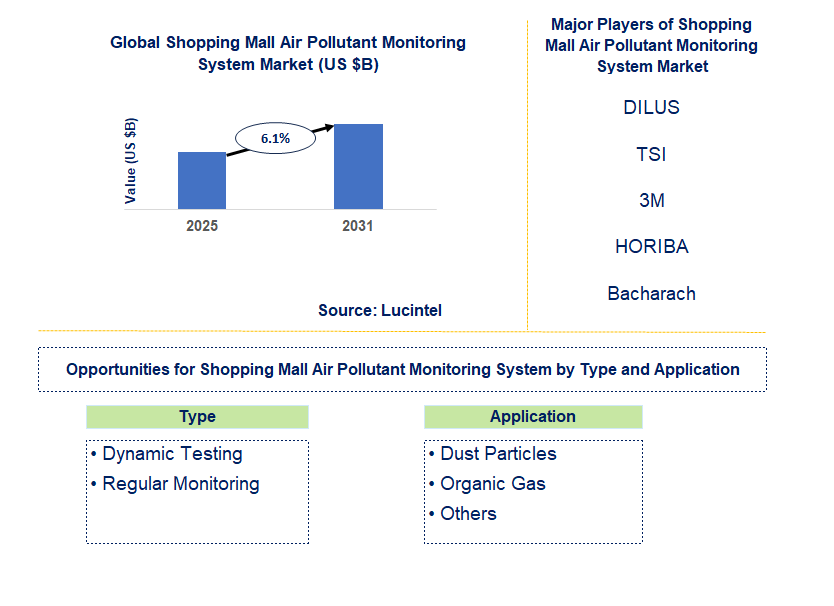
Key data points: The growth forecast = 6.1% annually for the next 7 years. Scroll below to get more insights. This market report covers Trends, opportunities and forecasts in shopping mall air pollutant monitoring system market to 2031 by type (dynamic testing and regular monitoring), application (dust particles, organic gas, and others), and region (North America, Europe, Asia Pacific, and the Rest of the World)
We'll send your sample report shortly.
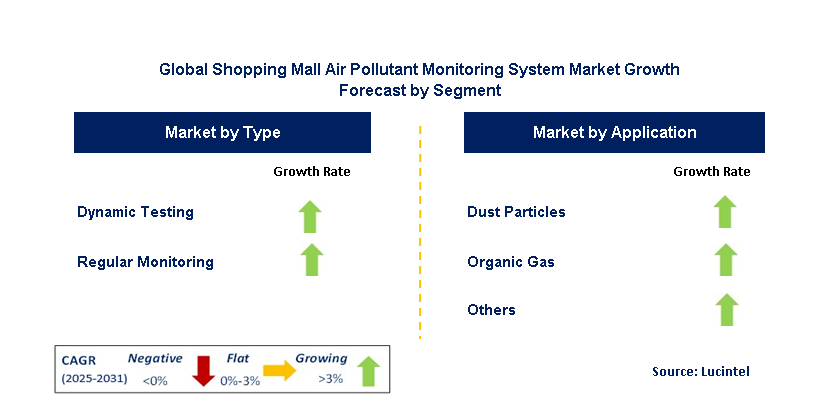
• Lucintel forecasts that, within the type category, dynamic testing is expected to witness higher growth over the forecast period.
• Within the application category, dust particle is expected to witness higher growth due to increasing air quality concerns.
• In terms of region, APAC is expected to witness the highest growth over the forecast period due to rapid urbanization and industrialization.
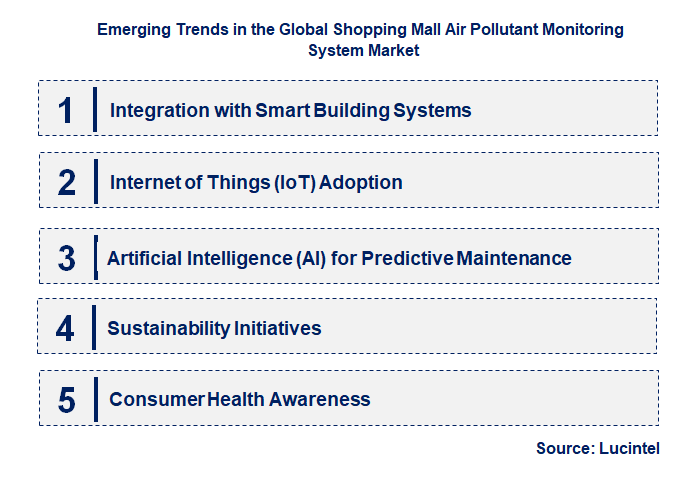
• Integration with Smart Building Systems: There is an increasing trend to integrate air pollutant monitoring systems with smart building technologies. This integration enables real-time monitoring and automatic adjustments to HVAC systems, optimizing air quality management. The synergy between these technologies improves both operational efficiency and indoor air quality.
• Internet of Things (IoT) Adoption: The adoption of IoT technologies is revolutionizing air quality monitoring in shopping malls. With IoT-enabled sensors, mall operators can track pollutant levels in real-time and make adjustments quickly. This connectivity ensures more accurate data and enables proactive maintenance of air quality systems, enhancing the shopping experience.
• Artificial Intelligence (AI) for Predictive Maintenance: AI is being increasingly used to optimize air pollutant monitoring systems in shopping malls. By using AI algorithms, malls can predict when maintenance is needed, ensuring that ventilation and filtration systems work efficiently. This helps prevent system failures and reduces operational costs.
• Sustainability Initiatives: As sustainability becomes a central focus for businesses, shopping malls are increasingly adopting air pollutant monitoring systems as part of their green building strategies. These systems play a key role in achieving environmental certifications, such as LEED, by improving indoor air quality and reducing the mall’s environmental footprint.
• Consumer Health Awareness: With rising awareness about the health impacts of air pollution, shoppers are becoming more conscious of the air quality in commercial spaces. This has led to increased demand for air pollutant monitoring systems, as mall operators seek to provide a safer, cleaner environment for their customers. These trends are reshaping the shopping mall air pollutant monitoring system market by driving the adoption of advanced technologies. The integration of smart systems, IoT, and AI, alongside sustainability efforts and consumer demand for healthier environments, is transforming how shopping malls manage air quality and creating more efficient, environmentally-friendly spaces.
• Government Regulations on Indoor Air Quality: Many governments worldwide are enforcing stricter regulations on indoor air quality in public spaces, including shopping malls. These regulations have driven the adoption of air pollutant monitoring systems to ensure compliance with legal standards, ensuring a healthier environment for shoppers.
• Smart Building Integration: Shopping malls are increasingly integrating air pollutant monitoring systems with their building management systems (BMS). This integration allows for automated adjustments to ventilation and air filtration systems, optimizing air quality and energy efficiency. It represents a significant leap towards more efficient and sustainable mall operations.
• Real-Time Monitoring and Data Analytics: Real-time air quality monitoring systems are gaining traction in shopping malls. These systems provide constant data on pollutants, enabling mall operators to take immediate action when air quality levels exceed safety limits. Advanced data analytics are also helping malls optimize their air quality strategies.
• Sustainability and Green Certifications: Many shopping malls are adopting air pollutant monitoring systems as part of their sustainability initiatives. These systems help malls meet environmental certification standards like LEED, highlighting their commitment to cleaner indoor environments. This trend is driving the growth of the air pollutant monitoring market in commercial real estate.
• Technological Advancements in Sensors: Advances in sensor technology are playing a crucial role in the growth of the air pollutant monitoring system market. New sensors are smaller, more accurate, and less expensive, making it easier for shopping malls to implement effective air quality monitoring systems at scale. These key developments indicate that the shopping mall air pollutant monitoring system market is growing rapidly due to technological advancements and increasing regulatory pressures. The focus on smart building integration, real-time monitoring, and sustainability is driving innovation and helping mall operators create cleaner and more energy-efficient environments.
• Integration with Smart Building Technologies: One major growth opportunity is the integration of air pollutant monitoring systems with smart building technologies. This integration allows for seamless communication between the air monitoring systems and other building systems, optimizing both air quality and operational efficiency.
• Adoption of IoT-Enabled Systems: The widespread adoption of IoT-enabled air quality monitoring systems represents a significant growth opportunity. These systems allow for real-time data collection and remote monitoring, providing greater flexibility and enabling faster response times to air quality issues in shopping malls.
• Energy Efficiency Optimization: Air pollutant monitoring systems can optimize energy usage in shopping malls by adjusting ventilation and filtration systems based on real-time air quality data. This offers a growth opportunity for energy-efficient air quality management, helping malls reduce costs and improve sustainability.
• Health-Conscious Consumer Demand: The increasing demand for healthier indoor environments creates growth opportunities for air pollutant monitoring systems in shopping malls. Consumers are becoming more conscious of air quality, and malls are investing in monitoring systems to meet this demand, improving customer satisfaction.
• Sustainability and Green Building Certifications: The push for sustainability and green certifications provides a growth opportunity for the market. By installing air pollutant monitoring systems, shopping malls can meet green building certification standards like LEED, positioning themselves as environmentally responsible and appealing to eco-conscious consumers. These growth opportunities are fueling the shopping mall air pollutant monitoring system market, driving the adoption of smart technologies, IoT, and energy-efficient solutions. The growing consumer demand for healthier environments and sustainability efforts are key factors in shaping the market’s future.
• DILUS
• TSI
• 3M
• HORIBA
• Bacharach
• Dynamic Testing
• Regular Monitoring
• Dust Particles
• Organic Gas
• Others
• North America
• Europe
• Asia Pacific
• The Rest of the World
• United States: The United States has been at the forefront of adopting advanced air pollutant monitoring systems in shopping malls. With an increasing focus on public health and sustainability, malls are implementing real-time air quality monitoring systems to ensure a healthier environment for customers. These systems are becoming integral in meeting both regulatory standards and consumer demand for healthier air quality.
• China: In China, the government has intensified its focus on environmental protection, driving the adoption of air pollutant monitoring systems in malls. Malls in major cities are installing air quality sensors to monitor pollutants like PM2.5, CO2, and VOCs. The push to improve air quality aligns with national efforts to combat urban pollution and promote healthier living environments for citizens.
• Germany: Germany's commitment to sustainability and environmental protection has led to the adoption of air pollutant monitoring systems in shopping malls. Many malls are integrating these systems with existing building management technologies to track air quality in real time. This development is in line with Germany’s green building certification initiatives and the country’s broader environmental goals.
• India: India is witnessing rapid urbanization and increasing pollution levels, making air quality a critical issue. In cities like Delhi and Mumbai, shopping malls are investing in air pollutant monitoring systems to safeguard the health of shoppers. These systems help malls comply with local air quality regulations while providing a safer environment for customers.
• Japan: Japan’s focus on environmental health and safety has led to the adoption of air quality monitoring systems in shopping malls. The integration of smart air monitoring technologies is prevalent, especially in urban malls like those in Tokyo. This development is in line with Japan’s efforts to improve the overall air quality and promote healthier indoor environments in commercial spaces.


• DILUS
• TSI
• 3M
• HORIBA
• Bacharach Q5. Which shopping mall air pollutant monitoring system market segment will be the largest in future? Answer: Lucintel forecasts that, within the type category, dynamic testing is expected to witness higher growth over the forecast period. Q6. In shopping mall air pollutant monitoring system market, which region is expected to be the largest in next 5 years? Answer: In terms of region, APAC is expected to witness the highest growth over the forecast period due to rapid urbanization and industrialization. Q7. Do we receive customization in this report? Answer: Yes, Lucintel provides 10% customization without any additional cost.


Choose a license that fits your team. Instant PDF delivery.
Prices exclude taxes. Instant delivery. Custom licensing available on request.
Market Report · July 16, 2026
Market Report · May 18, 2026
Market Report · May 18, 2026
Trusted partner for strategic intelligence and business growth


Receive a complimentary market analysis tailored to your industry. Our analysts will identify key growth opportunities and competitive dynamics specific to your business.

Market size, growth rate, and key trend analysis for your specific sector.

Top competitor positioning and market share analysis.

Strategic recommendations backed by data-driven insights.
Get curated market intelligence and competitive moves straight to your inbox.
By subscribing, you agree to receive our monthly insights. Unsubscribe anytime.
Receive a complimentary market analysis tailored to your industry. Our analysts will identify key growth opportunities and competitive dynamics specific to your business.
Market size, growth rate, and key trend analysis for your specific sector.
Top competitor positioning and market share analysis.
Strategic recommendations backed by data-driven insights.
Get curated market intelligence, emerging trends, and competitive moves straight to your inbox each month.
By subscribing, you agree to receive our monthly insights. Unsubscribe anytime.
We'll send your sample report shortly.