
Market Report · May 18, 2026

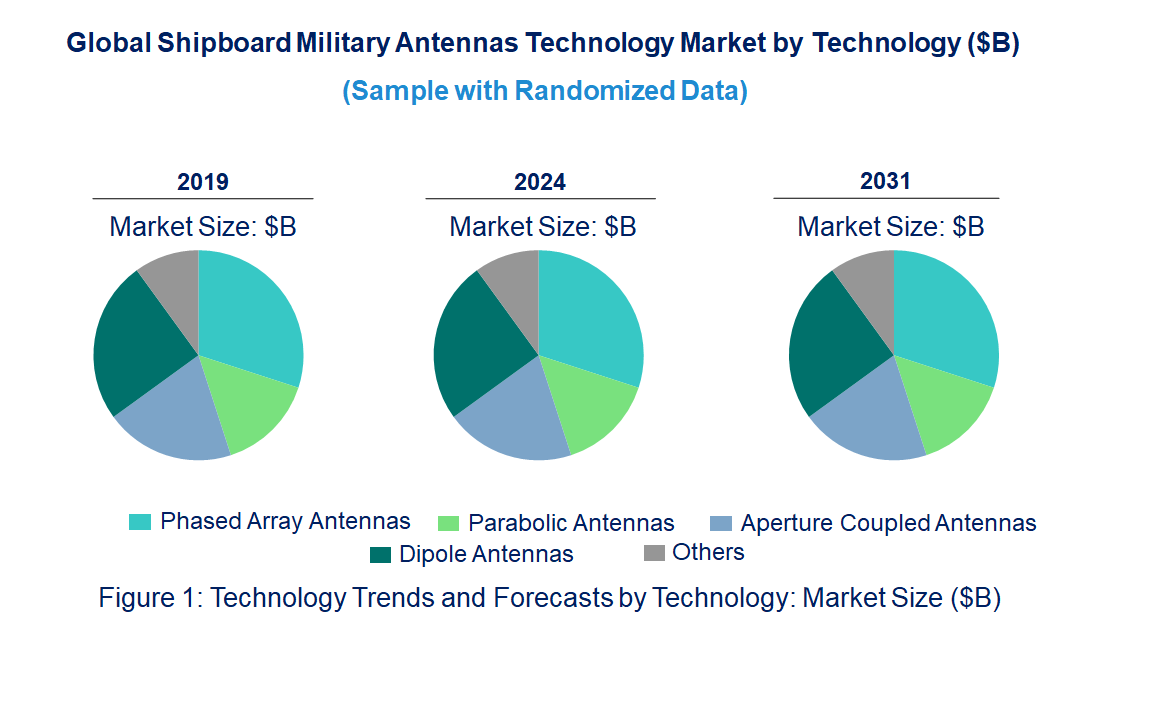
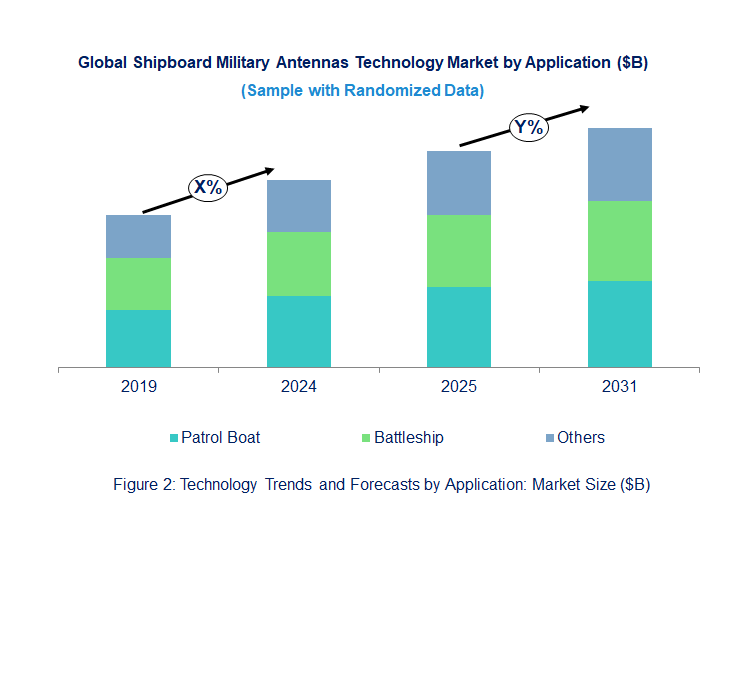
This market report covers trends, opportunities, and forecasts in the global shipboard military antennas market to 2031 by technology (phased array antennas, parabolic antennas, aperture coupled antennas, dipole antennas, and others), application (patrol boat, battleship, and others), and region (North America, Europe, Asia Pacific, and the Rest of the World)
We'll send your sample report shortly.
• Miniaturization and Integration: With the increasing need for smaller, more efficient systems, antennas are being integrated with multi-functional platforms, reducing space and weight on ships while maintaining the same performance.
• Switch towards Phased Array Antennas: The shift from conventional mechanically steered antennas to electronically scanned phased array antennas allows for faster, more reliable, and more accurate targeting capabilities for military ships.
• 5G and LTE Communications: There is greater integration of 5G and LTE technologies to provide higher bandwidth, lower latency, and more robust data transfers, which are key necessities for modern naval operations.
• Increased Signal Processing and AI Incorporation: Advanced signal processing algorithms and AI are being implemented to optimize antenna performance, providing improved radar and communication capabilities for detecting emerging threats.
• Hybrid Antenna Systems: Hybrid antennas, which combine different technologies like aperture-coupled antennas with phased arrays, are gaining popularity because they offer flexibility and adaptability for different military applications. These latest trends are changing the shipboard military antennas market, enhancing operational efficiency, communication capabilities, and the effectiveness of naval operations in complex, high-threat environments.
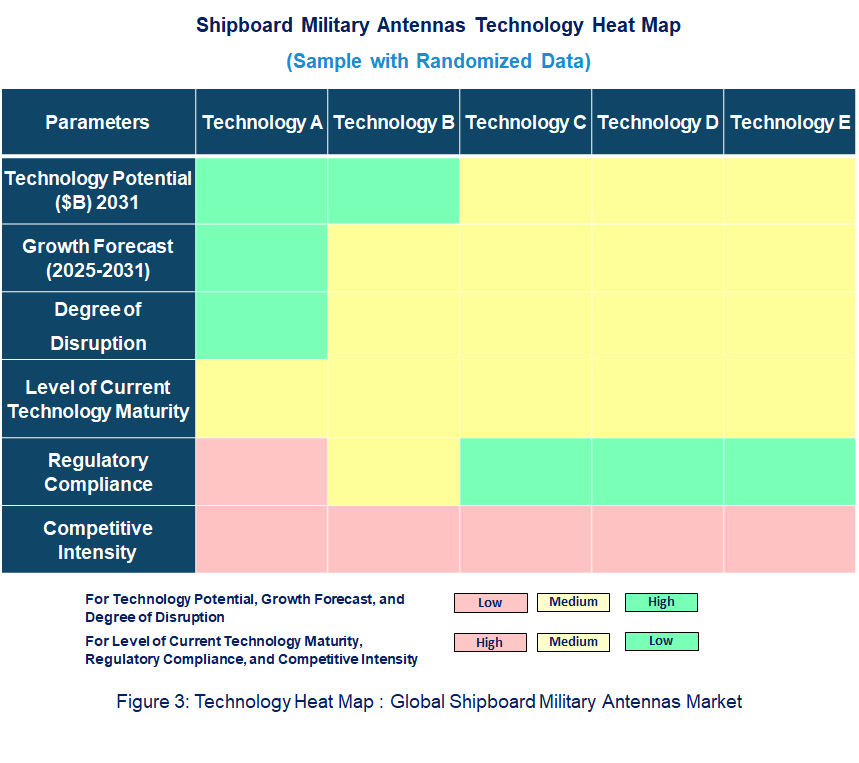
• Technology Potential: The potential of shipboard military antennas lies in their ability to support advanced communication systems such as satellite, radar, and electronic warfare systems. Emerging technologies like 5G, phased arrays, and advanced materials open opportunities for significant improvements in range, bandwidth, and signal clarity.
• Degree of Disruption: The degree of disruption in this market is high because new antenna technologies can potentially revolutionize naval operations, improve situational awareness, and enhance secure communications. Technologies such as AI-driven beamforming and software-defined radios are expected to disrupt traditional designs.
• Level of Current Technology Maturity: The maturity of shipboard antenna technology varies. While basic designs are well-established, newer systems incorporating adaptive capabilities, low-profile antennas, and digital signal processing are still evolving but show considerable promise.
• Regulatory Compliance: Regulatory compliance is essential, especially with naval and military standards that regulate safety, electromagnetic interference, and secure communication. Manufacturers must adhere to stringent military specifications (MIL-SPEC) and international regulations to ensure performance and interoperability. The shipboard military antennas market is evolving with high potential for innovation, driven by advanced technologies and regulatory standards.
• Shakespeare Military: Shakespeare Military is at the forefront of developing high-performance antenna systems, particularly for naval and airborne applications. Its rugged, durable designs have been critical for success in the harsh maritime environment.
• Hascall-Denke: Hascall-Denke has been an innovator in military antenna systems by upgrading the functionality of their communication systems for various military vehicles, including ships. Their antenna technologies bring critical advantages for real-time communication and surveillance.
• MTI Wireless EDGE Ltd.: MTI Wireless EDGE has made strides in developing phased array antennas, which are becoming increasingly important in military applications due to their speed and precision. This technology helps military forces achieve higher accuracy and effectiveness in their communication systems.
• RAMI: RAMI is a company that provides innovative radar and communication antenna systems. Through their research in dual-band technology, they have enhanced communication capabilities and optimized signal processing for naval vessels.
• Comrod Communication Group: Comrod has focused on offering durable antennas for defense applications. As a result, they have created advanced HF and VHF communication systems. Their offerings help improve global communications for military forces.
• Maritimes Cluster Norddeutschland Ev (ELNA): ELNA has collaborated with naval defense producers to design high-performance antennas for large naval vessels. ELNA's technology is dedicated to reducing signal loss, increasing coverage range, and achieving maximum system efficiency.
• AVL Tech: AVL Tech has enhanced multi-functional antenna systems for military ships. These systems allow military ships to conduct surveillance, communicate, and gather intelligence all from a single platform.
• Alaris Holdings (COJOT): COJOT, a brand owned by Alaris Holdings, leads innovation in antenna solutions. Their developments include antennas incorporating integrated RF along with AI-based features, which are crucial for making quick decisions during naval missions.
• Bushcomm HF Antenna Systems: Bushcomm specializes in designing antennas that ensure reliable communication over long distances, a necessity for naval operations. Their HF antenna systems are highly valued for their ability to maintain strong signal reception from distant areas.
• Myers Engineering International: Myers Engineering specializes in designing customizable antenna systems, ensuring their designs meet the unique needs and specifications of different military vessels and defense applications. These developments are advancing the capabilities of naval defense forces by providing more reliable, efficient, and high-performance communication systems, which are increasingly needed in modern naval warfare.
• Increasing Defense Budgets: As defense spending continues to rise, military organizations worldwide are committing more to advanced technologies, including antennas, to gain better operational advantages.
• Advances in Communication Technologies: The continuous development of faster, more reliable, and integrated communication technologies, such as 5G and LTE, is driving the demand for high-end antenna solutions that can meet the evolving needs of modern military operations.
• Advanced Surveillance and Reconnaissance: The need for advanced surveillance and reconnaissance systems on naval vessels is increasing the demand for high-performance antennas, particularly phased array and radar antennas.
• Naval Security Threats: With growing global maritime security concerns, the need for enhanced communication systems on military ships has become more critical. This is driving the growth of high-capacity and secure antenna solutions. Challenges in the shipboard military antennas market include:
• High Development and Maintenance Costs: The high development, integration, and maintenance costs of military-grade antennas are a challenge, limiting adoption, especially for smaller defense budgets.
• Technical Complexity: As military antenna technologies advance, the technical complexity involved in designing, implementing, and maintaining these systems increases, delaying the deployment of new technologies.
• Integration with Legacy Systems: Compatibility and interoperability issues generally slow down the adoption and effective use of new systems, particularly in integrating modern antenna technologies with existing legacy systems for most naval forces. These drivers and challenges are shaping the future of the shipboard military antennas market, an ever-changing landscape where progress in technology must be aligned with cost-effective and efficient deployment strategies. Challenges like these should be addressed to ensure continuous growth.
• Shakespeare Military
• Hascall-Denke
• Mti Wireless Edge
• Rami
• Comrod Communication Group
• Maritimes Cluster Norddeutschland
• Technology Readiness by Technology Type: Phased array antennas are mature and ready for integration in radar and communications. Parabolic antennas are reliable for long-range use but face mechanical and size challenges. Aperture-coupled antennas are newer but gaining readiness for compact military systems. Dipole antennas are simple and widely used but less competitive in advanced applications. Emerging technologies like frequency-agile antennas are progressing but still face regulatory and technological challenges.
• Competitive Intensity and Regulatory Compliance: In the shipboard military antennas market the phased array antennas dominate the market with the highest level of competition due to their versatility in defense applications. Parabolic antennas face regulatory scrutiny because of size but remain competitive for long-range use. Aperture-coupled antennas are growing in adoption with a moderate level of competition. Dipole antennas have minimal competition but fewer regulatory issues. Other emerging technologies will face higher regulatory hurdles regarding spectrum management and interference issues.
• Disruption Potential: Phased array antennas have a high disruption potential due to their dynamic beamforming for advanced communication and radar. Parabolic antennas are reliable but are limited by size and mechanical complexity. Aperture-coupled antennas are emerging with efficient integration in compact systems. Dipole antennas, though simple and cost-effective, offer fewer advancements. Other technologies like frequency-agile antennas are emerging with disruptive potential for enhanced flexibility and real-time operations.
• Phased Array Antennas
• Parabolic Antennas
• Aperture Coupled Antennas
• Dipole Antennas
• Others
• Patrol Boat
• Battleship
• Others
• North America
• Europe
• Asia Pacific
• The Rest of the World
• Latest Developments and Innovations in the Shipboard Military Antennas Technologies
• Companies / Ecosystems
• Strategic Opportunities by Technology Type


Choose a license that fits your team. Instant PDF delivery.
Prices exclude taxes. Instant delivery. Custom licensing available on request.
Market Report · May 18, 2026
Market Report · May 18, 2026
Market Report · May 18, 2026
Trusted partner for strategic intelligence and business growth


Receive a complimentary market analysis tailored to your industry. Our analysts will identify key growth opportunities and competitive dynamics specific to your business.

Market size, growth rate, and key trend analysis for your specific sector.

Top competitor positioning and market share analysis.

Strategic recommendations backed by data-driven insights.
Get curated market intelligence and competitive moves straight to your inbox.
By subscribing, you agree to receive our monthly insights. Unsubscribe anytime.
Receive a complimentary market analysis tailored to your industry. Our analysts will identify key growth opportunities and competitive dynamics specific to your business.
Market size, growth rate, and key trend analysis for your specific sector.
Top competitor positioning and market share analysis.
Strategic recommendations backed by data-driven insights.
Get curated market intelligence, emerging trends, and competitive moves straight to your inbox each month.
By subscribing, you agree to receive our monthly insights. Unsubscribe anytime.
We'll send your sample report shortly.