
Market Report · July 15, 2026

Key data points: The growth forecast = 17.8% annually for the next 7 years. Scroll below to get more insights. This market report covers trends, opportunities and forecasts in sensor fusion market to 2031 by technology (MEMS and Non-MEMS), algorithms (kalman filter, bayesian filter, central limit theorem, and convolutional neural networks), offering (hardware and software), end use (consumer electronics, automotive, home automation, medical, military, industrial, and others), and region (North America, Europe, Asia Pacific, and the Rest of the World)
We'll send your sample report shortly.
• Lucintel forecasts that, within the technology category, MEMS is expected to witness higher growth over the forecast period.
• Within the end use category, consumer electronics is expected to witness the highest growth.
• In terms of region, APAC is expected to witness the highest growth over the forecast period. Gain valuable insights for your business decisions with our comprehensive 150+ page report. Sample figures with some insights are shown below.

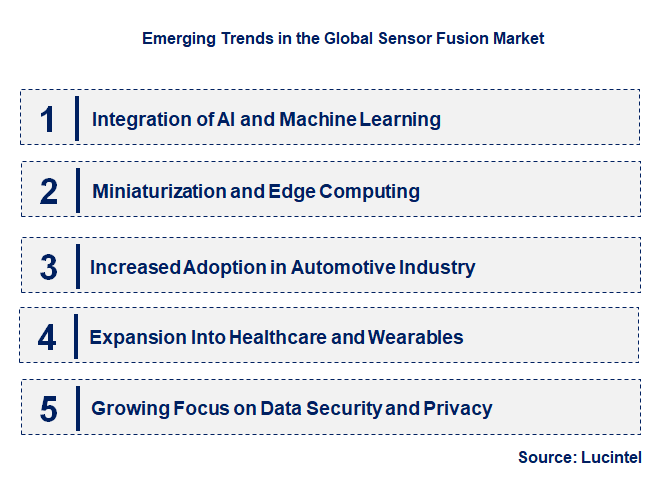
• Integration of AI and Machine Learning: The incorporation of AI and machine learning algorithms into sensor fusion systems enhances data processing capabilities, enabling more accurate and predictive analytics. This trend allows devices to adapt to changing environments and improve decision-making processes autonomously. It is particularly impactful in autonomous vehicles, robotics, and healthcare diagnostics, where real-time, precise data interpretation is critical. As AI-driven sensor fusion becomes more sophisticated, it will lead to smarter, more autonomous systems that can handle complex tasks with minimal human intervention, significantly advancing technological capabilities.
• Miniaturization and Edge Computing: Advances in miniaturization are enabling sensor fusion systems to be embedded into smaller, more portable devices. Coupled with edge computing, this trend reduces latency and bandwidth requirements by processing data locally rather than relying solely on cloud infrastructure. This shift improves real-time responsiveness and enhances privacy and security. It is especially influential in wearable health devices, IoT sensors, and autonomous vehicles, where space constraints and immediate data processing are vital. Miniaturization and edge computing are making sensor fusion more accessible and efficient, broadening its application scope.
• Increased Adoption in Automotive Industry: The automotive sector is increasingly adopting sensor fusion for advanced driver-assistance systems (ADAS) and autonomous driving. Combining data from cameras, radar, lidar, and ultrasonic sensors improves vehicle perception and safety. This trend accelerates the development of fully autonomous vehicles and enhances existing driver-assistance features. The impact is significant, as it leads to safer roads, reduced accidents, and new mobility solutions. As automakers invest heavily in sensor fusion technology, the market is expected to expand rapidly, driving innovation and competition within the automotive industry.
• Expansion into Healthcare and Wearables: Sensor fusion is gaining traction in healthcare for applications such as patient monitoring, diagnostics, and personalized medicine. Wearable devices integrate multiple sensors to track vital signs, activity levels, and environmental factors, providing comprehensive health data. This trend improves early detection of health issues and supports remote patient management. The impact includes enhanced healthcare outcomes, reduced hospital visits, and empowered patients. As sensor fusion becomes more sophisticated and affordable, its adoption in healthcare is poised to grow, transforming how medical data is collected, analyzed, and utilized.
• Growing Focus on Data Security and Privacy: As sensor fusion systems handle vast amounts of sensitive data, there is an increasing emphasis on cybersecurity measures and privacy protocols. Ensuring data integrity and protecting user information are critical concerns, especially in sectors like healthcare, automotive, and smart homes. This trend drives the development of secure data transmission, encryption, and access controls. The impact is a more trustworthy ecosystem that encourages user adoption and regulatory compliance. Strengthening data security in sensor fusion systems is essential for sustainable growth and widespread acceptance of these technologies. In summary, these trends are collectively transforming the sensor fusion market by making systems smarter, more compact, secure, and applicable across diverse sectors. They are fostering innovation, improving safety and efficiency, and expanding the market’s reach into new domains, ultimately reshaping how data-driven decisions are made in an increasingly connected world.
• Integration of AI and Machine Learning: Enhanced data processing capabilities have enabled smarter sensor fusion systems, improving real-time decision-making and predictive analytics, which boosts applications in autonomous vehicles and healthcare diagnostics.
• Miniaturization of Sensors: Advances in sensor miniaturization have facilitated deployment in compact devices, expanding applications in wearable technology and IoT devices, leading to increased market penetration and new product innovations.
• Expansion into Automotive Sector: Growing adoption of sensor fusion in autonomous vehicles for navigation, safety, and driver assistance systems has significantly driven market growth, with automakers investing heavily in sensor integration.
• Development of Multi-Sensor Platforms: The emergence of multi-sensor platforms that combine various sensor types (visual, infrared, ultrasonic) has improved environmental perception, especially in robotics and surveillance, enhancing operational efficiency.
• Increasing Focus on Data Security and Privacy: As sensor data becomes more critical, companies are prioritizing cybersecurity measures to protect sensitive information, which influences market standards and consumer trust. These developments are collectively transforming the sensor fusion market by enhancing system capabilities, broadening application scopes, and addressing security concerns. The market is becoming more sophisticated, competitive, and aligned with emerging technological trends, promising sustained growth and innovation in the coming years.
• Automotive Industry: Enhanced Autonomous Vehicles : Sensor fusion enables precise environment perception, improving autonomous vehicle safety and navigation. This growth opportunity accelerates the development of fully autonomous cars, reducing accidents and enabling smarter transportation systems.
• Healthcare Sector: Advanced Medical Devices : Integration of sensors enhances diagnostic accuracy and patient monitoring. This leads to more reliable wearable health devices and improved remote healthcare, expanding market reach and patient outcomes.
• Industrial Automation: Smart Manufacturing Processes : Sensor fusion facilitates real-time data analysis for predictive maintenance and quality control. This boosts operational efficiency, reduces downtime, and supports Industry 4.0 initiatives.
• Consumer Electronics: Enhanced User Experience : Combining sensors improves device responsiveness and personalization in smartphones, wearables, and smart home devices. This drives consumer adoption and product differentiation in a competitive market.
• Aerospace and Defense: Improved Navigation and Safety Systems : Sensor fusion enhances aircraft navigation, surveillance, and missile guidance systems. This opportunity supports safer, more reliable aerospace operations and defense capabilities. In summary, these growth opportunities are significantly impacting the sensor fusion market by fostering innovation, improving safety and efficiency, and expanding application scope. As industries increasingly adopt sensor fusion technologies, market growth is expected to accelerate, creating new avenues for development and competitive advantage.
• Technological Advancements: Rapid innovations in sensor technology and processing algorithms enable more accurate and reliable sensor fusion systems. These advancements facilitate the development of autonomous vehicles, drones, and industrial automation, creating a robust demand for integrated sensor solutions. As sensor capabilities improve, the ability to process and interpret data in real-time enhances safety, efficiency, and performance across various applications. The continuous evolution of AI and machine learning further complements sensor fusion, making systems smarter and more adaptable. This technological progress is a primary driver, fueling market growth and opening new avenues for deployment in diverse sectors.
• Growing Adoption of Autonomous Vehicles: The automotive industry is witnessing a significant shift toward autonomous driving, driven by safety, convenience, and regulatory push. Sensor fusion is critical for enabling autonomous vehicles to perceive their environment accurately, combining data from lidar, radar, cameras, and ultrasonic sensors. This integration enhances object detection, navigation, and decision-making capabilities. As automakers and tech companies invest heavily in autonomous technology, the demand for sophisticated sensor fusion systems surges. The increasing adoption of electric and connected vehicles further accelerates this trend, making sensor fusion indispensable for future mobility solutions.
• Rising Investment in Aerospace and Defense: The aerospace and defense sectors are increasingly adopting sensor fusion for applications such as aircraft navigation, surveillance, and missile guidance. The need for precise, reliable, and real-time data processing in complex environments drives the deployment of advanced sensor fusion systems. Governments and private players are investing heavily in research and development to enhance situational awareness and operational safety. The integration of sensor data improves mission success rates and reduces risks, making it a strategic priority. This investment trend significantly contributes to the expansion of the sensor fusion market, especially in high-stakes applications.
• Increasing Focus on Industrial Automation and Robotics: Industrial automation relies heavily on sensor fusion to improve process efficiency, safety, and predictive maintenance. In manufacturing, sensors combined through fusion techniques enable real-time monitoring and control of machinery, reducing downtime and operational costs. Robotics, especially collaborative robots (cobots), utilize sensor fusion for precise navigation and interaction with their environment. The push toward Industry 4.0 and smart factories accelerates the adoption of sensor fusion technologies. As industries seek to optimize productivity and safety, the demand for integrated sensor solutions continues to grow, driving market expansion. The challenges facing this sensor fusion market include:-
• High Development and Implementation Costs: Developing advanced sensor fusion systems involves significant investment in R&D, high-quality sensors, and sophisticated processing units. These costs can be prohibitive, especially for small and medium-sized enterprises, limiting market entry and expansion. Additionally, integrating multiple sensors and ensuring system reliability adds complexity and expense. The high costs may slow down adoption in cost-sensitive sectors or regions, impacting overall market growth. Overcoming these financial barriers requires strategic investments and cost-effective innovations to make sensor fusion solutions more accessible.
• Data Security and Privacy Concerns: Sensor fusion systems generate vast amounts of data, often sensitive and critical for safety and operational integrity. Ensuring data security against cyber threats is a major challenge, as breaches can lead to safety hazards, operational disruptions, or privacy violations. The increasing connectivity of sensor systems amplifies vulnerability to hacking and malicious attacks. Regulatory frameworks around data privacy are also evolving, requiring companies to implement robust security measures. Addressing these concerns is vital for building trust and ensuring widespread adoption of sensor fusion technologies.
• Integration Complexities and Standardization Issues: Combining data from diverse sensors involves complex algorithms and hardware compatibility challenges. Variations in sensor quality, data formats, and communication protocols can hinder seamless integration. Lack of standardized frameworks complicates system design, maintenance, and scalability. These integration issues can lead to increased development time, higher costs, and reduced system reliability. Establishing industry standards and developing flexible, interoperable solutions are essential to overcoming these barriers and accelerating market growth. In summary, the sensor fusion market is driven by rapid technological innovations, increasing adoption in autonomous vehicles, substantial investments in aerospace and defense, and a focus on industrial automation. However, high costs, data security concerns, and integration challenges pose significant hurdles. These factors collectively influence the pace and direction of market development. While opportunities abound, addressing the challenges is crucial for sustainable growth. Strategic investments, standardization efforts, and enhanced security measures will be key to unlocking the full potential of sensor fusion technologies across various sectors.
• STMicroelectronics
• InvenSense, Inc.
• NXP Semiconductors N.V.
• Infineon Technologies
• Bosch Sensortec GmbH
• Analog Devices, Inc.
• Renesas Electronics Corporation.
• Amphenol Corporation
• Texas Instruments
• Qualcomm Technologies, Inc.
• MEMS
• Non-MEMS
• Kalman Filter
• Bayesian Filter
• Central Limit Theorem
• Convolutional Neural Networks
• Hardware
• Software
• Consumer Electronics
• Automotive
• Home Automation
• Medical
• Military
• Industrial
• Others
• North America
• Europe
• Asia Pacific
• The Rest of the World
• United States: The US market has seen significant advancements in autonomous vehicle technology, with major companies integrating sensor fusion for improved safety and navigation. Investment in AI-driven sensor systems has increased, supported by government initiatives promoting smart infrastructure. The healthcare sector is adopting sensor fusion for enhanced diagnostics and patient monitoring. Additionally, the US leads in R&D, with numerous startups and tech giants developing innovative sensor solutions. Regulatory frameworks are evolving to accommodate autonomous systems, fostering a conducive environment for market growth.
• China: China is rapidly expanding its sensor fusion capabilities, especially in smart city projects and autonomous vehicles. The government’s focus on AI and IoT integration has accelerated development, with local firms investing heavily in sensor technology. The automotive industry is a key driver, with several Chinese companies launching autonomous vehicle prototypes. The healthcare sector is also adopting sensor fusion for remote diagnostics and telemedicine. Strategic partnerships between tech firms and government agencies are facilitating large-scale deployment of sensor solutions, positioning China as a major player in the global market.
• Germany: Germany’s market is characterized by its strong automotive industry, with sensor fusion being integral to the development of autonomous and electric vehicles. The country is investing in Industry 4.0 initiatives, integrating sensor data for smart manufacturing. Automotive OEMs are collaborating with tech firms to enhance vehicle safety and automation. Germany’s focus on quality and innovation is driving the adoption of high-precision sensor fusion systems. Additionally, the healthcare and industrial sectors are exploring sensor integration for improved operational efficiency and patient care, supported by robust research institutions and government funding.
• India: India is witnessing growing adoption of sensor fusion in agriculture, healthcare, and smart city projects. The government’s push for digital transformation and smart infrastructure is fostering market growth. Startups and local firms are developing cost-effective sensor solutions tailored to regional needs, especially in agriculture for precision farming. Healthcare providers are integrating sensor fusion for remote patient monitoring. The government’s initiatives like Digital India are creating a favorable environment for innovation and deployment of sensor technologies, although challenges remain in infrastructure and standardization.
• Japan: Japan’s market is driven by advancements in robotics, manufacturing, and healthcare. Sensor fusion is crucial for autonomous robots and industrial automation, with Japanese firms leading in precision and reliability. The healthcare sector is adopting sensor fusion for advanced diagnostics and elderly care. Japan’s focus on innovation and quality is reflected in the development of sophisticated sensor systems. The government supports research through funding and policy initiatives aimed at integrating sensor technology into various sectors, ensuring Japan remains a key player in the global sensor fusion landscape.


• STMicroelectronics
• InvenSense, Inc.
• NXP Semiconductors N.V.
• Infineon Technologies
• Bosch Sensortec GmbH
• Analog Devices, Inc.
• Renesas Electronics Corporation.
• Amphenol Corporation
• Texas Instruments
• Qualcomm Technologies, Inc. Q5. Which sensor fusion market segment will be the largest in future? Answer: Lucintel forecasts that, within the technology category, MEMS is expected to witness higher growth over the forecast period. Q6. In sensor fusion market, which region is expected to be the largest in next 5 years? Answer: In terms of region, APAC is expected to witness the highest growth over the forecast period. Q7. Do we receive customization in this report? Answer: Yes, Lucintel provides 10% customization without any additional cost.


Choose a license that fits your team. Instant PDF delivery.
Prices exclude taxes. Instant delivery. Custom licensing available on request.
Market Report · July 15, 2026
Market Report · July 13, 2026
Market Report · July 13, 2026
Trusted partner for strategic intelligence and business growth


Receive a complimentary market analysis tailored to your industry. Our analysts will identify key growth opportunities and competitive dynamics specific to your business.

Market size, growth rate, and key trend analysis for your specific sector.

Top competitor positioning and market share analysis.

Strategic recommendations backed by data-driven insights.
Get curated market intelligence and competitive moves straight to your inbox.
By subscribing, you agree to receive our monthly insights. Unsubscribe anytime.
Receive a complimentary market analysis tailored to your industry. Our analysts will identify key growth opportunities and competitive dynamics specific to your business.
Market size, growth rate, and key trend analysis for your specific sector.
Top competitor positioning and market share analysis.
Strategic recommendations backed by data-driven insights.
Get curated market intelligence, emerging trends, and competitive moves straight to your inbox each month.
By subscribing, you agree to receive our monthly insights. Unsubscribe anytime.
We'll send your sample report shortly.