
Market Report · May 18, 2026

This market report covers trends, opportunities, and forecasts in the global sensor-based sorting market to 2031 by technology (laser sorters, x-ray transmission, color based, near-infrared, and others), application (metallic, non-metallic, and others), and region (North America, Europe, Asia Pacific, and the Rest of the World)
We'll send your sample report shortly.
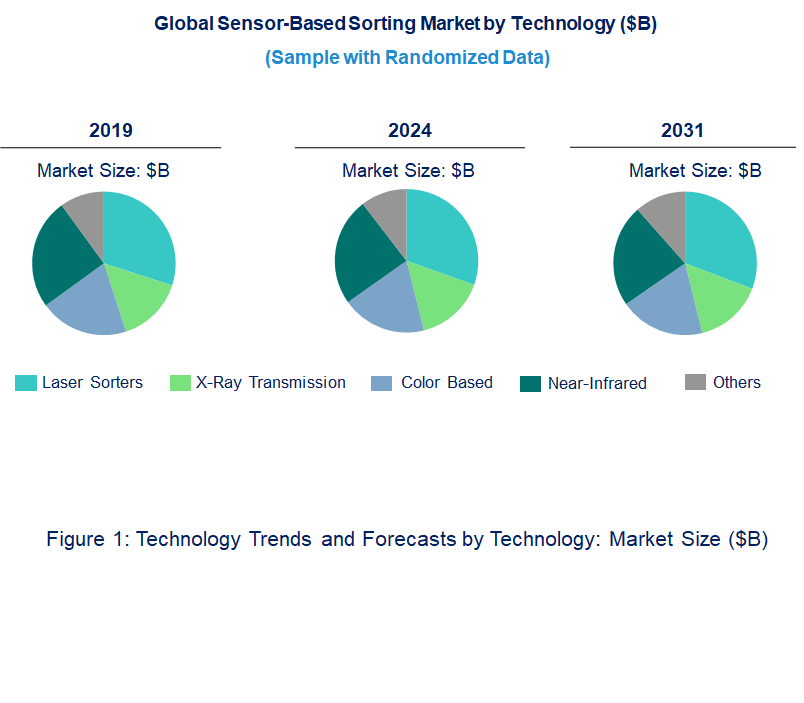
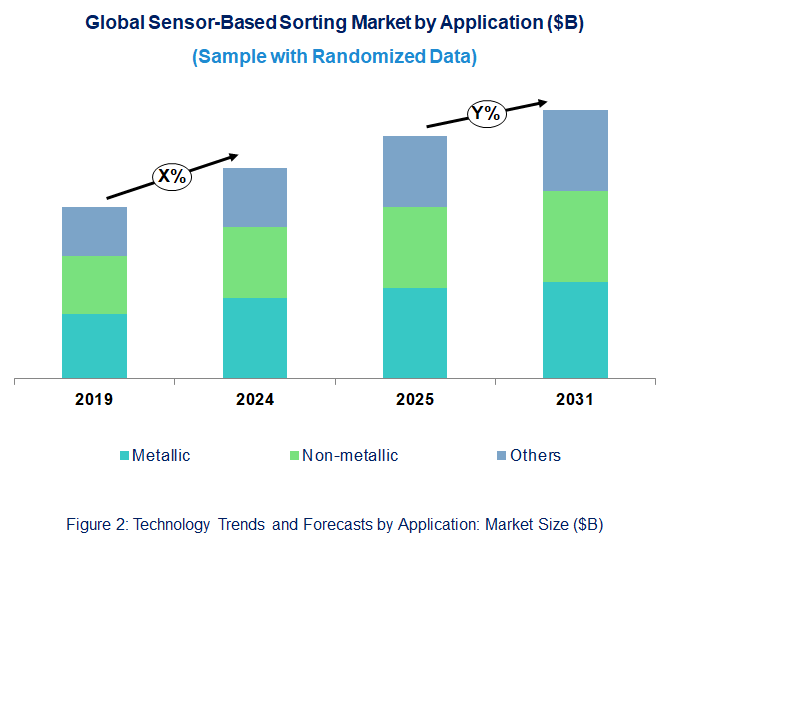
• Integration of Artificial Intelligence and Machine Learning: AI and machine learning algorithms are increasingly being integrated into sensor-based sorting systems to enhance the accuracy, speed, and adaptability of sorting operations. These technologies enable real-time learning from data, improving the system’s ability to recognize and sort different materials with higher precision. The result is a more efficient sorting process with reduced human intervention and fewer errors.
• Shift from X-Ray Transmission to Laser Sorters: There has been a significant shift from X-ray transmission (XRT) technology to laser sorters in many applications, particularly in mining and recycling industries. Laser sorters offer better resolution and the ability to process a wider range of materials, allowing for more effective separation of metals and non-metals. This transition is driven by the need for faster sorting speeds and improved detection of finer material differences.
• Increased Use of Multi-Sensor Technology: Multi-sensor sorting systems, which combine various sensor types like laser, infrared, and hyperspectral cameras, are gaining traction. These systems provide a more comprehensive analysis of materials, allowing for precise identification and sorting based on multiple characteristics (e.g., size, shape, color, and chemical composition). This trend enables better material recovery rates and more sustainable operations.
• Sustainability and Waste Reduction Focus: As industries face increasing pressure to meet sustainability goals, sensor-based sorting technologies are being adopted to reduce waste and improve resource recovery. The use of these advanced sorting systems allows for higher purity materials to be extracted from waste streams, which is crucial for industries like recycling and mining. The focus on minimizing waste through improved sorting processes is helping companies meet environmental regulations and reduce their carbon footprint.
• Automation and Remote Monitoring: Automation is a growing trend in the sensor-based sorting market, with companies implementing fully automated sorting systems that require minimal human intervention. Coupled with remote monitoring capabilities, these systems offer real-time performance tracking, diagnostics, and predictive maintenance. The ability to monitor and control sorting operations remotely enhances efficiency, reduces downtime, and improves overall system reliability. The sensor-based sorting market is undergoing a transformation driven by technological advancements that promise to make sorting processes more efficient, accurate, and sustainable. Trends such as the integration of AI and machine learning, the shift from X-ray to laser sorting technologies, the use of multi-sensor systems, the focus on sustainability, and the rise of automation are fundamentally reshaping the industry. These developments are not only improving operational efficiency but also helping industries achieve higher environmental standards, making sensor-based sorting an essential tool for the future of material processing.
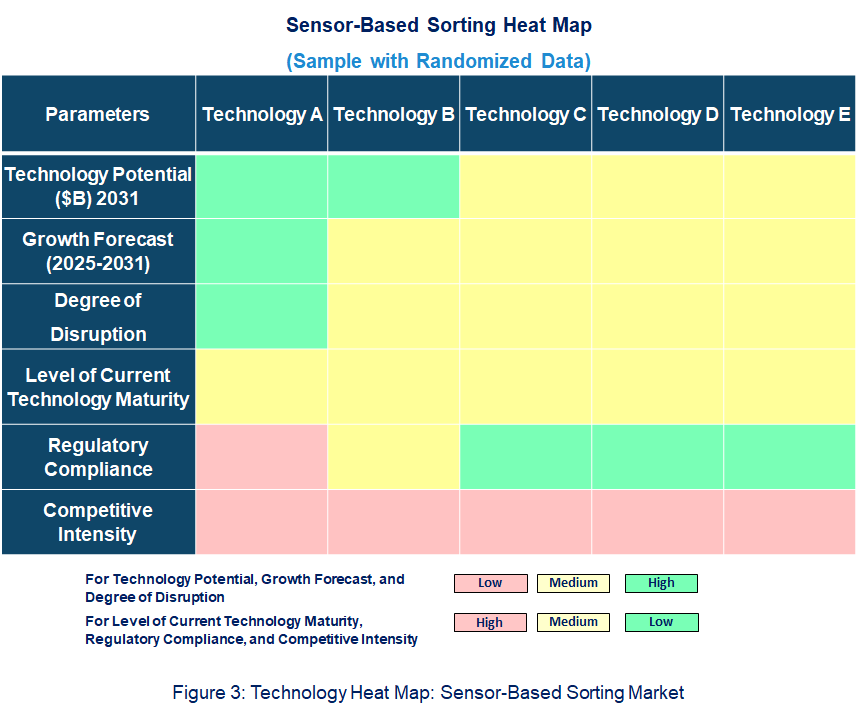
• Potential in Technology: The technology potential of sensor-based sorting in the market is immense, offering highly efficient, precise, and automated solutions for a variety of industries, including recycling, mining, and food processing. These systems leverage advanced sensors (such as laser, X-ray, and near-infrared) to quickly and accurately identify and separate materials based on properties like size, shape, and chemical composition. As AI and machine learning continue to improve, sensor-based sorting systems are becoming more adaptive and capable of handling increasingly complex sorting tasks, leading to higher resource recovery and reduced waste.
• Degree of Disruption: The degree of disruption is significant, particularly in sectors like recycling and mining, where traditional manual sorting methods are labor-intensive and less efficient. Automated sensor-based sorting systems can drastically improve speed, accuracy, and scalability, offering substantial cost reductions and environmental benefits.
• Current Technology Maturity Level: In terms of current technology maturity, sensor-based sorting is well-established in specific applications, such as in mining and waste recycling. However, there is still room for growth, particularly with integrating AI for smarter sorting and extending the technology to new applications.
• Regulatory Compliance: Regulatory compliance is a key consideration as industries face increasing pressure to meet environmental and sustainability standards. Sensor-based sorting technologies can help companies comply with waste management and recycling regulations by improving material recovery rates and minimizing waste. However, they must adhere to evolving regulatory frameworks, especially in the context of sustainability and waste reduction.
• HPY Sorting: Integration of AI and Advanced Sorting Technologies: HPY Sorting has integrated artificial intelligence (AI) into its sensor-based sorting systems, enhancing the ability to classify and sort materials with greater precision and adaptability. This move enables real-time learning, allowing the systems to continuously improve sorting accuracy and speed. The integration of AI has made their machines more capable of handling complex sorting tasks, particularly in the recycling and mining industries. This development has a major impact by increasing operational efficiency and reducing the need for manual labor, making sorting processes more automated and cost-effective.
• CSG Manufacturing Centers: Expansion of Sensor Technology Portfolio: CSG Manufacturing Centers has expanded its portfolio of sensor-based sorting solutions by incorporating advanced X-ray and near-infrared (NIR) sensors. By combining these technologies with multi-sensor platforms, CSG is offering more versatile and high-performance sorting systems that can distinguish a wider variety of materials. This development allows their systems to achieve higher purity levels in the sorting process, particularly in mining and recycling, and helps customers enhance material recovery rates. It also highlights the trend toward multi-sensor technologies in the market, further driving industry efficiency.
• Allgaier Process Technology: Focus on Sustainable Sorting Solutions: Allgaier Process Technology has emphasized the development of eco-friendly and sustainable sorting solutions, especially targeting the recycling industry. Their latest sorting systems incorporate energy-efficient sensors and technologies that reduce energy consumption while maximizing sorting precision. This focus on sustainability aligns with global regulatory trends pushing for cleaner production methods and better waste management practices. Allgaier’s innovations are helping companies meet stricter environmental regulations while improving overall productivity in material recovery and recycling.
• IMS Engineering: Advancements in Optical Sorting Technologies: IMS Engineering has recently launched enhanced optical sorting systems that leverage cutting-edge laser, color recognition, and hyperspectral sensors to more accurately separate different materials in various applications, including recycling and food processing. These advancements allow for finer and more precise sorting capabilities, leading to reduced contamination and higher-quality end products. The increased use of optical sorting technologies is also driving cost efficiencies and improving sorting speeds, enabling industries to scale up operations while minimizing waste. These developments by key players in the sensor-based sorting market illustrate the growing shift toward more advanced, efficient, and sustainable sorting technologies. As AI, multi-sensor integration, and sustainability become increasingly important, these players are setting new standards for material processing across a wide range of industries.
• Technological Advancements in Sorting Systems: Advancements in AI, machine learning, and multi-sensor integration are enabling highly precise, automated sorting. These technologies improve accuracy, efficiency, and adaptability, offering a competitive edge in industries such as mining and recycling.
• Growing Demand for Sustainability and Recycling: The increasing global focus on reducing waste and improving recycling rates is driving the adoption of sensor-based sorting technologies. These systems improve material recovery rates, helping industries comply with sustainability goals and regulations.
• Rising Labor Costs and Need for Automation: The need to reduce labor costs and improve productivity is prompting industries to adopt automated sensor-based sorting systems. These systems minimize human intervention, reduce errors, and enable 24/7 operation without fatigue.
• Increased Focus on Resource Recovery and Circular Economy: With a growing emphasis on the circular economy, industries are prioritizing efficient resource recovery. Sensor-based sorting systems allow for better separation of valuable materials, contributing to the reuse of resources and reducing waste. Major Challenges
• High Initial Investment and Maintenance Costs: Sensor-based sorting technologies require significant upfront investment in equipment and infrastructure. Additionally, ongoing maintenance and calibration costs can be barriers to adoption for smaller companies.
• Technological Complexity and Integration Issues: Integrating advanced sensor-based sorting systems with existing machinery and operations can be complex. The need for skilled personnel and compatibility issues with legacy systems can delay adoption and reduce efficiency.
• Regulatory and Environmental Compliance: As regulations surrounding waste management and resource recovery become stricter, sensor-based sorting systems must comply with evolving environmental standards. These regulations can increase costs and complicate implementation.
• Limited Material Recognition Capabilities: While current sorting systems are highly effective, limitations still exist in accurately recognizing and sorting complex or mixed materials. This can result in contamination or lower material purity, affecting sorting quality. The sensor-based sorting market is driven by key factors such as technological advancements, growing sustainability demands, automation needs, and a focus on resource recovery. These drivers present significant growth opportunities, pushing industries toward higher efficiency, reduced waste, and compliance with environmental regulations. However, challenges such as high costs, integration issues, regulatory compliance, and technological limitations must be addressed to fully realize the market’s potential. Overcoming these barriers will pave the way for wider adoption and more innovative applications, positioning sensor-based sorting as a core technology in the material processing and recycling industries.
• HPY SORTING
• CSG manufacturing centeris
• Allgaier Process Technology
• IMS Engineering
• Leevams Incorporated
• Redwave
• Technology Readiness by Technology Type for sensor-based sorting market: Laser sorters are mature, widely adopted in mining and recycling, offering high speed and precision, but at a higher capital cost. X-ray transmission (XRT) is effective in mining but is still evolving in terms of cost-efficiency and energy consumption. Color-based sorting is well-established in food processing and recycling, but struggles with complex materials. Near-infrared (NIR) technology is mature, particularly in recycling and agriculture, though it can struggle with mixed material types. Other emerging technologies, like hyperspectral imaging, are still developing. Laser and NIR systems are highly competitive with broad applications, while XRT and color-based sorting are more specialized. Each technology has matured for its niche but is continuously evolving to improve efficiency, reduce energy use, and meet stricter environmental regulations.
• Competitive Intensity and Regulatory Compliance of Different Technologies: Competitive intensity varies across technologies like laser sorters, XRT, color-based sorting, and NIR. Laser sorters face high competition due to their widespread use in mining and recycling, offering versatility and speed. XRT is highly competitive in mining but is more niche due to its high capital cost. Color-based sorting is dominant in food and recycling, though limited by material surface properties. NIR faces fierce competition in plastics and agriculture, driven by its ability to detect material composition. Regulatory compliance is crucial, with each technology needing to meet environmental standards, especially in recycling and waste management. Laser and NIR technologies are favored for eco-friendly applications, while XRT and color-based sorting systems must meet specific environmental guidelines.
• Disruption Potential of Different Technologies in sensor-based sorting market: Laser sorters, X-ray transmission (XRT), color-based sorting, and near-infrared (NIR) technologies each bring significant disruption to sensor-based sorting. Laser sorters provide precise and rapid sorting, especially for metals, by detecting fine material differences. XRT excels in dense material sorting, such as in mining, by separating materials with varying atomic densities. Color-based sorting enhances visual sorting in industries like food and recycling, distinguishing materials based on color and surface traits. NIR technology revolutionizes plastics and agriculture by detecting chemical compositions. These technologies disrupt traditional sorting by automating tasks, reducing labor costs, and improving material recovery. Integration with AI and machine learning further enhances their adaptability and real-time sorting capabilities, driving increased efficiency and sustainability across mining, recycling, and agriculture.
• Laser Sorters
• X-Ray Transmission
• Color Based
• Near-Infrared
• Others
• Metallic
• Non-Metallic
• Others
• North America
• Europe
• Asia Pacific
• The Rest of the World
• Latest Developments and Innovations in the Sensor-Based Sorting Technologies
• Companies / Ecosystems
• Strategic Opportunities by Technology Type


Choose a license that fits your team. Instant PDF delivery.
Prices exclude taxes. Instant delivery. Custom licensing available on request.
Market Report · May 18, 2026
Market Report · May 18, 2026
Market Report · May 18, 2026
Trusted partner for strategic intelligence and business growth


Receive a complimentary market analysis tailored to your industry. Our analysts will identify key growth opportunities and competitive dynamics specific to your business.

Market size, growth rate, and key trend analysis for your specific sector.

Top competitor positioning and market share analysis.

Strategic recommendations backed by data-driven insights.
Get curated market intelligence and competitive moves straight to your inbox.
By subscribing, you agree to receive our monthly insights. Unsubscribe anytime.
Receive a complimentary market analysis tailored to your industry. Our analysts will identify key growth opportunities and competitive dynamics specific to your business.
Market size, growth rate, and key trend analysis for your specific sector.
Top competitor positioning and market share analysis.
Strategic recommendations backed by data-driven insights.
Get curated market intelligence, emerging trends, and competitive moves straight to your inbox each month.
By subscribing, you agree to receive our monthly insights. Unsubscribe anytime.
We'll send your sample report shortly.