
Report Feature
Senior-Friendly Furniture Market Trends and Forecast
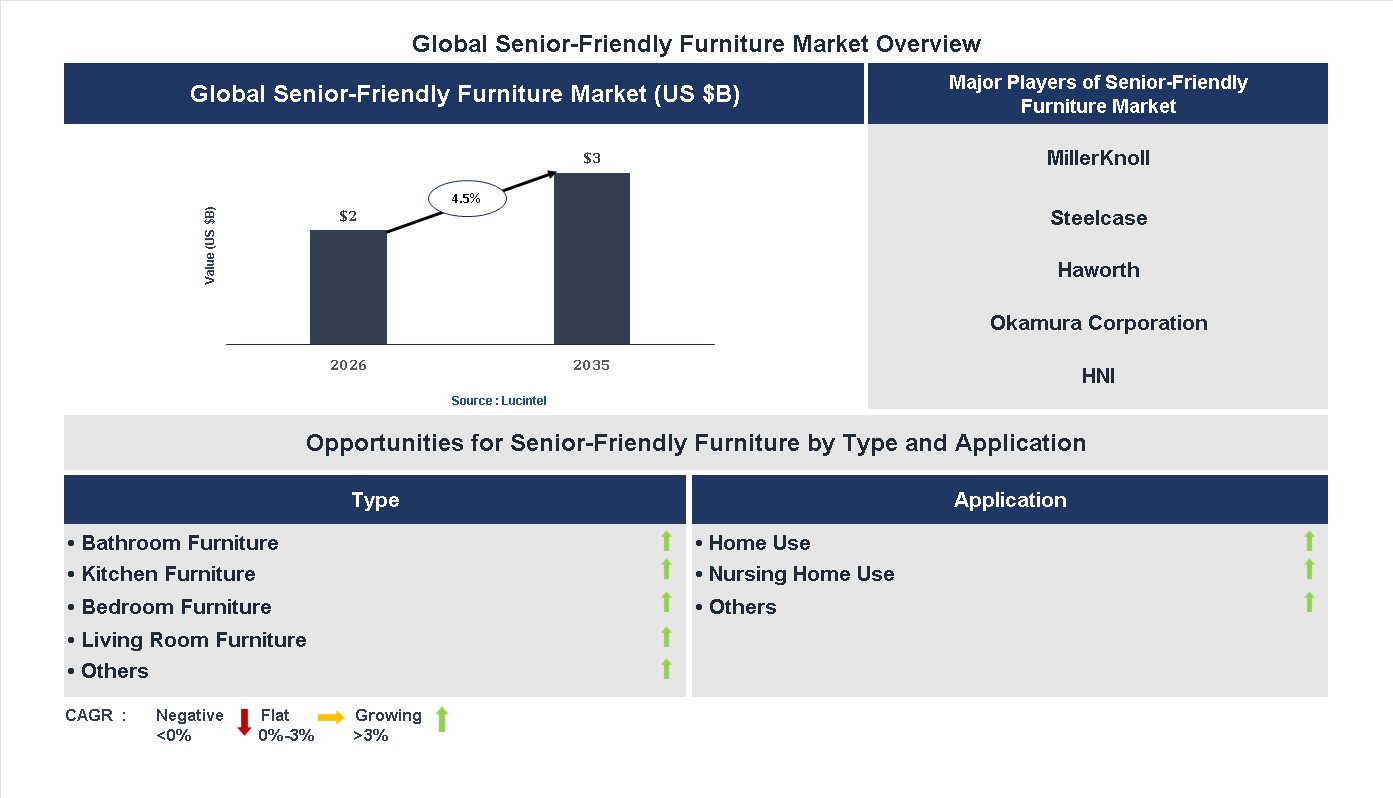
The future of the global senior-friendly furniture market looks promising with opportunities in the bathroom furniture, kitchen furniture, bedroom furniture, and living room furniture markets. The global senior-friendly furniture market is expected to reach an estimated $3 billion by 2035 with a CAGR of 4.5% from 2026 to 2035. The major drivers for this market are the increasing demand for ergonomic senior furniture, the rising aging population boosting furniture needs, and the growing preference for comfort focused designs.• Lucintel forecasts that, within the application category, home use is expected to witness higher growth over the forecast period.
• Within the type category, bedroom furniture is expected to witness the highest growth.
• In terms of region, APAC is expected to witness the highest growth over the forecast period. Gain valuable insights for your business decisions with our comprehensive 150+ page report. Sample figures with some insights are shown below.
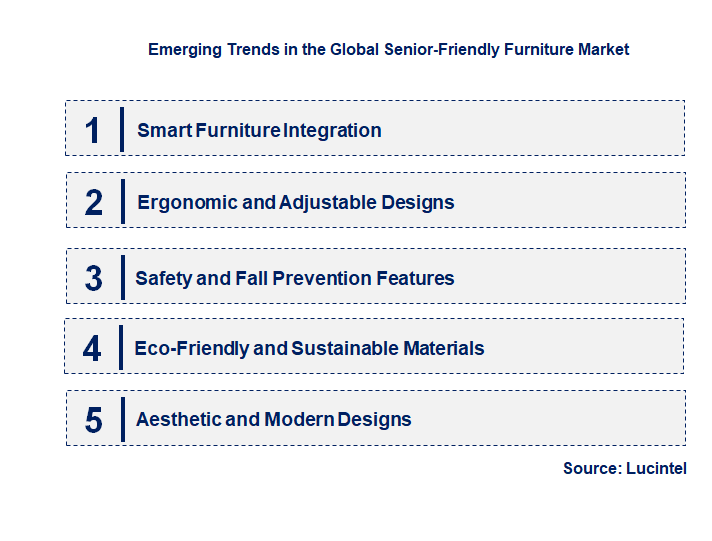
Emerging Trends in the Senior-Friendly Furniture Market
The senior-friendly furniture market is experiencing rapid growth driven by an aging global population and increasing awareness of the need for accessible, safe, and comfortable living solutions for seniors. Innovations in design, materials, and technology are transforming traditional furniture to meet the unique needs of older adults. Market players are focusing on ergonomic features, safety enhancements, and aesthetic appeal to attract consumers. These developments are not only improving quality of life for seniors but also creating new opportunities for manufacturers and retailers. As the market evolves, these trends are set to redefine standards and expectations in senior-friendly furniture, making it more inclusive and innovative.• Smart Furniture Integration : The incorporation of smart technology into furniture is enhancing convenience and safety for seniors. Features such as voice-activated controls, health monitoring sensors, and automated adjustments help seniors maintain independence and monitor their health. This trend is driven by advancements in IoT and wearable tech, making furniture more interactive and responsive. The impact includes improved safety, better health management, and increased user engagement, which appeals to tech-savvy seniors and their caregivers. Smart furniture is becoming a key differentiator in the competitive market.
• Ergonomic and Adjustable Designs : Ergonomics is central to senior-friendly furniture, with adjustable features like height, tilt, and support to accommodate various mobility and comfort needs. These designs reduce strain and prevent injuries, promoting better posture and ease of use. Manufacturers are focusing on customizable options to cater to individual preferences, enhancing comfort and safety. The influence of ergonomic furniture extends to improved daily living, reduced healthcare costs, and increased independence for seniors. This trend emphasizes user-centric design, making furniture more adaptable and functional.
• Safety and Fall Prevention Features : Safety enhancements are a primary focus, with features such as anti-slip surfaces, sturdy frames, armrests, and fall detection systems. These elements are crucial in reducing accidents and ensuring stability for seniors with mobility challenges. The market is witnessing innovations like sensor-based alerts and reinforced materials to improve safety. The impact is significant, as it directly addresses health risks, boosts confidence, and encourages active lifestyles among seniors. Enhanced safety features are becoming standard, setting new benchmarks for senior furniture.
• Eco-Friendly and Sustainable Materials : Sustainability is gaining importance, with manufacturers adopting eco-friendly materials like recycled wood, biodegradable fabrics, and non-toxic finishes. These choices appeal to environmentally conscious consumers and align with global sustainability goals. The use of sustainable materials also ensures healthier indoor environments, which is vital for seniors with sensitivities. This trend influences product development, supply chain practices, and branding strategies, fostering a market that values environmental responsibility. It enhances brand reputation and meets the growing demand for green products among consumers.
• Aesthetic and Modern Designs : The market is shifting towards stylish, modern furniture that blends functionality with aesthetics. Seniors increasingly prefer furniture that complements contemporary home decor, breaking away from traditional, institutional looks. Designers are focusing on sleek lines, color options, and versatile styles to appeal to a broader demographic. This trend improves the overall appeal and acceptance of senior-friendly furniture, making it more desirable for a wider audience. It also helps in reducing stigma associated with aging, promoting dignity and confidence among users. These emerging trends are transforming the senior-friendly furniture market by making products more innovative, safe, sustainable, and aesthetically appealing. They are driving market growth, expanding consumer choices, and setting new standards for quality and design. As these trends continue to evolve, they will significantly enhance the living experiences of seniors and reshape the industry landscape.
Recent Development in the Senior-Friendly Furniture Market
The senior-friendly furniture market is experiencing rapid growth driven by aging populations worldwide and increasing awareness of accessible living solutions. Innovations in ergonomic design, safety features, and customization are expanding options for seniors seeking comfort and independence. Market players are investing in sustainable materials and smart technology integration to enhance usability. These developments are creating new opportunities for manufacturers, retailers, and designers to meet the evolving needs of seniors, ultimately improving quality of life and fostering inclusive living environments.• Product Innovation: Ergonomic and Safety Features: The market is witnessing the development of furniture with ergonomic designs, non-slip surfaces, and adjustable features to ensure safety and comfort for seniors. These innovations help reduce fall risks and accommodate mobility limitations, making daily activities easier. As a result, demand for such furniture is increasing among healthcare providers, caregivers, and seniors themselves, driving market growth and encouraging further technological advancements.
• Customization and Modular Designs: Customizable furniture options are gaining popularity, allowing seniors to personalize their living spaces according to their specific needs and preferences. Modular designs enable easy reconfiguration, supporting mobility and independence. This trend enhances user satisfaction and broadens market reach, especially in assisted living facilities and private homes. Manufacturers are focusing on flexible solutions that adapt to changing health conditions, boosting sales and market competitiveness.
• Integration of Smart Technology: Smart furniture equipped with sensors, voice control, and automation features is transforming senior living environments. These innovations facilitate remote monitoring, emergency alerts, and ease of use, promoting safety and independence. The integration of IoT technology is attracting tech-savvy seniors and caregivers, expanding market opportunities. This development is also encouraging partnerships between furniture companies and tech firms, fostering innovation and creating new revenue streams.
• Sustainable and Eco-Friendly Materials: The adoption of sustainable materials such as recycled wood, biodegradable fabrics, and low-emission finishes is gaining momentum. Eco-friendly furniture appeals to environmentally conscious consumers and aligns with regulatory standards. This focus on sustainability enhances brand reputation and market differentiation. Additionally, eco-friendly products often meet higher safety standards, further increasing their appeal to senior consumers seeking safe, green living solutions.
• Market Expansion in Emerging Economies: Growing urbanization and rising disposable incomes in emerging markets are opening new avenues for senior-friendly furniture. Local manufacturers are entering these markets with affordable, culturally adapted products. This expansion is driven by increasing awareness of senior care and government initiatives supporting aging populations. As a result, the market is experiencing rapid growth, with opportunities for innovation, partnerships, and increased accessibility to senior-friendly furniture across diverse regions. The overall impact of these developments is significantly expanding the senior-friendly furniture market, making products more accessible, safe, and tailored to individual needs. Innovation and sustainability are driving consumer interest, while market expansion in emerging economies is broadening the customer base. These trends are fostering a more inclusive, technologically advanced, and environmentally conscious industry, ultimately improving the quality of life for seniors worldwide.
Strategic Growth Opportunities in the Senior-Friendly Furniture Market
The senior-friendly furniture market is experiencing significant growth driven by aging populations worldwide and increasing awareness of accessibility needs. Innovations in ergonomic design, safety features, and customization options are expanding the markets reach. Key applications such as healthcare facilities, residential spaces, and assisted living communities are adopting specialized furniture to enhance safety and comfort for seniors. This evolving landscape presents numerous opportunities for manufacturers and retailers to develop targeted products that meet the unique needs of elderly consumers, fostering market expansion and improved quality of life.• Healthcare Facilities and Hospitals: Growing demand for specialized furniture in healthcare settings is a major growth driver. Hospitals and clinics require adjustable beds, ergonomic chairs, and safety rails to improve patient comfort and safety. The increasing prevalence of chronic conditions among seniors necessitates adaptable and durable furniture solutions. Additionally, infection control and ease of cleaning are critical factors influencing product development. This segment offers substantial opportunities for innovation in functionality, materials, and design to meet stringent healthcare standards.
• Residential Senior Living and Assisted Living Communities: The rising number of seniors opting for independent or assisted living arrangements fuels demand for accessible, ergonomic, and stylish furniture. Products such as lift chairs, low-height sofas, and easy-to-reach storage solutions are increasingly popular. Customization options allow residents to personalize their spaces, enhancing comfort and independence. Market players are focusing on designing furniture that combines safety with aesthetics, creating a competitive edge. This segment is poised for growth as aging populations prefer aging-in-place and community living options.
• Home Modification and Renovation for Aging-in-Place: The trend toward aging-in-place is boosting demand for adaptable furniture that facilitates mobility and safety at home. Adjustable beds, grab bars integrated into furniture, and lightweight, easy-to-move pieces are essential. Homeowners seek solutions that blend seamlessly with existing decor while providing functional benefits. The market for retrofit furniture and accessories is expanding, driven by increased awareness and technological advancements. This opportunity allows manufacturers to develop versatile, stylish products that cater to the evolving needs of seniors remaining in their homes.
• E-Commerce and Direct-to-Consumer Sales Channels: The rise of online retail platforms offers a convenient avenue for seniors and caregivers to access specialized furniture. E-commerce enables a broader reach, detailed product information, and customization options. Virtual consultations and augmented reality tools enhance the shopping experience, making it easier to select suitable products. The direct-to-consumer model reduces costs and allows for innovative marketing strategies. As digital literacy improves among seniors, this channel is expected to significantly contribute to market growth and product accessibility.
• Technological Integration and Smart Furniture Solutions: Incorporating smart technology into senior-friendly furniture enhances safety, convenience, and health monitoring. Features such as adjustable height, built-in sensors, and remote control operation improve user experience. Integration with health tracking devices and emergency alert systems offers added safety benefits. The development of IoT-enabled furniture provides opportunities for personalized comfort and real-time assistance. This segment is expected to grow rapidly as technological adoption increases among seniors and caregivers seeking innovative solutions for independent living. The overall impact of these growth opportunities will significantly expand the senior-friendly furniture market, fostering innovation and increasing accessibility. As demand for safe, comfortable, and adaptable furniture rises, manufacturers will focus on developing diverse, technologically advanced products. This evolution will improve seniors quality of life, support aging-in-place initiatives, and create new revenue streams across various applications, ultimately shaping a more inclusive and responsive market landscape.
Senior-Friendly Furniture Market Driver and Challenges
The senior-friendly furniture market is influenced by a variety of technological, economic, and regulatory factors that shape its growth and development. Advances in ergonomic design and smart furniture technologies are driving innovation, while demographic shifts such as aging populations increase demand. Economic factors like disposable income levels and healthcare expenditure also play a crucial role. Additionally, regulatory standards related to safety and accessibility influence product development and market entry. Navigating these diverse drivers and challenges is essential for stakeholders aiming to capitalize on opportunities within this evolving sector. The factors responsible for driving the senior-friendly furniture market include:-• Increasing Aging Population: The global rise in the elderly demographic has significantly boosted demand for specialized furniture that caters to their unique needs. As seniors seek comfort, safety, and independence, manufacturers are innovating with ergonomic, adjustable, and safety-enhanced furniture. This demographic shift ensures a steady growth trajectory, especially in developed countries with aging populations. The market benefits from increased healthcare awareness and a focus on quality of life improvements for seniors, making senior-friendly furniture a vital segment in the overall furniture industry.
• Technological Innovations in Furniture Design: The integration of smart technology and ergonomic features has revolutionized senior-friendly furniture. Features such as adjustable heights, built-in support, and IoT-enabled devices enhance safety and convenience. These innovations improve mobility, reduce fall risks, and promote independence among seniors. As technology becomes more affordable and accessible, manufacturers are investing in R&D to develop advanced products, which in turn expands market opportunities and attracts a broader customer base.
• Rising Healthcare and Wellness Expenditure: Governments and private sectors are increasing investments in elderly care and wellness programs. This financial commitment translates into higher demand for specialized furniture that supports health and mobility. Hospitals, assisted living facilities, and home care providers are adopting senior-friendly furniture to improve patient outcomes and comfort. The economic emphasis on aging-in-place and home modifications further fuels market growth, creating opportunities for manufacturers to develop customized solutions aligned with healthcare standards.
• Regulatory Standards and Accessibility Guidelines: Governments worldwide are implementing strict safety and accessibility regulations for furniture used by seniors. These standards ensure products are safe, durable, and easy to use, encouraging manufacturers to innovate within regulatory frameworks. Compliance enhances consumer trust and opens up new markets, especially in regions with stringent safety laws. Adapting to these regulations requires ongoing R&D investment but ultimately fosters product quality and market credibility.
• Growing Awareness and Consumer Preferences: Increased awareness about the importance of ergonomic and accessible furniture has influenced consumer preferences. Seniors and their caregivers are actively seeking products that enhance safety, comfort, and independence. Marketing campaigns, online reviews, and healthcare endorsements have amplified this awareness, leading to higher demand for specialized furniture. Consumer preferences are also shifting towards stylish, customizable, and eco-friendly options, encouraging manufacturers to diversify their offerings and expand their market reach. The challenges facing the senior-friendly furniture market include:-
• High Manufacturing Costs: Developing innovative, safe, and ergonomic furniture involves significant R&D investment and the use of specialized materials, which increase production costs. Small and medium-sized manufacturers may struggle to compete with larger firms that benefit from economies of scale. Additionally, compliance with strict safety standards can lead to higher certification and testing expenses. These costs can result in higher retail prices, potentially limiting affordability for some consumers and constraining market growth in price-sensitive regions.
• Supply Chain Disruptions: The market is vulnerable to disruptions in raw material supply, transportation, and logistics, which can delay product delivery and increase costs. Global events such as pandemics, geopolitical tensions, and natural disasters have highlighted the fragility of supply chains. For senior-friendly furniture, timely delivery and product availability are critical, especially for healthcare facilities and home modifications. Persistent supply chain issues can hinder market expansion and erode profit margins, challenging manufacturers to develop resilient logistics strategies.
• Market Penetration and Consumer Awareness: Despite growing demand, awareness about specialized senior furniture remains limited in certain regions. Cultural perceptions, lack of product knowledge, and resistance to change can impede adoption. Additionally, distribution channels are often underdeveloped in emerging markets, restricting access to potential customers. Overcoming these barriers requires targeted marketing, education campaigns, and establishing strong retail and online presence, which can be resource-intensive and slow to yield results. The senior-friendly furniture market is driven by demographic shifts, technological advancements, healthcare investments, regulatory compliance, and evolving consumer preferences. However, high manufacturing costs, supply chain vulnerabilities, and limited market awareness pose significant challenges. The interplay of these factors will shape the market’s future trajectory, requiring stakeholders to innovate strategically, optimize supply chains, and enhance consumer education. Successfully navigating these drivers and challenges will determine the market’s growth potential and its ability to meet the needs of an aging global population.
List of Senior-Friendly Furniture Companies
Companies in the market compete on the basis of product quality offered. Major players in this market focus on expanding their manufacturing facilities, R&D investments, infrastructural development, and leverage integration opportunities across the value chain. With these strategies senior-friendly furniture companies cater increasing demand, ensure competitive effectiveness, develop innovative products & technologies, reduce production costs, and expand their customer base. Some of the senior-friendly furniture companies profiled in this report include-• MillerKnoll
• Steelcase
• Haworth
• Okamura Corporation
• HNI
• Kokuyo
• Paramount Bed Holdings
• Itoki Corporation
• Hill-Rom
• Sauder Manufacturing
Senior-Friendly Furniture Market by Segment
The study includes a forecast for the global senior-friendly furniture market by type, application, and region.Senior-Friendly Furniture Market by Type [Value from 2019 to 2035]:
• Bathroom Furniture
• Kitchen Furniture
• Bedroom Furniture
• Living Room Furniture
• Others
Senior-Friendly Furniture Market by Application [Value from 2019 to 2035]:
• Home Use
• Nursing Home Use
• Others
Senior-Friendly Furniture Market by Region [Value from 2019 to 2035]:
• North America
• Europe
• Asia Pacific
• The Rest of the World
Country Wise Outlook for the Senior-Friendly Furniture Market
The senior-friendly furniture market has experienced significant growth driven by aging populations and increasing awareness of accessibility needs worldwide. Innovations in design, materials, and technology aim to enhance safety, comfort, and independence for seniors. Governments and private sectors are investing in products that cater to this demographic, fostering a competitive landscape. As countries adapt to demographic shifts, the markets evolution reflects broader trends in healthcare, technology, and consumer preferences. This dynamic environment presents opportunities for manufacturers to develop tailored solutions that improve quality of life for seniors globally.• United States: The US market has seen a surge in smart furniture integrating technology such as adjustable heights and fall detection systems. Companies focus on ergonomic designs that promote safety and independence. Regulatory standards are evolving to ensure product safety, and there is increased consumer demand for customizable options. Retailers are expanding online channels to reach a broader senior demographic, emphasizing convenience and accessibility. Collaborations between tech firms and furniture manufacturers are driving innovation, making senior-friendly furniture more functional and appealing.
• China: Chinas senior-friendly furniture market is rapidly expanding due to its aging population. Local manufacturers are investing in affordable, functional designs that cater to middle-income seniors. There is a growing trend toward multi-functional furniture that saves space in urban homes. Government initiatives support the development of accessible products, and e-commerce platforms facilitate widespread distribution. Innovations include adjustable beds and ergonomic chairs tailored to Chinese seniors preferences. The market is also witnessing increased adoption of eco-friendly and sustainable materials.
• Germany: Germany emphasizes high-quality, durable, and ergonomically designed senior furniture. The market benefits from strong healthcare infrastructure and a focus on aging in place. Manufacturers incorporate advanced safety features, such as anti-slip surfaces and easy-to-reach controls. There is a notable trend toward integrating smart technology for monitoring health and safety. Sustainability and eco-conscious materials are prioritized, aligning with Germanys environmental standards. Retail channels include specialized stores and online platforms, with a focus on personalized solutions for individual needs.
• India: The Indian senior-friendly furniture market is emerging, driven by a growing elderly population and increasing awareness of accessibility issues. Cost-effective, simple designs are prevalent, with a focus on comfort and basic safety features. Local artisans and manufacturers are innovating with traditional materials and techniques to create affordable products. Urbanization and nuclear families are increasing demand for functional furniture that supports independent living. Government schemes and NGOs are promoting awareness and distribution of accessible furniture, fostering market growth.
• Japan: Japans market is characterized by advanced technological integration and high-quality standards. The aging population has led to innovations such as robotic-assisted furniture and adjustable, space-saving designs. There is a strong emphasis on safety features, including fall prevention and easy-to-use controls. The market also focuses on aesthetic appeal, blending traditional Japanese design with modern functionality. Smart home integration is common, enabling remote monitoring and assistance. Sustainability and eco-friendly materials are increasingly incorporated, reflecting Japans environmental commitments. Retail outlets include specialized stores and online platforms targeting tech-savvy seniors.

Features of the Global Senior-Friendly Furniture Market
Market Size Estimates: Senior-friendly furniture market size estimation in terms of value ($B). Trend and Forecast Analysis: Market trends (2019 to 2025) and forecast (2026 to 2035) by various segments and regions. Segmentation Analysis: Senior-friendly furniture market size by type, application, and region in terms of value ($B). Regional Analysis: Senior-friendly furniture market breakdown by North America, Europe, Asia Pacific, and Rest of the World. Growth Opportunities: Analysis of growth opportunities in different types, applications, and regions for the senior-friendly furniture market. Strategic Analysis: This includes M&A, new product development, and competitive landscape of the senior-friendly furniture market. Analysis of competitive intensity of the industry based on Porter’s Five Forces model.
FAQ
Q1. What is the senior-friendly furniture market size? Answer: The global senior-friendly furniture market is expected to reach an estimated $3 billion by 2035. Q2. What is the growth forecast for senior-friendly furniture market? Answer: The global senior-friendly furniture market is expected to grow with a CAGR of 4.5% from 2026 to 2035. Q3. What are the major drivers influencing the growth of the senior-friendly furniture market? Answer: The major drivers for this market are the increasing demand for ergonomic senior furniture, the rising aging population boosting furniture needs, and the growing preference for comfort focused designs. Q4. What are the major segments for senior-friendly furniture market? Answer: The future of the senior-friendly furniture market looks promising with opportunities in the bathroom furniture, kitchen furniture, bedroom furniture, and living room furniture markets. Q5. Who are the key senior-friendly furniture market companies? Answer: Some of the key senior-friendly furniture companies are as follows:• MillerKnoll
• Steelcase
• Haworth
• Okamura Corporation
• HNI
• Kokuyo
• Paramount Bed Holdings
• Itoki Corporation
• Hill-Rom
• Sauder Manufacturing Q6. Which senior-friendly furniture market segment will be the largest in future? Answer: Lucintel forecasts that, within the application category, home use is expected to witness higher growth over the forecast period. Q7. In senior-friendly furniture market, which region is expected to be the largest in next 5 years? Answer: In terms of region, APAC is expected to witness the highest growth over the forecast period. Q8. Do we receive customization in this report? Answer: Yes, Lucintel provides 10% customization without any additional cost.
Table of Contents
List of Figures
List of Tables
Methodology
- In-depth interviews of the major players in this market
- Detailed secondary research from competitors’ financial statements and published data
- Extensive searches of published works, market, and database information pertaining to industry news, company press releases, and customer intentions
- A compilation of the experiences, judgments, and insights of Lucintel’s professionals, who have analyzed and tracked this market over the years.


Buy Now
Choose a license that fits your team. Instant PDF delivery.
Prices exclude taxes. Instant delivery. Custom licensing available on request.
Key Questions
- • What are some of the most promising, high-growth opportunities for the senior-friendly furniture market by type (bathroom furniture, kitchen furniture, bedroom furniture, living room furniture, and others), application (home use, nursing home use, and others), and region (North America, Europe, Asia Pacific, and the Rest of the World)?
- • Which segments will grow at a faster pace and why?
- • Which region will grow at a faster pace and why?
- • What are the key factors affecting market dynamics? What are the key challenges and business risks in this market?
- • What are the business risks and competitive threats in this market?
- • What are the emerging trends in this market and the reasons behind them?
- • What are some of the changing demands of customers in the market?
- • What are the new developments in the market? Which companies are leading these developments?
- • Who are the major players in this market? What strategic initiatives are key players pursuing for business growth?
- • What are some of the competing products in this market and how big of a threat do they pose for loss of market share by material or product substitution?
- • What M&A activity has occurred in the last 7 years and what has its impact been on the industry? For any questions related to Senior-Friendly Furniture Market, Senior-Friendly Furniture Market Size, Senior-Friendly Furniture Market Growth, Senior-Friendly Furniture Market Analysis, Senior-Friendly Furniture Market Report, Senior-Friendly Furniture Market Share, Senior-Friendly Furniture Market Trends, Senior-Friendly Furniture Market Forecast, Senior-Friendly Furniture Companies, write Lucintel analyst at email: helpdesk@lucintel.com. We will be glad to get back to you soon.


