
Market Report · July 22, 2026

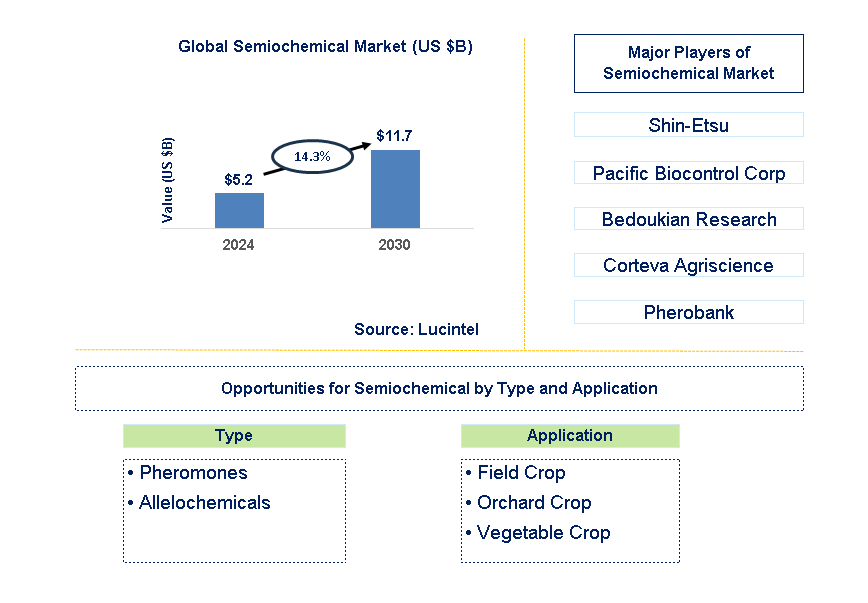
Key data points: The market size in 2030 = $11.7 billion, growth forecast = 14.3% annually for the next 6 years. Scroll below to get more insights. This market report covers trends, opportunities, and forecasts in the global semiochemical market to 2030 by type (pheromones and allelochemicals), application (field crop, orchard crop, and vegetable crop), and region (North America, Europe, Asia Pacific, and the Rest of the World)
We'll send your sample report shortly.
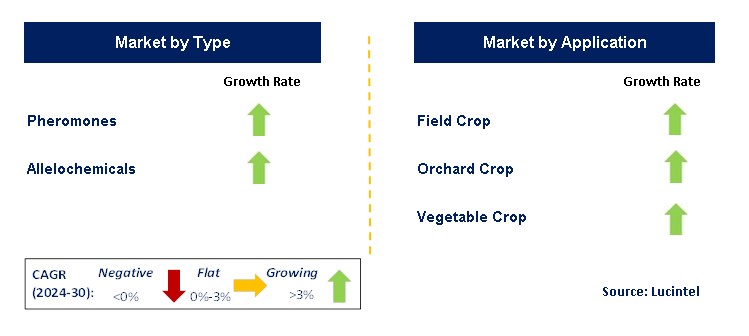
• Lucintel forecasts that, within the type category, pheromone is expected to witness a higher growth over the forecast period.
• Within the application category, field crop is expected to witness the highest growth.
• In terms of regions, North America is expected to witness the highest growth over the forecast period. Gain valuable insights for your business decisions with our comprehensive 150+ page report.
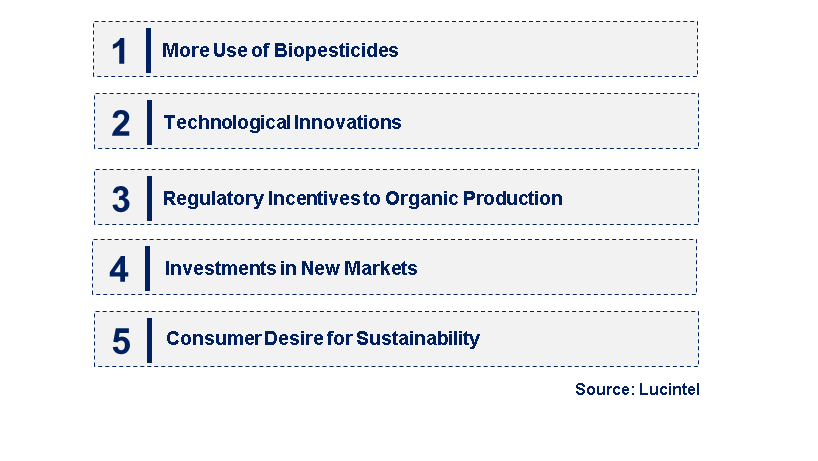
• More Use of Biopesticides: Growing concern over pesticide residues in the environment is leading farmers to focus on biopesticides that cause less harm. Biopesticides from natural sources offer a safer and potentially organic alternative to synthetic chemicals. This approach is expected to reduce the negative impact on the environment and enhance crop safety, a factor increasingly important to a larger consumer base concerned about sustainability.
• Technological Innovations: New technologies drive the development of more effective semiochemical products. Precision agriculture and smart delivery systems enhance the efficacy of semiochemicals. Targeted applications of these technologies minimize waste while improving efficiency in pest management. With an emphasis on more productive and efficient farming practices, organic agriculture adoption continues to increase across different sectors.
• Regulatory Incentives for Organic Production: Research and policy formulation in agriculture around the world contribute to the increasing usage of semiochemicals in organic farming. Governments create policies that ensure farming is conducted sustainably and decrease dependency on harmful pesticides, fostering a conducive climate for semiochemical producers to invest and conduct comprehensive research in green technology.
• Investments in New Markets: Beyond agricultural applications, such as food preservation and public health, the semiochemical market is slowly expanding into food processing and pest control. As awareness of the added value of semiochemicals increases, major industries involved in processing food and controlling pests are more likely to adopt these products. These new applications will generate additional revenue and expand market potential for manufacturers.
• Consumer Desire for Sustainability: The semiochemical market is being reshaped by growing consumer demand for sustainable and organic products. This trend has made consumers more aware of the environmental effects of agricultural practices and more likely to choose products that align with their values. Consequently, manufacturers are compelled to innovate novel semiochemical solutions that meet the needs of environmentally conscious consumers. These trends are collectively transforming the semiochemical market and promoting sustainable practices alongside innovative solutions to meet the growing demands of consumers and regulatory compliance.
• Novel Product Formulations: Recent formulations have led to more effective semiochemicals. Companies are developing tailor-made products to address specific pest issues without harming the environment. This innovation aims to meet the diverse needs of farmers while enhancing the overall effectiveness of pest management strategies.
• Improved Research Coordination: Collaboration between academia and industry is fostering significant advancements in semiochemical research. By partnering with companies, universities and research institutions are testing new semiochemical compounds and applications across various aspects of semiochemistry. This collaboration is crucial for developing sustainable pest control solutions.
• Diversification of Distribution Channels: Semiochemicals are expanding their distribution channels to reach a larger population of farmers. Online campaigns and direct-to-consumer models are now popular, ensuring easy access to semiochemical products. This expansion broadens outreach in response to rising demand and increases awareness of the benefits of semiochemical solutions.
• Integration with IPM: There is a growing concern to integrate semiochemicals with Integrated Pest Management (IPM) systems. Semiochemical-based IPM systems offer additional benefits for pest control at the farmer level. By integrating semiochemicals with other pest control methods, farmers can develop more sustainable and effective practices. This integration enhances the overall efficacy of pest control strategies, making them more appealing to environmentally conscious consumers.
• Focus on Educational Activities: Manufacturers are investing in educational initiatives that inform the public about the advantages of semiochemicals. Workshops and training sessions for farmers emphasize sustainable agricultural practices and demonstrate how semiochemicals improve pest control. Such developments have significantly impacted the semiochemical market, enhancing innovation, accessibility, and sustainability in pest management practices.
• Organic Farming Solutions: There is significant growth potential for semiochemical manufacturers in this area. As more consumers demand organic products, farmers are increasingly seeking environmentally friendly pest control options. Companies that innovate efficient semiochemicals for organic farming can capitalize on this high-margin business segment and position themselves as market leaders in sustainability.
• Pest Monitoring and Traps: Semiochemicals play a crucial role in pest monitoring and traps, which also have tremendous growth potential. Manufacturers have opportunities to design more effective pheromone-based traps and monitoring systems. This is essential not only for pest control but also for good agricultural practices, as it can reduce the reliance on chemical pesticides.
• Public Health Applications: Emerging opportunities exist for semiochemicals in controlling vectors of diseases such as malaria and dengue fever. Governments and organizations are increasingly opting for semiochemical-based solutions for effective pest control. This focus on public health presents interesting product development and marketing opportunities for manufacturers.
• Food Preservation: Certain semiochemicals are gaining interest in food safety and preservation. They can extend the shelf life of food products without compromising quality, making them a key focus area for companies looking to meet growing market demands and expand product portfolios.
• Collaborative Research Initiatives: There are opportunities for innovation through strategic partnerships and collaborative research initiatives between companies and research institutions. As stakeholders work together to leverage their combined expertise, cutting-edge semiochemical solutions will emerge to address new pest challenges. This collaboration will improve the speed of product development and enhance competitive positioning in the market. Semiochemicals are continually transforming the market landscape. The combination of innovation with alignment to evolving consumer needs and sustainability goals presents both challenges and opportunities in the semiochemical sector.
• Sustainability Trends: Consumer awareness and demand for better agricultural practices are key drivers in the market. Demand for effective pest control from environmentally conscious farmers is steadily increasing, creating a favorable market environment for semiochemical products and encouraging investment and innovation.
• Regulatory Support: Regulatory backing for biopesticides and natural pest control products fosters market growth. Many governments are establishing environmentally friendly policies, encouraging farmers to use semiochemicals. As adherence to these regulations increases, semiochemical-based products become more attractive for agricultural applications.
• Innovations: Continuous advancements in semiochemical production and application are driving market growth. Improvements in formulations and delivery methods increase the effectiveness of semiochemicals, making them more appealing to farmers. Ongoing technological developments will lead to new opportunities for semiochemical manufacturers.
• Advancements in Agricultural Practices: Growing interest in Integrated Pest Management (IPM) is driving demand for semiochemicals. Farmers are recognizing that sustainable agriculture requires integrating various pest control methods, creating an expanding market for semiochemical solutions.
• Increasing Demand for Organic Products: Rising consumer preference for organic products is a major driver of semiochemical market growth. The demand for organic food and eco-friendly pest control is increasing, motivating manufacturers to invest in semiochemical production, thereby enhancing market potential. Challenges:
• Rising Production Costs: Producing semiochemicals can be costly, especially when developing new chemical compounds. High production costs may reduce competitiveness and hinder investment. Manufacturers need to focus on optimizing processes to control costs without compromising product quality.
• Competition in the Market: Conventional chemical pesticides and alternative pest control solutions pose significant competition to the semiochemical market. Product offerings must be differentiated, and the efficacy of semiochemicals must be demonstrated to maintain market share. Continuous innovation is essential for companies to remain relevant.
• Low Awareness and Education Levels: Despite the benefits of semiochemicals, limited awareness among farmers remains a challenge. Educating stakeholders about the advantages of semiochemical solutions is vital for increasing adoption and market potential. In conclusion, the semiochemical market is characterized by significant drivers related to sustainability and technological advancements, alongside various challenges that require strategic responses. Understanding these dynamics will enable industry stakeholders to navigate this evolving landscape.
• Shin-Etsu
• Pacific Biocontrol Corp
• Bedoukian Research
• Corteva Agriscience
• Pherobank
• Suterra
• Certis
• Koppert Biological Systems
• Isagro Group
• Russell IPM
• Pheromones
• Allelochemicals
• Field Crop
• Orchard Crop
• Vegetable Crop
• North America
• Europe
• Asia Pacific
• The Rest of the World
• United States: Expanding investments in biopesticides and pheromone-based products in the U.S. semiochemical market represent significant growth. Driven by regulatory benefits for organic farming, the market for environmentally friendly pest control solutions is witnessing growth. Developments in targeted delivery systems aim for greater efficiency with minimal environmental impact. Increased interest from universities and the agrochemical industry in novel formulations further enhances market scope.
• China: The semiochemical market is gaining momentum in China due to a focus on sustainable agricultural practices. Government pressure to reduce pesticide use is prompting producers to explore natural semiochemicals. There is a growing interest in R&D for pest management solutions tailored to local crops and conditions. Farmers are increasingly incorporating semiochemicals into their integrated pest management systems.
• Germany: The German semiochemical market emphasizes sustainability and innovation. Germany is a leader in biopesticide innovation, with many startups focusing on eco-friendly chemical alternatives. Regulatory bodies are actively promoting semiochemicals for organic farming, encouraging their adoption among farmers. Accelerated research through industry-academia partnerships is driving the development of environmentally safe and effective semiochemical products.
• India: The growth of the Indian semiochemical market reflects a need for sustainable solutions to pest issues. Government encouragement of organic farming is boosting demand for semiochemical products, particularly pheromones for pest monitoring. Local companies are working to produce semiochemicals at lower costs for regional agricultural use. Educational initiatives about the benefits of semiochemicals are increasing demand for these products.
• Japan: Japan is rapidly expanding its semiochemical market by adopting advanced pest management technologies. The country is investing in research for novel semiochemical products that meet environmental standards. Japanese firms are also seeking international collaborations to enhance their product offerings.


• Shin-Etsu
• Pacific Biocontrol Corp
• Bedoukian Research
• Corteva Agriscience
• Pherobank
• Suterra
• Certis
• Koppert Biological Systems
• Isagro Group
• Russell IPM Q6. Which semiochemical market segment will be the largest in future? Answer: Lucintel forecasts that pheromone is expected to witness the higher growth over the forecast period. Q7. In semiochemical market, which region is expected to be the largest in next 5 years? Answer: North America is expected to witness highest growth over the forecast period. Q.8 Do we receive customization in this report? Answer: Yes, Lucintel provides 10% customization without any additional cost.


Choose a license that fits your team. Instant PDF delivery.
Prices exclude taxes. Instant delivery. Custom licensing available on request.
Market Report · July 22, 2026
Market Report · July 22, 2026
Market Report · July 22, 2026
Trusted partner for strategic intelligence and business growth


Receive a complimentary market analysis tailored to your industry. Our analysts will identify key growth opportunities and competitive dynamics specific to your business.

Market size, growth rate, and key trend analysis for your specific sector.

Top competitor positioning and market share analysis.

Strategic recommendations backed by data-driven insights.
Get curated market intelligence and competitive moves straight to your inbox.
By subscribing, you agree to receive our monthly insights. Unsubscribe anytime.
Receive a complimentary market analysis tailored to your industry. Our analysts will identify key growth opportunities and competitive dynamics specific to your business.
Market size, growth rate, and key trend analysis for your specific sector.
Top competitor positioning and market share analysis.
Strategic recommendations backed by data-driven insights.
Get curated market intelligence, emerging trends, and competitive moves straight to your inbox each month.
By subscribing, you agree to receive our monthly insights. Unsubscribe anytime.
We'll send your sample report shortly.