
Market Report · July 29, 2026

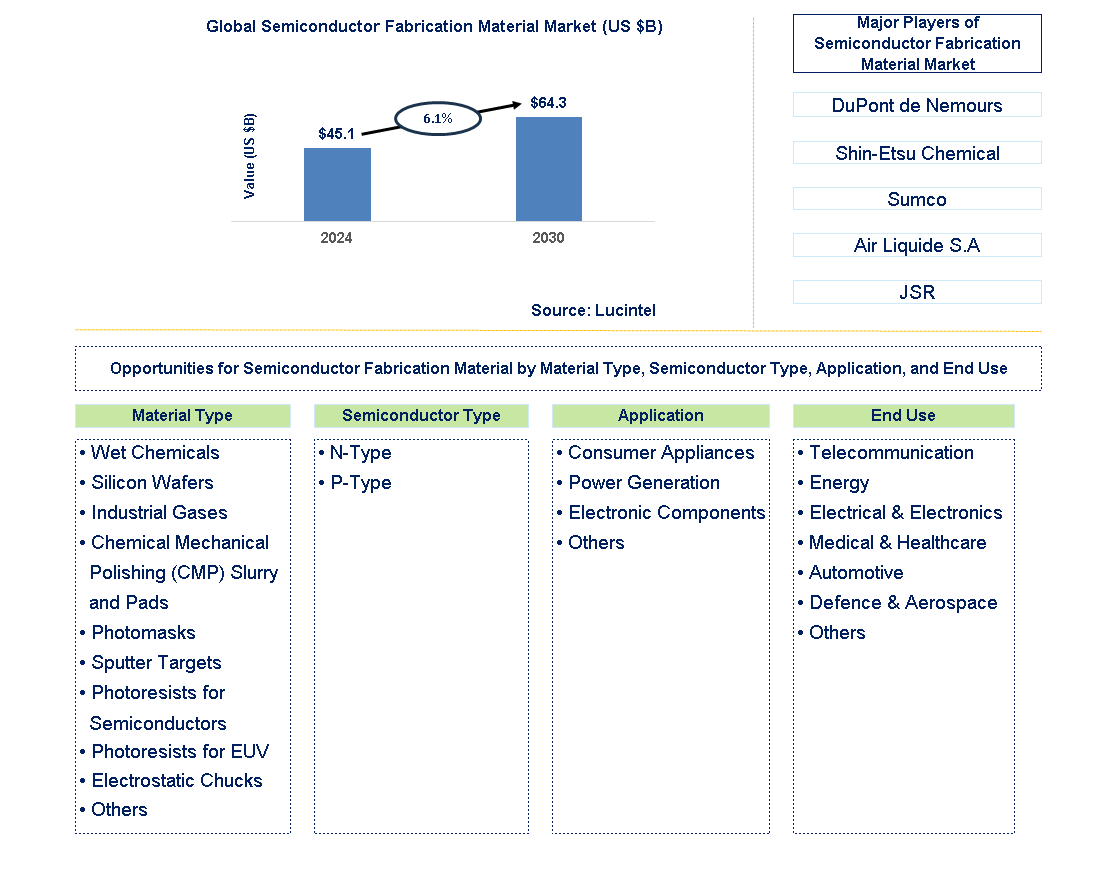
Key data points: The market size in 2030 = $64.3 billion, growth forecast = 6.1% annually for the next 6 years. Scroll below to get more insights. This market report covers trends, opportunities, and forecasts in the global semiconductor fabrication material market to 2030 by material type (wet chemicals, silicon wafers, industrial gases, chemical mechanical polishing (cmp) slurry and pads, photomasks, sputter targets, photoresists for semiconductors, photoresists for euv, electrostatic chucks, and others), semiconductor type (n-type and p-type), application (consumer appliances, power generation, electronic components, and others), end use (telecommunication, energy, electrical & electronics, medical & healthcare, automotive, defence & aerospace, and others), and region (North America, Europe, Asia Pacific, and the Rest of the World)
We'll send your sample report shortly.
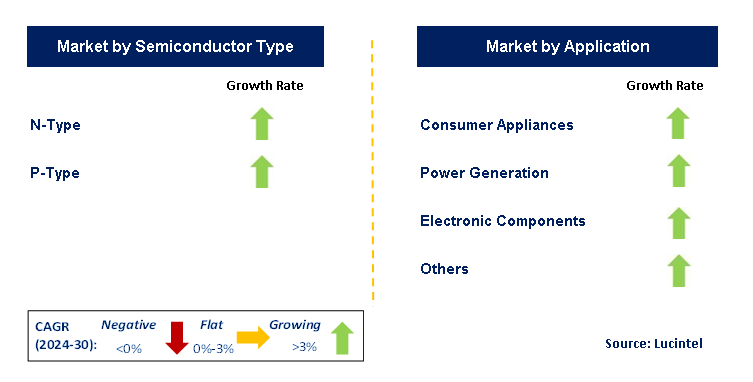
• Lucintel forecasts that, within the semiconductor type, N-type will remain the largest segment over the forecast period.
• In terms of regios, APAC is expected to witness the highest growth over the forecast period. Gain valuable insights for your business decisions with our comprehensive 150+ page report.
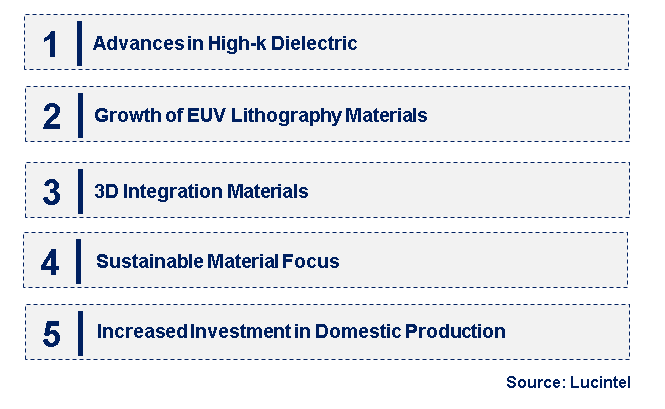
• Advances in High-k Dielectric: One of the key trends that empowers better performance at node technologies is the development of high-k dielectric materials. These materials provide higher capacitance with less leakage current, which is crucial for improving efficiency and performance in next-generation semiconductor devices.
• Growth of EUV Lithography Materials: There is a high demand for specialty materials, including high-purity photoresists and advanced mask blanks, due to the adoption of extreme ultraviolet lithography. EUV lithography enables the development of increasingly smaller and more complex semiconductor structures, thus allowing for continued scaling of semiconductor technology.
• 3D Integration Materials: There is growing interest and activity in sustainable trends concerning the ingredients key to enabling 3D integration. These new material sets already scale into higher-density semiconductor components, including fundamental advances in packaging and interconnections that enhance performance and reduce the form factor of electronic devices.
• Sustainable Material Focus: There is increased emphasis on sustainability regarding semiconductor fabrication materials, with much effort directed toward eco-friendly and recyclable material development. This aligns with international environmental initiatives and aims to make processes within semiconductor production much greener.
• Increased Investment in Domestic Production: Geopolitical tensions and vulnerabilities in supply chains warrant investments in the domestic production of semiconductor materials. This trend aims to reduce dependence on foreign sources and strengthen the resilience and security of semiconductor supply chains. New trends in the market for semiconductor fabrication materials involve emerging research and development in high-k dielectrics, EUV lithography materials, 3D integration, and sustainability. Rapid investments in domestic manufacturing facilities not only support developing country players but also provide long-term growth opportunities.
• Innovation in High-k Dielectrics: The development of high-k dielectric materials has progressed with new formulations offering even better performance at node technologies. These materials improve capacitance and reduce leakage currents, enabling the scaling of semiconductor devices by enhancing their efficiency and performance.
• Adoption of EUV Lithography Materials: Further development of advanced materials is a driver for EUV lithography, which includes very high-purity photoresists and mask blanks. The advanced fabrication of smaller and more complex semiconductor structures enables continued scaling of semiconductors and their technologies.
• 3D Integration Technologies: The development of new materials for 3D integration and advanced packaging to support vertical stacking with high-density interconnects is essential to meet the demands of compact, high-performance electronic devices with enhanced functionality and reliability.
• Sustainable Semiconductor Materials: There is an increasing trend toward using sustainable materials in this industry, including recycled or eco-friendly options. This trend is well-coordinated globally, aligning with the pursuit of Global Environmental Goals alongside the need for more environmentally friendly semiconductor manufacturing practices.
• Increasing Domestic Production Capacity: Investments in domestically produced semiconductor materials are rising to reduce dependence on foreign suppliers. This trend is expected to enhance supply chain resilience and security while ensuring stability in the supply of key semiconductor materials. Recent developments in the semiconductor fabrication material market include advancements in high-k dielectrics, EUV lithography materials, 3D integration technologies, sustainability, and domestic production. These advancements drive performance improvements, underpin rapid technological progress, and support supply chain stability.
• Automotive Electronics: One of the major growth opportunities in the semiconductor fabrication materials market is the expansion of automotive electronics. Advanced driver-assistance systems, infotainment, and power management in electric vehicles drive demand for high-performance materials that are durable and reliable.
• Consumer Electronics: Key areas of development include the consumer electronics market: smartphones, tablets, and wearables. For several new advanced devices, especially those related to high-density packaging and miniaturization, improving performance and functionality requires innovation in materials to support growth in this sector.
• Telecom Infrastructure: The deployment of 5G and other next-generation communication networks increases demand for customized semiconductor materials. These materials play a crucial role in managing heat and ensuring signal integrity in high-speed communication systems, leading to their growing applications in this segment.
• Renewable Energy Technologies: The renewable energy sector, particularly solar and wind power, requires semiconductor materials that can withstand harsh environmental conditions and support energy conversion and storage technologies. Growth in this sector presents ample opportunities for developing robust and efficient materials.
• Industrial Automation and IoT: Automation in industry and the IoT are developing markets for semiconductor materials in sensors, actuators, and control systems. High-performance materials are essential, as they determine the precision, reliability, and connectivity of automated and connected systems. Strategic growth opportunities in the semiconductor fabrication material market comprise automotive electronics, consumer electronics, telecommunications infrastructure, renewable energy technologies, and industrial automation, all driving higher demand for advanced materials. These opportunities support innovation, enhance performance, and address the needs of emerging technology.
• Technological Advancements: Innovations in materials science and fabrication techniques lead to the development of high-performance semiconductor materials. These advancements enable the creation of more compact, energy-efficient, and powerful semiconductor devices, supporting market growth.
• Growing Demand for Electronics: The prominent growth of electronic devices, such as smartphones, wearables, and automotive electronics, drives demand for advanced semiconductor materials. This demand positively contributes to the semiconductor fabrication material market, as higher technology levels necessitate higher-performing materials.
• Growth in Telecommunication Networks: The launch of 5G and other cutting-edge telecommunication infrastructures creates demand for specialized semiconductor materials necessary to manage heat and provide signal integrity in high-speed communication systems, thus driving market growth.
• Sustainability Focus: The development of recyclable and biodegradable materials promotes sustainable and greener concepts in the semiconductor market, aligning with global environmental goals.
• Investments in Domestic Production: An increasing number of investments in domestic production capabilities promote manufacturing independence from unreliable suppliers and enhance supply chain robustness. This trend also helps mitigate geopolitical risks and fosters the growth of a domestic semiconductor industry. Challenges in the semiconductor fabrication material market include:
• High Production Cost: The development and manufacturing costs of advanced semiconductor materials are high, potentially affecting profitability and market accessibility. Costs must be managed against achieving the necessary performance levels for competitiveness in the market.
• Supply Chain Disruptions: Supply chain disruptions, including shortages and logistical issues, affect the availability and cost of semiconductor materials. Mitigation strategies are essential to maintain market stability.
• Regulatory Compliance: Semiconductor material manufacturers must comply with strict environmental and safety regulations. Successfully accommodating these regulations without sacrificing product quality and performance is crucial for success in the marketplace. The drivers shaping the semiconductor fabrication material market include technological advancements, demand for electronics, expansion in telecommunications, sustainability focus, and investment in domestic production. The challenges faced by the market include high production costs, supply chain disruptions, and regulatory compliance. A fine balance between these factors is essential for navigating the evolving market landscape.
• DuPont de Nemours
• Shin-Etsu Chemical
• Sumco
• Air Liquide S.A
• JSR
• Versum Materials
• Globalwafers
• Sumitomo Chemical
• Photronics
• Honeywell
• Wet Chemicals
• Silicon Wafers
• Industrial Gases
• Chemical Mechanical Polishing (CMP) Slurry and Pads
• Photomasks
• Sputter Targets
• Photoresists for Semiconductors
• Photoresists for EUV
• Electrostatic Chucks
• Others
• N-Type
• P-Type
• Consumer Appliances
• Power Generation
• Electronic Components
• Others
• Telecommunication
• Energy
• Electrical & Electronics
• Medical & Healthcare
• Automotive
• Defence & Aerospace
• Others
• North America
• Europe
• Asia Pacific
• The Rest of the World
• United States: In the United States, there is a focus on advanced materials for next-generation devices, including the development of high-k dielectrics and advanced photoresists to enable further node technologies. Increased attention is given to domestic production as a strategy to reduce dependence on foreign suppliers and enhance supply chain resilience, aligning with national interests in semiconductor security and technological leadership.
• China: China is rapidly developing capabilities in semiconductor fabrication materials, supported by increasing investments in domestic production and research and development. Recent developments include the introduction of high-purity chemicals and advanced deposition materials to meet local semiconductor manufacturing needs. Furthermore, China is striving to reduce its reliance on foreign technology by developing proprietary fabrication materials and expanding production capacities to meet the growing demand for semiconductors across various industries.
• Germany: Germany leads in driving technology in semiconductor manufacturing materials, emphasizing precision and quality. Recently introduced materials are designed for high-precision lithography and advanced etching. The need for quality and efficiency has positioned Germany favorably, particularly in the automotive and industrial sectors, which rely on advanced semiconductor materials to achieve high performance and reliability in their complex electronic systems.
• India: India is scaling up its semiconductor fabrication materials by enhancing manufacturing infrastructure and technological capabilities. Key developments include collaborations with international companies to achieve world-class materials and technologies. India is also investing in affordable solutions and scaling up production units to support its electronics and semiconductor sectors, establishing itself as a key player in the global semiconductor supply chain.
• Japan: In Japan, semiconductor fabrication materials are focused on improved performance and miniaturization. Recent developments emphasize innovative high-performance materials for advanced packaging and high-density integration. Support for research and development is crucial for Japan to maintain its leading position in consumer electronics and automotive sectors, where material accuracy and quality are vital for sustaining technological competitiveness and meeting strict performance requirements.


• DuPont de Nemours
• Shin-Etsu Chemical
• Sumco
• Air Liquide S.A
• JSR
• Versum Materials
• Globalwafers
• Sumitomo Chemical
• Photronics
• Honeywell Q6. Which semiconductor fabrication material market segment will be the largest in future? Answer: Lucintel forecasts that, within the semiconductor type, N-type will remain the largest segment over the forecast period. In terms of regios, APAC is expected to witness the highest growth over the forecast period. Q7. In semiconductor fabrication material market, which region is expected to be the largest in next 5 years? Answer: APAC is expected to witness the highest growth over the forecast period. Q.8 Do we receive customization in this report? Answer: Yes, Lucintel provides 10% customization without any additional cost.


Choose a license that fits your team. Instant PDF delivery.
Prices exclude taxes. Instant delivery. Custom licensing available on request.
Market Report · July 29, 2026
Market Report · July 20, 2026
Market Report · July 20, 2026
Trusted partner for strategic intelligence and business growth


Receive a complimentary market analysis tailored to your industry. Our analysts will identify key growth opportunities and competitive dynamics specific to your business.

Market size, growth rate, and key trend analysis for your specific sector.

Top competitor positioning and market share analysis.

Strategic recommendations backed by data-driven insights.
Get curated market intelligence and competitive moves straight to your inbox.
By subscribing, you agree to receive our monthly insights. Unsubscribe anytime.
Receive a complimentary market analysis tailored to your industry. Our analysts will identify key growth opportunities and competitive dynamics specific to your business.
Market size, growth rate, and key trend analysis for your specific sector.
Top competitor positioning and market share analysis.
Strategic recommendations backed by data-driven insights.
Get curated market intelligence, emerging trends, and competitive moves straight to your inbox each month.
By subscribing, you agree to receive our monthly insights. Unsubscribe anytime.
We'll send your sample report shortly.