
Market Report · July 22, 2026

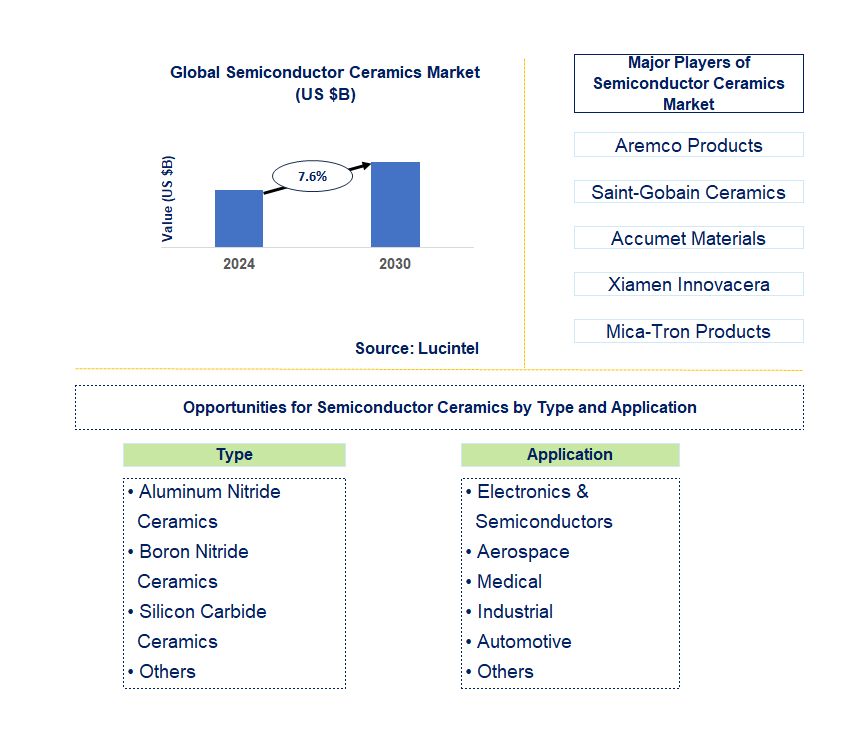
Key data points: The growth forecast = 7.6% annually for the next 6 years. Scroll below to get more insights. This market report covers trends, opportunities, and forecasts in the global semiconductor ceramics market to 2030 by type (aluminum nitride ceramics, boron nitride ceramics, silicon carbide ceramics, and others), application (electronics & semiconductors, aerospace, medical, industrial, automotive, and others), and region (North America, Europe, Asia Pacific, and the Rest of the World)
We'll send your sample report shortly.
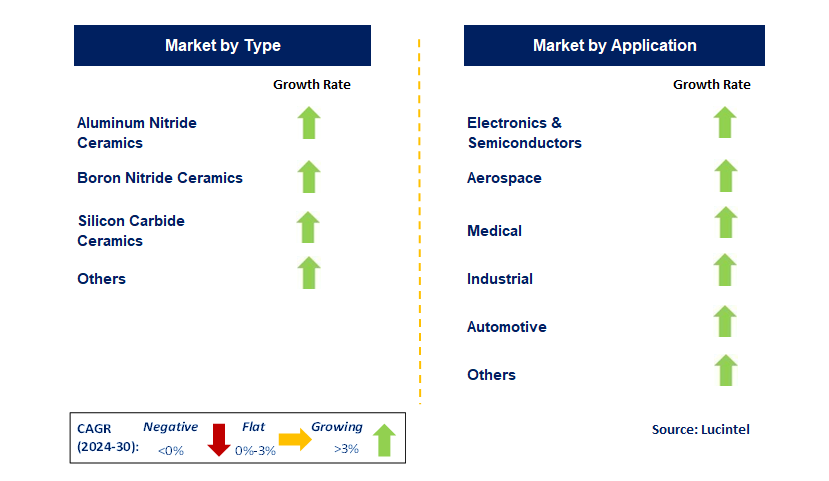
• Lucintel forecasts that, within the type category, aluminum nitride ceramic is expected to witness the highest growth over the forecast period.
• Within the application category, electronics & semiconductor is expected to witness the highest growth.
• In terms of regions, APAC is expected to witness the highest growth over the forecast period. A more than 150-page report is developed to help in your business decisions.
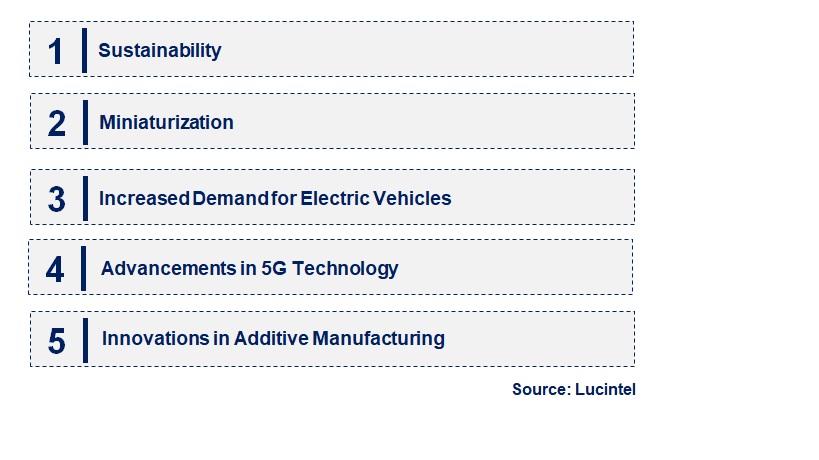
• Sustainability: Sustainability is becoming a critical focus in the semiconductor ceramics market. Companies are developing eco-friendly materials and manufacturing processes that minimize environmental impact. This trend not only addresses regulatory pressures but also meets consumer demand for greener products. By utilizing recycled materials and reducing energy consumption during production, the industry is positioning itself for a more sustainable future.
• Miniaturization: The push for miniaturization in electronics is driving innovations in semiconductor ceramics. As devices become smaller and more powerful, the need for compact and efficient materials grows. This trend is leading to the development of advanced ceramic substrates that enable higher density and performance in electronic circuits. Miniaturization is crucial for applications in mobile devices, IoT, and wearable technology.
• Increased Demand for Electric Vehicles: The rise of electric vehicles (EVs) is significantly impacting the semiconductor ceramics market. Advanced ceramics are essential for improving the performance and efficiency of power electronics used in EVs. This trend is leading to increased research and development investments in high-temperature and high-voltage ceramic materials. As the EV market expands, the demand for reliable semiconductor ceramics will continue to grow.
• Advancements in 5G Technology: The rollout of 5G technology is creating new opportunities for semiconductor ceramics. Higher frequencies require materials with excellent dielectric properties, prompting innovation in ceramic formulations. This trend is crucial for telecommunications infrastructure, where reliability and performance are paramount. As 5G adoption accelerates, the demand for specialized ceramics will rise, driving further advancements in the field.
• Innovations in Additive Manufacturing: Additive manufacturing is revolutionizing the production of semiconductor ceramics. This trend allows for the creation of complex geometries and customized materials that traditional manufacturing methods cannot achieve. Innovations in 3D printing technologies are leading to cost-effective and efficient production processes. As the industry embraces these advancements, the potential for tailored ceramic components will enhance the performance of electronic devices. These emerging trends are reshaping the semiconductor ceramics market, driving innovation and sustainability. As the industry adapts to new technological demands, it will continue to evolve, creating opportunities for improved materials and processes. The interplay of sustainability, miniaturization, and advancements in technology positions semiconductor ceramics as a critical component in the future of electronics.
• Advanced Material Formulations: Recent advancements in material formulations have led to the creation of high-performance ceramics that exhibit superior thermal and electrical properties. This development allows for better heat dissipation in electronic devices, enhancing their reliability and lifespan. These improved materials are increasingly being used in high-frequency applications, paving the way for more efficient and compact electronic components. As manufacturers adopt these advanced materials, the overall performance of semiconductor devices is significantly enhanced.
• Sustainability Initiatives: The push for sustainability has prompted companies to focus on eco-friendly manufacturing processes and materials. Developments include the use of recycled materials in ceramic production and energy-efficient manufacturing techniques. This not only reduces the carbon footprint but also addresses regulatory demands for greener practices. As sustainability becomes a core value, companies that prioritize eco-friendly approaches are likely to gain a competitive edge in the market.
• Integration of AI in R&D: The integration of artificial intelligence (AI) in research and development has transformed how semiconductor ceramics are designed and tested. AI-driven simulations allow for rapid material discovery and optimization, reducing time and costs associated with traditional methods. This development enhances innovation and enables manufacturers to create tailored solutions that meet specific application needs, ultimately accelerating the development cycle for new products.
• Expansion in 5G Applications: With the rollout of 5G technology, there has been a marked increase in demand for specialized semiconductor ceramics that can handle higher frequencies and greater data transmission needs. Recent developments focus on optimizing dielectric properties in ceramics, which are crucial for telecommunications infrastructure. This growth in 5G applications drives the market, prompting investments in research to enhance the performance of ceramic materials, leading to more efficient communication networks.
• Growth in Electric Vehicle Technologies: The rise of electric vehicles (EVs) has spurred significant developments in semiconductor ceramics, particularly in power electronics. Advanced ceramics are essential for improving battery efficiency and thermal management in EVs. As automakers strive for better performance and longer ranges, the demand for reliable ceramic components is increasing. This trend not only enhances vehicle performance but also positions semiconductor ceramics as a vital component in the transition to sustainable transportation. These recent developments are reshaping the semiconductor ceramics market by enhancing material properties, promoting sustainability, and driving innovation. The integration of advanced materials and technologies fosters new applications, while the focus on environmental responsibility is creating a more competitive landscape. Overall, these trends contribute to the growth and evolution of the semiconductor ceramics sector, meeting the demands of an increasingly technology-driven world.
• Electronics and Consumer Devices: The electronics sector is experiencing significant growth, driven by the demand for high-performance materials in consumer devices. Semiconductor ceramics are increasingly used in capacitors, resistors, and substrates, enhancing device efficiency and miniaturization. As consumer electronics become more advanced, the need for durable and reliable ceramic components will continue to rise, presenting substantial growth opportunities for manufacturers.
• Renewable Energy Technologies: The transition to renewable energy sources offers considerable opportunities for semiconductor ceramics, particularly in solar panels and energy storage systems. Advanced ceramic materials improve the efficiency and lifespan of batteries and photovoltaic cells. As governments and industries invest more in clean energy, the demand for innovative ceramic solutions will likely grow, positioning the semiconductor ceramics market as a key player in sustainability efforts.
• Telecommunications Infrastructure: The expansion of telecommunications networks, especially with the advent of 5G technology, is creating a surge in demand for semiconductor ceramics. These materials are essential for high-frequency applications, enhancing signal integrity and performance. As global connectivity improves, investments in infrastructure will drive growth opportunities for companies specializing in ceramics tailored for telecom applications.
• Aerospace and Defense: The aerospace and defense sectors present unique opportunities for high-performance semiconductor ceramics, which are used in applications requiring exceptional durability and thermal resistance. These materials are critical in components such as sensors, insulators, and microwave devices. As defense technologies advance, the demand for robust ceramic solutions will rise, creating a lucrative market segment for manufacturers.
• Automotive Electronics: With the rise of electric and autonomous vehicles, the automotive sector is increasingly reliant on semiconductor ceramics for power electronics and thermal management systems. These materials enhance battery performance and vehicle reliability. As the automotive industry transitions toward electrification, the demand for innovative ceramic solutions is expected to soar, providing significant growth opportunities in this application. These strategic growth opportunities are shaping the semiconductor ceramics market by driving demand across key applications. As industries adapt to technological advancements and sustainability initiatives, manufacturers have the potential to innovate and capture new market segments. This evolving landscape not only enhances the performance of existing technologies but also positions semiconductor ceramics as a crucial component in the future of various industries.
• Technological Advancements: Continuous innovation in semiconductor materials enhances performance and efficiency. Advanced ceramics provide superior thermal stability and electrical insulation, making them essential in modern electronic devices. This drives demand in sectors like telecommunications and automotive, where high reliability is paramount. As technology evolves, the need for specialized ceramics will continue to expand.
• Growing Demand for Electronics: The global surge in electronics consumption, particularly in smartphones, laptops, and IoT devices, fuels the semiconductor ceramics market. These ceramics are critical for miniaturization and efficiency improvements in chips. As consumer demand escalates, manufacturers are compelled to innovate, leading to increased investments in ceramic technology, which supports market growth.
• Sustainability Trends: Environmental regulations and consumer preferences for sustainable products are pushing manufacturers towards eco-friendly materials. Semiconductor ceramics are often more sustainable than their alternatives, aligning with green initiatives. This trend not only opens new markets but also enhances corporate reputation, prompting companies to adopt ceramic solutions in their product lines.
• Renewable Energy: The push for renewable energy sources drives demand for semiconductors in energy storage and conversion systems. Ceramic materials are integral in applications like photovoltaics and batteries due to their durability and efficiency. As investments in renewable technologies grow, so does the reliance on semiconductor ceramics, making this a key market driver.
• Increasing Automotive Electronics: The rise of electric vehicles (EVs) and advanced driver-assistance systems (ADAS) significantly boosts demand for semiconductor ceramics. These materials offer high performance in harsh environments, making them ideal for automotive applications. As the automotive sector undergoes transformation, the need for reliable and efficient components ensures continued growth in the ceramics market. Challenges in the semiconductor ceramics market are:
• Supply Chain Disruptions: The semiconductor industry faces vulnerabilities due to global supply chain disruptions, particularly for raw materials. These disruptions can delay production timelines, increasing costs and reducing availability. Companies must adapt by diversifying suppliers and optimizing manufacturing processes to ensure resilience.
• Raw Material Price Fluctuations: The price volatility of raw materials, such as rare earth metals used in ceramics, can impact production costs. This fluctuation creates financial uncertainty and can lead to higher prices for consumers. Manufacturers must invest in sourcing strategies to mitigate these risks, such as recycling or developing alternatives.
• Stringent Regulations: The growing focus on environmental regulations and standards for materials used in electronics and other sectors presents challenges for the semiconductor ceramics market. Compliance with these regulations can increase operational costs and limit the range of materials available. Companies must stay informed of changing regulations to ensure continued market access. Despite these challenges, the semiconductor ceramics market is positioned for strong growth, driven by advancements in technology, sustainability trends, and increasing demand across various industries. Stakeholders must address these challenges proactively to unlock the full potential of this dynamic market.
• Aremco Products
• Saint-Gobain Ceramics
• Accumet Materials
• Xiamen Innovacera Advanced Materials
• Mica-Tron Products
• TQ Abrasive Machining
• A C Technologies
• Calix Ceramic Solutions
• Bomas Machine Specialties
• Accuratus
• Aluminum Nitride Ceramics
• Boron Nitride Ceramics
• Silicon Carbide Ceramics
• Others
• Electronics & Semiconductors
• Aerospace
• Medical
• Industrial
• Automotive
• Others
• North America
• Europe
• Asia Pacific
• The Rest of the World
• United States: In the U.S., recent developments focus on integrating advanced ceramics in microelectronics. Companies are enhancing material properties such as thermal stability and electrical conductivity. The rise of electric vehicles (EVs) has spurred demand for semiconductor ceramics in power electronics. Furthermore, collaborations between universities and industries are fostering innovation, particularly in developing materials that can withstand extreme environments.
• China: The Chinese semiconductor ceramics market is booming, fueled by government investments and the push for self-sufficiency in technology. Key advancements include developing high-performance dielectric ceramics that improve device efficiency. Chinese manufacturers are also ramping up production capacity to meet the growing domestic demand, particularly in telecommunications and renewable energy sectors. Research initiatives are exploring nanostructured ceramics, aiming to enhance performance in advanced electronic applications.
• Germany: Germany is leading in the development of environmentally friendly semiconductor ceramics, focusing on sustainability in production processes. Innovations include using recycled materials in ceramic fabrication, minimizing waste. The automotive industry’s shift toward electric drivetrains is driving demand for robust semiconductor materials. German research institutions are collaborating with industries to improve the performance of ceramics, specifically in thermal management applications.
• India: India is witnessing a surge in semiconductor ceramics research, driven by the growing electronics market. Investments in local manufacturing and research initiatives aim to enhance material properties and production efficiencies. Key advancements include developing low-cost ceramic substrates for electronic circuits. The government’s “Make in India” initiative is supporting startups and SMEs to innovate in semiconductor ceramics, aiming to reduce reliance on imports.
• Japan: Japan remains a leader in precision ceramics, focusing on high-performance applications in consumer electronics and industrial machinery. Recent developments include innovations in dielectric ceramics that enhance signal integrity and reduce energy loss. Japanese firms are investing in AI and machine learning to optimize production processes and material development. Collaborative efforts between academia and industry are key in advancing next-generation semiconductor ceramics that meet evolving market demands.


• Aremco Products
• Saint-Gobain Ceramics
• Accumet Materials
• Xiamen Innovacera Advanced Materials
• Mica-Tron Products
• TQ Abrasive Machining
• A C Technologies
• Calix Ceramic Solutions
• Bomas Machine Specialties
• Accuratus Q5. Which semiconductor ceramics market segment will be the largest in future? Answer: Lucintel forecasts that aluminum nitride ceramic is expected to witness the highest growth over the forecast period. Q6. In semiconductor ceramics market, which region is expected to be the largest in next 5 years? Answer: APAC is expected to witness the highest growth over the forecast period. Q.7 Do we receive customization in this report? Answer: Yes, Lucintel provides 10% customization without any additional cost.


Choose a license that fits your team. Instant PDF delivery.
Prices exclude taxes. Instant delivery. Custom licensing available on request.
Market Report · July 22, 2026
Market Report · July 22, 2026
Market Report · July 22, 2026
Trusted partner for strategic intelligence and business growth


Receive a complimentary market analysis tailored to your industry. Our analysts will identify key growth opportunities and competitive dynamics specific to your business.

Market size, growth rate, and key trend analysis for your specific sector.

Top competitor positioning and market share analysis.

Strategic recommendations backed by data-driven insights.
Get curated market intelligence and competitive moves straight to your inbox.
By subscribing, you agree to receive our monthly insights. Unsubscribe anytime.
Receive a complimentary market analysis tailored to your industry. Our analysts will identify key growth opportunities and competitive dynamics specific to your business.
Market size, growth rate, and key trend analysis for your specific sector.
Top competitor positioning and market share analysis.
Strategic recommendations backed by data-driven insights.
Get curated market intelligence, emerging trends, and competitive moves straight to your inbox each month.
By subscribing, you agree to receive our monthly insights. Unsubscribe anytime.
We'll send your sample report shortly.