
Market Report · July 29, 2026

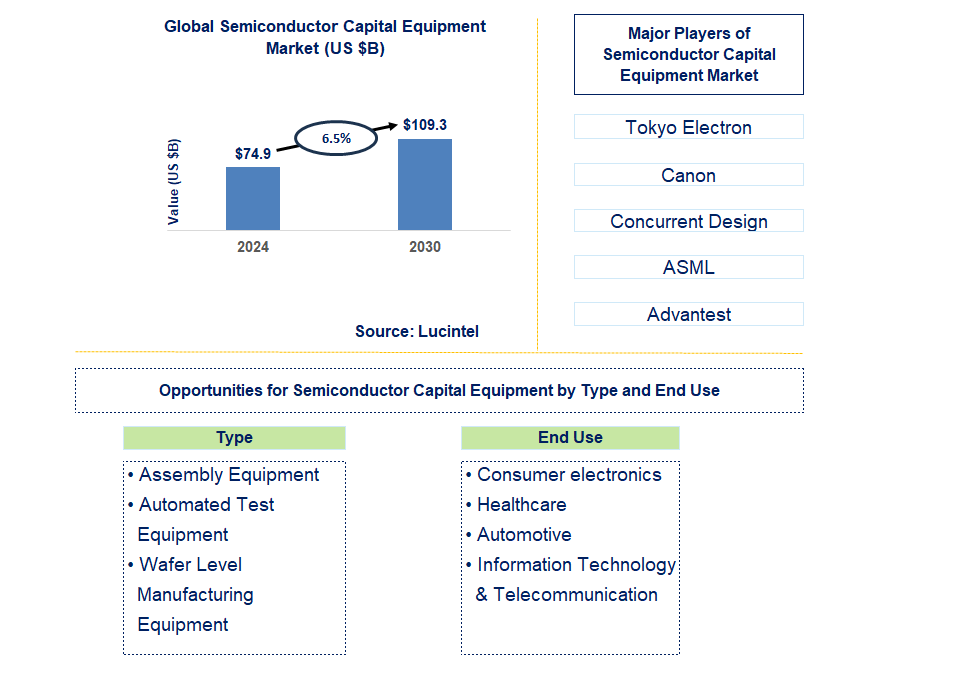
Key data points: The market size in 2030 = $109.3 billion, growth forecast = 6.5% annually next 6 years. Scroll below to get more insights. This market report covers trends, opportunities, and forecast in the global semiconductor capital equipment market to 2030 by type (assembly equipment, automated test equipment, and wafer level manufacturing equipment), end use (consumer electronics, healthcare, automotive, and information technology & telecommunication), and region (North America, Europe, Asia Pacific, and the Rest of the World)
We'll send your sample report shortly.
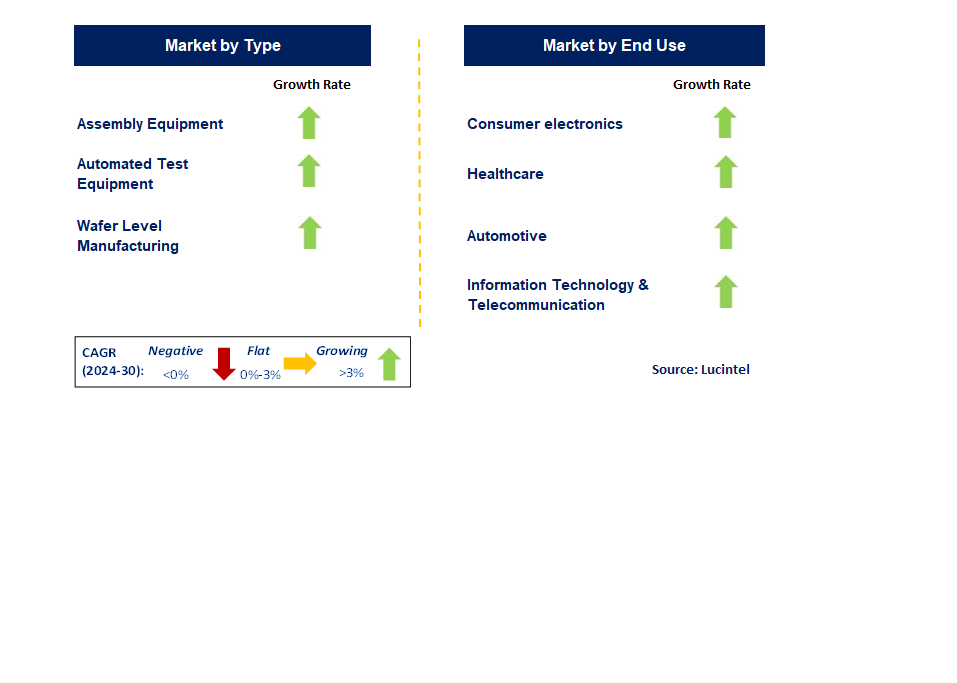
• Lucintel forecasts that assembly equipment will remain the largest segment over the forecast period due to strong demand for assembly equipment in the production of integrated circuits.
• APAC will remain the largest region over the forecast period due to expanding use of semiconductor capital equipment in the consumer electronics industry, as well as, growth of the semiconductor capital equipment industry mostly to countries such as China, India, and Japan. A more than 150-page report is developed to help in your business decisions.
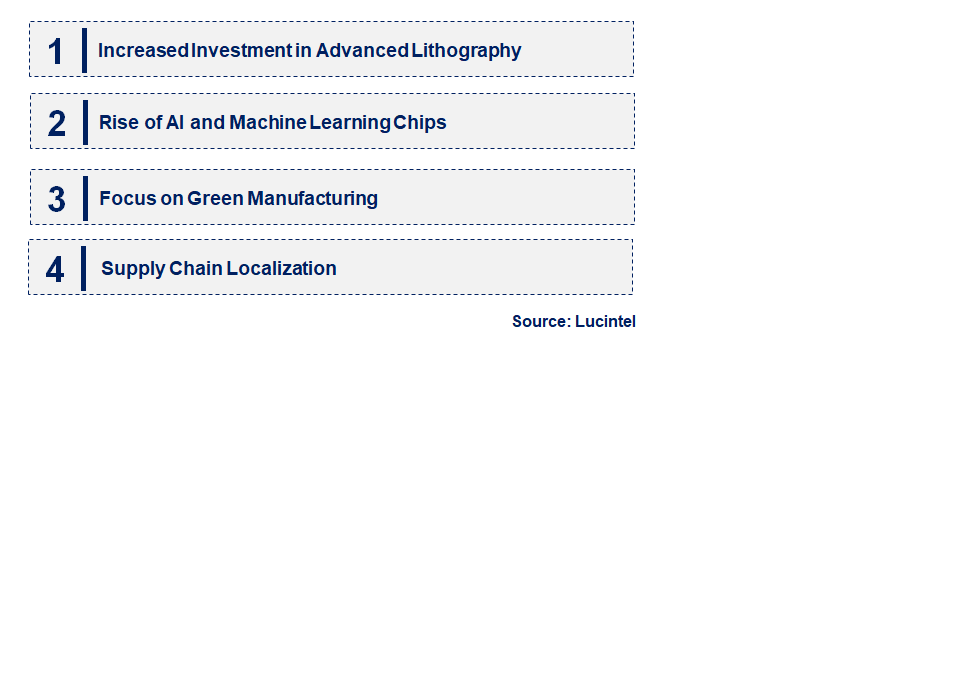
• Increased Investment in Advanced Lithography: The push for smaller nodes and higher performance has driven investments in advanced lithography equipment, such as extreme ultraviolet (EUV) machines. This technology enables the production of smaller, more efficient chips, crucial for the next generation of electronics and computing.
• Rise of AI and Machine Learning Chips: There is a growing demand for specialized equipment to manufacture AI and machine learning chips. These chips require advanced design and production capabilities to handle complex computations and data processing, driving innovation in semiconductor equipment.
• Focus on Green Manufacturing: Environmental sustainability is becoming a key focus, with semiconductor companies investing in greener manufacturing processes. Innovations include energy-efficient production techniques and recycling of materials, aimed at reducing the industry’s environmental footprint.
• Supply Chain Localization: Geopolitical tensions and supply chain disruptions are encouraging companies to localize their supply chains. Investments in domestic manufacturing capabilities are rising, aiming to reduce reliance on global suppliers and mitigate risks associated with international trade uncertainties. These trends are reshaping the semiconductor capital equipment market by pushing advancements in technology, promoting environmental sustainability, and adapting to geopolitical shifts. Companies are adapting their strategies to stay competitive and address emerging needs in a rapidly evolving industry.
• EUV Lithography Advancements: Lithography technology developments, such as EUV lithography, still continue to offer the smaller, higher-powered semiconductors. It helps in fabricating chips with tighter nodes, which are a highly significant step within modern electronics.
• Greater Government Funding: Government-sponsored programs, such as the CHIPS Act in the U.S. and many in the EU, serve as crucial funding for semiconductor research and manufacturing, further impacting domestic production activities and technological innovation.
• New Market Entrants: New market entrants in the semiconductor equipment industry are entering in from particularly Asia. New entrants into the field are highly competitive with their driving technologies, thus ensuring greater innovation, making the industry more dynamic.
• Advancements in the Test Equipment: A lot of advanced test equipment is under development, where they have to take into confidence the aspects related to reliability and performance along with the increased complexity in semiconductor devices. Innovations include test methodologies and automation. This altogether is reformulating the semiconductor capital equipment market—making it productive, innovative, and responsive to environmental concerns. The industry is adapting to these trends, which now make new thresholds for growth, both technologically and environmentally.
• Growth in Automotive Electronics: Increased demand for automotive electronics, such as that for ADAS and other electric-vehicle-related components, is fueling an uptick of semiconductor equipment. This is a high-growth segment, as additional technology goes in to the vehicle.
• 5G Infrastructure Development: Increasing the deployment of 5G networks is likely to heighten demand for high-performance semiconductor equipment in the development of new infrastructure and devices. This opens up opportunities for the development of equipment in RF components and network infrastructure.
• Improving Consumer Electronics: Since the development of smart devices and consumer electronics like wearables and smartphones, semiconductor manufacturing equipment has been in high demand. As such, the innovation of chip design and production has become highly demanding.
• Data Center Technologies: The growth to meet the demands of the many data centers required to support expanded cloud computing and big-data needs is driving the surge in semiconductor devices. This includes high capacity, high-powered needs of computing equipment and high availability, storage, and retrieval solutions. These key growth opportunities consequently shape the landscape of the semiconductor capital equipment market by pinpointing very demanding and potential innovative areas. Companies can thus tap into these opportunities to drive growth and retain their competitive advantages in an evolving marketplace.
• Tokyo Electron
• Canon
• Concurrent Design
• ASML
• Advantest
• EV Group
• AMEC
• Lam Research
• Hitachi High-Technologies
• Applied Materials
• Assembly Equipment
• Automated Test Equipment
• Wafer Level Manufacturing Equipment
• Consumer electronics
• Healthcare
• Automotive
• Information Technology & Telecommunication
• North America
• Europe
• Asia Pacific
• The Rest of the World
• United States: The country has increased investment in semiconductor manufacturing, with the CHIPS Act encouraging more domestic production. Major firms, including Intel and TSMC, are building larger facilities and investing heavily in R&D for advanced lithography and AI chips to reduce dependence on foreign technologies and to secure supply chains.
• China continues to forge ahead with self-sufficiency in semiconductor technology with a number of state-led investments in domestic chip fabrication capabilities. Developing advanced lithography equipment and reducing dependence on U.S. technology, amidst a back-drop of still on-going trade restrictions, are being focused upon.
• Germany: Germany is now extending its semiconductor fabrication footprint into new fab projects together with the EU. Emphasis is put on the production of automotive chips and advanced packaging technologies for the promotion of supply chain resilience across Europe.
• India: India is fast becoming an emerging hub for semiconductor assembly and testing. Incentives will be available on offer from the government under its Semiconductor Mission, which is intended to attract investments by global players in setting up facilities. This growth is likely to support India's electronics manufacturing sector and enhance its position globally.
• Japan: Japan invests in revitalizing its semiconductor industry, mainly for high-performance computing and memory technologies. The government and big companies work together to restore the leading position in semiconductor technology that the country lost over the years by losing market share.


• Tokyo Electron
• Canon
• Concurrent Design
• ASML
• Advantest
• EV Group
• AMEC
• Lam Research
• Hitachi High-Technologies
• Applied Materials Q6. Which semiconductor capital equipment market segment will be the largest in future? Answer: Lucintel forecasts that assembly equipment will remain the largest segment over the forecast period due to strong demand for assembly equipment in the production of integrated circuits. Q7. In semiconductor capital equipment market, which region is expected to be the largest in next 5 years? Answer: APAC will remain the largest region over the forecast period due to expanding use of semiconductor capital equipment in the consumer electronics industry, as well as, growth of the semiconductor capital equipment industry mostly to countries such as China, India, and Japan. Q.8 Do we receive customization in this report? Answer: Yes, Lucintel provides 10% customization without any additional cost.


Choose a license that fits your team. Instant PDF delivery.
Prices exclude taxes. Instant delivery. Custom licensing available on request.
Market Report · July 29, 2026
Market Report · July 20, 2026
Market Report · July 20, 2026
Trusted partner for strategic intelligence and business growth


Receive a complimentary market analysis tailored to your industry. Our analysts will identify key growth opportunities and competitive dynamics specific to your business.

Market size, growth rate, and key trend analysis for your specific sector.

Top competitor positioning and market share analysis.

Strategic recommendations backed by data-driven insights.
Get curated market intelligence and competitive moves straight to your inbox.
By subscribing, you agree to receive our monthly insights. Unsubscribe anytime.
Receive a complimentary market analysis tailored to your industry. Our analysts will identify key growth opportunities and competitive dynamics specific to your business.
Market size, growth rate, and key trend analysis for your specific sector.
Top competitor positioning and market share analysis.
Strategic recommendations backed by data-driven insights.
Get curated market intelligence, emerging trends, and competitive moves straight to your inbox each month.
By subscribing, you agree to receive our monthly insights. Unsubscribe anytime.
We'll send your sample report shortly.