
Semiconductor Analog Market Trends and Forecast
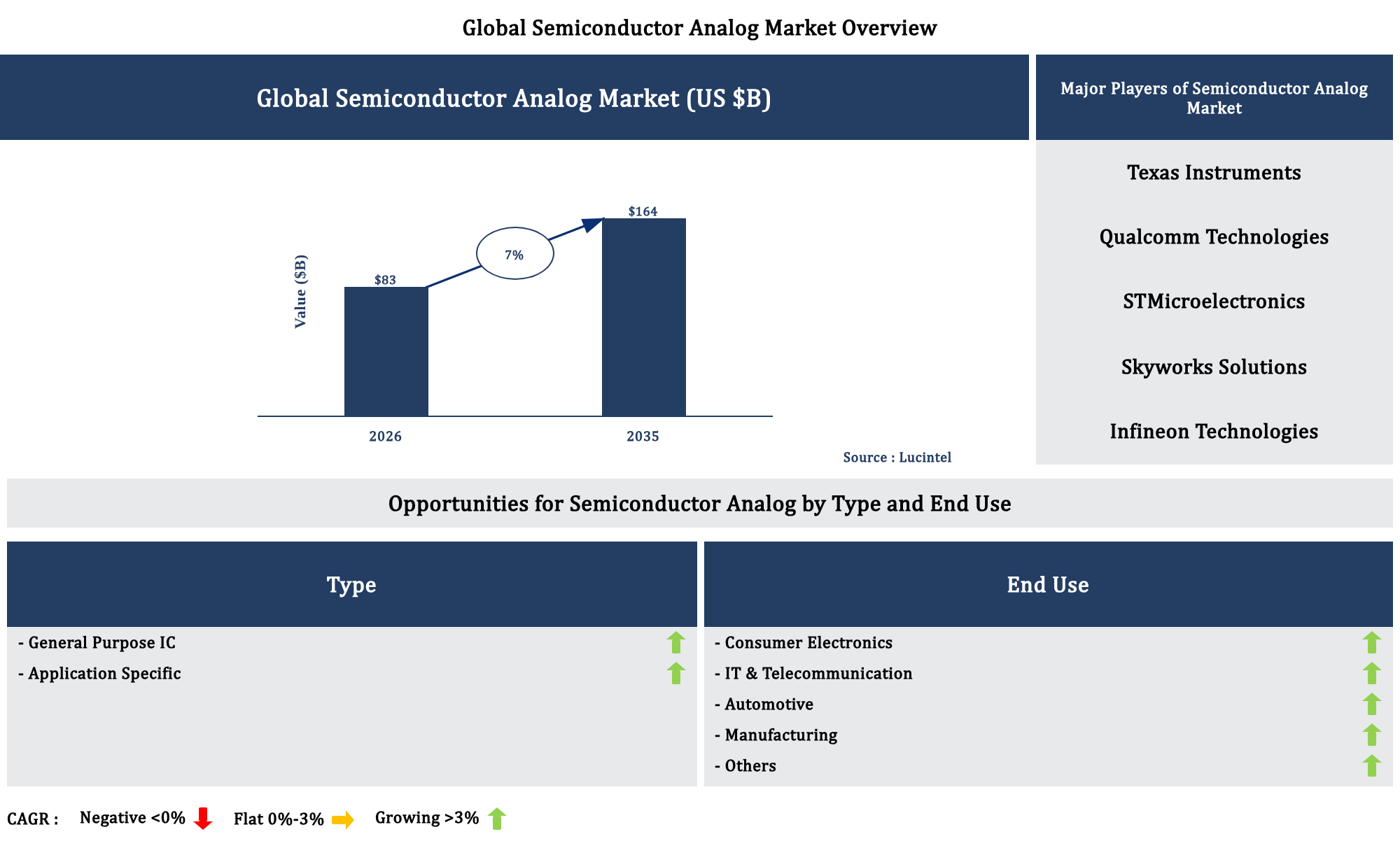
The future of the global semiconductor analog market looks promising with opportunities in the consumer electronic, it & telecommunication, automotive, and manufacturing markets. The global semiconductor analog market is expected to reach an estimated $164 billion by 2035 with a CAGR of 7.0% from 2026 to 2035. The major drivers for this market are the growing demand in healthcare electronic devices, the rising demand for electric vehicles & automotive electronics, and the increasing demand for integration of sensors in smart devices.
• Lucintel forecasts that, within the type category, general purpose ic is expected to witness higher growth over the forecast period.
• Within the end use category, consumer electronic is expected to witness the highest growth.
• In terms of region, APAC is expected to witness the highest growth over the forecast period.
Gain valuable insights for your business decisions with our comprehensive 150+ page report. Sample figures with some insights are shown below.
Emerging Trends in the Semiconductor Analog Market
The semiconductor analog market is experiencing rapid evolution driven by technological advancements, increasing demand for high-performance devices, and the integration of innovative solutions across various industries. As digital transformation accelerates, analog semiconductors are becoming more critical in enabling seamless connectivity, power management, and signal processing. Market players are investing heavily in R&D to develop smarter, more efficient, and miniaturized components. These developments are reshaping the competitive landscape, creating new opportunities, and addressing the growing needs of sectors such as automotive, consumer electronics, healthcare, and industrial automation. Understanding these emerging trends is essential for stakeholders aiming to capitalize on future growth.
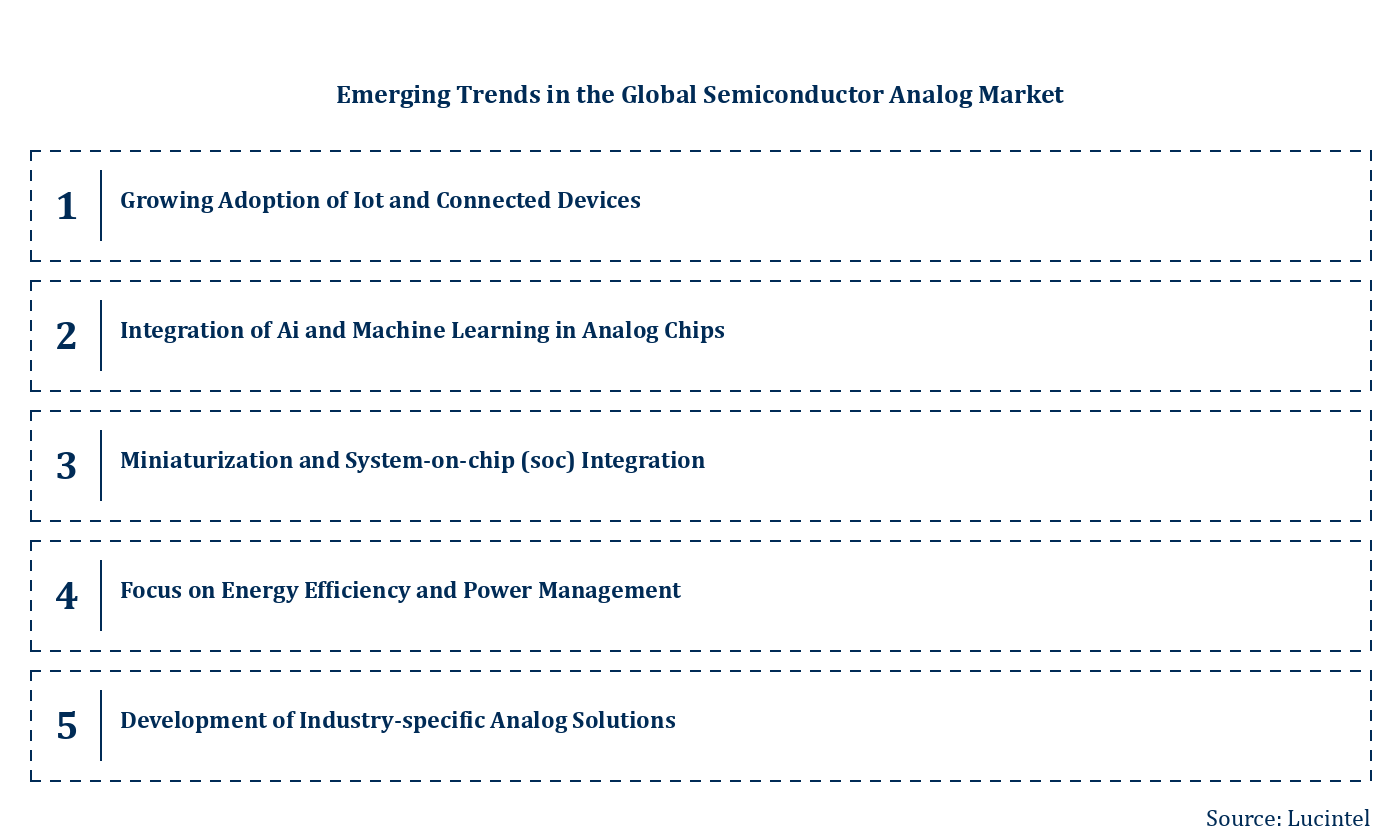
• Growing Adoption of IoT and Connected Devices: The proliferation of Internet of Things (IoT) devices is significantly increasing demand for analog semiconductors. These components are essential for sensor interfacing, signal conditioning, and power management in smart devices, wearables, and industrial sensors. As IoT applications expand across sectors, the need for reliable, low-power, and high-precision analog chips is rising, driving innovation and market growth.
• Integration of AI and Machine Learning in Analog Chips: The incorporation of AI capabilities into analog semiconductors is transforming their functionality. These advanced chips enable real-time data processing, predictive analytics, and enhanced signal accuracy, which are crucial for autonomous vehicles, healthcare devices, and industrial automation. This trend enhances device intelligence, reduces latency, and improves overall system efficiency, positioning analog chips as vital enablers of next-generation smart systems.
• Miniaturization and System-on-Chip (SoC) Integration: The demand for compact, energy-efficient devices is pushing manufacturers toward miniaturized analog solutions and integrated SoCs. Combining multiple functions into a single chip reduces size, power consumption, and manufacturing costs. This trend is particularly impactful in mobile devices, wearables, and medical implants, where space constraints and battery life are critical considerations.
• Focus on Energy Efficiency and Power Management: As energy consumption becomes a primary concern, the market is witnessing a surge in innovative power management solutions. Analog semiconductors are being designed to optimize power usage, improve battery life, and support renewable energy systems. This focus not only enhances device performance but also aligns with global sustainability goals, opening new avenues for market expansion.
• Development of Industry-Specific Analog Solutions: Custom analog solutions tailored for specific industries such as automotive, healthcare, and industrial automation are gaining prominence. These specialized components address unique requirements like high temperature tolerance, safety standards, and precision measurement. Industry-specific analog chips improve system reliability and performance, fostering growth in niche markets and enabling more tailored technological advancements.
These emerging trends are fundamentally reshaping the semiconductor analog market by fostering innovation, enhancing device capabilities, and expanding application horizons. The focus on integration, efficiency, and industry-specific solutions is driving market growth and positioning analog semiconductors as critical enablers of future technological advancements.
Recent Development in the Semiconductor Analog Market
The semiconductor analog market is experiencing rapid growth driven by technological advancements and increasing demand across various industries. Innovations in integrated circuits, IoT, and automotive electronics are fueling expansion. Companies are investing heavily in R&D to develop more efficient, smaller, and cost-effective analog components. This evolving landscape presents significant opportunities for market players to capture new segments and enhance product portfolios. The following developments highlight key areas shaping the future of the semiconductor analog market.
• Advanced Integration Technologies: Integration of multiple analog functions into single chips is revolutionizing the market. This reduces size, cost, and power consumption, enabling more compact and efficient devices. Such innovations are particularly impactful in consumer electronics, automotive, and industrial applications, where space and energy efficiency are critical. The trend toward system-on-chip solutions is expected to accelerate, fostering new product development and expanding market reach.
• Growth of IoT and Smart Devices: The proliferation of IoT devices and smart gadgets is significantly boosting demand for high-performance analog components. These devices require precise sensing, signal processing, and power management, all reliant on advanced analog solutions. As IoT adoption expands across sectors like healthcare, manufacturing, and home automation, the need for reliable, scalable analog semiconductors will intensify, creating lucrative opportunities for manufacturers and suppliers.
• Automotive Electronics Expansion: The automotive industry is increasingly integrating sophisticated analog components for ADAS, electric vehicles, and autonomous driving systems. These applications demand high accuracy, robustness, and low latency. The shift toward electric and connected vehicles is driving innovation in analog semiconductors, leading to increased investments and new product lines. This growth is transforming the automotive supply chain and expanding market size substantially.
• Sustainability and Energy Efficiency Focus: Rising emphasis on energy conservation and sustainable practices is influencing the development of low-power analog semiconductors. These components are essential for renewable energy systems, smart grids, and energy-efficient appliances. Innovations in this area are enabling more sustainable solutions, reducing operational costs, and supporting global environmental goals. The market for energy-efficient analog chips is expected to grow rapidly, driven by regulatory pressures and consumer demand.
• Emerging Markets and Regional Growth: Rapid industrialization and digital transformation in emerging markets are creating new opportunities for analog semiconductor growth. Countries in Asia, Africa, and Latin America are investing in infrastructure, smart city projects, and industrial automation. This regional expansion is fostering local manufacturing, reducing costs, and increasing accessibility to advanced analog solutions. The market is becoming more globalized, with diverse applications fueling sustained growth.
The overall impact of these developments is a dynamic, expanding semiconductor analog market characterized by innovation, increased competition, and new application opportunities. These trends are driving technological progress, enabling smarter, more efficient devices, and opening pathways for market players to capitalize on emerging demands. The market‘s evolution promises sustained growth and diversification in the coming years.
Strategic Growth Opportunities in the Semiconductor Analog Market
The semiconductor analog market is experiencing rapid expansion driven by technological advancements and increasing demand across various industries. As electronic devices become more sophisticated, the need for high-performance analog components grows. Market players are exploring new applications and innovations to capitalize on emerging opportunities. Strategic growth in this sector hinges on technological innovation, expanding application areas, and addressing evolving customer needs. Companies that effectively leverage these opportunities can secure a competitive edge and drive long-term growth in the dynamic semiconductor analog landscape.
• Increasing Adoption of Analog Components in IoT Devices: The proliferation of IoT devices demands reliable, low-power analog components for sensors, connectivity, and processing. As IoT applications expand across industries like healthcare, manufacturing, and smart homes, the need for advanced analog solutions grows. This trend offers significant growth opportunities for semiconductor companies to develop specialized, miniaturized, and energy-efficient analog components tailored for IoT ecosystems, thereby capturing a larger market share and enabling innovative connected solutions.
• Growing Demand for High-Precision analog Components in Automotive Electronics: The automotive industry is increasingly reliant on high-precision analog components for advanced driver-assistance systems (ADAS), electric vehicles, and autonomous driving. These components require high accuracy, reliability, and robustness to operate in harsh environments. The rising adoption of electric and autonomous vehicles presents a substantial opportunity for semiconductor firms to develop innovative analog solutions that enhance vehicle safety, performance, and energy efficiency, fueling market growth.
• Expansion of Analog Solutions in Healthcare and Medical Devices: The healthcare sector‘s shift towards digital and portable medical devices necessitates high-quality analog components for accurate signal processing, imaging, and diagnostics. Wearable health monitors, imaging equipment, and telemedicine devices depend on advanced analog solutions for precise measurements and reliable operation. This expanding application landscape offers semiconductor companies opportunities to innovate and supply specialized analog components that meet stringent medical standards, thereby driving growth in this niche market.
• Integration of Analog and Digital Technologies for Smarter Systems: The convergence of analog and digital technologies enables the development of smarter, more efficient systems across industries. Integrated analog-digital solutions facilitate real-time data processing, power management, and signal conversion, essential for applications like 5G infrastructure, industrial automation, and consumer electronics. This integration creates opportunities for semiconductor firms to develop hybrid components that optimize performance, reduce size, and lower costs, fostering innovation and market expansion.
• Rising Focus on Energy-Efficient and Miniaturized Analog Components: As electronic devices become more compact and energy-conscious, there is a growing demand for miniaturized, low-power analog components. These components are critical for portable devices, wearables, and energy-sensitive applications. Companies investing in innovative manufacturing processes and materials to produce smaller, more efficient analog solutions can capitalize on this trend, meeting customer needs for sustainability, performance, and space-saving designs, thus driving market growth.
These strategic growth opportunities are poised to significantly influence the semiconductor analog market by fostering innovation, expanding application areas, and addressing evolving technological demands. Companies that proactively pursue these avenues can enhance their market position, meet customer expectations, and contribute to the overall advancement of electronic systems across diverse industries.
Semiconductor Analog Market Driver and Challenges
The semiconductor analog market is influenced by a complex interplay of technological advancements, economic conditions, and regulatory frameworks. Rapid innovation in electronics, increasing demand for high-performance devices, and evolving industry standards drive growth. Conversely, challenges such as supply chain disruptions, regulatory hurdles, and technological complexities pose significant obstacles. Understanding these drivers and challenges is essential for stakeholders to navigate the market effectively and capitalize on emerging opportunities while mitigating risks.
The factors responsible for driving the semiconductor analog market include:-
• Technological Innovation: The continuous development of advanced semiconductor analog components enables higher performance, lower power consumption, and miniaturization of electronic devices. Innovations like integrated circuits and IoT-compatible sensors expand application scopes, fueling market growth. As industries demand smarter, more efficient electronics, manufacturers invest heavily in R&D to stay competitive, which accelerates market expansion.
• Increasing Adoption of IoT and Smart Devices: The proliferation of IoT devices, wearables, and smart home products significantly boosts demand for analog semiconductors. These devices require precise signal processing and power management, which analog components excel at providing. As consumer and industrial sectors embrace IoT solutions, the market experiences sustained growth driven by the need for reliable, high-quality analog chips.
• Growing Automotive Electronics Market: The automotive industry’s shift towards electric vehicles (EVs), autonomous driving, and connected cars relies heavily on advanced analog semiconductors for sensors, control units, and power management. The increasing integration of electronics in vehicles enhances safety, efficiency, and user experience, thereby expanding the market for analog components in automotive applications.
• Rising Demand for Consumer Electronics: The surge in demand for smartphones, tablets, and multimedia devices propels the need for sophisticated analog circuitry. Consumers seek high-resolution displays, better audio, and longer battery life, all of which depend on high-quality analog components. This trend supports continuous market growth as manufacturers innovate to meet consumer expectations.
The challenges in the semiconductor analog market are:
• Supply Chain Disruptions: The global semiconductor supply chain faces persistent disruptions due to geopolitical tensions, pandemics, and logistical issues. These disruptions lead to shortages, increased costs, and delays in product delivery, hampering market growth. Manufacturers must navigate complex sourcing strategies and diversify supply sources to mitigate risks.
• Technological Complexity and Design Challenges: Developing high-performance analog components involves intricate design processes and stringent testing. The complexity increases with miniaturization and integration demands, requiring specialized expertise and advanced manufacturing facilities. These factors can slow innovation cycles and elevate production costs, impacting competitiveness.
• Regulatory and Environmental Constraints: Evolving regulations related to environmental standards, safety, and export controls impose additional compliance burdens on manufacturers. Meeting these standards often requires significant investments in R&D and manufacturing processes, which can increase costs and limit market agility, especially for smaller players.
The semiconductor analog market is driven by rapid technological innovation, expanding applications in IoT, automotive, and consumer electronics sectors. However, it faces challenges such as supply chain vulnerabilities, design complexities, and regulatory pressures. These factors collectively shape the market landscape, requiring stakeholders to adapt strategically. While growth prospects remain promising, addressing these challenges is crucial for sustained success and competitive advantage in this dynamic industry.
List of Semiconductor Analog Companies
Companies in the market compete on the basis of product quality offered. Major players in this market focus on expanding their manufacturing facilities, R&D investments, infrastructural development, and leverage integration opportunities across the value chain. With these strategies semiconductor analog companies cater increasing demand, ensure competitive effectiveness, develop innovative products & technologies, reduce production costs, and expand their customer base. Some of the semiconductor analog companies profiled in this report include-
• Texas Instruments
• Qualcomm Technologies
• STMicroelectronics
• Skyworks Solutions
• Infineon Technologies
• NXP Semiconductors
• ON Semiconductor
Semiconductor Analog Market by Segment
The study includes a forecast for the global semiconductor analog market by type, end use, and region.
Semiconductor Analog Market by Type [Value from 2019 to 2035]:
• General Purpose IC
• Application Specific
Semiconductor Analog Market by End Use [Value from 2019 to 2035]:
• Consumer Electronics
• IT & Telecommunication
• Automotive
• Manufacturing
• Others
Semiconductor Analog Market by Region [Value from 2019 to 2035]:
• North America
• Europe
• Asia Pacific
• The Rest of the World
Country Wise Outlook for the Semiconductor Analog Market
The semiconductor analog market is experiencing rapid growth driven by technological advancements, increasing demand for electronic devices, and the expansion of industries such as automotive, healthcare, and consumer electronics. As digital transformation accelerates globally, the need for high-performance analog components becomes critical. Countries are investing heavily in research and development, manufacturing capacity, and strategic partnerships to maintain competitiveness. This dynamic landscape reflects shifts in supply chains, regulatory policies, and innovation trends, shaping the future of the semiconductor analog industry across major economies.
• United States: The US continues to lead in semiconductor innovation, with significant investments in R&D and advanced manufacturing facilities. Companies like Texas Instruments and Analog Devices are expanding their product portfolios, focusing on high-precision analog chips. The government’s CHIPS Act aims to bolster domestic production and reduce reliance on foreign supply chains, fostering a more resilient industry. Additionally, US firms are increasingly collaborating with startups to develop cutting-edge analog solutions for AI, automotive, and healthcare applications.
• China: China is rapidly advancing its semiconductor analog capabilities through substantial government support and domestic investments. The country is focusing on developing indigenous technologies to reduce dependency on foreign suppliers. Major Chinese firms like SMIC and HI Silicon are expanding their analog product lines, especially for consumer electronics and automotive sectors. Strategic initiatives aim to build a complete supply chain ecosystem, with a focus on innovation, localization, and increasing exports to global markets.
• Germany: Germany remains a key player in the European semiconductor landscape, emphasizing high-quality analog components for industrial automation, automotive, and medical devices. Companies such as Infineon Technologies are investing in next-generation analog chips, integrating IoT and automotive functionalities. Germany’s focus on sustainability and energy efficiency is driving innovations in power management and sensor technologies. The country also benefits from strong collaborations within the European Union to enhance research and manufacturing capabilities.
• India: India is emerging as a significant hub for semiconductor analog design and manufacturing, supported by government initiatives like the Make in India program. The country is attracting global investments to develop semiconductor fabs and R&D centers. Indian firms are focusing on analog components for telecommunications, consumer electronics, and automotive sectors. The government’s push for self-reliance and digital infrastructure development is fostering a conducive environment for innovation and industry growth.
• Japan: Japan maintains its reputation for high-quality analog semiconductor solutions, especially in automotive, industrial, and consumer electronics sectors. Companies like Renesas Electronics are advancing in power management and sensor technologies. Japan is investing in next-generation analog chips to support autonomous vehicles, robotics, and IoT applications. The country’s emphasis on technological excellence and strategic partnerships with global firms continues to strengthen its position in the global market, with a focus on sustainability and energy-efficient solutions.
Features of the Global Semiconductor Analog Market
Market Size Estimates: Semiconductor analog market size estimation in terms of value ($B).
Trend and Forecast Analysis: Market trends (2019 to 2025) and forecast (2026 to 2035) by various segments and regions.
Segmentation Analysis: Semiconductor analog market size by type, end use, and region in terms of value ($B).
Regional Analysis: Semiconductor analog market breakdown by North America, Europe, Asia Pacific, and Rest of the World.
Growth Opportunities: Analysis of growth opportunities in different type, end use, and regions for the semiconductor analog market.
Strategic Analysis: This includes M&A, new product development, and competitive landscape of the semiconductor analog market.
Analysis of competitive intensity of the industry based on Porter’s Five Forces model.
FAQ
Q1. What is the semiconductor analog market size?
Answer: The global semiconductor analog market is expected to reach an estimated $164 billion by 2035.
Q2. What is the growth forecast for semiconductor analog market?
Answer: The global semiconductor analog market is expected to grow with a CAGR of 7.0% from 2026 to 2035.
Q3. What are the major drivers influencing the growth of the semiconductor analog market?
Answer: The major drivers for this market are the growing demand in healthcare electronic devices, the rising demand for electric vehicles & automotive electronics, and the increasing demand for integration of sensors in smart devices.
Q4. What are the major segments for semiconductor analog market?
Answer: The future of the semiconductor analog market looks promising with opportunities in the consumer electronic, it & telecommunication, automotive, and manufacturing markets.
Q5. Who are the key semiconductor analog market companies?
Answer: Some of the key semiconductor analog companies are as follows:
• Texas Instruments
• Qualcomm Technologies
• STMicroelectronics
• Skyworks Solutions
• Infineon Technologies
• NXP Semiconductors
• ON Semiconductor
Q6. Which semiconductor analog market segment will be the largest in future?
Answer: Lucintel forecasts that, within the type category, general purpose ic is expected to witness higher growth over the forecast period.
Q7. In semiconductor analog market, which region is expected to be the largest in next 8 years?
Answer: In terms of region, APAC is expected to witness the highest growth over the forecast period.
Q8. Do we receive customization in this report?
Answer: Yes, Lucintel provides 10% customization without any additional cost.
This report answers following 11 key questions:
Q.1. What are some of the most promising, high-growth opportunities for the semiconductor analog market by type (general purpose IC and application specific), end use (consumer electronics, IT & telecommunication, automotive, manufacturing, and others), and region (North America, Europe, Asia Pacific, and the Rest of the World)?
Q.2. Which segments will grow at a faster pace and why?
Q.3. Which region will grow at a faster pace and why?
Q.4. What are the key factors affecting market dynamics? What are the key challenges and business risks in this market?
Q.5. What are the business risks and competitive threats in this market?
Q.6. What are the emerging trends in this market and the reasons behind them?
Q.7. What are some of the changing demands of customers in the market?
Q.8. What are the new developments in the market? Which companies are leading these developments?
Q.9. Who are the major players in this market? What strategic initiatives are key players pursuing for business growth?
Q.10. What are some of the competing products in this market and how big of a threat do they pose for loss of market share by material or product substitution?
Q.11. What M&A activity has occurred in the last 7 years and what has its impact been on the industry?
For any questions related to Semiconductor Analog Market, Semiconductor Analog Market Size, Semiconductor Analog Market Growth, Semiconductor Analog Market Analysis, Semiconductor Analog Market Report, Semiconductor Analog Market Share, Semiconductor Analog Market Trends, Semiconductor Analog Market Forecast, Semiconductor Analog Companies, write Lucintel analyst at email: helpdesk@lucintel.com. We will be glad to get back to you soon.