
Market Report · July 31, 2026

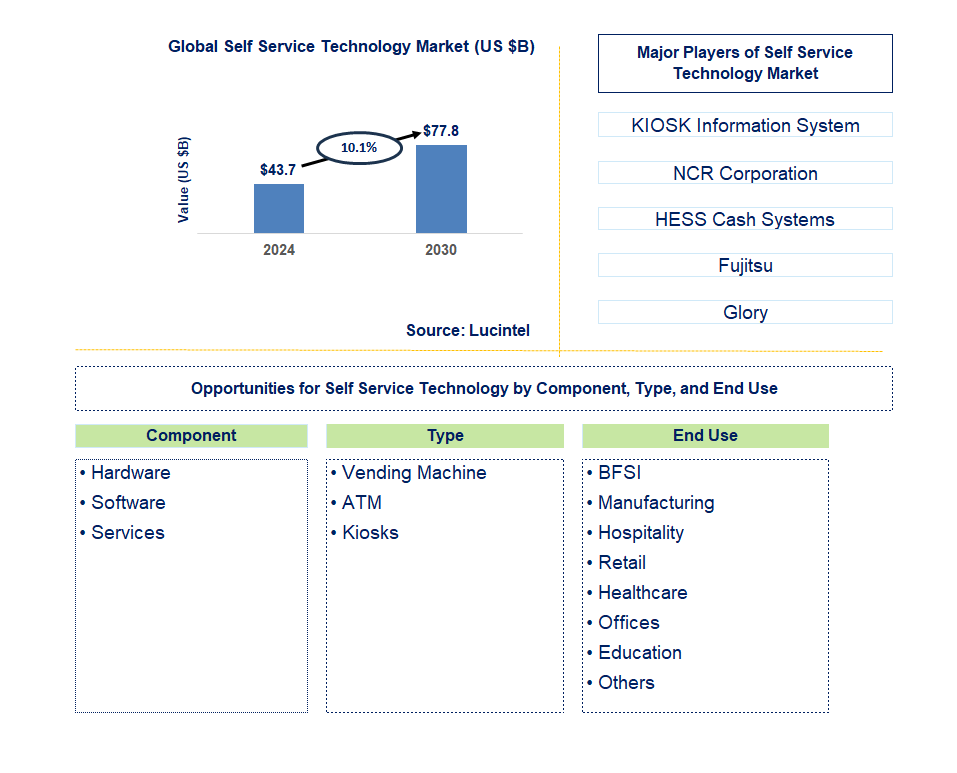
Key data points: The market size in 2030 = $77.8 billion, growth forecast = 10.1% annually next 6 years. Scroll below to get more insights. This market report covers trends, opportunities, and forecast in the global self service technology market to 2030 by component (hardware, software, and services), type (vending machine, atm, and kiosks), end use (bfsi, manufacturing, hospitality, retail, healthcare, offices, education, and others), and region (North America, Europe, Asia Pacific, and the Rest of the World)
We'll send your sample report shortly.
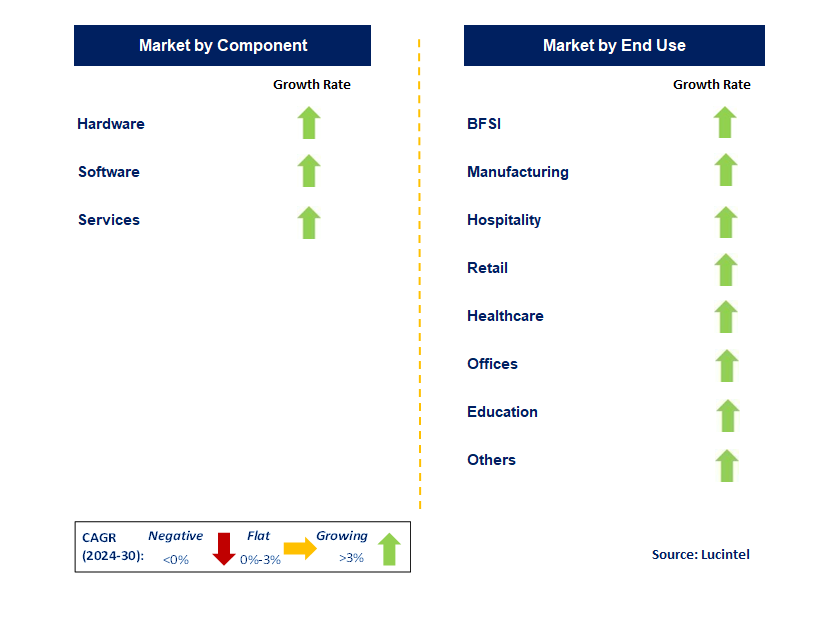
• Lucintel forecasts that hardware is expected to witness the highest growth over the forecast period.
• Within this market, bfsi will remain the largest segment.
• North America is expected to witness highest growth over the forecast period due to increase in spending on self service technologies solutions. A more than 150-page report is developed to help in your business decisions.
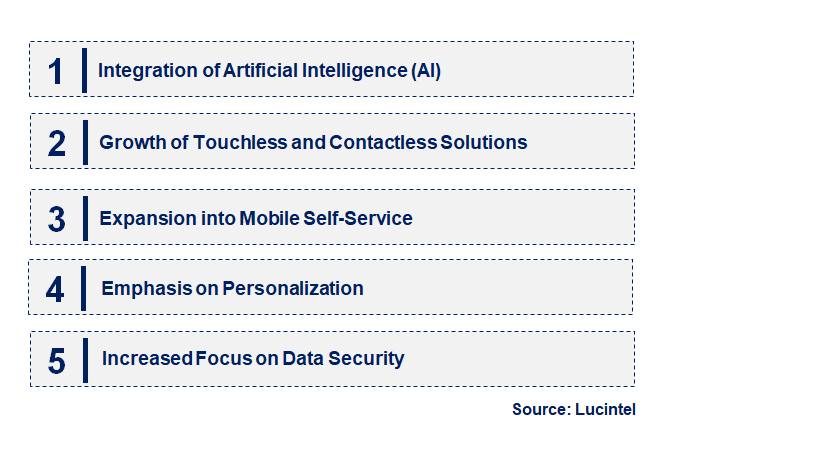
• Integration of Artificial Intelligence (AI): The integration of AI into self-service technologies is a major trend, enhancing the functionality and user experience of self-service solutions. AI is used to power intelligent kiosks, virtual assistants, and automated customer support systems. These AI-driven solutions provide personalized recommendations, improve accuracy in transactions, and enable more natural interactions. By leveraging machine learning and natural language processing, businesses can offer more efficient and responsive self-service options, meeting the increasing demand for advanced and user-friendly technology.
• Growth of Touchless and Contactless Solutions: The demand for touchless and contactless self-service solutions is rising, driven by health and safety concerns as well as convenience. Technologies such as biometric authentication, NFC (Near Field Communication), and QR codes are being increasingly adopted to facilitate secure and hygienic transactions. Contactless payment systems and touchless kiosks are becoming standard in various sectors, including retail and banking. This trend reflects a broader shift towards minimizing physical contact and enhancing the efficiency and safety of self-service interactions.
• Expansion into Mobile Self-Service: Mobile self-service solutions are becoming increasingly prominent, offering users the ability to access services via smartphones and tablets. Mobile apps and web-based platforms are providing convenient options for activities such as banking, ticketing, and ordering. The trend towards mobile self-service is driven by the widespread use of smartphones and the demand for on-the-go access to services. Businesses are investing in mobile technologies to improve customer engagement, streamline processes, and offer personalized experiences.
• Emphasis on Personalization: Personalization is a key trend in the self-service technology market, with solutions increasingly tailored to individual preferences and needs. Advanced analytics and AI are used to deliver personalized recommendations and customized user experiences. For example, self-service kiosks and mobile apps can provide targeted offers and personalized content based on user data and behavior. This trend enhances user satisfaction and loyalty by making self-service interactions more relevant and engaging.
• Increased Focus on Data Security: As self-service technologies become more prevalent, there is a growing emphasis on data security and privacy. Ensuring the protection of sensitive information and preventing unauthorized access is crucial. Innovations in encryption, secure authentication methods, and compliance with data protection regulations are becoming standard practices. The focus on data security addresses consumer concerns and builds trust, which is essential for the adoption and success of self-service solutions in sectors such as banking, healthcare, and retail. Recent developments in the self-service technology market highlight significant advancements in AI integration, touchless solutions, mobile self-service, personalization, and data security. These trends reflect the market's shift towards more advanced, efficient, and user-friendly technologies. As businesses continue to adopt and innovate in these areas, they are enhancing customer experiences and operational efficiency. Understanding these emerging trends provides valuable insights for stakeholders looking to capitalize on opportunities and navigate the evolving landscape of self-service technology.
• Expansion of AI-Powered Kiosks: The deployment of AI-powered kiosks has become increasingly prevalent, enhancing the capabilities of self-service systems. These kiosks use artificial intelligence to offer personalized recommendations, process transactions more efficiently, and provide interactive customer support. For instance, AI-driven kiosks in retail settings can analyze customer preferences and suggest relevant products, improving the shopping experience. This advancement is revolutionizing customer interactions, reducing wait times, and boosting operational efficiency by automating complex tasks previously handled by human staff.
• Growth of Contactless Payment Solutions: Contactless payment technology is experiencing significant growth within the self-service sector. Innovations such as Near Field Communication (NFC) and QR code scanning are enabling customers to complete transactions quickly and securely without physical contact. This development is driven by increased consumer demand for hygienic, fast, and convenient payment methods, particularly in the wake of the COVID-19 pandemic. The adoption of contactless payment solutions is enhancing the overall customer experience, reducing transaction times, and minimizing physical contact at self-service terminals.
• Rise of Mobile Self-Service Applications: Mobile self-service applications are becoming increasingly popular, providing users with flexible access to services via their smartphones. These applications enable users to perform a range of activities, from managing bank accounts and ordering food to booking healthcare appointments. The growth of mobile self-service is driven by the widespread use of smartphones and the demand for on-the-go access. Mobile apps offer convenience, personalization, and real-time updates, making them a key component of the self-service technology landscape and contributing to the expansion of digital self-service options.
• Implementation of Advanced Biometric Authentication: Advanced biometric authentication methods, such as facial recognition and fingerprint scanning, are being integrated into self-service technologies to enhance security and user convenience. These biometric systems offer a higher level of security compared to traditional methods, reducing the risk of fraud and unauthorized access. For example, biometric authentication is being used in self-service kiosks and ATMs to verify identities quickly and accurately. The implementation of these technologies is improving the safety of self-service transactions and streamlining user interactions by eliminating the need for physical identification cards or PINs.
• Development of Interactive and Modular Kiosks: The development of interactive and modular self-service kiosks is providing businesses with customizable solutions that can be adapted to various environments and applications. These kiosks feature modular designs that allow for easy upgrades and integration of new functionalities, such as digital signage, touchscreens, and payment processing. Interactive kiosks offer enhanced user engagement through dynamic interfaces and multimedia content. This flexibility enables businesses to tailor self-service solutions to their specific needs and preferences, enhancing customer experiences and operational efficiency. The recent developments in self-service technology are significantly impacting the market by driving innovation, improving user experiences, and expanding application areas. The integration of AI, contactless payments, mobile applications, and biometric authentication is enhancing the functionality and convenience of self-service systems. Interactive and modular kiosks provide businesses with adaptable solutions that can meet evolving customer needs. These advancements are not only improving operational efficiency but also increasing customer satisfaction, positioning self-service technology as a critical component in the digital transformation of various industries.
• Retail Sector: The retail sector offers substantial growth opportunities for self-service technology, including self-checkout kiosks and interactive digital displays. These technologies improve customer experience by reducing wait times and offering personalized product recommendations. Retailers can enhance operational efficiency, reduce labor costs, and increase customer satisfaction through the adoption of self-service solutions. Innovations such as mobile checkout and contactless payment options are particularly attractive in the retail environment, providing convenience and meeting modern consumer expectations.
• Banking and Financial Services: In banking and financial services, self-service technologies like ATMs, interactive teller machines (ITMs), and mobile banking apps are key growth areas. These solutions streamline transactions, reduce branch congestion, and offer customers 24/7 access to financial services. Advanced features such as biometric authentication and AI-driven customer support enhance security and user experience. Financial institutions can leverage self-service technologies to improve service efficiency, reduce operational costs, and cater to the growing demand for convenient and accessible banking solutions.
• Healthcare Industry: The healthcare industry presents significant growth opportunities for self-service technology, including appointment scheduling kiosks, patient check-in systems, and telemedicine platforms. These technologies improve patient management, reduce administrative burdens, and enhance the overall patient experience. Self-service solutions can streamline administrative tasks, improve appointment scheduling, and facilitate virtual consultations. The integration of self-service technologies in healthcare settings supports better patient care and operational efficiency, responding to the increasing need for accessible and efficient healthcare services.
• Hospitality and Travel: In the hospitality and travel sectors, self-service technologies such as self-check-in kiosks, digital concierge services, and automated booking systems are gaining traction. These solutions offer guests a seamless check-in experience, enhance service delivery, and streamline booking processes. By adopting self-service technologies, hotels and travel companies can improve guest satisfaction, reduce wait times, and optimize operational workflows. Innovations in mobile check-ins and digital room keys further enhance the convenience and efficiency of self-service solutions in these industries.
• Public Services and Government: Public services and government sectors are leveraging self-service technologies to improve citizen engagement and streamline administrative processes. Self-service kiosks for document issuance, digital voter registration, and online service portals are examples of how technology is enhancing public service delivery. These solutions offer greater accessibility, reduce wait times, and improve efficiency in government operations. By implementing self-service technologies, public sector organizations can better meet the needs of citizens and enhance the delivery of essential services. The self-service technology market is witnessing significant growth across various applications, driven by advancements in automation, digital solutions, and consumer demand for convenience. Key growth opportunities in retail, banking, healthcare, hospitality, and public services highlight the potential for self-service technologies to transform customer experiences and operational efficiency. By embracing these technologies, businesses and organizations can enhance service delivery, reduce costs, and meet the evolving expectations of their customers.
• KIOSK Information System
• NCR Corporation
• HESS Cash Systems
• Fujitsu
• Glory
• Azkoyen
• Crane
• Hardware
• Software
• Services
• Vending Machine
• ATM
• Kiosks
• BFSI
• Manufacturing
• Hospitality
• Retail
• Healthcare
• Offices
• Others
• North America
• Europe
• Asia Pacific
• The Rest of the World
• United States: In the United States, the self-service technology market is experiencing significant growth driven by innovations in automation and artificial intelligence. Retailers and banks are deploying advanced kiosks and mobile apps to enhance customer interactions and streamline transactions. For example, touchless payment systems and AI-driven customer service kiosks are becoming more prevalent. Additionally, the adoption of self-service technology in healthcare, such as appointment scheduling and virtual consultations, is expanding. The focus is on improving operational efficiency and providing seamless customer experiences, reflecting a broader trend towards digital transformation in various sectors.
• China: China is rapidly advancing in the self-service technology market, particularly in the retail and financial sectors. The country is seeing widespread adoption of self-service kiosks and smart vending machines, driven by high consumer demand for convenience and efficiency. Innovations include the use of facial recognition technology and mobile payment solutions to facilitate seamless transactions. Additionally, the Chinese government’s support for digital infrastructure development is accelerating the deployment of self-service solutions. The focus is on integrating cutting-edge technologies to enhance user experiences and operational efficiency, supporting the country’s broader digitalization goals.
• Germany: In Germany, recent developments in the self-service technology market emphasize efficiency and user experience, particularly in banking and retail. The integration of advanced self-service terminals and interactive kiosks is enhancing customer service and streamlining transactions. Innovations such as self-checkout systems and digital banking solutions are gaining traction. German companies are also focusing on data security and privacy in the deployment of self-service technologies, aligning with stringent regulatory standards. The market is evolving towards solutions that not only improve operational efficiency but also offer secure and user-friendly interfaces for consumers.
• India: India’s self-service technology market is growing rapidly, driven by increasing digital adoption and the need for operational efficiency. The deployment of self-service kiosks in retail environments and automated teller machines (ATMs) in banking is expanding. Mobile self-service applications are also gaining popularity, providing convenient access to services such as bill payments and account management. Innovations are focused on making self-service technology more accessible to a wider population, including features that cater to regional languages and low-cost solutions. The market is characterized by a strong emphasis on scalability and accessibility.
• Japan: Japan self-service technology market is characterized by high-tech innovations and a focus on enhancing user experience. The integration of robotics and AI in self-service solutions is notable, with advancements in automated checkout systems and information kiosks. Japanese companies are leading the development of sophisticated self-service terminals that incorporate advanced features like voice recognition and real-time language translation. The emphasis is on providing seamless and high-tech solutions that align with Japan’s reputation for technological excellence and customer service. The market is driven by both consumer demand and technological advancements.


• KIOSK Information System
• NCR Corporation
• HESS Cash Systems
• Fujitsu
• Glory
• Azkoyen
• Crane Q6. Which self service technology market segment will be the largest in future? Answer: Lucintel forecasts that hardware is expected to witness the highest growth over the forecast period. Q7. In self service technology market, which region is expected to be the largest in next 5 years? Answer: North America is expected to witness highest growth over the forecast period due to increase in spending on self service technologies solutions. Q.8 Do we receive customization in this report? Answer: Yes, Lucintel provides 10% customization without any additional cost.


Choose a license that fits your team. Instant PDF delivery.
Prices exclude taxes. Instant delivery. Custom licensing available on request.
Market Report · July 31, 2026
Market Report · July 31, 2026
Market Report · July 31, 2026
Trusted partner for strategic intelligence and business growth


Receive a complimentary market analysis tailored to your industry. Our analysts will identify key growth opportunities and competitive dynamics specific to your business.

Market size, growth rate, and key trend analysis for your specific sector.

Top competitor positioning and market share analysis.

Strategic recommendations backed by data-driven insights.
Get curated market intelligence and competitive moves straight to your inbox.
By subscribing, you agree to receive our monthly insights. Unsubscribe anytime.
Receive a complimentary market analysis tailored to your industry. Our analysts will identify key growth opportunities and competitive dynamics specific to your business.
Market size, growth rate, and key trend analysis for your specific sector.
Top competitor positioning and market share analysis.
Strategic recommendations backed by data-driven insights.
Get curated market intelligence, emerging trends, and competitive moves straight to your inbox each month.
By subscribing, you agree to receive our monthly insights. Unsubscribe anytime.
We'll send your sample report shortly.