
Seed Technology Market
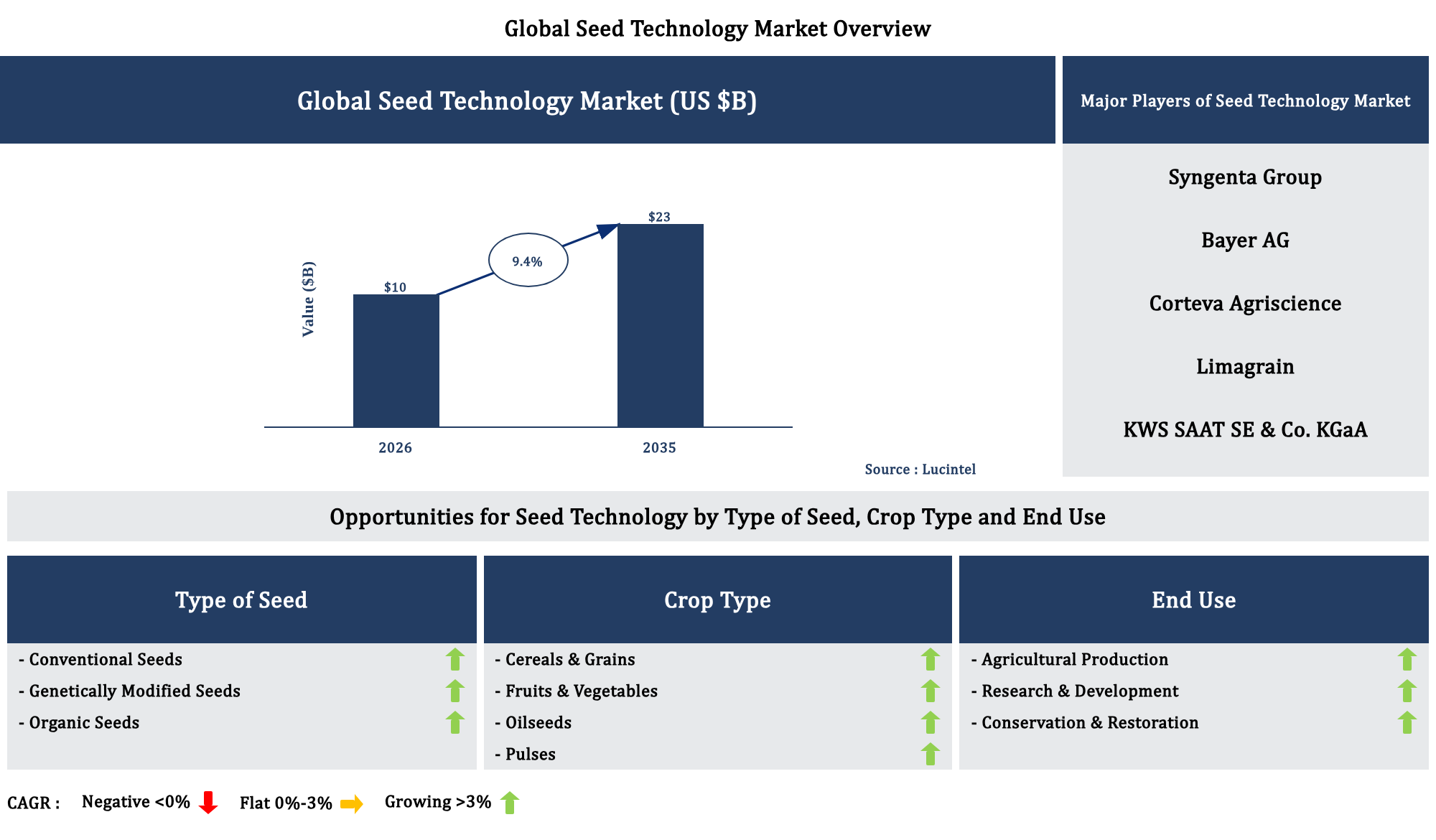
The future of the global seed technology market looks promising with opportunities in the agricultural production, research & development, and conservation & restoration markets. The global seed technology market is expected to reach an estimated $23 billion by 2035 with a CAGR of 9.4% from 2026 to 2035. The major drivers for this market are the increasing demand for high yield seeds, the rising adoption of genetically improved varieties, and the growing focus on crop productivity enhancement.
Gain valuable insights for your business decisions with our comprehensive 150+ page report. Sample figures with some insights are shown below.
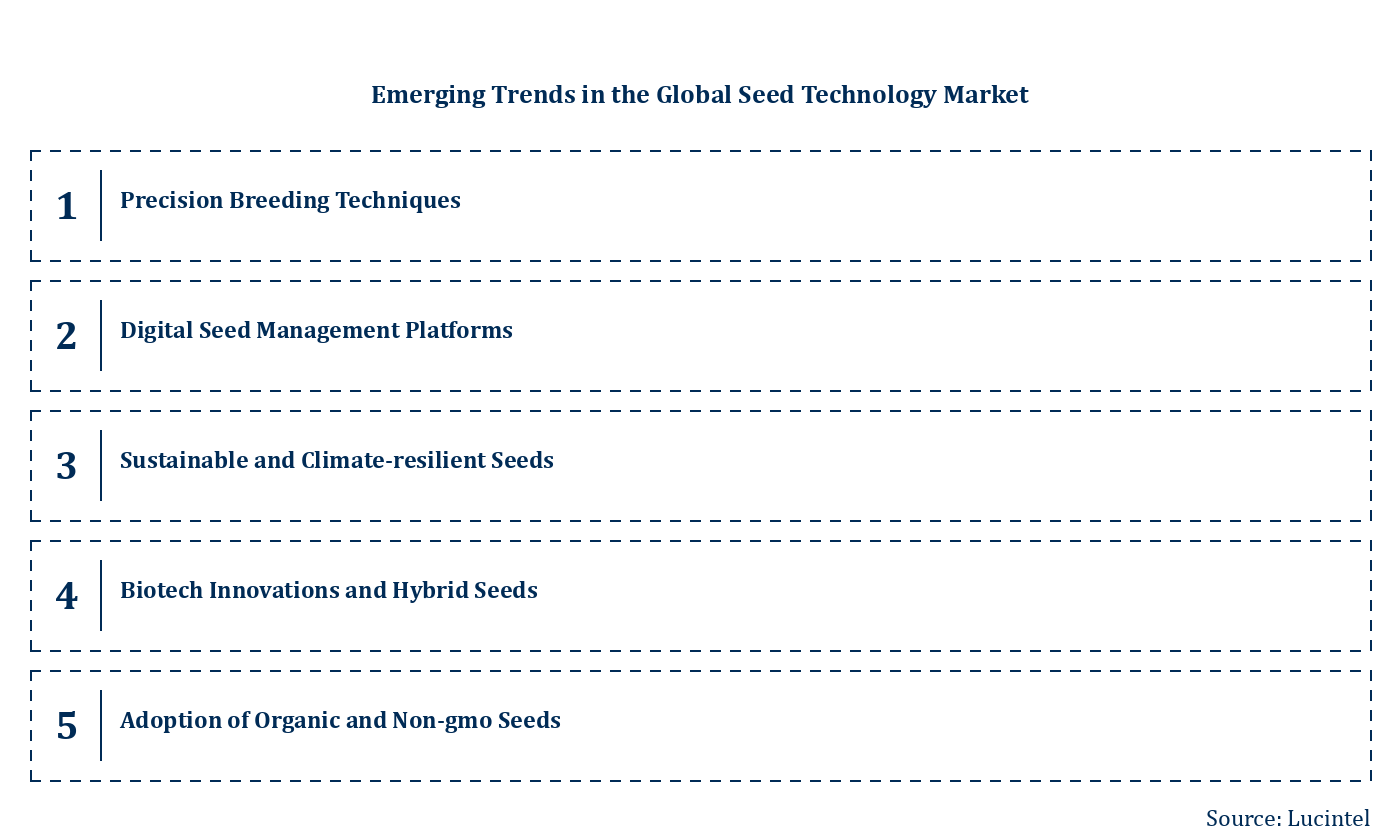
Emerging Trends in the Seed Technology Market
The seed technology market is experiencing rapid evolution driven by advancements in biotechnology, digital innovation, and sustainability initiatives. These developments are transforming traditional seed breeding, distribution, and management practices, leading to increased crop yields, resilience, and environmental benefits. As global food security becomes a pressing concern, stakeholders are investing heavily in innovative solutions to meet the rising demand for high-quality, disease-resistant, and climate-adapted seeds. The following key trends highlight the dynamic nature of this market and its potential to revolutionize agriculture worldwide.
These emerging trends are collectively reshaping the seed technology market by fostering innovation, sustainability, and efficiency. Precision breeding and biotech innovations are driving higher yields and resilience, while digital platforms enhance supply chain transparency. The focus on climate-resilient seeds addresses environmental challenges, and the growing demand for organic and non-GMO seeds reflects changing consumer preferences. Together, these developments are creating a more sustainable, productive, and responsive seed industry, poised to meet the future needs of global agriculture and food security.
Recent Developments in the Seed Technology Market
The seed technology market is experiencing rapid advancements driven by innovations in genetic modification, precision breeding, and digital agriculture. These developments are transforming traditional seed production, enhancing crop yields, and addressing global food security challenges. As the industry evolves, key opportunities are emerging across various segments, including biotech seeds, hybrid seeds, and sustainable practices. These innovations are not only improving productivity but also promoting resilience against climate change and pests, thereby shaping the future landscape of agriculture worldwide.
These recent developments in seed technology are significantly impacting the market by enhancing crop productivity, resilience, and sustainability. The integration of biotech, digital tools, and eco-friendly practices is creating new opportunities for growth across various segments. As these innovations continue to evolve, they are expected to meet the increasing global food demand, support sustainable agriculture, and strengthen the overall competitiveness of the seed industry worldwide.
Strategic Growth Opportunities in the Seed Technology Market
The seed technology market is experiencing rapid growth driven by innovations in genetic engineering, precision agriculture, and sustainable farming practices. These advancements are enabling farmers to improve crop yields, resist pests and diseases, and adapt to changing climate conditions. As global food demand increases, the adoption of advanced seed technologies is becoming essential for ensuring food security and agricultural sustainability. Market players are investing heavily in R&D to develop high-performance seed varieties tailored to diverse environmental conditions.
Genetic engineering is revolutionizing seed technology by enabling the development of crops with enhanced traits such as drought tolerance, pest resistance, and higher nutritional content. Biotechnology allows for precise modifications, reducing the time needed to bring new seed varieties to market. This growth opportunity is particularly significant in developing regions where crop resilience is critical. Sub-segments include genetically modified (GM) seeds for corn, soybean, and cotton, which dominate the market and offer substantial yield improvements.
Precision agriculture utilizes GPS, IoT, and data analytics to optimize seed planting, watering, and fertilization. This approach ensures optimal seed placement and resource use, leading to increased yields and reduced waste. The integration of seed technology with precision farming tools offers farmers better control over crop management. Sub-segments include drone-assisted planting, variable rate seeding, and soil health monitoring, which collectively improve seed efficiency and crop performance across diverse farming environments.
The demand for sustainable seed varieties that withstand extreme weather conditions is rising due to climate change. Developing drought-tolerant, flood-resistant, and heat-resistant seeds helps farmers adapt to unpredictable weather patterns. These seeds reduce reliance on chemical inputs and water resources, promoting eco-friendly farming. Sub-segments include organic seed varieties and biofortified seeds aimed at improving nutritional content, supporting global efforts toward sustainable agriculture and food security.
Digital tools and data analytics facilitate the development of customized seed solutions tailored to specific regional needs. Platforms that analyze weather patterns, soil data, and crop performance enable breeders to accelerate the development of high-yield, disease-resistant seeds. This technological integration enhances decision-making for farmers and breeders, leading to more efficient seed selection and breeding processes. Sub-segments include AI-driven breeding programs and cloud-based seed databases, which streamline innovation and market responsiveness.
Partnerships between seed companies, biotech firms, and research institutions foster innovation and expand product portfolios. Mergers and acquisitions enable access to new technologies, markets, and expertise, accelerating the development of advanced seed varieties. These collaborations also facilitate knowledge sharing and resource pooling, reducing R&D costs. Sub-segments include joint ventures in biotech research, licensing agreements for proprietary seed traits, and regional alliances to penetrate emerging markets, all contributing to market expansion.
Conclusion:
These growth opportunities collectively drive the evolution of the seed technology market, fostering innovation, sustainability, and efficiency. Advancements in genetic engineering, precision agriculture, and digital tools are transforming seed development and deployment. Strategic collaborations further enhance market competitiveness and reach. Overall, these opportunities are poised to significantly impact global agriculture by increasing productivity, resilience, and sustainability, ensuring food security amid environmental challenges.
Seed Technology Market Drivers and Challenges
The seed technology market is influenced by a variety of technological, economic, and regulatory factors that shape its growth and development. Advances in biotechnology, digital agriculture, and precision farming are driving innovation, while economic conditions such as global demand for food security and investment trends impact market expansion. Regulatory frameworks around genetically modified organisms (GMOs) and seed certification also play a crucial role in shaping market dynamics. Additionally, environmental concerns and sustainability initiatives influence research and adoption rates. Understanding these drivers and challenges is essential for stakeholders to navigate the evolving landscape and capitalize on emerging opportunities within the seed technology sector.
The factors responsible for driving the seed technology market include:-
The challenges facing the seed technology market are:-
The seed technology market is shaped by a combination of technological advancements, increasing demand for food security, supportive regulatory frameworks, and innovative collaborations. However, it faces challenges such as regulatory and ethical concerns, high R&D costs, and environmental uncertainties. These drivers propel the market forward by fostering innovation and expanding adoption, while challenges necessitate strategic navigation to ensure sustainable growth. Overall, the market's future depends on balancing technological progress with regulatory compliance and environmental stewardship. Stakeholders must collaborate to address barriers and leverage opportunities, ensuring the development of resilient, high-yield seed solutions that meet global food demands.
List of Seed Technology Market Companies
Companies in the market compete on the basis of product quality offered. Major players in this market focus on expanding their manufacturing facilities, R&D investments, infrastructural development, and leverage integration opportunities across the value chain. Through these strategies seed technology market companies cater increasing demand, ensure competitive effectiveness, develop innovative products & technologies, reduce production costs, and expand their customer base. Some of the seed technology market companies profiled in this report include-
Seed Technology Market by Segment
The study includes a forecast for the global seed technology market by type of seed, crop type, end use, and region.
Country Wise Outlook for the Seed Technology Market
The seed technology market has experienced rapid growth driven by advancements in biotechnology, increased demand for high-yield crops, and sustainability initiatives worldwide. Countries are investing heavily in research and development to improve seed quality, disease resistance, and climate adaptability. Regulatory frameworks are evolving to accommodate innovative seed solutions, while digital tools are enhancing seed production and distribution. The market's expansion reflects the global emphasis on food security and agricultural efficiency, with key players adopting sustainable practices and technological integration to meet future demands.
Features of the Seed Technology Market
Top 5 Companies
Table of Contents
List of Figures
List of Tables
Methodology
Lucintel has been in the business of market research and management consulting since 2000 and has published over 1000 market intelligence reports in various markets / applications and served over 1,000 clients worldwide. This study is a culmination of four months of full-time effort performed by Lucintel's analyst team. The analysts used the following sources for the creation and completion of this valuable report:
- In-depth interviews of the major players in this market
- Detailed secondary research from competitors' financial statements and published data
- Extensive searches of published works, market, and database information pertaining to industry news, company press releases, and customer intentions
- A compilation of the experiences, judgments, and insights of Lucintel's professionals, who have analyzed and tracked this market over the years.
Extensive research and interviews are conducted across the supply chain of this market to estimate market share, market size, trends, drivers, challenges, and forecasts. Below is a brief summary of the primary interviews that were conducted by job function for this report.

Thus, Lucintel compiles vast amounts of data from numerous sources, validates the integrity of that data, and performs a comprehensive analysis. Lucintel then organizes the data, its findings, and insights into a concise report designed to support the strategic decision-making process. The figure below is a graphical representation of Lucintel's research process.

Buy Now
Choose a license that fits your team. Instant PDF delivery.
Prices exclude taxes. Instant delivery. Custom licensing available on request.
Frequently Asked Questions
What is the seed technology market size?
What is the growth forecast for seed technology market?
What are the major drivers influencing the growth of the seed technology market?
What are the major segments for seed technology market?
Who are the key seed technology market companies?
Some of the key seed technology companies are as follows:
- Syngenta Group
- Bayer AG
- Corteva Agriscience
- Limagrain
- KWS SAAT SE & Co. KGaA
- Land O'Lakes, Inc.
- Rijk Zwaan Zaadteelt en Zaadhandel B.V.
- Sakata Seed Corporation
- DLF Seeds A/S
- Takii & Co., Ltd.
Which seed technology market segment will be the largest in future?
In seed technology market, which region is expected to be the largest in next 9 years?
Do we receive customization in this report?
Key Questions
- • What are some of the most promising, high-growth opportunities for the seed technology market by type of seed (conventional seeds, genetically modified seeds, and organic seeds), crop type (cereals & grains, fruits & vegetables, oilseeds, and pulses), end use (agricultural production, research & development, and conservation & restoration), and region (North America, Europe, Asia Pacific, and the Rest of the World)?
- • Which segments will grow at a faster pace and why?
- • Which region will grow at a faster pace and why?
- • What are the key factors affecting market dynamics? What are the key challenges and business risks in this market?
- • What are the business risks and competitive threats in this market?
- • What are the emerging trends in this market and the reasons behind them?
- • What are some of the changing demands of customers in the market?
- • What are the new developments in the market? Which companies are leading these developments?
- • Who are the major players in this market? What strategic initiatives are key players pursuing for business growth?
- • What are some of the competing products in this market and how big of a threat do they pose for loss of market share by material or product substitution?
- • What M&A activity has occurred in the last 6 years and what has its impact been on the industry?


