
Market Report · July 31, 2026

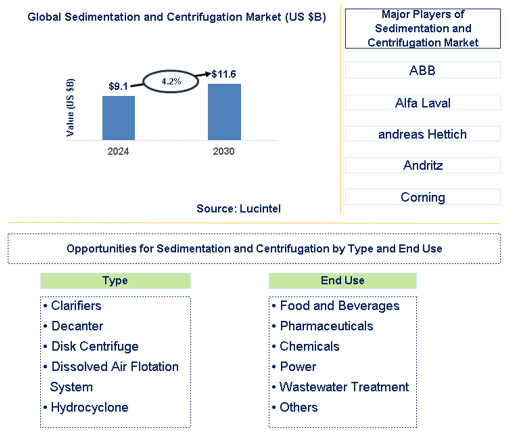
Key data points: The market size in 2030 = $11.6 billion, growth forecast = 4.2% annually for the next 6 years. Scroll below to get more insights. This market report covers trends, opportunities, and forecasts in the global sedimentation and centrifugation market to 2030 by type (clarifiers, decanter, disk centrifuge, dissolved air flotation system, and hydrocyclone), end use (food and beverages, pharmaceuticals, chemicals, power, wastewater treatment, and others), and region (North America, Europe, Asia Pacific, and the Rest of the World)
We'll send your sample report shortly.
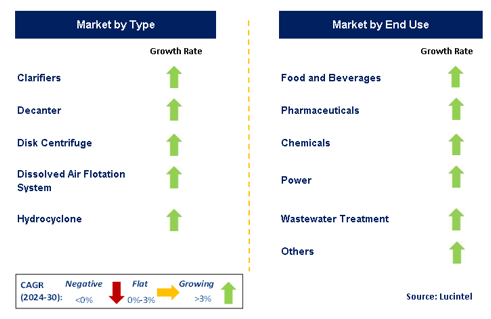
• Lucintel forecasts that, within the type category, disk centrifuge is expected to witness the highest growth over the forecast period.
• Within the end use category, food and beverage is expected to witness the highest growth over the forecast period.
• In terms of regions, APAC will remain the largest region over the forecast period. Gain valuable insight for your business decisions with our comprehensive 150+ page report
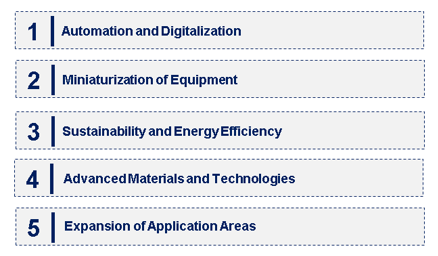
• Automation and Digitalization: One prevalent trend in sedimentation and centrifugation equipment is the integration of automation and digital technologies. This change results in increased operational efficiency, minimized error rates due to human intervention, and the support of real-time process monitoring, which is especially important for research and industrial applications.
• Miniaturization of Equipment: The miniaturization trend has been gaining momentum, especially within laboratory settings. Compact centrifuges and sedimentation devices have gained popularity due to their space-saving designs, allowing them to perform high-precision tasks at smaller volumes, making them ideal for research or diagnostic applications.
• Sustainability and Energy Efficiency: There is an increasing focus on sustainability and energy efficiency within this market segment. Manufacturers are developing centrifuges and sedimentation systems that use less energy and are made sustainably, contributing toward global environmental goals while lowering costs associated with operations.
• Advanced Materials and Technologies: The application of advanced materials, including nanotechnology and high-strength polymers, has enhanced the durability and performance of sedimentation systems like centrifuges. The outcome has been more reliable systems that can perform more complex tasks more effectively.
• Expansion of Application Areas: Sedimentation and centrifugation technologies are no longer tied to their traditional fields but are extending their applicability into other areas such as environmental monitoring, food processing, and the development of new materials, demonstrating versatility. The market’s current emerging trends are leading to more efficient, versatile, and sustainable ways in which sedimentation technology is being used in the global bioscience industry. The market will therefore grow into different sectors as companies adjust themselves accordingly, so that innovation expands, leading to diversification in the world today and prompting numerous opportunities.
• Shift towards IoT in Centrifuges: The Internet of Things (IoT) technology integrated into centrifugal equipment makes it possible to remotely control them, efficiently managing their operations and predicting maintenance requirements. In industrial settings where operations are continuous, this innovation has a significant impact.
• Research-oriented High-Speed Centrifuges: High-speed centrifuge machines, specifically developed for research purposes, constitute another trend. These separate kilograms from milligrams, thus supporting sophisticated biotechnology, pharmaceutical, and life science research.
• Biopharmaceutical Application Expansion: The growth of centrifugation usage in biopharmaceutical manufacturing, particularly for the purification of biologics, is an important development. This has increased demand for more customized and higher-volume machinery to support the expansion of the biopharmaceutical industry.
• Advancement in Filtration Technologies: Sedimentation systems now incorporate modern filtration technologies, improving the efficiency of solid-liquid separation processes. This technology is especially useful for processes like water treatment or mining, where effective separation is critical.
• Portable Sedimentation Devices Development: Portable sedimentation devices are emerging on the market, which are more useful in fields or remote locations since they are lightweight, user-friendly, and provide reliable performance suitable for environmental monitoring and emergencies. These major improvements represent a shift within the sedimentation and centrifugation industry toward advanced, efficient, and versatile technologies. They will shape the future direction of the industry, forever transforming its prospects over time.
• Biotechnology and Pharmaceuticals: Increased demand for biologics and personalized medicine necessitates advanced centrifugation technologies in the biotechnology and pharmaceutical industries. Effective separation and purification of biomolecules require high-speed, high-capacity centrifuges, which hold potential for great strides.
• Environmental Monitoring: The need for efficient environmental monitoring solutions presents sedimentation technology with room to grow. These systems are indispensable in water, air, and soil analysis activities aimed at detecting pollutants or contaminants for environmental preservation purposes.
• Food and Beverage Processing: Liquid-solid separation has taken hold in the food and beverage industry, leading to the adoption of centrifugation technologies ensuring product quality assurance and safety enhancement efforts. This industry’s demand for efficient and reliable separation processes provides manufacturers with a significant opportunity to grow their business.
• Clinical Diagnostics: There is an increasing reliance on rapid diagnostics that are also highly accurate. Hence, clinics have embraced centrifugation techniques for laboratory-based procedures, including point-of-care testing (POCT). Contemporary medical practices are demanding more sample preparation methods, making centrifuges vital.
• Industrial Waste Management: The management of industrial waste, particularly from sectors like oil and gas, mining, and chemicals, creates an avenue for sedimentation/centrifugation technology to expand into this area. These devices perform effective waste material separation, enhancing efficiency through the sustainable treatment of waste materials while enforcing compliance guidelines. These strategic growth opportunities drive the sedimentation and centrifugation market’s expansion path. Companies embracing these opportunities can expand their footprint, catering to diverse needs from different industries, which will result in continuous growth and innovation.
• Technological Advancements: These have been brought about by the continued advancements in centrifugation and sedimentation technologies, driving the growth of this market. Innovations in materials, automation, and digital integration have improved these systems’ efficiency, accuracy, and flexibility, making them more attractive across different sectors.
• Growing Demand for Biopharmaceuticals: This is one of the key drivers in this market due to the increasing need for biologics and personalized medicine. Centrifugation and sedimentation equipment are needed in production processes involving purification of these complex molecules that require superior quality facilities.
• Environmental Regulations: Sedimentation and centrifugation provide solutions for meeting tough environmental regulations required in industries such as water treatment, mining, and oil and gas. They help meet stringent expectations on waste management practices and pollution control.
• Expansion of Research Activities: The research activities being carried out in areas like biotechnology, life sciences, and environmental science have led to increased demand for centrifuges/centrifugation apparatuses worldwide. These technologies are necessary for many laboratory procedures, ranging from simple sample preparation techniques to advanced analytical methods.
• Increased Healthcare Expenditure: The rise in healthcare expenditure, especially in emerging markets, coupled with the demand for diagnostic equipment and research purposes, including centrifugation systems, means that as health infrastructure expands, so does the need for reliable, efficient separation technologies. Challenges in the sedimentation and centrifugation market include:
• High Cost of Advanced Equipment: For several consumers, particularly those in price-sensitive regions, purchasing highly sophisticated machines, such as centrifugal ones, may not be possible due to their prohibitive prices. Manufacturers now face the challenge of striking a balance between cost and quality.
• Regulatory Complexity: Operating in this market could be difficult for companies due to the complex regulatory framework, especially across different regions. It requires substantial investments in resources and expertise to comply with diverse standards and regulations.
• Competition from Alternative Technologies: Sedimentation/centrifugation systems often face competition from other separation alternatives, such as ultrafiltration or chromatography, which have their unique advantages and might be preferable for certain applications instead of conventional sedimenters/centrifuges. The sedimentation and centrifugation market is driven by numerous factors while encountering challenges. Rapid technological advancements and increasing demands in various industries provide opportunities for growth, but there are still high costs, complicated regulations, and alternative technologies to contend with. Succeeding in this competitive environment will require careful negotiation of these drivers.
• ABB
• Alfa Laval
• andreas Hettich
• andritz
• Corning
• Evoqua Water Technologies
• Ferrum
• Flottweg
• FLSmidth
• GEA
• Clarifiers
• Decanter
• Disk Centrifuge
• Dissolved Air Flotation System
• Hydrocyclone
• Food and Beverages
• Pharmaceuticals
• Chemicals
• Power
• Wastewater Treatment
• Others
• North America
• Europe
• Asia Pacific
• The Rest of the World
• United States: In the United States, spending on biotech and pharmaceutical research has greatly accelerated the growth of the sedimentation and centrifugation sector. High-speed centrifuges and advanced sedimentation equipment are in high demand due to precision requirements for laboratory processes and the growing use of centrifugation in clinical diagnostics.
• China: Government efforts aimed at improving domestic biopharmaceutical production and research capabilities have resulted in the rapid expansion of the Chinese market. Among recent developments, local companies have increasingly focused on manufacturing cost-effective, efficient equipment, including the adoption of high-capacity centrifuges into large-scale manufacturing processes.
• Germany: The sedimentation and centrifugation sector in Germany is marked by a strong focus on technology innovation and precision engineering. This has led to recent developments such as the integration of advanced automation control systems into centrifuges, which enhances efficiency at low operational costs. Furthermore, there is an upsurge in applications of sedimentation technology for environmental monitoring and waste management throughout the country.
• India: India’s market is growing due to increased healthcare expenditures and a large domestic manufacturing base for centrifuges. Indian companies are pushing forward innovations to create affordable, effective sedimentation and centrifugation equipment, especially for environmental and agricultural sectors.
• Japan: Japan’s focus on sustainable and energy-efficient technologies has driven the growth of eco-friendly centrifuges in recent years. Additionally, Japan’s rapidly growing food processing industry is creating increased demand for specialized sedimentation equipment. The sedimentation and centrifugation market will continue to see varied yet exciting growth globally, driven by innovation and applications across multiple industries. Companies that adopt cutting-edge technologies, regulatory compliance, and product diversification will thrive in these dynamic market


• ABB
• Alfa Laval
• andreas Hettich
• andritz
• Corning
• Evoqua Water Technologies
• Ferrum
• Flottweg
• FLSmidth
• GEA Q6. Which sedimentation and centrifugation market segment will be the largest in future? Answer: Lucintel forecasts that disk centrifuge is expected to witness the highest growth over the forecast period. Q7. In sedimentation and centrifugation market, which region is expected to be the largest in next 5 years? Answer:
• In terms of regions, APAC will remain the largest region over the forecast period. Q.8 Do we receive customization in this report? Answer: Yes, Lucintel provides 10% customization without any additional cost.


Choose a license that fits your team. Instant PDF delivery.
Prices exclude taxes. Instant delivery. Custom licensing available on request.
Market Report · July 31, 2026
Market Report · July 22, 2026
Market Report · July 20, 2026
Trusted partner for strategic intelligence and business growth


Receive a complimentary market analysis tailored to your industry. Our analysts will identify key growth opportunities and competitive dynamics specific to your business.

Market size, growth rate, and key trend analysis for your specific sector.

Top competitor positioning and market share analysis.

Strategic recommendations backed by data-driven insights.
Get curated market intelligence and competitive moves straight to your inbox.
By subscribing, you agree to receive our monthly insights. Unsubscribe anytime.
Receive a complimentary market analysis tailored to your industry. Our analysts will identify key growth opportunities and competitive dynamics specific to your business.
Market size, growth rate, and key trend analysis for your specific sector.
Top competitor positioning and market share analysis.
Strategic recommendations backed by data-driven insights.
Get curated market intelligence, emerging trends, and competitive moves straight to your inbox each month.
By subscribing, you agree to receive our monthly insights. Unsubscribe anytime.
We'll send your sample report shortly.