
Market Report · July 29, 2026

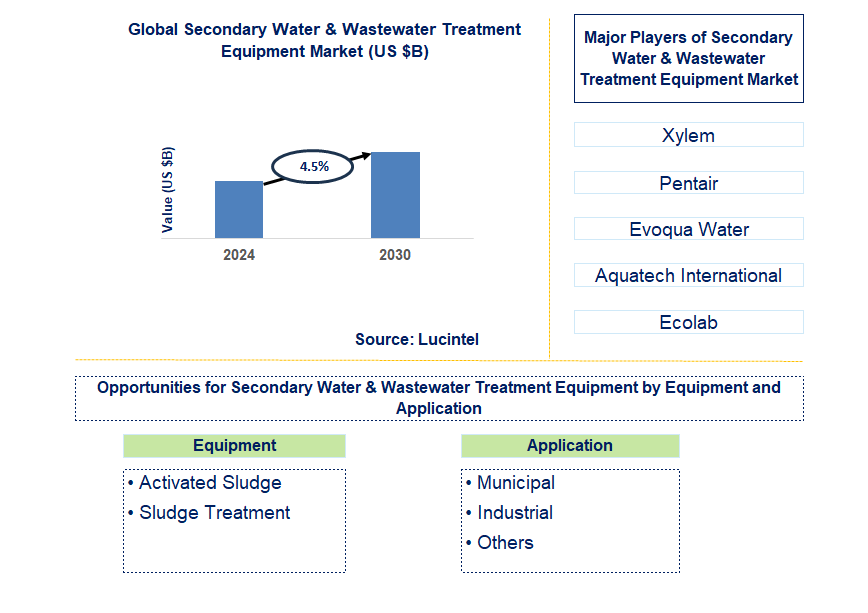
Key data points: The growth forecast = 4.5% annually for the next 6 years. Scroll below to get more insights. This market report covers trends, opportunities, and forecasts in the global secondary water & wastewater treatment equipment market to 2030 by equipment (activated sludge and sludge treatment), application (municipal, industrial, and others), and region (North America, Europe, Asia Pacific, and the Rest of the World)
We'll send your sample report shortly.
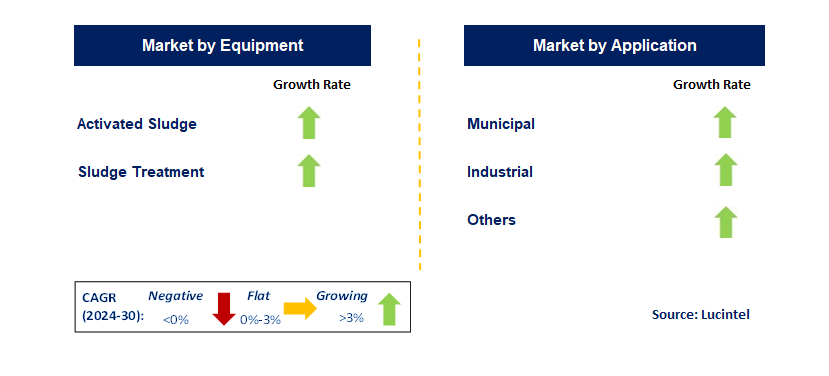
• Lucintel forecasts that, within the equipment category, activated sludge segment is expected to witness the highest growth over the forecast period due to removal of harmful bacteria to lower the health risks for people and surroundings that may come into contact with the material.
• Within the application category, municipal will remain the largest segment due to fast urbanization, most notably in emerging economies coupled with rapid housing infrastructural development.
• In terms of regions, APAC is expected to witness the highest growth over the forecast period due to increasing government investment, expanding urbanization, and rising consumer expenditure. A more than 150-page report is developed to help in your business decisions.
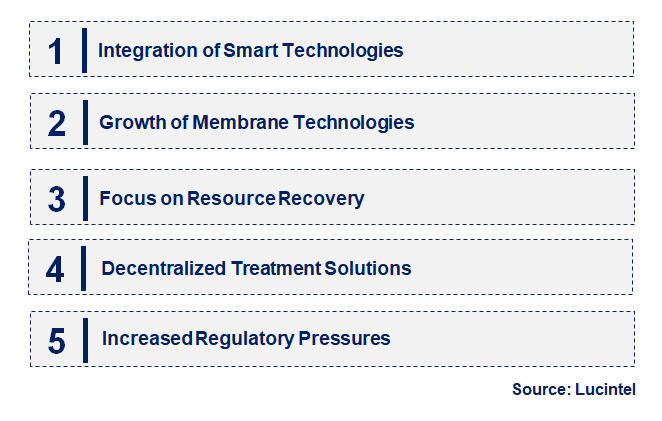
• Integration of Smart Technologies: Increasing use of smart technologies and real-time monitoring systems in wastewater treatment is enhancing process accuracy and operational control. These innovations provide operational benefits, including improved regulatory compliance and higher efficiency standards.
• Growth of Membrane Technologies: Membrane bioreactors (MBRs) and reverse osmosis (RO) technologies are becoming more widely adopted due to their ability to treat wastewater efficiently and produce high-quality effluent. As these technologies become more affordable, they are being integrated into both domestic and industrial wastewater treatment plants.
• Focus on Resource Recovery: There is a growing emphasis on recovering valuable resources such as energy and nutrients from wastewater. Treatment processes focused on resource conservation, nutrient recovery, and energy generation are under development, helping to improve both economic and environmental outcomes.
• Decentralized Treatment Solutions: Modular, flexible, and cost-effective decentralized treatment systems are gaining traction, particularly in developing regions. These systems offer adaptable solutions for local water treatment needs and can be easily scaled to meet growing demands.
• Increased Regulatory Pressures: As global environmental standards become more stringent, industries are under pressure to meet higher water quality and treatment standards. This is leading to increased demand for advanced technologies and processes that can achieve compliance with increasingly strict regulations. These trends are transforming the secondary water and wastewater treatment equipment market by improving technological performance, enhancing sustainability, and ensuring better regulatory compliance. They also contribute to more efficient water treatment processes.
• Advanced Membrane Technologies: Over the past two decades, advancements in membrane technology have significantly enhanced filtration processes. New materials and membrane designs are improving the operation of filtration systems, making water treatment both more efficient and cost-effective.
• Enhanced Biological Treatment Processes: There have been significant advancements in biological treatment methods, such as advanced activated sludge processes and biological nutrient removal (BNR). These improvements increase the efficiency of secondary treatment and help meet stricter discharge limits by reducing pollutants to a lower level.
• Integration of Real-Time Monitoring: The addition of real-time monitoring and control systems has improved the management of wastewater treatment processes. These systems allow for accurate data collection, improving the timing and efficiency of operations and enhancing overall system performance.
• Development of Energy-Efficient Systems: Energy-efficient treatment technologies, such as low-energy membrane filtration systems and optimized aeration technologies, are gaining prominence. These innovations contribute to the industry’s shift toward more sustainable and cost-effective water treatment solutions.
• Increased Adoption of Modular Systems: The demand for flexible, scalable, and decentralized treatment systems is growing. Modular systems are ideal for addressing water treatment needs in remote or rapidly expanding areas, where infrastructure may be limited or non-existent. These developments showcase the industry's responsiveness to market needs, regulatory demands, and technological opportunities. By improving efficiency, fostering innovation, and supporting environmental goals, these advancements are driving the evolution of wastewater treatment equipment.
• Municipal Wastewater Treatment: The increasing urban population is driving demand for advanced municipal wastewater treatment solutions. Opportunities include the implementation of high-efficiency treatment systems and upgrading aging infrastructure to meet more stringent water quality standards.
• Industrial Wastewater Management: Industries are seeking more cost-effective and efficient treatment solutions to manage complex wastewater streams. Opportunities lie in developing specialized equipment tailored to specific industrial processes and pollutant types, improving both efficiency and compliance.
• Resource Recovery: Resource recovery, including energy generation and nutrient recovery, presents significant potential. Technologies such as anaerobic digestion and nutrient recovery systems are being developed to transform wastewater into valuable resources, thereby enhancing sustainability and creating new business models.
• Decentralized Treatment Systems: The demand for decentralized, flexible, and scalable treatment solutions is growing, especially in areas with rapid population growth or limited infrastructure. Modular systems that can be customized for local needs offer promising growth opportunities in these regions.
• Upgrade of Existing Infrastructure: Many regions are focusing on upgrading outdated water and wastewater treatment infrastructure. Opportunities exist in providing advanced technologies and systems that improve the performance and efficiency of legacy systems, enhancing overall treatment capacity. These growth opportunities underscore the industry’s focus on municipal, industrial, and decentralized wastewater treatment solutions. By improving regulatory compliance, supporting sustainability, and addressing the increasing demand for efficient water management, these opportunities reflect the sector's evolving needs.
• Technological Advancements: Innovations such as membrane bioreactors (MBRs) and real-time monitoring systems enhance treatment efficiency and effectiveness. Advanced technologies enable better performance and compliance with stringent water quality standards, driving market growth and encouraging investment in new solutions.
• Regulatory Pressures: Increasing environmental regulations require higher standards for wastewater treatment. Stricter discharge limits and sustainability mandates drive the adoption of advanced equipment and technologies, influencing market trends and promoting the development of more efficient treatment systems.
• Consumer Demand for Sustainability: Growing environmental awareness and demand for sustainable practices push companies to develop eco-friendly treatment solutions. This consumer-driven focus encourages the adoption of green technologies and practices, impacting market dynamics and fostering innovation in wastewater treatment.
• Infrastructure Investment: Investment in upgrading and expanding wastewater infrastructure supports market growth. Governments and private sectors are funding projects to replace outdated systems and improve treatment capacities, creating opportunities for equipment manufacturers and service providers.
• Urbanization and Population Growth: Rapid urbanization and increasing population create greater demand for effective wastewater treatment. Expanding cities require new and upgraded treatment facilities, driving the need for advanced equipment and solutions to manage higher volumes of wastewater efficiently. Challenges in the secondary water & wastewater treatment equipment market are:
• High Initial Costs: The high capital expenditure required for advanced treatment technologies can be a barrier to adoption, especially in developing regions. These initial costs can limit market penetration and slow down the expansion of new systems.
• Maintenance and Operational Costs: Ongoing maintenance and operational expenses for advanced systems can be significant. Balancing these costs with the need for efficient performance presents a challenge for facility operators and impacts the cost-effectiveness of treatment solutions.
• Regulatory Compliance Complexity: Navigating complex and varying regulations across different regions can be challenging for equipment manufacturers and operators. Adhering to diverse standards and requirements requires substantial resources and expertise, complicating market participation. The secondary water and wastewater treatment equipment market is shaped by a balance of these drivers and challenges. Technological innovations, regulatory pressures, and the growing demand for sustainability are pushing the market forward, while high costs, regulatory complexity, and maintenance issues remain significant barriers to widespread adoption.
• Xylem
• Pentair
• Evoqua Water Technologies
• Aquatech International
• Ecolab
• Activated Sludge
• Sludge Treatment
• Municipal
• Industrial
• Others
• North America
• Europe
• Asia Pacific
• The Rest of the World
• United States: In the U.S., there is a significant push for the adoption of membrane bioreactors (MBRs) and ultraviolet (UV) disinfection systems. The demand for these technologies is driven by regulatory compliance requirements and a need for more efficient, cost-effective wastewater treatment solutions.
• China: China is investing heavily in new wastewater treatment technologies, including improved activated sludge systems and advanced oxidation processes. These developments are driven by government policies and the country's rapid industrialization, which require more efficient water management systems.
• Germany: Germany is a leader in applying advanced wastewater treatment technologies that integrate biological nutrient removal and nutrient recovery. Stringent environmental regulations and a strong commitment to sustainability are fueling innovation and improving the efficacy of wastewater treatment systems.
• India: India is seeing a rise in the implementation of cost-effective and flexible treatment technologies, such as UASB (Upflow Anaerobic Sludge Blanket) reactors. This shift is driven by the urgent need to address water and sanitation challenges in rapidly growing urban areas.
• Japan: In Japan, advanced treatment methods, such as membrane bioreactor (MBR) systems and online monitoring, are being increasingly implemented. The country’s focus on technological development and environmental protection is enhancing the quality and efficiency of wastewater treatment processes.


• Xylem
• Pentair
• Evoqua Water Technologies
• Aquatech International
• Ecolab Q5. Which secondary water & wastewater treatment equipment market segment will be the largest in future? Answer: Lucintel forecasts that activated sludge segment is expected to witness the highest growth over the forecast period due to removal of harmful bacteria to lower the health risks for people and surroundings that may come into contact with the material. Q6. In secondary water & wastewater treatment equipment market, which region is expected to be the largest in next 5 years? Answer: APAC is expected to witness the highest growth over the forecast period due to increasing government investment, expanding urbanization, and rising consumer expenditure. Q.7 Do we receive customization in this report? Answer: Yes, Lucintel provides 10% customization without any additional cost.


Choose a license that fits your team. Instant PDF delivery.
Prices exclude taxes. Instant delivery. Custom licensing available on request.
Market Report · July 29, 2026
Market Report · July 20, 2026
Market Report · July 20, 2026
Trusted partner for strategic intelligence and business growth


Receive a complimentary market analysis tailored to your industry. Our analysts will identify key growth opportunities and competitive dynamics specific to your business.

Market size, growth rate, and key trend analysis for your specific sector.

Top competitor positioning and market share analysis.

Strategic recommendations backed by data-driven insights.
Get curated market intelligence and competitive moves straight to your inbox.
By subscribing, you agree to receive our monthly insights. Unsubscribe anytime.
Receive a complimentary market analysis tailored to your industry. Our analysts will identify key growth opportunities and competitive dynamics specific to your business.
Market size, growth rate, and key trend analysis for your specific sector.
Top competitor positioning and market share analysis.
Strategic recommendations backed by data-driven insights.
Get curated market intelligence, emerging trends, and competitive moves straight to your inbox each month.
By subscribing, you agree to receive our monthly insights. Unsubscribe anytime.
We'll send your sample report shortly.