
Market Report · July 22, 2026

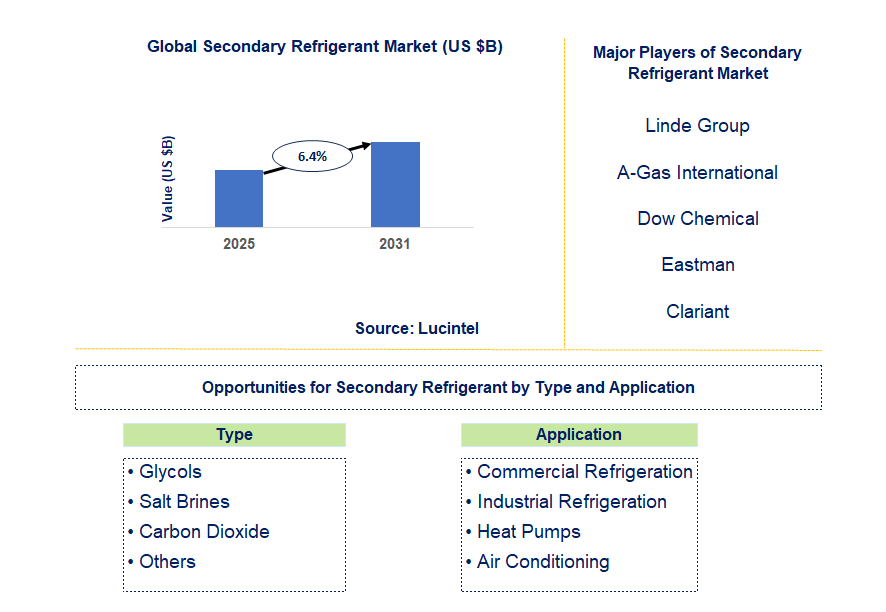
Key data points: The growth forecast = 6.4% annually for the next 7 years. Scroll below to get more insights. This market report covers Trends, opportunities and forecasts in secondary refrigerant market to 2031 by type (glycols, salt brines, carbon dioxide, and others), application (commercial refrigeration, industrial refrigeration, heat pumps, and air conditioning), and region (North America, Europe, Asia Pacific, and the Rest of the World)
We'll send your sample report shortly.
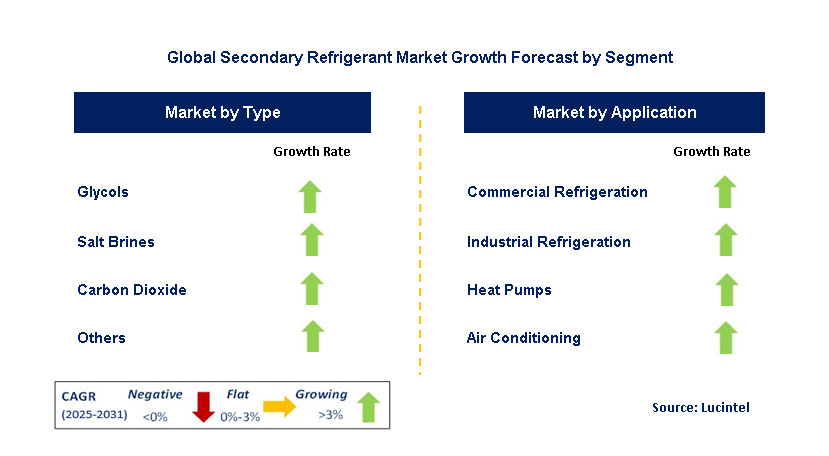
• Lucintel forecasts that, within the type category, glycol is expected to witness the highest growth over the forecast period.
• Within the application category, commercial refrigeration is expected to witness the highest growth.
• In terms of region, APAC is expected to witness the highest growth over the forecast period.
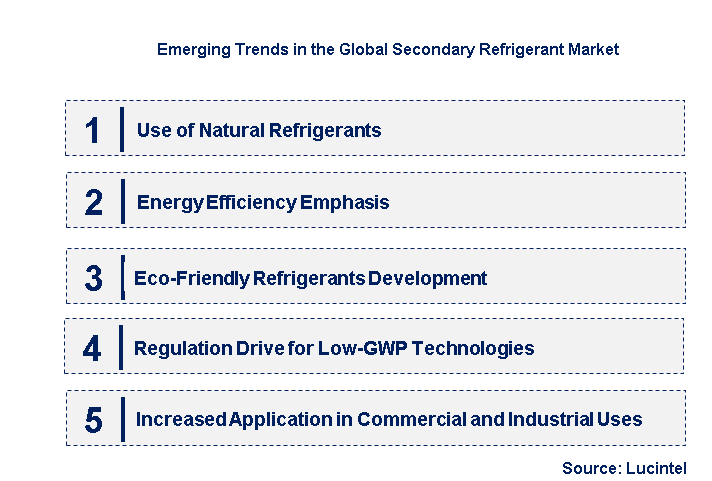
• Use of Natural Refrigerants: There is a growing tendency to utilize natural refrigerants including CO2, ammonia, and hydrocarbons in secondary refrigeration systems. These refrigerants have a much smaller environmental footprint than synthetic refrigerants, providing a more environmentally friendly option that comes in tandem with international sustainability objectives. With the tightening of regulations on refrigerant emissions, businesses are resorting to natural refrigerants in order to meet environmental regulations. This change is particularly pronounced in industrial applications, cold storage, and commercial refrigeration, where environmental responsibility is becoming increasingly important.
• Energy Efficiency Emphasis: Energy efficiency is increasingly a focus in the refrigeration industry, and secondary refrigerant are at the heart of more energy-efficient systems. Secondary refrigerants, including glycol and brine, enable greater heat transfer and can lower the energy usage of refrigeration systems. As energy prices rise and pressure mounts on companies to curb carbon emissions, the industry is seeing a sharp push towards adopting innovative secondary refrigerant that not only minimize energy consumption but don't affect the performance of systems. This wave is likely to catch on with industries working toward achieving energy-conserving targets.
• Eco-Friendly Refrigerants Development: Part of the global sustainability drive is the production of green refrigerants, a leading trend in the secondary refrigerant market. Fresh innovations in non-toxic, non-flammable, and environmentally friendly refrigerant blends are finding increasing adoption in industries with high-performance refrigeration requirements. These refrigerants not only lower environmental damage but also comply with stringent regulations from environmental bodies globally. Producers are spending big money on R&D to create refrigerants that meet these changing standards while providing even better performance.
• Regulation Drive for Low-GWP Technologies: Governments globally are growingly concentrating on regulations that ensure the use of low Global Warming Potential (GWP) refrigerants within cooling systems. This regulation drive is propelling demand for secondary refrigerant that are environmentally low-impact. The European Union, for instance, has adopted the F-Gas regulation, which is driving the use of lower-GWP refrigerants in the food and beverage industry, as well as in industrial cooling applications. This trend will continue to influence the market for secondary refrigerant in the near future.
• Increased Application in Commercial and Industrial Uses: The market for secondary refrigerant is expanding in commercial and industrial uses, especially in cold storage, food processing, and pharmaceuticals. These industries need dependable, energy-saving cooling systems that can satisfy both temperature control and safety needs. Secondary refrigerants like glycol and CO2 are being used more and more in these applications to maximize system performance, save energy, and improve overall refrigeration reliability. With the growth in commercial and industrial refrigeration comes an increase in secondary refrigerant use, leading to new business opportunities in the respective industries. Secondary refrigerant market are in response to increased demands for sustainability, energy efficiency, and minimized environmental footprint. The use of natural refrigerants, the focus on energy-efficient systems, and the creation of environmentally friendly refrigerants are revolutionizing the market. Furthermore, the regulatory momentum for low-GWP refrigerants and the increasing application of secondary refrigerant in commercial and industrial sectors are likely to propel additional innovation and market growth. These trends are redefining the industry by driving more sustainable behavior and pushing the adoption of new, high-performance refrigerants that are suited to the demands of contemporary refrigeration systems.
• Use of CO2-Based Refrigerants: Integration of CO2 as a secondary refrigerant is amongst the most valuable developments in the market. CO2 is an environmentally friendly, natural refrigerant with a significantly lower environmental profile than conventional refrigerants. Increasingly, commercial and industrial refrigeration systems are using CO2, especially for supermarkets and cold storage. CO2-based systems provide energy efficiency and better performance, and this is boosting the demand for CO2 as a secondary refrigerant in the European and North American markets.
• Introduction of Glycol-Based Refrigerants in Cold Storage: Glycol secondary refrigerant have been a widely accepted solution in cold storage and industrial refrigeration. Ethylene and propylene glycol solutions possess superior thermal characteristics and facilitate effective heat transfer and temperature management in low-temperature conditions. As industries, especially the food and drink industry, seek dependable and cost-effective cooling solutions, glycol-based refrigerants are becoming increasingly popular for application on a large scale, particularly in environments where environmental friendliness and energy efficiency are of utmost importance.
• Low-GWP Secondary Refrigerants: With the world moving towards minimizing the environmental footprint of refrigeration systems, low Global Warming Potential (GWP) secondary refrigerant have been the industry's focus. These secondary refrigerant are being developed to comply with strict regulations while providing added efficiency and performance. Technological advancements in low-GWP refrigerants like R-1234yf and R-744 are promoting their use in industrial and commercial air conditioning systems as a more sustainable option than conventional refrigerants, and aligning with global efforts to cut emissions.
• Ammonia-Based Refrigerants Improvements: Ammonia remains a leading refrigerant in the industrial world, especially for industrial-scale refrigeration systems. Recent developments in ammonia-based systems have centered on enhanced safety features and system performance. Advances in leak detection technologies, system design, and ammonia refrigeration have made it increasingly acceptable to apply in commercial and industrial settings. Ammonia-based refrigerants are increasingly turning out to be an ideal solution for high-temperature capacity cooling systems, owing to their efficiency, inexpensive nature, and environmental attractiveness.
• Expansion of Refrigerant Management Solutions: Increased emphasis on sustainability and compliance with regulations has resulted in the creation of innovative refrigerant management solutions. Such solutions enable the monitoring, managing, and lowering of refrigerant consumption, increasing system efficiency, and reducing environmental footprint. As a response to more stringent regulation of refrigerant emissions, several companies are implementing these solutions in order to boost their operational sustainability. These systems are increasingly becoming essential for industries seeking to uphold environmental compliance while maximizing their usage of refrigerants and efficiency in energy usage. These developments are having a positive effect on the secondary refrigerant market by enhancing sustainability, minimizing environmental footprint, and enhancing energy efficiency. The transition to natural refrigerants, like CO2 and ammonia, along with the technology to better manage refrigerants and low-GWP options, is opening the door for more efficient, environmentally friendly cooling technologies. These technologies are not just fueling market growth but also changing the design and operation of refrigeration systems to ensure future systems are compatible with global environmental aspirations.
• Cold Storage Industry: The cold storage sector is one major growth area for secondary refrigerant as it is boosted by growing demand for food preservation and temperature-controlled products. Secondary refrigerants, such as glycol-based systems, are increasingly important in ensuring energy-efficient cooling in large cold storage facilities. Secondary refrigerants are more efficient in heat transfer, minimize energy consumption, and maintain improved temperature control. As international food trade grows, with more emphasis placed on minimizing food waste, the cold storage industry is set to grow even further, reinforcing the application of secondary refrigerant to enhance refrigeration performance and lower operating expenses.
• Commercial Refrigeration: Commercial refrigeration is one of the most extensive uses of secondary refrigerant in supermarkets, restaurants, and food retail. As demand increases for more environmentally friendly refrigeration methods, secondary refrigerant like CO2 and ammonia are increasingly popular due to their minimal environmental footprint and efficiency. Secondary refrigerants provide greater temperature control and reduced use of primary refrigerants, therefore maximizing the performance of commercial refrigeration systems. This opportunity for growth is being further driven by the increased global move towards sustainable refrigerant solutions as well as the more stringent regulatory demands that seek to curb greenhouse gas emissions.
• Industrial Refrigeration: Secondary refrigerants serve an important function in cooling operations within industries such as pharmaceuticals, chemicals, and automotive production in industrial refrigeration. Glycol and ammonia-based secondary refrigerant facilitate effective cooling in the industrial sector. These systems provide improved thermal control and energy efficiency, which are critical for high-cooling-demand industries. As industries target improving operating efficiency and environmental sustainability, the need for secondary refrigerant in industrial refrigeration systems will increase, presenting a high growth prospect in this industry.
• Air Conditioning Systems: Residential and commercial air conditioning systems are incorporating secondary refrigerant to improve energy efficiency and system performance. Secondary refrigerants, including glycol solutions and brine, are employed in district cooling systems to enhance heat transfer and thermal control. With rising global temperatures and growing cooling requirements, especially in cities, secondary refrigerant are increasingly the backbone of green air conditioning systems. This opportunity in the market is fueled by increased demand for efficient air conditioning technology that reduces not only energy use but also its environmental footprint.
• District Cooling Systems: District cooling systems, which cool several buildings off from a common plant, are increasingly using secondary refrigerant in order to boost efficiency and sustainability. With the use of secondary refrigerant such as chilled water or brine, district cooling systems can become more energy efficient, decrease the environmental impact, and save costs. District cooling systems are being increasingly used in densely populated cities with high cooling loads, including commercial centers and residential estates. With the international trend toward smart cities and energy-efficient technologies, district cooling systems are witnessing strong growth, and secondary refrigerant are becoming an essential part of their success. The opportunities of strategic growth across different applications are propelling the use of secondary refrigerant, especially in cold storage, commercial refrigeration, and district cooling systems. As consumers and industries increasingly need more energy-efficient and environmentally friendly refrigeration products, these opportunities are fueling the transition toward cleaner alternatives. The growing regulatory pressure for reduced environmental footprint and enhanced energy efficiency is likely to continue to drive market growth. These opportunities are transforming the refrigeration sector by encouraging the extensive application of secondary refrigerant that improve system performance, lower operating expenses, and address environmental objectives.
• Linde Group
• A-Gas International
• Dow Chemical
• Eastman
• Clariant
• Tazzetti
• Arteco Coolants
• Temper Technology
• Srs Frigadon
• Hydratech
• Glycols
• Salt Brines
• Carbon Dioxide
• Others
• Commercial Refrigeration
• Industrial Refrigeration
• Heat Pumps
• Air Conditioning
• North America
• Europe
• Asia Pacific
• The Rest of the World
• United States: In the US, the secondary refrigerant market has been growing steadily because of the use of energy-efficient technologies and an emphasis on sustainability. New refrigerants like CO2, glycol-based fluids, and ammonia are commonly used as secondary coolants for commercial and industrial applications. Moreover, regulatory shifts from the Environmental Protection Agency (EPA) have driven the use of environmentally friendly refrigerants that meet more stringent emissions regulations. The U.S. companies are concentrating on creating and employing non-toxic, non-flammable refrigerants to meet their sustainability objectives and minimize the carbon footprint of refrigeration systems.
• China: China is projected to undergo a substantial shift in its secondary refrigerant market, supported by the industrialization of the nation and increasing demand for cooling systems. The government's initiative towards sustainability and energy efficiency is promoting the adoption of environmentally friendly secondary refrigerant. Specifically, China is investing in CO2 and ammonia-based refrigerants, which are gaining applications in the food and beverage, industrial, and cold storage markets. The country's emphasis on lowering greenhouse gas emissions and energy efficiency is boosting the development of refrigerant technologies, which will further boost growth in the years to come.
• Germany: Germany's secondary refrigerant market has been characterized by the uptake of sustainable refrigerants and energy-efficient technologies, more so in the industrial and commercial segments. Germany has imposed stringent regulations to mitigate the use of harmful refrigerants such as HFCs, resulting in the growing uptake of ammonia, CO2, and other natural refrigerants. Such refrigerants, in many cases utilized in combination with secondary refrigerant, enable greater energy efficiency and reduced carbon emissions. Germany's dedication to sustainability, coupled with robust R&D efforts by manufacturers, has made the country a world leader in the transition towards environmentally friendly refrigeration technologies.
• India: India is experiencing a boom in the demand for secondary refrigerant as the nation's industrial and commercial sectors keep growing. As energy usage is growing and there is a requirement for efficient cooling technologies, India is moving more and more towards secondary refrigerant like glycol and CO2 that assist in improving refrigeration efficiency and minimizing costs of operation. Government policies for the implementation of energy-efficient technology along with a growing awareness about environmental issues are leading to increased usage of these refrigerants. The market is also experiencing growth with respect to the use of natural refrigerants, specifically in commercial refrigeration and cold storage.
• Japan: Japan's secondary refrigerant market is changing as the nation adopts technological advances in refrigeration systems. Japan has dramatically advanced its adoption of CO2, ammonia, and glycol-based refrigerants, particularly for commercial and industrial use. The nation's strict environmental policies and focus on lowering greenhouse gas emissions are fueling the need for more environmentally friendly refrigerants. Japan's strong infrastructure and research base are also helping to advance next-generation secondary refrigerant, which will further minimize energy use and lower the environmental footprint of refrigeration systems.


• Linde Group
• A-Gas International
• Dow Chemical
• Eastman
• Clariant
• Tazzetti
• Arteco Coolants
• Temper Technology
• Srs Frigadon
• Hydratech Q5. Which secondary refrigerant market segment will be the largest in future? Answer: Lucintel forecasts that, within the type category, glycol is expected to witness the highest growth over the forecast period. Q6. In secondary refrigerant market, which region is expected to be the largest in next 5 years? Answer: In terms of region, APAC is expected to witness the highest growth over the forecast period. Q7. Do we receive customization in this report? Answer: Yes, Lucintel provides 10% customization without any additional cost.


Choose a license that fits your team. Instant PDF delivery.
Prices exclude taxes. Instant delivery. Custom licensing available on request.
Market Report · July 22, 2026
Market Report · July 22, 2026
Market Report · July 22, 2026
Trusted partner for strategic intelligence and business growth


Receive a complimentary market analysis tailored to your industry. Our analysts will identify key growth opportunities and competitive dynamics specific to your business.

Market size, growth rate, and key trend analysis for your specific sector.

Top competitor positioning and market share analysis.

Strategic recommendations backed by data-driven insights.
Get curated market intelligence and competitive moves straight to your inbox.
By subscribing, you agree to receive our monthly insights. Unsubscribe anytime.
Receive a complimentary market analysis tailored to your industry. Our analysts will identify key growth opportunities and competitive dynamics specific to your business.
Market size, growth rate, and key trend analysis for your specific sector.
Top competitor positioning and market share analysis.
Strategic recommendations backed by data-driven insights.
Get curated market intelligence, emerging trends, and competitive moves straight to your inbox each month.
By subscribing, you agree to receive our monthly insights. Unsubscribe anytime.
We'll send your sample report shortly.