
Market Report · July 22, 2026

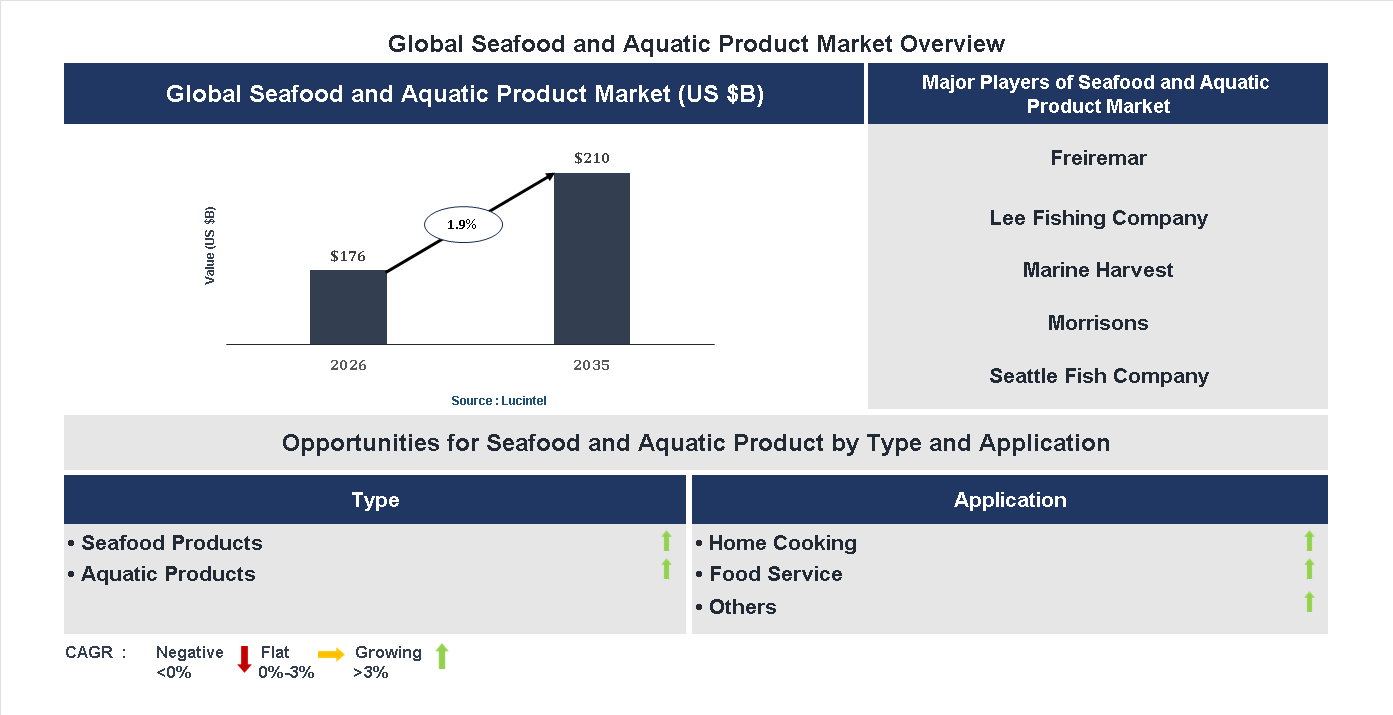
Key data points: The market size in 2035 = $210 billion, growth forecast = 1.9% annually for the next 8 years. Scroll below to get more insights. This market report covers trends, opportunities and forecasts in seafood and aquatic product market to 2035 by type (seafood products and aquatic products), application (home cooking, food service, and others), and region (North America, Europe, Asia Pacific, and the Rest of the World)
We'll send your sample report shortly.
• Lucintel forecasts that, within the type category, aquatic product is expected to witness higher growth over the forecast period.
• Within the application category, food service is expected to witness higher growth.
• In terms of region, APAC is expected to witness the highest growth over the forecast period. Gain valuable insights for your business decisions with our comprehensive 150+ page report. Sample figures with some insights are shown below.
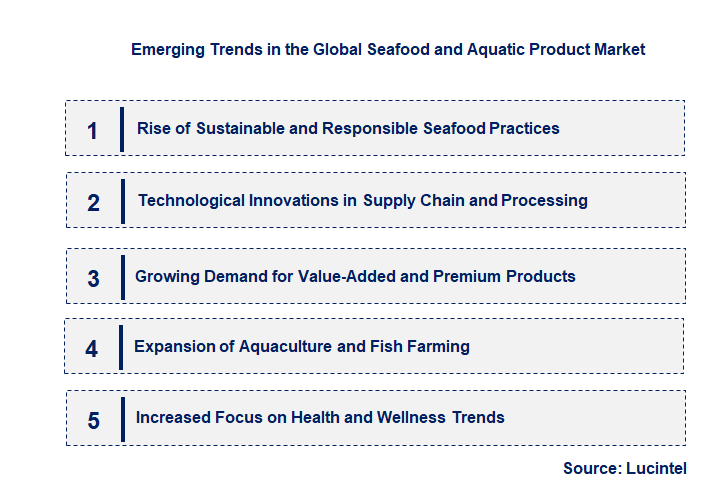
• Rise of Sustainable and Responsible Seafood Practices: Consumers are increasingly prioritizing sustainability, prompting industry players to adopt eco-friendly fishing and aquaculture methods. Certification programs like MSC and ASC are gaining prominence, encouraging responsible sourcing. This trend enhances brand reputation, ensures long-term resource availability, and aligns with global environmental goals. Companies investing in sustainable practices are better positioned to meet regulatory requirements and consumer expectations, fostering trust and loyalty in a competitive market.
• Technological Innovations in Supply Chain and Processing: Advanced technologies such as blockchain, IoT, and AI are revolutionizing seafood supply chains. Blockchain enhances traceability, ensuring product authenticity and safety from catch to consumer. IoT devices monitor environmental conditions, optimizing harvesting and storage. AI-driven processing improves efficiency and reduces waste. These innovations increase transparency, reduce fraud, and improve product quality, ultimately leading to increased consumer confidence and operational efficiencies across the industry.
• Growing Demand for Value-Added and Premium Products: Consumers are seeking convenient, nutritious, and gourmet seafood options. This has led to a surge in value-added products like pre-cut fillets, ready-to-eat meals, and specialty items. Premium offerings such as organic, wild-caught, and sustainably sourced seafood command higher prices and cater to health-conscious and environmentally aware consumers. This trend encourages product innovation, diversifies revenue streams, and elevates market competitiveness by meeting evolving consumer preferences.
• Expansion of Aquaculture and Fish Farming: As wild catch limits tighten, aquaculture is emerging as a vital growth driver. Advances in fish farming techniques improve yield, quality, and sustainability. Countries are investing heavily in aquaculture infrastructure to meet global seafood demand. This expansion reduces pressure on wild stocks, offers consistent supply, and creates economic opportunities. However, it also raises concerns about environmental impacts, requiring responsible practices to ensure long-term sustainability and market acceptance.
• Increased Focus on Health and Wellness Trends: Consumers are increasingly viewing seafood as a healthy protein source rich in omega-3 fatty acids, vitamins, and minerals. This health consciousness drives demand for organic, non-GMO, and sustainably sourced products. Marketing efforts emphasize health benefits, boosting sales across various demographics. The trend encourages product innovation, such as fortified seafood and functional foods, and influences industry standards to meet health and safety regulations, ultimately shaping a market that aligns with wellness and lifestyle priorities. These trends are fundamentally reshaping the seafood and aquatic product market by emphasizing sustainability, technological integration, product innovation, responsible farming, and health-conscious offerings. They are fostering a more transparent, efficient, and consumer-focused industry, ensuring its resilience and growth in a rapidly evolving global landscape.
• Growing demand for sustainable seafood: Increasing consumer awareness about environmental impact is driving demand for sustainably sourced seafood. Certification programs like MSC and ASC are gaining popularity, encouraging fishers and producers to adopt eco-friendly practices. This shift is fostering responsible harvesting, reducing overfishing, and promoting biodiversity conservation. As a result, market players are investing in sustainable supply chains, which enhances brand reputation and meets regulatory requirements, ultimately expanding market share and ensuring long-term industry viability.
• Technological innovations in aquaculture: Advances in aquaculture technology, such as recirculating systems and automation, are revolutionizing seafood production. These innovations improve efficiency, reduce environmental footprint, and enable year-round production. Enhanced breeding techniques and disease management are increasing yields and product quality. This development allows producers to meet rising global demand while minimizing ecological impact. Consequently, the industry benefits from increased productivity, cost reductions, and the ability to supply a consistent, high-quality product to consumers worldwide.
• Expansion of processed seafood products: The market is witnessing a surge in processed seafood, including ready-to-eat and convenience products. This trend caters to busy lifestyles and urbanization, expanding consumer access to seafood. Innovations in packaging and preservation extend shelf life, making products more accessible across regions. The growth of e-commerce platforms further boosts sales. This development diversifies product offerings, attracts new customer segments, and increases overall market revenue, positioning processed seafood as a key growth driver in the industry.
• Adoption of digital supply chain solutions: Digital technologies like blockchain, IoT, and AI are transforming supply chain management in the seafood industry. These tools enhance traceability, transparency, and quality control, reducing fraud and ensuring compliance with safety standards. Real-time data tracking optimizes logistics, minimizes waste, and improves inventory management. This digital shift builds consumer trust, streamlines operations, and reduces costs. As a result, companies can better meet regulatory demands and consumer expectations, strengthening their market position and fostering sustainable growth.
• Focus on health and wellness trends: Increasing awareness of health benefits associated with seafood consumption is driving product innovation and marketing strategies. Functional foods, omega-3 enriched products, and allergen-free options are gaining popularity. Companies are emphasizing nutritional value and health benefits to attract health-conscious consumers. This trend encourages product diversification and premium offerings, boosting sales and market share. It also prompts industry players to invest in research and development, ensuring they stay aligned with evolving consumer preferences and health standards. These developments are significantly impacting the seafood and aquatic product market by fostering sustainability, technological advancement, product diversification, digital transformation, and health-focused offerings. They enhance supply chain efficiency, meet consumer demands, and promote responsible practices. As a result, the industry is poised for sustainable growth, increased competitiveness, and expanded global reach. Market players who adapt to these trends will be better positioned to capitalize on emerging opportunities and navigate future challenges effectively.
• Expanding demand for sustainable and eco-friendly seafood options: Growing consumer concern for environmental impact is driving demand for sustainably sourced seafood. Certification programs and transparent supply chains are becoming critical. Companies investing in sustainable aquaculture practices and eco-labeling can differentiate themselves, attract environmentally conscious consumers, and meet regulatory standards. This shift encourages industry-wide adoption of responsible fishing and farming methods, fostering long-term market stability and growth.
• Innovation in aquaculture technology to increase yield and quality: Advances in aquaculture technology, such as recirculating systems, automation, and genetic improvements, are enhancing productivity and product quality. These innovations reduce environmental impact, lower operational costs, and enable year-round production. Companies adopting cutting-edge technology can meet rising demand efficiently, improve product consistency, and expand into new markets. This opportunity supports sustainable growth and helps address supply chain challenges.
• Diversification of seafood product offerings to meet changing consumer preferences: Consumers are seeking diverse, convenient, and health-oriented seafood products, including ready-to-eat, plant-based, and fortified options. Companies expanding product portfolios to include such innovations can capture new customer segments. Emphasizing flavor, packaging, and nutritional benefits appeals to health-conscious and convenience-driven consumers. Diversification also mitigates risks associated with reliance on traditional seafood products, fostering resilience and growth.
• Expansion into emerging markets with rising seafood consumption: Rapid economic growth and urbanization in developing regions are increasing seafood consumption. Entering these markets through localized products, strategic partnerships, and distribution channels offers significant growth potential. Tailoring offerings to regional tastes and affordability enhances market acceptance. Companies that establish a strong presence early can capitalize on expanding demand, build brand loyalty, and secure long-term market share in these high-growth areas.
• Adoption of digital platforms for supply chain transparency and direct-to-consumer sales: Digital technologies enable real-time tracking, traceability, and improved supply chain efficiency. E-commerce platforms facilitate direct-to-consumer sales, expanding market reach and reducing intermediaries. Transparency builds consumer trust, especially for sustainably sourced products. Leveraging digital tools allows companies to respond swiftly to market trends, improve customer engagement, and optimize logistics, ultimately driving revenue growth and strengthening competitive advantage in the seafood industry. The overall landscape of the seafood and aquatic product market is poised for substantial growth driven by sustainability, technological innovation, diversification, emerging markets, and digital transformation. These opportunities enable industry players to meet evolving consumer demands, enhance operational efficiency, and secure a competitive edge. Strategic focus on these areas will shape the future trajectory of the market, ensuring sustainable and profitable expansion.
• Technological Innovation: The adoption of advanced processing, freezing, and packaging technologies enhances product quality, safety, and shelf life. These innovations reduce waste, improve efficiency, and meet consumer expectations for fresh and high-quality seafood. Automation and IoT integration streamline supply chains, enabling real-time tracking and inventory management. As technology continues to evolve, producers can offer a wider variety of products, including ready-to-eat and value-added options, thus expanding market reach and consumer appeal.
• Rising Health Awareness: Increasing awareness about the health benefits of seafood, such as high protein content and omega-3 fatty acids, drives consumer demand. As lifestyles become more health-conscious, consumers seek nutritious, low-fat, and sustainable seafood options. This trend encourages product diversification and marketing strategies focused on health benefits, boosting sales across retail and foodservice sectors. Governments and health organizations also promote seafood consumption, further supporting market growth.
• Economic Growth and Urbanization: Growing disposable incomes and urbanization in emerging economies expand the consumer base for seafood products. Urban populations tend to have higher purchasing power and greater access to diverse seafood options through supermarkets and restaurants. Economic development also facilitates investments in aquaculture and fishing infrastructure, increasing supply and variety. This economic momentum fosters market expansion, especially in regions where seafood was previously less accessible.
• Sustainability and Certification Initiatives: Increasing emphasis on sustainable fishing practices and eco-labeling influences consumer choices and industry standards. Certifications like MSC and ASC assure consumers of responsible sourcing, encouraging brands to adopt sustainable practices. Regulatory bodies and NGOs promote conservation efforts, which can enhance brand reputation and market competitiveness. These initiatives also help mitigate overfishing and environmental degradation, ensuring long-term resource availability and market stability.
• Global Trade and Supply Chain Integration: The globalization of seafood trade broadens market access and diversifies supply sources. Efficient logistics, cold chain infrastructure, and trade agreements facilitate the movement of seafood across borders, meeting rising international demand. This integration allows producers to access new markets, optimize costs, and respond swiftly to market trends. However, it also exposes the industry to geopolitical risks and trade restrictions, which require strategic management to sustain growth. The challenges facing the seafood and aquatic product market include:
• Environmental and Climate Change Risks: Climate change impacts marine ecosystems, leading to unpredictable fish stocks and habitat degradation. Ocean warming, acidification, and pollution threaten sustainable harvesting and aquaculture productivity. These environmental shifts can cause supply shortages, price volatility, and increased operational costs. Adapting to these changes requires significant investment in research, sustainable practices, and resilient infrastructure, posing ongoing challenges for industry stakeholders.
• Regulatory and Trade Barriers: Stringent safety standards, import-export regulations, and trade restrictions can hinder market access and increase compliance costs. Variations in regulations across countries complicate international trade, requiring companies to navigate complex legal frameworks. Non-compliance risks penalties and product recalls, damaging brand reputation. Staying abreast of evolving policies demands continuous monitoring and adaptation, which can strain resources, especially for smaller players.
• Overfishing and Resource Depletion: Unsustainable fishing practices threaten fish populations and marine biodiversity. Overfishing leads to stock collapses, affecting supply stability and economic viability. Regulatory measures such as quotas and fishing bans aim to address these issues but can disrupt supply chains and increase costs. Balancing economic interests with conservation efforts remains a critical challenge, requiring industry-wide cooperation and innovative resource management strategies. The seafood and aquatic product market is shaped by technological progress, health trends, economic development, sustainability efforts, and global trade dynamics. While these drivers foster growth and innovation, environmental concerns, regulatory complexities, and resource limitations pose significant challenges. Navigating these factors effectively will determine the industrys future trajectory, requiring stakeholders to adopt sustainable practices, leverage technological advancements, and adapt to evolving market conditions. The overall impact is a dynamic, resilient market with substantial growth potential, provided that challenges are managed proactively and responsibly.
• Freiremar
• Lee Fishing Company
• Marine Harvest
• Morrisons
• Seattle Fish Company
• Tesco
• True World Foods
• All Seas Wholesale
• Austevoll Seafood Group
• Faroe Seafood
• Seafood Products
• Aquatic Products
• Home Cooking
• Food Service
• Others
• North America
• Europe
• Asia Pacific
• The Rest of the World
• United States: The U.S. seafood market has seen a surge in sustainable fishing practices and aquaculture innovations. There is increased consumer demand for organic and locally sourced seafood, prompting retailers to expand their offerings. Technological advancements in traceability and supply chain transparency are improving product safety and quality. The government has introduced stricter regulations to combat overfishing and protect marine ecosystems. Additionally, the U.S. is investing in offshore aquaculture projects to reduce pressure on wild stocks and meet domestic demand. The market is also witnessing growth in plant-based seafood alternatives, driven by health and environmental concerns.
• China: China remains the worlds largest seafood producer and consumer, with rapid growth in aquaculture and processing industries. Recent developments include the adoption of advanced breeding techniques and sustainable farming practices to increase yield and reduce environmental impact. The government has implemented policies to promote high-quality seafood exports and improve product safety standards. E-commerce platforms are playing a vital role in expanding domestic sales and international trade. China is also investing in research to develop new species and improve aquaculture efficiency. The country is focusing on reducing reliance on wild-caught fish and enhancing the sustainability of its seafood industry.
• Germany: Germanys seafood market is characterized by a strong emphasis on sustainability and quality. The country has increased imports of certified sustainable seafood and is actively promoting eco-labeling initiatives. Innovations in cold chain logistics are ensuring freshness and reducing waste. Germany is also investing in aquaculture research, particularly in land-based systems, to reduce environmental impact. Consumer preferences are shifting towards organic and responsibly sourced products, influencing retail offerings. The government supports initiatives to improve fishery management and promote sustainable consumption. Overall, Germany is positioning itself as a leader in sustainable seafood consumption within Europe.
• India: Indias seafood industry is experiencing rapid growth, driven by increased exports and domestic consumption. The government is promoting aquaculture development through subsidies and infrastructure improvements. Recent advancements include the adoption of modern farming techniques and disease management practices to boost productivity. India is also focusing on value addition and processing to enhance export competitiveness. The country is expanding its shrimp and fish farming sectors, with a focus on sustainable practices. Additionally, efforts are underway to improve supply chain logistics and cold storage facilities, reducing post-harvest losses. The market is poised for continued growth, supported by rising global demand for seafood.
• Japan: Japan remains a major player in the global seafood market, emphasizing high-quality and sustainable products. Recent developments include the adoption of innovative fishing technologies to reduce bycatch and environmental impact. The country is investing in aquaculture, particularly in seaweed and fish farming, to diversify sources. Japan is also advancing research on sustainable fishing quotas and marine conservation. Consumer preferences continue to favor premium, responsibly sourced seafood, including traditional favorites like tuna and salmon. The government promotes sustainable fishery management and international cooperation to ensure resource longevity. Overall, Japan is balancing tradition with innovation to maintain its seafood industry’s global competitiveness.


• Freiremar
• Lee Fishing Company
• Marine Harvest
• Morrisons
• Seattle Fish Company
• Tesco
• True World Foods
• All Seas Wholesale
• Austevoll Seafood Group
• Faroe Seafood Q6. Which seafood and aquatic product market segment will be the largest in future? Answer: Lucintel forecasts that, within the type category, aquatic product is expected to witness higher growth over the forecast period. Q7. In seafood and aquatic product market, which region is expected to be the largest in next 5 years? Answer: In terms of region, APAC is expected to witness the highest growth over the forecast period. Q8. Do we receive customization in this report? Answer: Yes, Lucintel provides 10% customization without any additional cost.


Choose a license that fits your team. Instant PDF delivery.
Prices exclude taxes. Instant delivery. Custom licensing available on request.
Market Report · July 22, 2026
Market Report · July 22, 2026
Market Report · July 22, 2026
Trusted partner for strategic intelligence and business growth


Receive a complimentary market analysis tailored to your industry. Our analysts will identify key growth opportunities and competitive dynamics specific to your business.

Market size, growth rate, and key trend analysis for your specific sector.

Top competitor positioning and market share analysis.

Strategic recommendations backed by data-driven insights.
Get curated market intelligence and competitive moves straight to your inbox.
By subscribing, you agree to receive our monthly insights. Unsubscribe anytime.
Receive a complimentary market analysis tailored to your industry. Our analysts will identify key growth opportunities and competitive dynamics specific to your business.
Market size, growth rate, and key trend analysis for your specific sector.
Top competitor positioning and market share analysis.
Strategic recommendations backed by data-driven insights.
Get curated market intelligence, emerging trends, and competitive moves straight to your inbox each month.
By subscribing, you agree to receive our monthly insights. Unsubscribe anytime.
We'll send your sample report shortly.