
Market Report · May 18, 2026

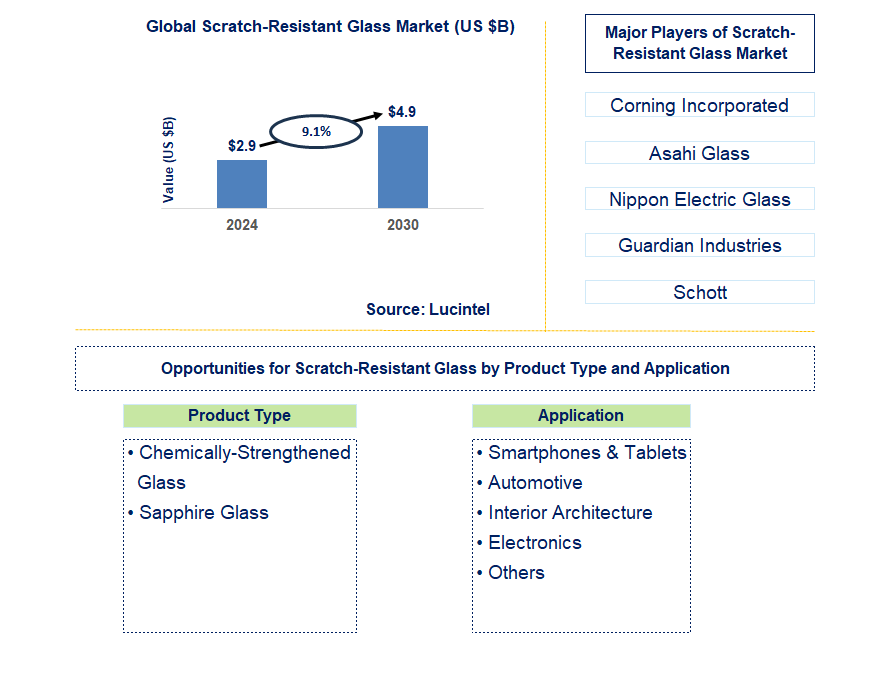
Key data points: The market size in 2030 = $4.9 billion, growth forecast = 9.1% annually for the next 6 years. Scroll below to get more insights. This market report covers trends, opportunities, and forecasts in the global scratch-resistant glass market to 2030 by product type (chemically-strengthened glass and sapphire glass), application (smartphones & tablets, automotive, interior architecture, electronics, and others), and region (North America, Europe, Asia Pacific, and the Rest of the World)
We'll send your sample report shortly.
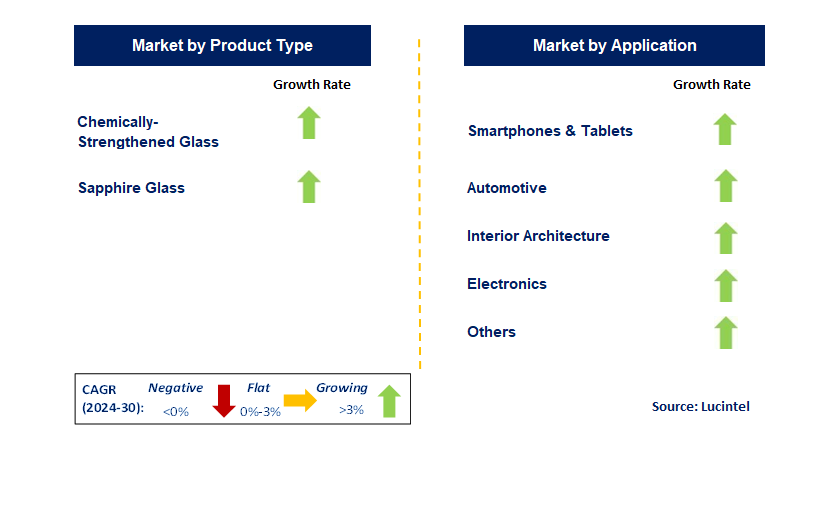
• Lucintel forecasts that, within the product type category, the chemically-strengthened glass will remain the larger segment over the forecast period due to the wide range of applications.
• Within the application category, smartphones & tablets will remain the largest segment due to applications in smartphones and tablets.
• In terms of region, In terms of region, APAC will remain the largest region over the forecast period due to increasing demand for scratch-resistant glass from smartphones & tablets. A more than 150-page report is developed to help in your business decisions.
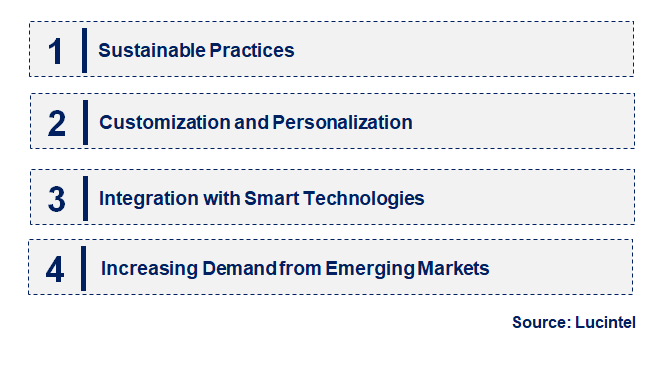
• Sustainable Practices: Manufacturers need to focus on sustainable production practices in light of growing environmental concerns. This means using eco-friendly raw materials and processes that minimize waste. The sustainability trend satisfies regulatory requirements for companies while creating demand from environmentally aware consumers who seek green products.
• Customization and Personalization: Consumers demand customized solutions; hence, the scratch-resistant glass product is applied with an understanding of specific demands. This trend allows manufacturers to focus on niche markets, such as luxury electronics or bespoke architectural designs, enhancing customer satisfaction and loyalty.
• Integration with Smart Technologies: Smart devices and technologies are driving demand for scratch-resistant glass. Manufacturers are including touch sensitivity features and anti-glare properties in the glass, making it more functional in high-technology applications. This trend aligns with increased consumer demand for multi-functional and aesthetically pleasing products.
• Increasing Demand from Emerging Markets: As industries expand in emerging markets, the demand for scratch-resistant glass also increases proportionally. Investment in construction, automotive, and electronics in the Asia-Pacific and Latin American regions has unveiled fresh prospects for manufacturers to enter and expand in these markets. The trends of advanced coating technologies, sustainability, customization, integration of smart technologies, and growth in emerging markets are evident in the scratch-resistant glass market. The ways in which manufacturers can exploit these trends to gain competitive advantages and better serve the evolving demands of consumers are outlined.
• Improved Analytical Techniques: Mass spectrometry and other high-throughput screening technologies have made it easier to establish more precise and efficient transporter assays. It is now possible to evaluate drug interactions with various transporters more quickly in the drug discovery process.
• Integration of AI and Machine Learning: AI and machine learning are transforming transporter assays through their ability to identify complex patterns in relationships within large datasets and improve prediction models for drug transport behavior.
• Improvements in the Regulatory Framework: Updates made by regulatory organizations regarding transporter assays have emphasized their importance in the overall drug development process. This encourages pharmaceutical companies to invest in transporter studies, ensuring compliance with regulatory standards and enhancing the safety of drugs.
• Increased Interface between Academia and Industry: Collaborations between academia and industry have significantly stimulated the invention of transporter assays. These partnerships encourage collaborative research programs focused on developing new assay techniques and technologies that may enable better transport predictions.
• Emergence of Personalized Medicine: The rising demand for personalized medicine is influencing the development of transporter assays that consider variability in drug transport mechanisms among individuals. This trend emphasizes the need for better predictive assays that can accurately forecast medication responses in patients. Recent innovations in the transporter assay market include improvements in analytical techniques, integration of AI, enhancements in regulations, collaboration between academia and industry, and the rise of personalized medicine. All these innovations are set to change the landscape of drug development and discovery toward safer and more effective drugs.
• Growth in the Automotive Industry: There is growth potential due to increasing demand for toughened glass materials within the automotive industry. Manufacturers can develop scratch-resistant glass for windows and dashboards, which are lightweight, thereby improving the aesthetic appeal and long-term durability of vehicles.
• Electronics and Consumer Goods: The popularity of personal and business users of smartphones, tablets, and other consumer electronic products creates demand for high-quality, scratch-resistant glass. The innovation of protective glass solutions will capitalize on this high-margin market and position producers at the forefront of consumer electronics.
• Architectural Applications: The building industry requires aesthetically pleasing and durable materials. This scratch-resistant glass may be used in facades, windows, and interior designs, giving manufacturers the opportunity to expand their architectural glass solutions.
• Demand in the Healthcare Sector: Scratch-resistant glass continues to enjoy increasing demand in the healthcare sector, with rising usage in medical devices and equipment. This trend represents an investment opportunity in specialized glass designed to meet the stringent demands of the health sector for safety and performance.
• Home Appliance Market: The growing premium home appliance market is creating demand for high-quality scratch-resistant glass surfaces. Manufacturers have opportunities to capitalize on this market by catering to customers who seek innovative solutions that offer durability and aesthetic appeal in home appliances. Strategic growth opportunities regarding the growth of the automotive industry, along with developments in electronics, architectural applications, healthcare demand, and the home appliance market, provide substantial prospects for manufacturing companies to enhance their products and achieve continued growth in the competitive landscape of scratch-resistant glass.
• Demand for More Durable Materials: Increasing demand for durable, long-lasting materials, especially in various applications, is a key factor driving growth in the scratch-resistant glass market, as manufacturers are under pressure to ensure the development of superior products.
• Technological Developments: Enhanced coating technologies and manufacturing processes are enabling the production of high-performance scratch-resistant glass. These advancements allow manufacturers to meet the growing demand for robust solutions across sectors.
• Expanding Application Sector: The growth of application sectors such as electronics, automotive, and construction, where durability and aesthetic appeal are gaining importance, is contributing to the expansion of the scratch-resistant glass market.
• Consumer Preferences for Quality Products: Consumers have increasingly high expectations regarding product quality, leading to greater demand for high-quality, scratch-resistant glass. This compels producers to invest more in superior materials and technology inputs.
• Regulatory Support for Sustainable Products: Supportive regulations favoring sustainable materials encourage producers to design environmentally friendly scratch-resistant glass solutions in line with the global trend toward sustainability. Challenges in the scratch-resistant glass market include:
• Competition from Alternative Materials: The presence of alternative materials, including plastics and composites that may provide similar benefits at lower costs, poses a challenge to the growth of the market.
• Price Volatility in Raw Materials: Fluctuations in the prices of raw materials used in glass production can affect profitability and operational stability for manufacturers, creating challenges in maintaining competitive pricing.
• Complexity in Regulatory Compliance: Manufacturers face complex regulatory standards surrounding safety and environmental concerns; many regulations are advanced and challenging to comply with. Significant and continuous investment in compliance is necessary to meet these standards. Overall, drivers for the scratch-resistant glass market stem from the increasing demand for durable materials, technological advancements, entry into new application fields, discerning consumers seeking quality products, and regulatory encouragement for sustainable solutions. However, competition from alternative materials, price volatility, and regulatory complexity will need to be effectively managed. Understanding these dynamics is essential for stakeholders looking to exploit growth opportunities within the scratch-resistant glass market.
• Corning Incorporated
• Asahi Glass
• Nippon Electric Glass
• Guardian Industries
• Schott
• Chemically-Strengthened Glass
• Sapphire Glass
• Smartphones & Tablets
• Automotive
• Interior Architecture
• Electronics
• Others
• North America
• Europe
• Asia Pacific
• The Rest of the World
• United States: Recent periods have seen an upsurge in the growth of the electronics sector, with smartphones and tablets being prominent drivers in the United States, which has led to growth in the scratch-resistant glass market. Most prominent manufacturers have developed innovative coating technologies that are superior to others without affecting the clarity of the glass. Tech companies collaborate with glass manufacturers to develop ultra-thin glass that is highly resistant to damage. In addition, environmental regulations are fueling demand for green, eco-friendly materials and processes as manufacturers adopt sustainable production practices. This is attractive to concerned consumers while keeping corporations committed to sustainability.
• China: The market for scratch-resistant glass is growing rapidly in China, particularly in the booming electronics, automotive, and construction industries. Much research and development have been conducted in the country regarding the improvement of scratch-resistant coating technologies. Local glass manufacturers focus on producing high-quality glass that is durable for users, and this market extends across the country and beyond its borders. Its smart manufacturing is also fostered by the government through policies that provide incentives for innovation and efficiency in production processes. China is gaining a strong position in the global scratch-resistant glass market due to its robust manufacturing capabilities.
• Germany: The objective of quality and precision engineering is what has led Germany to invest heavily in scratch-resistant glass. Some of the leading glass manufacturers in the country are innovating new coating technologies and pioneering advanced products with superior scratch resistance. The automotive industry widely supports scratch-resistant glass, as it is common in standard vehicles, providing manufacturers with aesthetically pleasing and longer-lasting glass. Additionally, Germany's stringent regulatory standards have compelled manufacturers to innovate production technologies and driven the development of eco-friendly glass solutions. This focus on innovation and quality is helping to establish Germany as a market leader in scratch-resistant glass in Europe.
• India: Scratch-resistant glass is becoming more popular in India as users require more durable products in the electronics, architecture, and automotive industries. Local manufacturers have been investing in upgrading their production lines with modern equipment and applying advanced coating technologies for scratch resistance. Moreover, the growth of e-commerce and electronic retail is driving the demand for high-quality packaging materials, including scratch-resistant glass. Additionally, the "Make in India" government policies focus on local manufacturing and innovation. Such measures assist the region in developing scratch-resistant glass markets.
• Japan: Innovation and quality of manufacturing characterize the Japanese scratch-resistant glass market. The country remains ahead in developing advanced glass coatings that are more scratch-resistant and clearer than others. Applications in the automobile industry are the most important application areas, as Japanese auto manufacturers are increasingly using scratch-resistant glass in their vehicles. Environmental awareness in Japan mirrors global concerns, which is why the country has adopted eco-friendly glass solutions. Universities and industry participants also collaborate on new ideas and innovations to keep Japan at the forefront of the latest developments in the scratch-resistant glass market.




Choose a license that fits your team. Instant PDF delivery.
Prices exclude taxes. Instant delivery. Custom licensing available on request.
Market Report · May 18, 2026
Market Report · May 16, 2026
Market Report · May 16, 2026
Trusted partner for strategic intelligence and business growth


Receive a complimentary market analysis tailored to your industry. Our analysts will identify key growth opportunities and competitive dynamics specific to your business.

Market size, growth rate, and key trend analysis for your specific sector.

Top competitor positioning and market share analysis.

Strategic recommendations backed by data-driven insights.
Get curated market intelligence and competitive moves straight to your inbox.
By subscribing, you agree to receive our monthly insights. Unsubscribe anytime.
Receive a complimentary market analysis tailored to your industry. Our analysts will identify key growth opportunities and competitive dynamics specific to your business.
Market size, growth rate, and key trend analysis for your specific sector.
Top competitor positioning and market share analysis.
Strategic recommendations backed by data-driven insights.
Get curated market intelligence, emerging trends, and competitive moves straight to your inbox each month.
By subscribing, you agree to receive our monthly insights. Unsubscribe anytime.
We'll send your sample report shortly.