
Market Report · May 18, 2026

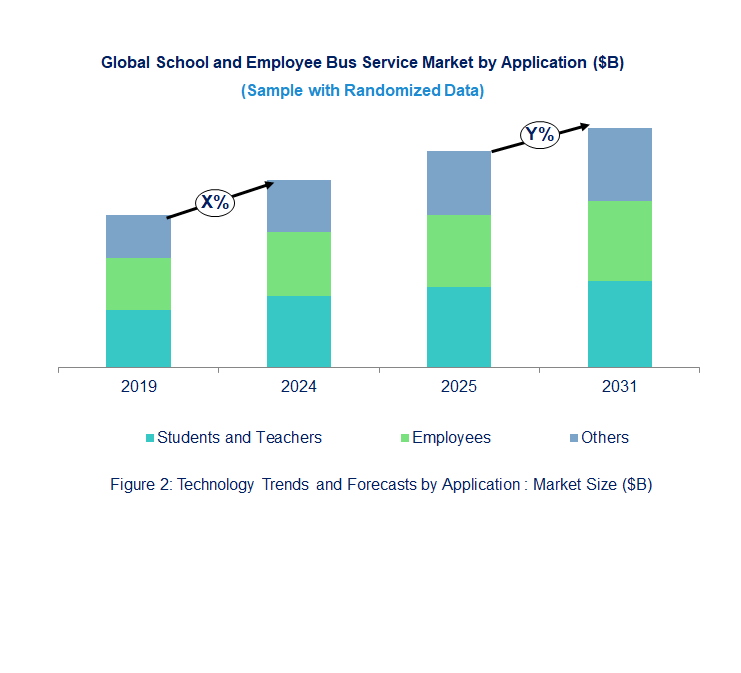
This market report covers trends, opportunities, and forecasts in the global school and employee bus service market to 2031 by technology (mobility as a service (maas) and software as a service (saas)), application (students and teachers, employees, and others), and region (North America, Europe, Asia Pacific, and the Rest of the World)
We'll send your sample report shortly.
• Adoption of MaaS (Mobility as a Service): The integration of MaaS platforms has allowed for more flexible, efficient, and personalized bus services. Schools and companies can now offer customized transport solutions, giving users real-time access to bus schedules, routes, and payment options.
• Bus Fleet Electrification: The changeover from diesel-powered buses to electric vehicles is gaining ground with a growing focus on sustainability objectives and government regulation. Electric buses cut carbon emissions and the cost of operating buses while providing an environment-friendly transport option for school and employee bus services.
• Real-time tracking and analytics with it: Increasingly, advanced GPS and telematics systems are being integrated into bus fleets. Real-time tracking of the buses allows safety and route optimization and reduces delay times while providing data-driven fleet management and efficiency insights.
• On-demand and flexible routes: On-demand bus services are becoming more common, especially in rural or underserved areas. With mobile apps and dynamic routing, passengers can request rides in real-time, and buses are routed efficiently based on demand, providing more flexibility for students and employees.
• Safety Features and Innovations: As safety concerns grow, advanced features such as collision detection systems, automatic braking, and video surveillance are being introduced into more bus services. Such features enhance the overall safety of passengers, ensuring a safer transportation environment for students and employees. The emerging trends are changing the school and employee bus service market to be more efficient, sustainable, and flexible. MaaS, EVs, real-time tracking, and enhanced safety features improve the overall passenger experience while optimizing operational efficiency for service providers.
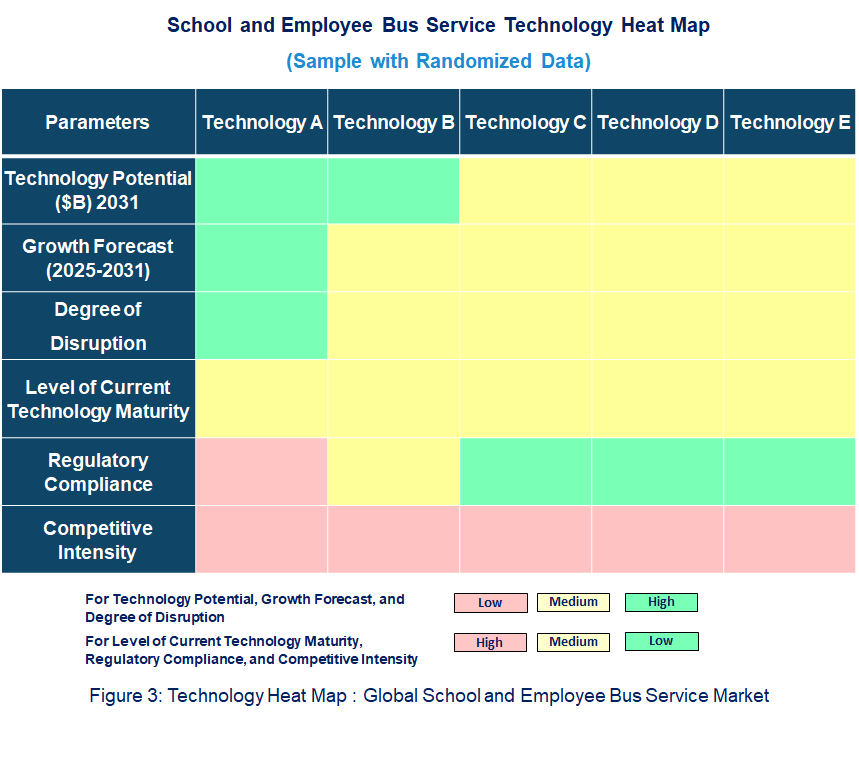
• Technology Potential: Technologies such as GPS tracking, route optimization software, real-time monitoring, and IoT sensors hold great promise to enhance the safety and efficiency of school and employee bus services. With GPS tracking, parents and employers are able to monitor the location of buses in real-time, resulting in reduced anxiety and improvements in punctuality. Route optimization software can help improve fuel efficiency and reduce travel times, while IoT sensors can monitor the conditions of a bus to ensure safety.
• Degree of Disruption The disruption level is moderate because the traditional bus service model is still dominant, and these technologies bring about huge operation improvements. Automation and analytics can help optimize routes for cost reduction and improvement of passenger experience, but still, full adoption is in process.
• Level of Maturity of Current Technology: The technology in this industry is somewhat mature. Already, the sector is utilizing GPS tracking and route optimization, but innovations such as AI-driven predictive maintenance and completely autonomous buses are still at the nascent stage.
• Regulatory Compliance: The regulatory compliance will be high, particularly related to data privacy and safety of the vehicle. All transportation services should follow local regulations as well as DOT on the standards for maintenance and passenger safety in a vehicle.
• FirstGroup Plc: FirstGroup has made a lot of progress in the adoption of electric vehicles in its fleet and the integration of advanced route optimization software. Their efforts to improve operational efficiency and reduce emissions resonate with growing sustainability demands in the transportation sector.
• National Express Group: National Express Group has implemented real-time bus tracking solutions and expanded its MaaS offerings to provide more flexible transport services. Their investments in technology are helping improve the efficiency and reliability of their bus services for both school and employee transportation.
• Student Transportation Inc.: Student Transportation Inc. has concentrated on electrifying its fleet and has introduced modern technologies such as GPS tracking and data analytics to make route management more efficient and the safety features of its services better, making the transportation experience for students safer and greener.
• Transdev: Transdev has led the way on MaaS integration and has been instrumental in expanding the on-demand bus service. With its efforts to provide flexible, personalized transportation solutions for schools and businesses, they are slowly overcoming the diverse needs of people with improved service efficiency.
• North America Central School Bus: North America Central School Bus has introduced advanced telematics systems aimed at improving fleet management and optimizing bus routes. The emphasis of the company on safety innovations and operational efficiency positions it to be a leader in K-12 school transportation.
• Cook-Illinois Corporation: Cook-Illinois has embraced software-driven fleet management systems that have enhanced scheduling and saved costs. Their adoption of electric buses contributes to sustainability goals while ensuring a safer and more reliable service for schools and employees.
• Riteway Bus Service, Inc.: Riteway has introduced real-time tracking systems into its bus fleet, providing improved visibility and operational control. They continue to invest in technology and safety features that assure the reliability of their services and the safety of passengers.
• WE Transport Inc.: WE Transport is now increasing its use of mobile applications for easier bus booking and scheduling. The company is also looking into electric buses for better fuel efficiency and lower emissions.
• Krapf Group: Krapf Group has integrated telematics and route optimization software into its bus operations, improving fuel efficiency and service reliability. Its commitment to using technology to improve fleet management is enhancing its market position in school and employee transportation.
• Birnie Bus Service Inc.: Birnie Bus Service has emphasized improving safety features and environmentally friendly practices. They have developed systems such as real-time tracking and safety cameras to protect students and employees while they are traveling. Such changes show that a school and employee bus service market transformation is ongoing, where a company should stay ahead of the curve through technological adoption, sustainability, and safety to better serve evolving market demands.
• Technological Developments: MaaS platforms, GPS tracking, and electric vehicles changed the bus service market, making it more efficient, safe, and sustainable. These technologies are currently influencing growth in this market. With better flexibility in their transportation options, reliability and cost-effectiveness drive market growth.
• Sustainability Focus: With the increasing focus of governments and schools on sustainability, the tide is turning toward electric buses and other eco-friendly transportation solutions. Driven by regulation and environmental awareness, this shift reduces emissions and cuts operating costs.
• Better Safety Standards: Rising demand for better safety features such as real-time tracking, collision detection, and video surveillance drives innovation in the bus service market. All these technologies help improve the safety of passengers and reduce the chances of accidents, making for a safer transportation environment.
• Expansion of On-Demand Services: Increased on-demand transportation services create a new opportunity for bus service providers. Mobile applications, dynamic routing, and real-time scheduling allow for more personal and efficient services to students and employees. Challenges in the school and employee bus service market include:
• High Capital Investiture: The adoption of electric buses and advanced technology requires significant capital investiture. For many bus operators, the cost of upgrading fleets or implementing new systems is becoming a financial challenge that impacts their ability to stay competitive.
• Compliance: For a bus service provider, regulatory compliance is a huge task to handle. A vast sea of local, state, and federal regulations must be studied and followed to comply with safety standards, environmental regulations, and licensing.
• Infrastructure Limitations: The infrastructure required to support electric buses, such as charging stations and maintenance facilities, is not always readily available. This limitation can hinder the widespread adoption of electric vehicles, especially in rural or underdeveloped areas. The school and employee bus service market is propelled by technological advancements, sustainability trends, and improved safety standards, which enhance operational efficiency and passenger satisfaction. High capital costs, regulatory hurdles, and infrastructure gaps will continue to challenge the market to achieve further growth.
• FirstGroup Plc
• National Express Group
• Student Transportation Inc
• Transdev
• North America Central School Bus
• Cook-Illinois Corporation
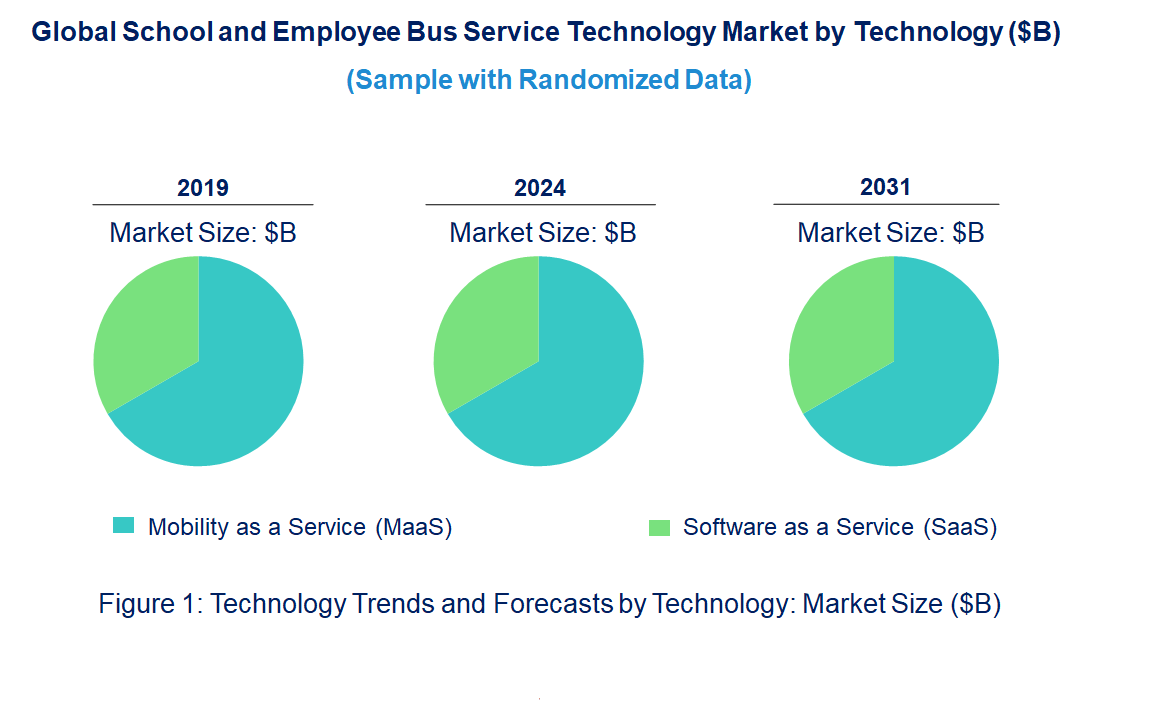
• Technology Readiness by Technology Type for the School and Employee Bus Service Market: MaaS becomes ready in the school and employee bus service market, seeing growing adoption in urban cities but still finding it relatively challenging in rural areas and smaller regions due to infrastructure deficits and varying local regulations. The platforms for MaaS provide the feature of real-time tracking, payment integration, and route optimization, and thus they have high competitive intensity in terms of the presence of giant tech companies and startups. For MaaS, there will be regulatory compliance regarding transportation safety, data security, and the local transportation authority’s compliance with the regulations. SaaS is highly mature with proven applications in fleet management, route planning, and analytics on data. SaaS offers strong competitive advantages in terms of scalability, cost-effectiveness, and integration with other school or business systems. Compliance in SaaS platforms is focused on data protection and ensuring operational safety in transportation services with applications ranging from scheduling to maintenance management.
• Competitive Intensity and Regulatory Compliance of Different Technologies for School and Employee Bus Service Market: MaaS has a highly competitive intensity, with a growing number of tech companies and transport providers competing to offer integrated mobility solutions for school and employee bus services. Competition focuses on user experience, route efficiency, and cost-effectiveness. Regulatory compliance for MaaS requires adherence to local transport and safety regulations, including data privacy laws, passenger rights, and environmental standards. SaaS solutions in this market also face intense competition, particularly in fleet management and operational software, with many vendors offering cloud-based tools. Regulatory compliance for SaaS focuses on data protection, especially student and employee information, and ensuring the safety of transport services. Both technologies must navigate very different regional regulations to be sure that the solutions can be deployed and are thereby legally compliant.
• Potential for Disruption from Various Technologies for School and Employee Bus Service Market: Mobility as a Service (MaaS) has the potential to significantly disrupt the school and employee bus service market by integrating various transport modes into a unified platform, offering on-demand services, route optimization, and real-time tracking. MaaS allows for more flexible and efficient transportation, reducing costs and improving convenience for both students and employees. Software as a Service (SaaS) can complement MaaS by providing cloud-based solutions for fleet management, scheduling, and data analytics, streamlining operations and reducing administrative burdens. SaaS platforms enable easy scalability, better maintenance tracking, and enhanced safety protocols. Together, MaaS and SaaS can provide a comprehensive, efficient, and modern solution to traditional school and employee transportation systems, improving service and customer satisfaction.
• Mobility as a Service (MaaS)
• Software as a Service (SaaS)
• Students and Teachers
• Employees
• Others
• North America
• Europe
• Asia Pacific
• The Rest of the World
• Latest Developments and Innovations in the School and Employee Bus Service Technologies
• Companies / Ecosystems
• Strategic Opportunities by Technology Type


Choose a license that fits your team. Instant PDF delivery.
Prices exclude taxes. Instant delivery. Custom licensing available on request.
Market Report · May 18, 2026
Market Report · May 18, 2026
Market Report · May 18, 2026
Trusted partner for strategic intelligence and business growth


Receive a complimentary market analysis tailored to your industry. Our analysts will identify key growth opportunities and competitive dynamics specific to your business.

Market size, growth rate, and key trend analysis for your specific sector.

Top competitor positioning and market share analysis.

Strategic recommendations backed by data-driven insights.
Get curated market intelligence and competitive moves straight to your inbox.
By subscribing, you agree to receive our monthly insights. Unsubscribe anytime.
Receive a complimentary market analysis tailored to your industry. Our analysts will identify key growth opportunities and competitive dynamics specific to your business.
Market size, growth rate, and key trend analysis for your specific sector.
Top competitor positioning and market share analysis.
Strategic recommendations backed by data-driven insights.
Get curated market intelligence, emerging trends, and competitive moves straight to your inbox each month.
By subscribing, you agree to receive our monthly insights. Unsubscribe anytime.
We'll send your sample report shortly.