
Report Feature
Scandium Market Trends and Forecast
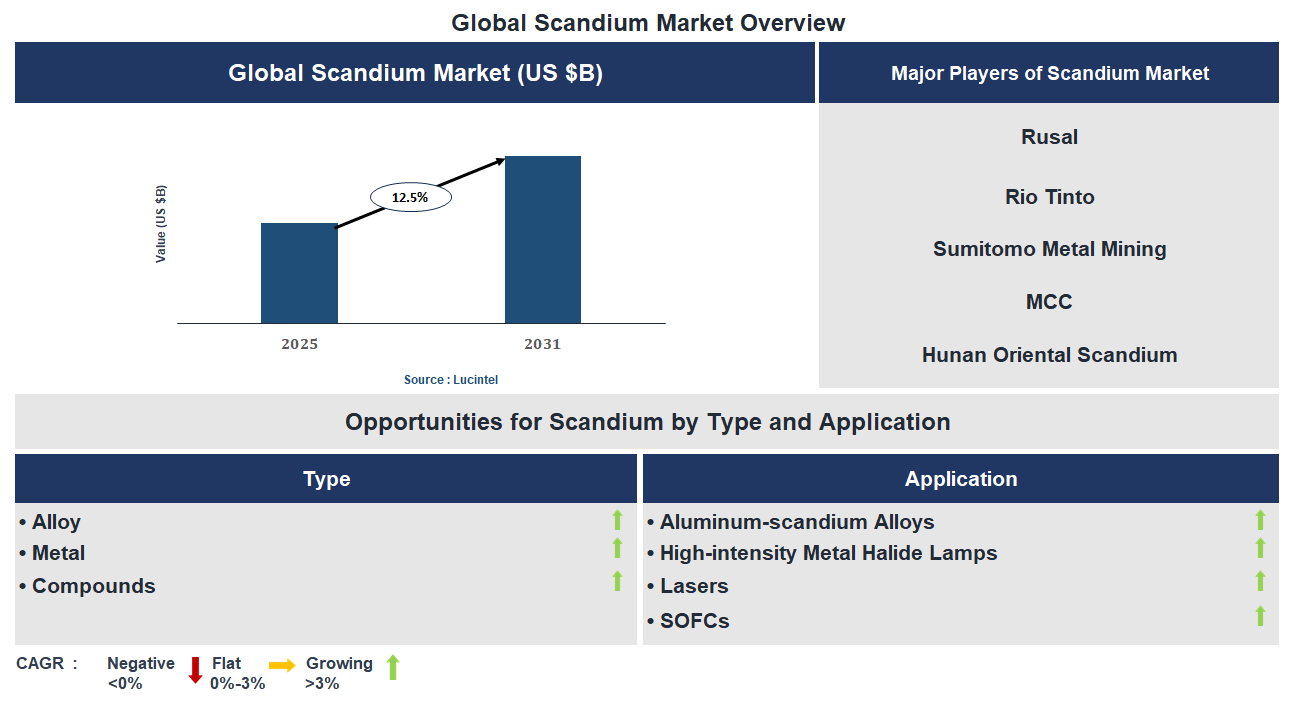
The future of the global scandium market looks promising with opportunities in the aluminum-scandium alloy, high-intensity metal halide lamp, laser, and SOFC markets. The global scandium market is expected to grow with a CAGR of 12.5% from 2025 to 2031. The major drivers for this market are the increasing demand for lightweight aerospace materials, the rising use in advanced battery technologies, and the growing adoption of scandium-based alloys in manufacturing.• Lucintel forecasts that, within the type category, alloy is expected to witness the highest growth over the forecast period.
• Within the application category, aluminum-scandium alloy is expected to witness the highest growth.
• In terms of region, APAC is expected to witness the highest growth over the forecast period. Gain valuable insights for your business decisions with our comprehensive 150+ page report. Sample figures with some insights are shown below.
Emerging Trends in the Scandium Market
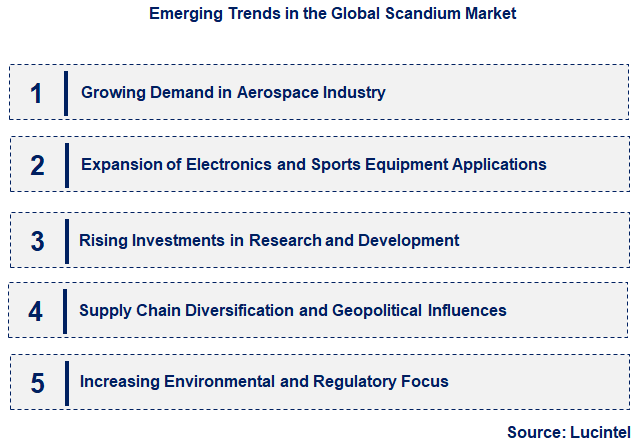
The scandium market is experiencing significant transformation driven by technological advancements, increasing demand in various industries, and evolving regulatory landscapes. As industries such as aerospace, sports equipment, and electronics seek lighter, stronger, and more sustainable materials, scandiums unique properties are gaining recognition. Market players are investing in research and development to unlock new applications, while geopolitical factors influence supply chains. These developments are collectively shaping a dynamic environment that promises growth but also presents challenges related to resource availability and market regulation. Understanding these emerging trends is crucial for stakeholders aiming to capitalize on future opportunities in the scandium market.• Growing Demand in Aerospace Industry: The aerospace sector is increasingly adopting scandium alloys due to their lightweight and high-strength properties, which improve fuel efficiency and performance. This trend is driven by the push for greener, more efficient aircraft and space vehicles. As governments and private companies invest in aerospace innovation, the demand for scandium is expected to rise significantly, making it a critical material for next-generation aircraft and spacecraft. This shift enhances the market’s growth prospects and encourages further research into scandium-based materials.
• Expansion of Electronics and Sports Equipment Applications: Scandiums excellent properties for improving the durability and performance of electronics and sports equipment are fueling market growth. In electronics, scandium is used in high-performance components, while in sports, it enhances the strength and lightness of equipment like tennis rackets and bicycle frames. As consumer demand for high-quality, durable products increases, manufacturers are increasingly incorporating scandium alloys. This trend broadens the application scope of scandium, driving innovation and expanding market opportunities across multiple sectors.
• Rising Investments in Research and Development: Companies and governments are investing heavily in R&D to discover new applications and improve scandium extraction methods. Advances in processing techniques aim to reduce costs and increase supply, addressing current scarcity issues. These efforts are also focused on developing more efficient alloys and composites, which could unlock new markets. The increased R&D activity is expected to lead to technological breakthroughs, making scandium more accessible and affordable, thereby boosting overall market growth and encouraging wider adoption across industries.
• Supply Chain Diversification and Geopolitical Influences: The scarcity of scandium and its concentrated supply in a few regions, primarily China, pose risks to market stability. Recent geopolitical tensions and trade policies are prompting efforts to diversify supply sources and develop domestic production capabilities. This trend aims to reduce dependency on limited sources, stabilize prices, and ensure consistent availability for end-users. As supply chain resilience improves, market confidence is likely to grow, encouraging more investment and international trade, which will shape the future landscape of scandium sourcing and distribution.
• Increasing Environmental and Regulatory Focus: As environmental concerns grow, regulations around mining and processing of rare earth elements, including scandium, are becoming stricter. This trend encourages the development of sustainable extraction and recycling methods, reducing environmental impact. Companies are exploring eco-friendly production techniques and circular economy models to meet regulatory standards and consumer expectations. These initiatives are expected to influence market dynamics by promoting sustainable practices, potentially increasing costs initially but fostering long-term growth through responsible resource management and enhanced market reputation. In summary, these emerging trends are collectively reshaping the scandium market by fostering innovation, diversifying supply, and emphasizing sustainability. They are driving increased adoption across high-growth sectors like aerospace and electronics, while also addressing supply constraints and environmental concerns. As a result, the market is poised for substantial growth, with new opportunities emerging for stakeholders willing to adapt to these evolving dynamics.
Recent Development in the Scandium Market
The scandium market has experienced notable shifts driven by technological advancements, increasing demand in various industries, and geopolitical factors. As industries seek lightweight, durable materials, scandiums unique properties have garnered attention. Recent developments reflect a dynamic landscape where innovation and strategic sourcing are shaping future growth. These changes are influencing supply chains, pricing, and application scopes, making the market more competitive and diverse. Stakeholders are closely monitoring these trends to capitalize on emerging opportunities and mitigate risks associated with resource scarcity and regulatory changes. The following key developments highlight the current trajectory of the scandium market.• Expansion of Production Capacities: Major producers have increased their output to meet rising demand, leading to a more stable supply chain. This expansion reduces scarcity concerns and encourages new applications, particularly in aerospace and sports equipment. It also helps stabilize prices and attracts investment in scandium extraction technologies.
• Technological Innovations in Extraction: New extraction methods, such as solvent extraction and ion exchange, have improved efficiency and reduced environmental impact. These innovations lower production costs and enable more sustainable sourcing, making scandium more accessible for various industries.
• Growing Demand in Aerospace and Defense: The aerospace sectors need for lightweight, high-strength materials has driven increased scandium usage. This demand boosts market growth and encourages research into new alloy formulations, expanding scandiums application scope in defense and space exploration.
• Strategic Stockpiling and Government Initiatives: Governments and industry players are stockpiling scandium to secure supply amid geopolitical tensions. Such initiatives aim to stabilize the market, promote domestic production, and reduce reliance on imports, influencing global trade dynamics.
• Development of Recycling Technologies: Advances in recycling scandium from aluminum scrap and other waste materials have emerged. Recycling reduces dependency on primary sources, lowers costs, and promotes sustainability, thereby expanding the market and supporting circular economy practices. In summary, these developments are making the scandium market more resilient, sustainable, and diversified. Increased production and technological advances are improving supply stability and reducing costs. Growing demand from aerospace and defense sectors is driving innovation and application expansion. Strategic initiatives and recycling efforts are enhancing resource security and environmental sustainability. Collectively, these factors are positioning the scandium market for sustained growth and increased competitiveness in the global materials landscape.
Strategic Growth Opportunities in the Scandium Market
The scandium market is experiencing significant growth driven by increasing demand across various applications such as aerospace, sports equipment, lighting, electronics, and medical devices. As industries seek lightweight, durable, and high-performance materials, scandiums unique properties position it as a strategic resource. Innovations and technological advancements are unlocking new opportunities, making scandium a critical element for future development. Companies and investors are increasingly focusing on expanding production and application scopes to capitalize on this potential. These developments are shaping a dynamic landscape, offering substantial growth prospects and competitive advantages in the global market.• Enhanced performance and weight reduction : Scandiums ability to strengthen aluminum alloys makes it ideal for aerospace applications, leading to lighter aircraft, improved fuel efficiency, and increased payload capacity, thus driving demand in the aerospace sector.
• Improved durability and performance : The use of scandium in sports equipment such as baseball bats, bicycle frames, and tennis rackets enhances strength and flexibility, attracting premium markets and boosting sales through high-performance products.
• Energy-efficient and high-intensity lighting : Incorporating scandium in metal halide lamps results in brighter, more energy-efficient lighting solutions, expanding its application in commercial, industrial, and outdoor lighting markets.
• Advanced electronic components : Scandiums properties are utilized in the development of high-performance electronics, including thin-film coatings and semiconductors, which improve device efficiency and durability, fueling growth in the electronics sector.
• Biocompatible and lightweight materials : The medical industry benefits from scandiums biocompatibility and lightweight nature, used in implants and diagnostic equipment, leading to innovative, high-performance medical solutions. In summary, these key growth opportunities across applications are significantly impacting the scandium market by expanding its usage, enhancing product performance, and driving technological innovation. This diversification is attracting new investments and fostering competitive advantages, positioning scandium as a vital element in future industry developments.
Scandium Market Driver and Challenges
The scandium market is influenced by a variety of technological, economic, and regulatory factors that shape its growth trajectory. Advances in material science and aerospace technology drive demand for scandium, especially in high-performance alloys. Economic conditions, including raw material costs and global trade policies, impact supply chains and pricing. Regulatory frameworks concerning environmental standards and mining regulations also play a crucial role in shaping market dynamics. Additionally, innovations in recycling and alternative materials influence the availability and sustainability of scandium. Understanding these drivers and challenges is essential for stakeholders aiming to capitalize on opportunities and mitigate risks within this niche yet vital market. The factors responsible for driving the scandium market include:• Technological Advancements: The development of high-strength, lightweight aluminum alloys incorporating scandium significantly boosts demand. These alloys are crucial in aerospace, automotive, and sports equipment industries, where performance and weight reduction are critical. Innovations in manufacturing processes, such as additive manufacturing, further enhance scandiums application scope. As research progresses, new uses emerge, expanding market potential. The integration of scandium into advanced materials offers competitive advantages, encouraging increased adoption across various sectors. This technological evolution is expected to sustain long-term growth and attract investments into scandium extraction and processing.
• Growing Aerospace and Defense Sector: The aerospace industry is a major consumer of scandium due to its ability to improve alloy strength and reduce weight. The increasing demand for fuel-efficient aircraft and space exploration initiatives drive the need for lightweight, durable materials. Defense applications also benefit from scandium-enhanced alloys for military aircraft and vehicles. As global aerospace production rises, so does the consumption of scandium, creating a positive market outlook. Governments and private companies investing in aerospace innovation further propel this demand, making the sector a key driver for market expansion.
• Rising Demand for Sports Equipment and Automotive Applications: Scandiums unique properties are increasingly utilized in sports equipment such as bicycle frames, golf clubs, and tennis rackets, where lightweight and strength are valued. The automotive industry is also adopting scandium-aluminum alloys to meet stringent fuel efficiency and emission standards. The push towards electric vehicles and lightweight construction materials amplifies this trend. As consumers and manufacturers prioritize performance and sustainability, the demand for scandium in these sectors is expected to grow steadily, supporting market development and diversification.
• Environmental Regulations and Sustainability Initiatives: Stricter environmental policies and sustainability goals influence the scandium market by promoting responsible mining and recycling practices. Governments are implementing regulations to minimize ecological impact, encouraging the development of eco-friendly extraction methods and secondary sources. Recycling of scandium from industrial waste and end-of-life products is gaining importance, reducing reliance on primary mining. These initiatives not only ensure compliance but also enhance the markets sustainability profile, attracting environmentally conscious investors and consumers. Such regulatory frameworks are shaping the supply chain and fostering innovation in sustainable scandium sourcing.
• Increasing Investment in R&D and Market Expansion: Significant investments by governments, research institutions, and private companies are fueling innovation in scandium applications. R&D efforts focus on improving extraction techniques, alloy formulations, and recycling processes, which lower costs and expand usability. Market expansion strategies include exploring new geographic regions and developing value-added products. These investments facilitate technological breakthroughs, reduce barriers to entry, and open new markets. As a result, the overall market outlook becomes more optimistic, with increased competitiveness and diversified application areas, supporting sustained growth in the long term. The challenges facing this scandium market include:
• Limited Raw Material Availability: Scandium is a rare element with limited primary sources, primarily found as a byproduct of uranium and titanium mining. The scarcity of high-grade deposits constrains supply, leading to high extraction costs and market volatility. This limited availability hampers large-scale production and can cause price fluctuations, affecting end-user industries. Additionally, geopolitical factors and mining restrictions may further restrict access to scandium resources. Overcoming these supply constraints requires investment in recycling technologies and alternative sourcing methods, which are still in developmental stages, posing a significant challenge to market stability.
• High Production and Processing Costs: The extraction and processing of scandium are complex and expensive, involving sophisticated techniques to isolate and purify the element. These high costs limit profitability and make scandium-based products less competitive compared to alternatives. The need for specialized equipment and skilled labor adds to operational expenses. Consequently, manufacturers face pressure to optimize processes and reduce costs, which is challenging given the elements scarcity and the technical complexity involved. These financial barriers restrict market growth, especially for smaller players, and may slow down innovation and adoption.
• Regulatory and Environmental Challenges: Stringent environmental regulations governing mining activities and waste management pose hurdles for scandium producers. Compliance costs increase, and delays in obtaining permits can disrupt supply chains. Environmental concerns related to mining operations, such as habitat destruction and pollution, necessitate sustainable practices that are often costly and technically demanding. Additionally, international trade policies and export restrictions can impact market access and pricing. Navigating these regulatory landscapes requires significant investment and strategic planning, which can hinder rapid market expansion and innovation efforts. In summary, the scandium market is driven by technological innovations, expanding aerospace and automotive sectors, and sustainability initiatives, all of which foster growth and diversification. However, limited raw material availability, high processing costs, and regulatory challenges pose significant hurdles. These factors collectively influence market stability, pricing, and supply chain dynamics. While opportunities for expansion are substantial, addressing supply constraints and regulatory complexities is crucial for sustainable growth. Overall, the markets future depends on technological advancements, strategic resource management, and regulatory compliance, shaping a cautiously optimistic outlook.
List of Scandium Companies
Companies in the market compete on the basis of product quality offered. Major players in this market focus on expanding their manufacturing facilities, R&D investments, infrastructural development, and leverage integration opportunities across the value chain. With these strategies scandium companies cater increasing demand, ensure competitive effectiveness, develop innovative products & technologies, reduce production costs, and expand their customer base. Some of the scandium companies profiled in this report include-• Rusal
• Rio Tinto
• Sumitomo Metal Mining
• MCC
• Hunan Oriental Scandium
• Rongjia Scandium
• Huizhou Top Metal Materials
Scandium Market by Segment
The study includes a forecast for the global scandium market by type, application, and region.Scandium Market by Type [Value from 2019 to 2031]:
• Alloy
• Metal
• Compounds
Scandium Market by Application [Value from 2019 to 2031]:
• Aluminum-scandium Alloys
• High-intensity Metal Halide Lamps
• Lasers
• SOFCs
Scandium Market by Region [Value from 2019 to 2031]:
• North America
• Europe
• Asia Pacific
• The Rest of the World
Country Wise Outlook for the Scandium Market
The scandium market has experienced notable shifts driven by technological advancements, increased demand in aerospace and automotive industries, and evolving regulatory landscapes. As countries seek to leverage lightweight, high-strength materials, the strategic importance of scandium has grown. Innovations in extraction and processing methods have also contributed to market expansion, while geopolitical factors influence supply chains. The following summaries highlight recent developments in the United States, China, Germany, India, and Japan, reflecting their unique contributions and challenges within the global scandium landscape.• United States: The US has increased investments in domestic scandium extraction and processing facilities, aiming to reduce reliance on imports. Research institutions and government agencies are collaborating on innovative extraction techniques, and several startups are exploring new applications in aerospace and sports equipment, boosting local production and technological capabilities.
• China: China remains the dominant player in scandium production, expanding its mining operations and refining capacity. The government has prioritized rare earth element development, including scandium, to support its high-tech industries. Recent policies aim to stabilize supply and promote domestic consumption, while export controls influence global trade dynamics.
• Germany: Germany has focused on integrating scandium into its automotive and aerospace sectors, emphasizing lightweight materials for electric vehicles and aircraft. Several research projects are underway to develop scandium-aluminum alloys, and collaborations between industry and academia are fostering innovation in processing techniques.
• India: India is exploring domestic scandium resources and investing in research to develop extraction methods suitable for its mineral deposits. The government recognizes scandiums potential in defense and aerospace sectors and is encouraging public-private partnerships to establish a sustainable supply chain.
• Japan: Japan is advancing in the development of scandium-based materials for electronics and energy storage applications. The country is also investing in recycling technologies to recover scandium from waste products, aiming to create a circular economy and reduce dependency on imports, while fostering innovation in high-performance materials.

Features of the Global Scandium Market
Market Size Estimates: Scandium market size estimation in terms of value ($B). Trend and Forecast Analysis: Market trends (2019 to 2024) and forecast (2025 to 2031) by various segments and regions. Segmentation Analysis: Scandium market size by type, application, and region in terms of value ($B). Regional Analysis: Scandium market breakdown by North America, Europe, Asia Pacific, and Rest of the World. Growth Opportunities: Analysis of growth opportunities in different types, applications, and regions for the scandium market. Strategic Analysis: This includes M&A, new product development, and competitive landscape of the scandium market. Analysis of competitive intensity of the industry based on Porter’s Five Forces model.
FAQ
Q1. What is the growth forecast for scandium market? Answer: The global scandium market is expected to grow with a CAGR of 12.5% from 2025 to 2031. Q2. What are the major drivers influencing the growth of the scandium market? Answer: The major drivers for this market are the increasing demand for lightweight aerospace materials, the rising use in advanced battery technologies, and the growing adoption of scandium-based alloys in manufacturing. Q3. What are the major segments for scandium market? Answer: The future of the scandium market looks promising with opportunities in the aluminum-scandium alloy, high-intensity metal halide lamp, laser, and SOFC markets. Q4. Who are the key scandium market companies? Answer: Some of the key scandium companies are as follows:• Rusal
• Rio Tinto
• Sumitomo Metal Mining
• MCC
• Hunan Oriental Scandium
• Rongjia Scandium
• Huizhou Top Metal Materials Q5. Which scandium market segment will be the largest in future? Answer: Lucintel forecasts that, within the type category, alloy is expected to witness the highest growth over the forecast period. Q6. In scandium market, which region is expected to be the largest in next 5 years? Answer: In terms of region, APAC is expected to witness the highest growth over the forecast period. Q7. Do we receive customization in this report? Answer: Yes, Lucintel provides 10% customization without any additional cost.
Table of Contents
List of Figures
List of Tables
Methodology
- In-depth interviews of the major players in this market
- Detailed secondary research from competitors’ financial statements and published data
- Extensive searches of published works, market, and database information pertaining to industry news, company press releases, and customer intentions
- A compilation of the experiences, judgments, and insights of Lucintel’s professionals, who have analyzed and tracked this market over the years.


Buy Now
Choose a license that fits your team. Instant PDF delivery.
Prices exclude taxes. Instant delivery. Custom licensing available on request.
Key Questions
- • What are some of the most promising, high-growth opportunities for the scandium market by type (alloy, metal, and compounds), application (aluminum-scandium alloys, high-intensity metal halide lamps, lasers, and SOFCs), and region (North America, Europe, Asia Pacific, and the Rest of the World)?
- • Which segments will grow at a faster pace and why?
- • Which region will grow at a faster pace and why?
- • What are the key factors affecting market dynamics? What are the key challenges and business risks in this market?
- • What are the business risks and competitive threats in this market?
- • What are the emerging trends in this market and the reasons behind them?
- • What are some of the changing demands of customers in the market?
- • What are the new developments in the market? Which companies are leading these developments?
- • Who are the major players in this market? What strategic initiatives are key players pursuing for business growth?
- • What are some of the competing products in this market and how big of a threat do they pose for loss of market share by material or product substitution?
- • What M&A activity has occurred in the last 5 years and what has its impact been on the industry? For any questions related to Scandium Market, Scandium Market Size, Scandium Market Growth, Scandium Market Analysis, Scandium Market Report, Scandium Market Share, Scandium Market Trends, Scandium Market Forecast, Scandium Companies, write Lucintel analyst at email: helpdesk@lucintel.com. We will be glad to get back to you soon.


