
Market Report · July 22, 2026

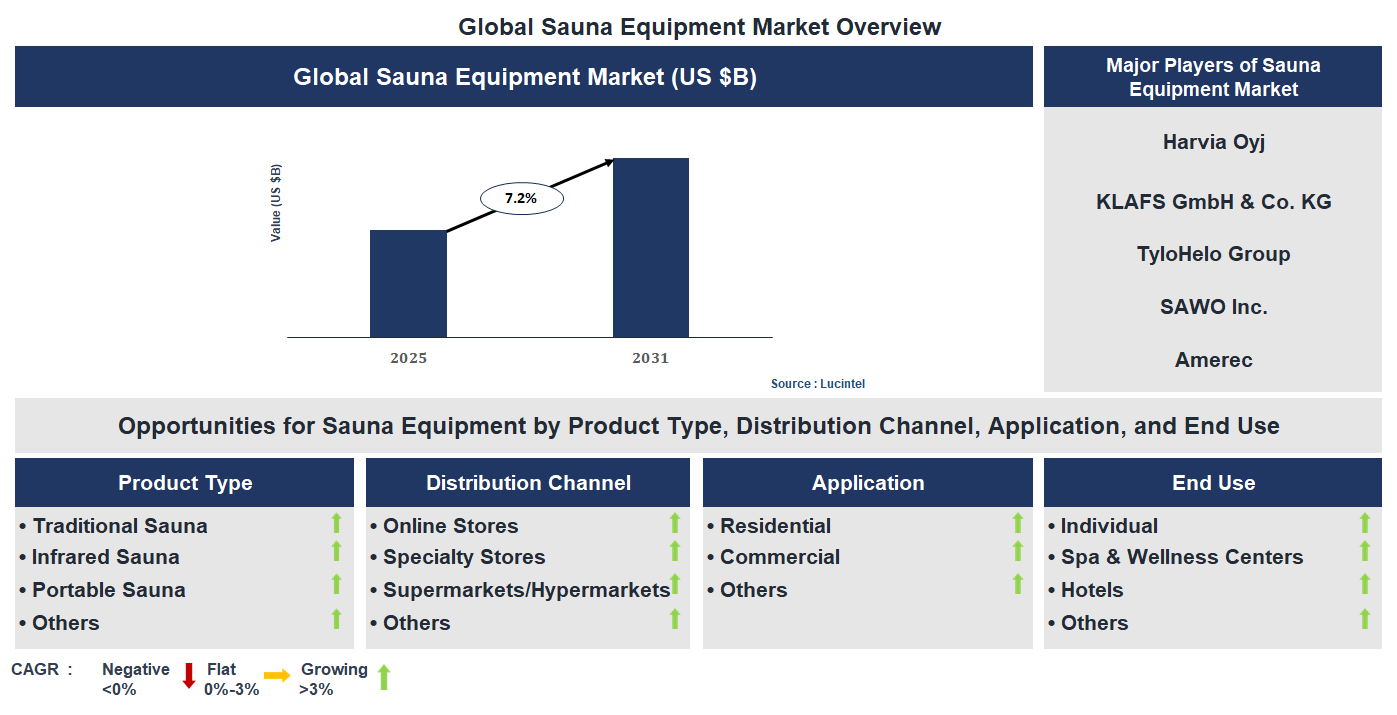
Key data points: The growth forecast = 7.2% annually for the next 7 years. Scroll below to get more insights. This market report covers trends, opportunities and forecasts in sauna equipment market to 2031 by product type (traditional sauna, infrared sauna, portable sauna, and others), distribution channel (online stores, specialty stores, supermarkets/hypermarkets, and others), application (residential, commercial, and others), end use (individual, spa & wellness centers, hotels, and others), and region (North America, Europe, Asia Pacific, and the Rest of the World)
We'll send your sample report shortly.
• Lucintel forecasts that, within the product type category, traditional sauna is expected to witness the highest growth over the forecast period.
• Within the application category, residential is expected to witness higher growth.
• In terms of region, North America is expected to witness the highest growth over the forecast period. Gain valuable insights for your business decisions with our comprehensive 150+ page report. Sample figures with some insights are shown below.
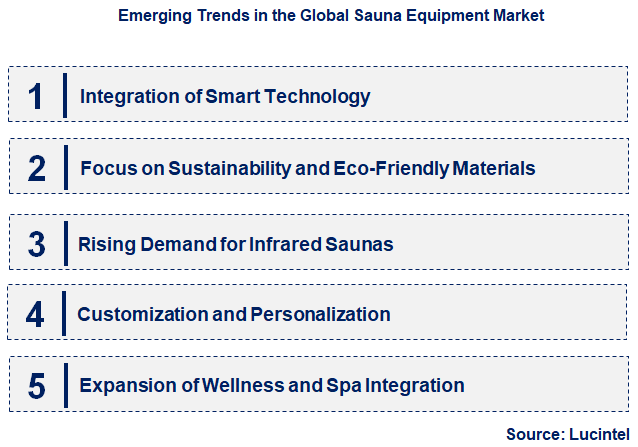
• Integration of Smart Technology: The adoption of IoT-enabled sauna equipment allows users to control and customize their sauna experience remotely via smartphones or voice commands. This trend enhances user convenience, energy efficiency, and safety, making sauna sessions more personalized and accessible. Manufacturers are incorporating features like automated temperature adjustments, usage tracking, and maintenance alerts, which improve overall user experience and operational efficiency. As smart technology becomes more affordable and widespread, it is expected to significantly influence product development and consumer preferences in the sauna equipment market.
• Focus on Sustainability and Eco-Friendly Materials: Consumers are increasingly prioritizing environmentally sustainable products, prompting manufacturers to adopt eco-friendly materials and energy-efficient designs. This includes the use of renewable wood sources, low-energy heating systems, and recyclable components. The shift towards sustainability not only reduces the environmental footprint but also appeals to eco-conscious consumers, providing a competitive edge. Companies investing in green technologies and sustainable practices are likely to see increased brand loyalty and market share, aligning with global efforts to combat climate change and promote responsible consumption.
• Rising Demand for Infrared Saunas: Infrared sauna technology is gaining popularity due to its perceived health benefits, such as better detoxification, pain relief, and relaxation, often at lower temperatures and shorter durations than traditional saunas. This trend is driven by health-conscious consumers seeking effective wellness solutions that fit into busy lifestyles. The compact and portable nature of infrared saunas also appeals to residential users and small commercial establishments. As awareness and acceptance grow, the infrared segment is expected to expand rapidly, influencing product innovation and market segmentation strategies.
• Customization and Personalization: Consumers are seeking tailored sauna experiences that cater to individual preferences and health needs. This includes adjustable temperature controls, personalized lighting, aromatherapy options, and ergonomic designs. Manufacturers are offering modular and customizable units to meet diverse consumer demands, enhancing user satisfaction and engagement. The trend towards personalization is also driven by the desire for unique wellness experiences and the integration of digital interfaces for intuitive control. This shift is transforming product offerings and marketing strategies within the market.
• Expansion of Wellness and Spa Integration: The integration of sauna equipment into broader wellness and spa facilities is a significant trend. This includes combining saunas with other health services such as massage, meditation, and fitness programs. The trend is fueled by the growing global wellness industry and the increasing popularity of holistic health approaches. Spa operators and wellness centers are investing in advanced sauna solutions to attract clients seeking comprehensive health benefits. This integration enhances the value proposition of sauna equipment, driving market growth and encouraging innovation in multifunctional wellness spaces. In summary, these emerging trends—smart technology integration, sustainability, infrared sauna popularity, customization, and wellness integration—are collectively reshaping the sauna equipment market. They are driving innovation, expanding consumer choices, and emphasizing health and sustainability, ultimately leading to a more dynamic and competitive industry landscape.
• Technological Innovations: Integration of smart technology and IoT in sauna equipment enhances user experience by enabling remote control, personalized settings, and energy efficiency, thereby attracting tech-savvy consumers and expanding market reach.
• Eco-Friendly Products: Growing demand for sustainable and energy-efficient sauna equipment has led manufacturers to develop eco-friendly materials and energy-saving features, reducing environmental impact and appealing to environmentally conscious buyers.
• Product Diversification: Companies are expanding their product portfolios to include portable, infrared, and custom-designed saunas, catering to diverse consumer preferences and increasing market penetration across different segments.
• Market Expansion in Emerging Regions: Increasing adoption of wellness practices in Asia-Pacific and Latin America is driving market growth, with local manufacturers entering the space and global players expanding their distribution networks.
• Regulatory and Safety Standards: Implementation of stricter safety and quality standards worldwide is prompting manufacturers to enhance product safety features, ensuring compliance and building consumer trust, which positively impacts market stability. In summary, these developments are significantly impacting the sauna equipment market by fostering innovation, promoting sustainability, expanding regional reach, and emphasizing safety. They are enabling companies to better meet consumer demands, differentiate their offerings, and sustain growth in a competitive landscape.
• Residential Use: Growing health awareness and desire for home wellness solutions are driving demand for residential sauna equipment. Consumers prefer private, customizable wellness spaces, leading to increased sales of compact, easy-to-install sauna units. This trend enhances market penetration in the residential sector, offering convenience and personalized health benefits, and fueling overall market growth.
• Commercial Wellness Centers: The expansion of gyms, spas, and wellness centers is boosting demand for commercial-grade sauna equipment. These facilities seek advanced, durable, and energy-efficient solutions to attract clients and enhance their service offerings. This growth opportunity supports the development of innovative, high-performance saunas, strengthening the commercial segment and increasing industry revenue.
• Hospitality Industry: Hotels and resorts are increasingly integrating sauna facilities to enhance guest experiences. The demand for luxurious, state-of-the-art sauna equipment in hospitality settings is rising, driven by the need for differentiation and premium services. This trend opens avenues for specialized, high-end sauna solutions, expanding market share within the hospitality sector.
• Healthcare and Rehabilitation: Saunas are gaining recognition for their therapeutic benefits, leading to increased adoption in healthcare and rehabilitation centers. These facilities utilize specialized sauna equipment for physical therapy, stress relief, and wellness programs. This application broadens the market scope, encouraging innovation in medical-grade sauna solutions and promoting health-focused growth.
• Portable and Personal Saunas: The demand for portable, easy-to-use sauna units is increasing among fitness enthusiasts and travelers. These compact devices offer convenience and flexibility, catering to a broader consumer base. The rise of personal wellness devices fosters market diversification, enabling companies to tap into new customer segments and expand their reach. In summary, these growth opportunities are significantly impacting the sauna equipment market by diversifying applications, encouraging innovation, and expanding consumer access. As demand across residential, commercial, hospitality, healthcare, and portable segments grows, the market is poised for sustained expansion, driven by evolving consumer preferences and technological advancements.
• Technological Innovation: The integration of smart technology and energy-efficient systems has revolutionized sauna equipment, making products more user-friendly, customizable, and environmentally sustainable. These innovations attract health-conscious consumers seeking advanced features, thereby expanding market reach. Manufacturers investing in R&D can differentiate their offerings, leading to increased sales and market share. The adoption of IoT-enabled devices allows remote control and monitoring, enhancing user experience and operational efficiency. As technology continues to evolve, the market is expected to see further growth driven by innovative product development and improved functionality.
• Rising Health and Wellness Trends: Increasing awareness about health, fitness, and wellness has significantly contributed to the demand for sauna equipment. Consumers are seeking natural and holistic methods to improve their well-being, such as detoxification, stress relief, and skin health, which saunas provide. The growing popularity of spa and wellness centers further fuels demand, as these facilities incorporate advanced sauna solutions to attract clients. Additionally, the trend towards personalized health routines encourages the adoption of home sauna units, expanding the market beyond commercial spaces. This shift towards health-centric lifestyles is expected to sustain long-term growth in the market.
• Economic Growth and Disposable Income: Economic stability and rising disposable incomes in key regions have increased consumers purchasing power, enabling more households and commercial establishments to invest in sauna equipment. As economies grow, there is a higher demand for luxury and wellness products, including high-end sauna units with advanced features. This economic upliftment also encourages commercial investments in spa and wellness centers, boosting market expansion. Furthermore, favorable financing options and competitive pricing strategies make sauna equipment more accessible, broadening the customer base and accelerating market growth.
• Regulatory Standards and Certifications: Stringent safety, quality, and environmental regulations influence the manufacturing and marketing of sauna equipment. Compliance with standards such as CE, UL, and ISO ensures product safety and reliability, building consumer trust and brand reputation. Regulatory frameworks also promote innovation by encouraging manufacturers to develop eco-friendly and energy-efficient products. However, navigating these standards can pose challenges for smaller players due to compliance costs. Overall, robust regulatory environments help maintain market integrity and ensure consumer safety, fostering sustainable growth.
• Market Expansion and Urbanization: Rapid urbanization and the expansion of residential and commercial infrastructure create new opportunities for sauna equipment. The increasing number of luxury apartments, hotels, and wellness centers in urban areas drives demand for modern, space-efficient sauna solutions. Additionally, the trend towards integrating wellness amenities into residential complexes enhances market prospects. Urban consumers seek convenient, high-quality wellness options, prompting developers and service providers to invest in advanced sauna equipment. This expansion into emerging markets and urban settings is expected to significantly contribute to the overall growth trajectory of the market. The challenges in the sauna equipment market are:
• High Manufacturing and Installation Costs: The production of advanced sauna equipment involves significant costs related to high-quality materials, innovative technology, and compliance with safety standards. Installation expenses, especially for commercial setups, can be substantial, deterring small and medium-sized enterprises from entering the market. These costs can also lead to higher retail prices, limiting affordability for some consumers. As a result, market growth may be constrained by price sensitivity, particularly in price-competitive regions, and manufacturers must balance quality with cost-effectiveness to sustain profitability.
• Regulatory and Certification Complexities: Navigating diverse regulatory requirements across different regions poses a considerable challenge for market players. Compliance with safety, environmental, and energy efficiency standards often involves lengthy approval processes and additional costs. Variations in standards can hinder product standardization and complicate international trade. Smaller companies may struggle to meet these requirements, limiting their market entry and expansion capabilities. Ensuring ongoing compliance while innovating remains a critical challenge that could slow down market growth and product development.
• Market Saturation and Competition: The increasing number of players and product offerings has led to a highly competitive environment, resulting in market saturation in developed regions. Differentiating products and maintaining market share becomes difficult, especially with price wars and commoditization. Consumer preferences are shifting towards customized and smart sauna solutions, requiring continuous innovation and marketing efforts. Additionally, the threat of new entrants and substitute wellness products intensifies competition, potentially limiting profit margins and slowing overall market expansion. In summary, the sauna equipment market is driven by technological advancements, health trends, economic growth, regulatory standards, and urbanization, which collectively foster expansion and innovation. However, high costs, regulatory complexities, and intense competition pose significant challenges that could hinder growth. The markets future depends on how effectively stakeholders can leverage technological and economic opportunities while navigating regulatory and competitive hurdles. Overall, the market is poised for growth, provided these drivers are maximized and challenges are managed strategically.
• Harvia Oyj
• KLAFS GmbH & Co. KG
• TyloHelo Group
• SAWO Inc.
• Amerec
• Finnleo Sauna and Steam
• Helo Ltd.
• Almost Heaven Saunas
• Sunlighten
• Clearlight Infrared Saunas
• Traditional Sauna
• Infrared Sauna
• Portable Sauna
• Others
• Online Stores
• Specialty Stores
• Supermarkets/Hypermarkets
• Others
• Residential
• Commercial
• Others
• Individual
• Spa & Wellness Centers
• Hotels
• Others
• North America
• Europe
• Asia Pacific
• The Rest of the World
• United States: The US sauna equipment market has seen rapid growth, driven by rising health awareness and a shift towards home wellness solutions. Innovations include smart saunas with app connectivity and energy-efficient models. Major companies are expanding product lines to include infrared and traditional steam saunas, catering to diverse consumer preferences. The market also benefits from increased adoption of wellness technology and a focus on eco-friendly materials, with online retail channels boosting accessibility and sales.
• China: Chinas sauna equipment market is expanding swiftly, fueled by urbanization and a growing middle class seeking luxury wellness experiences. Local manufacturers are investing in advanced manufacturing techniques and innovative designs. The demand for infrared saunas is rising, alongside traditional models, as consumers prioritize health benefits. Government initiatives promoting health and wellness are further supporting market growth. E-commerce platforms are playing a crucial role in distribution, making sauna products more accessible across the country.
• Germany: The German sauna equipment market emphasizes quality, sustainability, and energy efficiency. Consumers prefer eco-friendly and durable products, prompting manufacturers to innovate with sustainable materials and energy-saving technologies. The market is characterized by a strong presence of premium brands offering customized solutions. Wellness trends such as biohacking and holistic health are influencing product development. Retail outlets and online channels are equally important, with a focus on educating consumers about health benefits and sustainable practices.
• India: The Indian sauna equipment market is emerging, with increasing awareness of health and wellness benefits. Urban middle-class consumers are seeking luxury and relaxation solutions, leading to a rise in demand for infrared and traditional saunas. Local manufacturers are entering the market, offering affordable and innovative products. The growth is supported by rising disposable incomes, wellness tourism, and a shift towards premium lifestyle products. E-commerce platforms are expanding their reach, making sauna equipment more accessible to a broader audience.
• Japan: Japans sauna equipment market is characterized by technological innovation and a focus on health benefits. Consumers prefer compact, energy-efficient models suitable for small living spaces. The market is driven by aging populations seeking wellness solutions and a cultural affinity for relaxation practices. Smart sauna systems with customizable features are gaining popularity. Sustainability and eco-friendliness are also important, with manufacturers adopting environmentally conscious materials. Retail and online channels are both vital, with a focus on integrating traditional and modern wellness practices.


• Harvia Oyj
• KLAFS GmbH & Co. KG
• TyloHelo Group
• SAWO Inc.
• Amerec
• Finnleo Sauna and Steam
• Helo Ltd.
• Almost Heaven Saunas
• Sunlighten
• Clearlight Infrared Saunas Q5. Which sauna equipment market segment will be the largest in future? Answer: Lucintel forecasts that, within the product type category, traditional sauna is expected to witness the highest growth over the forecast period. Q6. In sauna equipment market, which region is expected to be the largest in next 5 years? Answer: In terms of region, North America is expected to witness the highest growth over the forecast period. Q7. Do we receive customization in this report? Answer: Yes, Lucintel provides 10% customization without any additional cost.


Choose a license that fits your team. Instant PDF delivery.
Prices exclude taxes. Instant delivery. Custom licensing available on request.
Market Report · July 22, 2026
Market Report · July 16, 2026
Market Report · May 18, 2026
Trusted partner for strategic intelligence and business growth


Receive a complimentary market analysis tailored to your industry. Our analysts will identify key growth opportunities and competitive dynamics specific to your business.

Market size, growth rate, and key trend analysis for your specific sector.

Top competitor positioning and market share analysis.

Strategic recommendations backed by data-driven insights.
Get curated market intelligence and competitive moves straight to your inbox.
By subscribing, you agree to receive our monthly insights. Unsubscribe anytime.
Receive a complimentary market analysis tailored to your industry. Our analysts will identify key growth opportunities and competitive dynamics specific to your business.
Market size, growth rate, and key trend analysis for your specific sector.
Top competitor positioning and market share analysis.
Strategic recommendations backed by data-driven insights.
Get curated market intelligence, emerging trends, and competitive moves straight to your inbox each month.
By subscribing, you agree to receive our monthly insights. Unsubscribe anytime.
We'll send your sample report shortly.