
Report Feature
Satellite Rocket Launcher Market Trends and Forecast
The technologies used within the satellite rocket launcher market are undergoing drastic transformation due to a shift from conventional chemical propulsion to non-conventional propulsion systems, including advanced electric propulsion and green propellants. This shift is driven by the goal of enhancing sustainability and efficiency, as such technologies can deploy satellites cost-effectively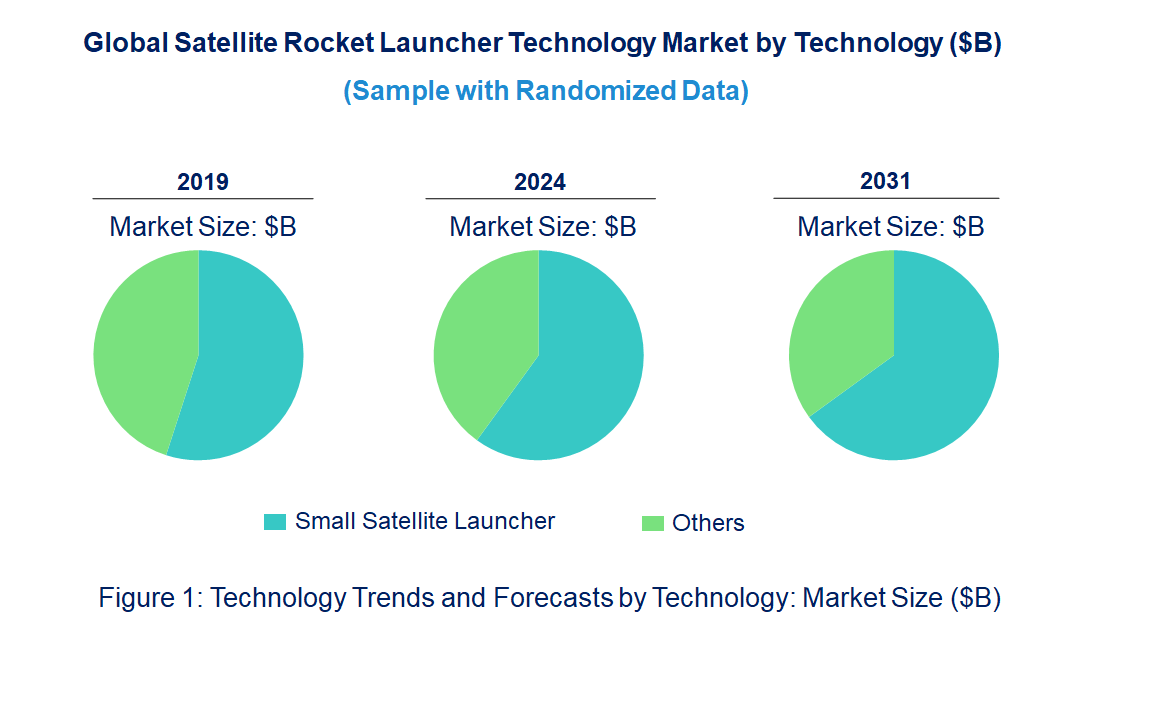
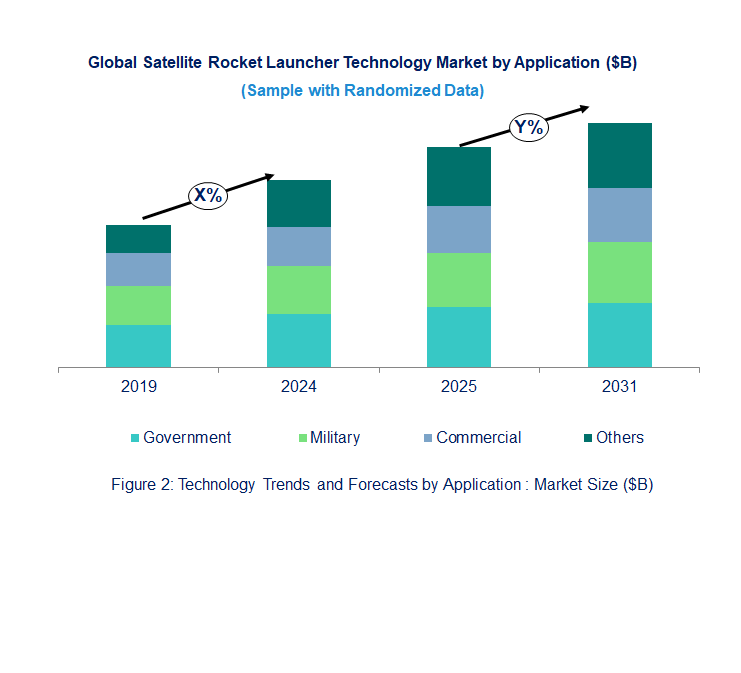
Emerging Trends in the Satellite Rocket Launcher Market
Advances in technology and shifts in demand from government, military, and commercial sectors have led to the evolution of the satellite rocket launcher market. This rapidly emerging market is shaping satellite launches into more efficient, cost-effective, and sustainable activities. Below are five key trends:• Miniaturization of Satellites and Launch Vehicles: The increasing prevalence of small satellites is driving the demand for smaller, more affordable launch systems. This trend is enabling greater flexibility and more frequent satellite deployment.
• Reusable Launch Systems: Companies are investing in reusable rocket technologies to reduce the cost per launch. The success of reusable systems, such as SpaceX’s Falcon series, is pushing the industry toward more sustainable and economical practices.
• Green Propellants and Electric Propulsion: Green propellants and electric propulsion systems aim to reduce emissions and burn less fuel. Both technologies align with environmental sustainability models.
• Private Sector Involvement: Private companies are now making significant contributions to satellite launches. This involvement fosters greater innovation, increases competition, and reduces reliance on government-backed space programs.
• Hybrid and Multi-stage Launch Vehicles: Progress in hybrid propulsion systems, which combine solid and liquid fuels, enhances performance and flexibility in satellite launches, especially for smaller payloads across multiple orbits. These trends demonstrate that the satellite launch industry is undergoing a transformation, driven by technology, making it more sustainable, cost-effective, and versatile in launching satellites.
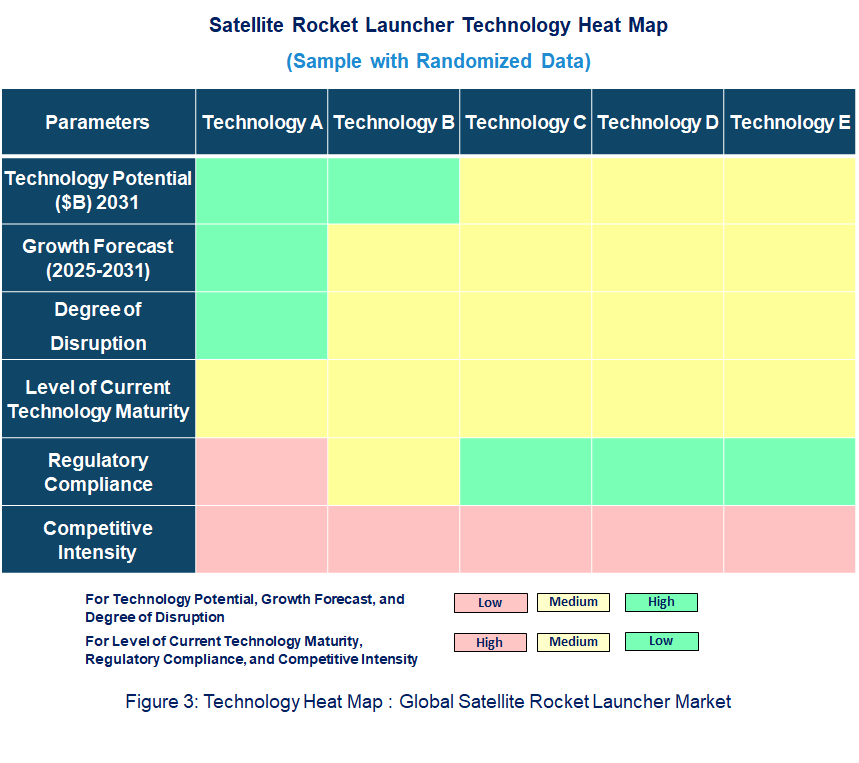
Satellite Rocket Launcher Market : Industry Potential, Technological Development, and Compliance Considerations
The satellite rocket launcher market is advancing rapidly, driven by emerging technologies and the demand for cost-effective space exploration. This market encompasses technologies related to launch vehicles, propulsion systems, and advanced materials.• Technology Potential: The potential of satellite rocket launchers is immense, as they offer the ability to deploy satellites in low Earth orbit (LEO) or beyond, supporting telecommunications, Earth observation, and national security. Innovations such as reusable rockets, hybrid propulsion, and miniaturization are expanding capabilities and lowering costs.
• Degree of Disruption: The market is experiencing disruption through private sector involvement, led by companies like SpaceX and Blue Origin. These disruptors are introducing reusable rockets, drastically reducing launch costs, and increasing access to space for commercial and government missions.
• Level of Current Technology Maturity: Rocket technology is relatively mature, with major players achieving frequent, successful launches. However, advancements in rocket reusability and sustainable fuel alternatives are still in the developmental stage.
• Regulatory Compliance: The satellite rocket launcher market is tightly regulated, with agencies like NASA, the FAA, and the ESA overseeing safety, environmental impact, and national security concerns. Compliance with international treaties and space debris mitigation protocols is a significant challenge. The satellite rocket launcher market holds great promise, with ongoing technological advancements and regulatory hurdles shaping its future.
Recent Technological development in Satellite Rocket Launcher Market by Key Players
Major players, including Lockheed Martin, General Dynamics, Northrop Grumman, Launcher, and Instalaza, have made several key developments in the satellite rocket launcher market. These developments will continue to drive innovation and competition in the market.• Lockheed Martin: Lockheed Martin is improving its launch capabilities with the Atlas V rocket, which is transitioning to more efficient and flexible models for government and commercial satellite launches. The company expects a significant cost reduction through the integration of reusable technologies.
• General Dynamics: General Dynamics has recently partnered with commercial companies for small satellite launchers, contributing to the growth of the micro-launchers market. These partnerships have strengthened the company’s position in developing efficient, low-cost solutions for small satellite constellations.
• Northrop Grumman: Northrop Grumman has solidified its presence in the satellite launch market due to its acquisition of Orbital ATK. Its Pegasus rocket is being upgraded, and with an increasing focus on reusability and performance for low Earth orbit satellite launches, this enhances its ability to offer competitive pricing for smaller payloads.
• Launcher: The new startup Launcher has gained significant attention with its Orbiter rocket, designed for small satellite launches. The company focuses on simplifying the rocket design and lowering launch costs while increasing payload capacity, targeting both commercial and government contracts.
• Instalaza: Instalaza is concentrating on the development of rocket technology for military use. The company is engaged in developing a new generation of short-range rocket launchers with enhanced targeting and accuracy for defense purposes, meeting specialized market demands. These key player developments indicate a shift toward more sustainable, flexible, and competitive satellite launch technologies that are reshaping the market.
Satellite Rocket Launcher Market Driver and Challenges
The drivers and challenges in the satellite rocket launcher market play significant roles in determining its future trajectory. The factors driving the satellite rocket launcher market include:• Increasing Demand for Small Satellites: The growing demand for small satellites is driving innovation in launch vehicles, especially small satellite launchers. This trend is encouraging the production of dedicated low-cost launchers, particularly for commercial and research purposes.
• Technological Advances in Rocket Reusability: Reusable rockets significantly reduce the cost of launching satellites. As companies lower the cost of rockets and components, they are better positioned to offer lower prices for satellite launches.
• Government and Commercial Collaboration: Governments are increasingly partnering with commercial entities to develop affordable launch solutions. Public-private partnerships are improving the availability and variety of launch options, particularly for small satellite deployment.
• Sustainability and Environmental Concerns: There is growing demand for green technologies, including green propellants and electric propulsion systems, to minimize the ecological footprint of satellite launches. This driver is pushing the industry to innovate in cleaner, more efficient propulsion technologies. Challenges in the satellite rocket launcher market include:
• High Launch Costs: Despite technological advancements, the launch costs associated with satellites remain high. This limits the ability of smaller companies and governments to enter the market, hindering growth.
• Space Debris and Safety Concerns: The increasing number of satellites being launched into space raises concerns about space debris. As satellite constellations grow, managing and mitigating debris becomes a major challenge, necessitating stricter regulations and more sophisticated tracking systems.
• Technological Challenges in Miniaturization: The trend toward smaller launchers and miniaturized satellites presents significant technological challenges. Ensuring that these smaller launch vehicles meet the required performance and safety standards is complex and requires continuous innovation. These drivers and challenges highlight the dynamic nature of the market, where innovation is crucial for growth, but challenges like high costs and space safety concerns still need to be addressed.
List of Satellite Rocket Launcher Companies
Companies in the market compete on the basis of product quality offered. Major players in this market focus on expanding their manufacturing facilities, R&D investments, infrastructural development, and leverage integration opportunities across the value chain. With these strategies satellite rocket launcher companies cater increasing demand, ensure competitive effectiveness, develop innovative products & technologies, reduce production costs, and expand their customer base. Some of the satellite rocket launcher companies profiled in this report includes.• Lockheed Martin
• General Dynamics
• Northrop Grumman
• Launcher Inc.
• Instalaza
Satellite Rocket Launcher Market by Technology
• Technology Maturity by Launch Technology Type for Small Satellite Launchers: Small satellite launchers are now mature, with commercial operations in place, while innovative services are still being developed. Reusability, as represented by SpaceX, has reduced the cost of access, and hybrid propulsion and 3D printing are emerging technologies. Traditional large launchers are still necessary for carrying heavy payloads, but new small and reusable systems are becoming competitive quickly. Regulatory compliance, especially for reusable systems, remains a challenge but is essential for growth. Key applications include LEO constellations and IoT networks.
• Disruption Potential of Technologies in the Satellite Rocket Launcher Market: Small satellite launchers are disrupting markets by providing frequent, inexpensive, and flexible access to space, especially for smaller payload users. This is catalyzing the growth of satellite constellations and the Internet of Things. Reusability, 3D printing of parts, and hybrid propulsion further reduce costs while threatening traditional large rockets. Private companies are entering the market, changing the landscape of space infrastructure and access. As frequency and affordability increase, the market is expected to expand, with the cost-to-benefit ratio improving over time.
• Competitive Intensity and Regulatory Compliance of Technologies: The satellite rocket launcher market is becoming highly competitive, driven by private companies like SpaceX and Rocket Lab. New technologies, such as reusable rockets, challenge traditional systems by reducing costs. Regulatory compliance is complex, with international safety standards and national licensing processes in place. Agencies like the FAA and ESA regulate launches, balancing innovation with safety. Over-regulation could hinder progress, while under-regulation poses risks, requiring a careful balance for market growth.
Satellite Rocket Launcher Market Trend and Forecast by Technology [Value from 2019 to 2031]:
• Small Satellite Launcher
• Others
Satellite Rocket Launcher Market Trend and Forecast by Application [Value from 2019 to 2031]:
• Government
• Military
• Commercial
• Others
Satellite Rocket Launcher Market by Region [Value from 2019 to 2031]:
• North America
• Europe
• Asia Pacific
• The Rest of the World
• Latest Developments and Innovations in the Satellite Rocket Launcher Technologies
• Companies / Ecosystems
• Strategic Opportunities by Technology Type
Features of the Global Satellite Rocket Launcher Market
Market Size Estimates: Satellite rocket launcher market size estimation in terms of ($B). Trend and Forecast Analysis: Market trends (2019 to 2024) and forecast (2025 to 2031) by various segments and regions. Segmentation Analysis: Technology trends in the global satellite rocket launcher market size by various segments, such as application and technology in terms of value and volume shipments. Regional Analysis: Technology trends in the global satellite rocket launcher market breakdown by North America, Europe, Asia Pacific, and the Rest of the World. Growth Opportunities: Analysis of growth opportunities in different application, technologies, and regions for technology trends in the global satellite rocket launcher market. Strategic Analysis: This includes M&A, new product development, and competitive landscape for technology trends in the global satellite rocket launcher market. Analysis of competitive intensity of the industry based on Porter’s Five Forces model.Table of Contents
Methodology
- In-depth interviews of the major players in this market
- Detailed secondary research from competitors’ financial statements and published data
- Extensive searches of published works, market, and database information pertaining to industry news, company press releases, and customer intentions
- A compilation of the experiences, judgments, and insights of Lucintel’s professionals, who have analyzed and tracked this market over the years.


Buy Now
Choose a license that fits your team. Instant PDF delivery.
Prices exclude taxes. Instant delivery. Custom licensing available on request.
Key Questions
- • What are some of the most promising potential, high-growth opportunities for the technology trends in the global satellite rocket launcher market by technology (small satellite launcher and others), application (government, military, commercial, and others), and region (North America, Europe, Asia Pacific, and the Rest of the World)?
- • Which technology segments will grow at a faster pace and why?
- • Which regions will grow at a faster pace and why?
- • What are the key factors affecting dynamics of different technology? What are the drivers and challenges of these technologies in the global satellite rocket launcher market?
- • What are the business risks and threats to the technology trends in the global satellite rocket launcher market?
- • What are the emerging trends in these technologies in the global satellite rocket launcher market and the reasons behind them?
- • Which technologies have potential of disruption in this market?
- • What are the new developments in the technology trends in the global satellite rocket launcher market? Which companies are leading these developments?
- • Who are the major players in technology trends in the global satellite rocket launcher market? What strategic initiatives are being implemented by key players for business growth?
- • What are strategic growth opportunities in this satellite rocket launcher technology space?
- • What M & A activities did take place in the last five years in technology trends in the global satellite rocket launcher market?


