
Market Report · July 31, 2026

Key data points: The market size in 2035 = $194 billion, growth forecast = 12.7% annually for the next 8 years. Scroll below to get more insights. This market report covers trends, opportunities and forecasts in satellite ground station market to 2035 by type (services and solution), application (civil and military), and region (North America, Europe, Asia Pacific, and the Rest of the World)
We'll send your sample report shortly.
• Lucintel forecasts that, within the type category, service is expected to witness higher growth over the forecast period.
• Within the application category, military is expected to witness higher growth.
• In terms of region, APAC is expected to witness the highest growth over the forecast period. Gain valuable insights for your business decisions with our comprehensive 150+ page report. Sample figures with some insights are shown below.

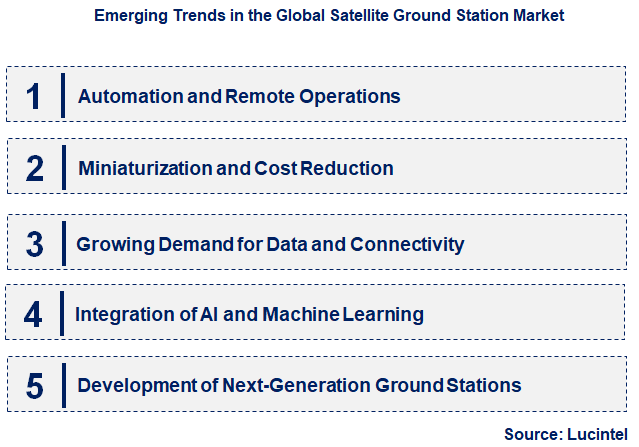
• Automation and Remote Operations: The integration of automation technologies and remote management systems is revolutionizing ground station operations. Automated tracking, data processing, and maintenance reduce the need for manual intervention, increasing efficiency and reducing operational costs. Remote operations enable centralized control of multiple stations across different locations, enhancing flexibility and responsiveness. This trend supports real-time data handling and improves overall system reliability, making ground stations more adaptable to the increasing volume of satellite data and diverse application needs.
• Miniaturization and Cost Reduction: Advances in miniaturization of ground station components are making setups more compact and affordable. Smaller antennas, modular hardware, and integrated systems lower capital expenditure and operational costs, enabling deployment in remote or underserved areas. Cost-effective solutions are attracting new entrants and expanding the market base, including smaller organizations and developing countries. This trend democratizes access to satellite communication infrastructure, fostering innovation and increasing the proliferation of satellite services globally.
• Growing Demand for Data and Connectivity: The surge in satellite-based applications such as IoT, autonomous vehicles, and global internet coverage is driving demand for robust ground station networks. Enhanced data throughput, low latency, and high reliability are critical to support these services. Ground stations are evolving to handle larger data volumes with advanced processing capabilities, supporting real-time analytics and cloud integration. This trend underscores the importance of scalable infrastructure to meet the expanding needs of commercial, governmental, and scientific sectors.
• Integration of AI and Machine Learning: Artificial intelligence and machine learning are increasingly incorporated into ground station operations for predictive maintenance, anomaly detection, and optimized resource allocation. These technologies improve system uptime, reduce downtime, and enhance data processing accuracy. AI-driven analytics enable smarter decision-making and automation, leading to more efficient management of satellite networks. This trend is transforming ground stations into intelligent hubs capable of adapting to dynamic operational environments and complex data workflows.
• Development of Next-Generation Ground Stations: The focus on next-generation ground stations involves adopting cutting-edge technologies such as phased array antennas, high-frequency bands, and advanced signal processing techniques. These innovations aim to improve coverage, capacity, and flexibility, supporting the deployment of mega-constellations and 5G satellite networks. Enhanced interoperability and modular designs facilitate easier upgrades and integration with emerging satellite architectures. This trend is positioning ground stations as critical infrastructure for future satellite ecosystems, enabling more comprehensive and resilient global connectivity. These emerging trends are fundamentally reshaping the satellite ground station market by enhancing operational efficiency, reducing costs, expanding connectivity, and integrating advanced technologies. They are fostering a more agile, scalable, and intelligent infrastructure that supports the growing demands of satellite communications and data services worldwide. As these developments continue, the market is poised for significant growth, innovation, and increased global reach.
• Growing Demand for Global Connectivity: The increasing need for reliable internet and communication services worldwide is boosting ground station deployments, especially in remote and underserved areas, leading to market expansion and technological innovation.
• Advancements in Satellite Technology: Innovations such as small satellites and mega-constellations are demanding more sophisticated ground station infrastructure, driving upgrades and new installations to support higher data throughput and real-time processing.
• Integration of AI and Automation: Incorporating artificial intelligence and automation into ground station operations enhances efficiency, reduces costs, and improves data processing accuracy, making ground stations more adaptable to complex satellite networks.
• Expansion of Commercial Satellite Services: The rise of commercial satellite operators, including telecom and media companies, is increasing demand for ground stations, fostering competition and encouraging technological advancements in the sector.
• Development of Next-Generation Ground Station Infrastructure: Investments in high-capacity, scalable, and secure ground station facilities are enabling better handling of increasing satellite traffic, supporting emerging applications like IoT, Earth observation, and space tourism. The market is witnessing transformative developments that are expanding capabilities, improving efficiency, and fostering innovation. These opportunities are driving growth, attracting investments, and enabling the satellite ground station industry to meet the evolving needs of global communication, navigation, and data services, ultimately shaping a more connected and technologically advanced future.
• Expansion into Remote and Underdeveloped Regions: Growing demand for reliable satellite communication in remote areas presents significant growth opportunities. Developing ground stations in underserved regions can bridge connectivity gaps, support disaster management, and enable scientific research. This expansion requires tailored infrastructure, regulatory compliance, and strategic partnerships, offering companies a chance to tap into emerging markets and diversify revenue streams.
• Adoption of Advanced Technologies for Enhanced Performance: Integrating AI, machine learning, and automation into ground station operations can significantly improve efficiency, data processing, and predictive maintenance. These technologies enable real-time monitoring, reduce downtime, and optimize resource allocation. Investing in such innovations can provide a competitive edge, meet increasing data demands, and support the deployment of next-generation satellite networks.
• Growth of Small Satellite and CubeSat Markets: The rise of small satellites and CubeSats offers new opportunities for ground station providers to develop specialized, cost-effective tracking and communication solutions. These smaller satellites require flexible, scalable ground infrastructure, creating a niche market. Companies that innovate in modular, affordable ground station systems can capitalize on this expanding sector, supporting scientific, commercial, and defense applications.
• Integration of Ground Stations with Space Traffic Management: As satellite constellations grow, managing space traffic becomes critical. Ground stations integrated with space situational awareness tools can enhance collision avoidance, spectrum management, and regulatory compliance. Developing such integrated systems can position companies as key players in sustainable space operations, ensuring safety and efficiency in increasingly crowded orbital environments.
• Increasing Demand for Data Security and Cybersecurity Solutions: With rising data volumes and sensitive information transmitted via satellite links, cybersecurity becomes paramount. Ground station providers can expand offerings to include robust encryption, intrusion detection, and secure data handling. Strengthening cybersecurity measures not only protects assets but also builds trust with clients, opening avenues for premium services and long-term contracts in a competitive market. The overall impact of these opportunities is a dynamic, innovative satellite ground station market poised for substantial growth. Companies that strategically invest in technology, infrastructure, and new applications will be well-positioned to capitalize on emerging trends, ensuring resilience and leadership in a rapidly evolving space industry landscape.
• Technological Innovation: The continuous development of advanced satellite communication systems and ground station equipment enhances operational efficiency and expands service capabilities. Innovations like phased array antennas and software-defined ground stations enable faster deployment and improved flexibility, attracting more clients. These technological improvements reduce costs and increase reliability, making ground stations more accessible for various applications, including defense, commercial, and scientific research. As technology evolves, the market benefits from increased performance, scalability, and integration with emerging satellite constellations, fueling overall growth.
• Rising Demand for Satellite-Based Services: The increasing need for high-speed internet, remote sensing, and navigation services drives the expansion of ground station infrastructure. Governments and private enterprises are investing heavily in satellite networks to bridge connectivity gaps, especially in remote and underserved regions. The proliferation of IoT devices and the growth of satellite-based data analytics further amplify demand. This trend supports the deployment of more ground stations globally, facilitating real-time data transmission and enhancing service quality, thereby propelling market growth.
• Growth of Commercial Satellite Launches: The surge in commercial satellite launches, driven by private companies and international agencies, necessitates a robust ground station network for satellite tracking, control, and data reception. The increasing frequency of launches, including mega-constellations like Starlink, requires scalable ground infrastructure. This growth creates opportunities for ground station providers to expand their facilities and services, fostering a competitive environment. The demand for ground stations that can support large-scale, cost-effective satellite operations is a key driver in this market.
• Government Initiatives and Space Programs: Governments worldwide are investing in space exploration, defense, and communication infrastructure, which significantly boosts ground station deployment. Strategic initiatives, such as national space policies and space situational awareness programs, require extensive ground support. Public-private partnerships and funding for space research further accelerate infrastructure development. These initiatives not only increase the number of operational ground stations but also enhance technological capabilities, ensuring the market remains dynamic and growth-oriented. The challenges facing the satellite ground station market include:
• Regulatory and Spectrum Allocation Issues: The satellite ground station market faces complex regulatory environments across different countries. Spectrum allocation and licensing processes can be lengthy and restrictive, delaying deployment and increasing costs. International coordination is required to prevent interference and ensure compliance with global standards. These regulatory hurdles can hinder rapid expansion and limit access to certain regions, impacting overall market growth and operational efficiency.
• High Capital and Operational Costs: Establishing and maintaining ground stations involves significant capital investment in infrastructure, technology, and skilled personnel. Operational costs, including maintenance, upgrades, and spectrum fees, further strain budgets. These financial barriers can restrict entry for smaller players and slow down expansion plans. The high costs also pose challenges in adopting new technologies swiftly, potentially leading to outdated infrastructure that hampers competitiveness.
• Cybersecurity and Data Privacy Concerns: As ground stations become more integrated with digital networks, they are increasingly vulnerable to cyber threats. Data breaches, hacking, and signal interference can compromise satellite operations and sensitive information. Ensuring robust cybersecurity measures requires ongoing investment and expertise, adding to operational costs. These concerns can delay deployment and create trust issues among clients, impacting market stability and growth prospects. The satellite ground station market is shaped by rapid technological advancements, increasing demand for satellite services, and supportive government initiatives. However, regulatory complexities, high costs, and cybersecurity threats pose significant challenges. These drivers and challenges collectively influence market dynamics, requiring stakeholders to innovate, adapt, and collaborate to sustain growth. Navigating this landscape effectively will determine the markets trajectory, with opportunities for expansion balanced by the need for strategic risk management.
• RTX Corporation
• Lockheed Martin Corporation
• Israel Aerospace Industries
• Amazon
• China Aerospace Science and Technology Corporation
• Huaxun Fangzhou Technology
• Kratos Defense & Security Solutions
• Viasat
• Safran
• Communications & Power Industries
• Services
• Solution
• Civil
• Military
• North America
• Europe
• Asia Pacific
• The Rest of the World
• United States: The US market has seen substantial investments in next-generation ground stations equipped with AI and automation technologies, improving operational efficiency. Major players are expanding their networks to support burgeoning satellite constellations like Starlink, and government agencies are upgrading infrastructure for national security and scientific missions. The adoption of cloud-based management systems is also on the rise, enabling real-time data processing and remote operations.
• China: China has accelerated its satellite ground station development, focusing on supporting its rapidly growing satellite industry and space exploration initiatives. The country is deploying advanced ground stations with high-frequency capabilities and integrating 5G technology for enhanced connectivity. Strategic collaborations between government agencies and private firms are fostering innovation, and China aims to establish a comprehensive ground station network to support its space ambitions.
• Germany: Germany is emphasizing the modernization of its ground station infrastructure, incorporating cutting-edge technologies such as phased array antennas and software-defined radio systems. The country is also investing in research to improve data security and resilience against cyber threats. European collaborations are facilitating the integration of Germany’s ground stations into broader European and global satellite networks, enhancing interoperability and data sharing.
• India: India is rapidly expanding its satellite ground station network to support its ambitious space program, including navigation, communication, and Earth observation satellites. The government is investing in indigenous technology development and establishing new ground stations across the country. The focus is on building resilient, cost-effective infrastructure capable of supporting small satellite missions and international collaborations.
• Japan: Japan continues to advance its satellite ground station capabilities with a focus on high-frequency and deep-space communication. The country is deploying sophisticated ground stations with enhanced tracking and data processing capabilities to support its space exploration and scientific research initiatives. Japan is also collaborating with international partners to develop global ground station networks, ensuring robust support for its satellite operations.


• RTX Corporation
• Lockheed Martin Corporation
• Israel Aerospace Industries
• Amazon
• China Aerospace Science and Technology Corporation
• Huaxun Fangzhou Technology
• Kratos Defense & Security Solutions
• Viasat
• Safran
• Communications & Power Industries Q6. Which satellite ground station market segment will be the largest in future? Answer: Lucintel forecasts that, within the type category, service is expected to witness higher growth over the forecast period. Q7. In satellite ground station market, which region is expected to be the largest in next 8 years? Answer: In terms of region, APAC is expected to witness the highest growth over the forecast period. Q8. Do we receive customization in this report? Answer: Yes, Lucintel provides 10% customization without any additional cost.


Choose a license that fits your team. Instant PDF delivery.
Prices exclude taxes. Instant delivery. Custom licensing available on request.
Market Report · July 31, 2026
Market Report · July 31, 2026
Market Report · July 31, 2026
Trusted partner for strategic intelligence and business growth


Receive a complimentary market analysis tailored to your industry. Our analysts will identify key growth opportunities and competitive dynamics specific to your business.

Market size, growth rate, and key trend analysis for your specific sector.

Top competitor positioning and market share analysis.

Strategic recommendations backed by data-driven insights.
Get curated market intelligence and competitive moves straight to your inbox.
By subscribing, you agree to receive our monthly insights. Unsubscribe anytime.
Receive a complimentary market analysis tailored to your industry. Our analysts will identify key growth opportunities and competitive dynamics specific to your business.
Market size, growth rate, and key trend analysis for your specific sector.
Top competitor positioning and market share analysis.
Strategic recommendations backed by data-driven insights.
Get curated market intelligence, emerging trends, and competitive moves straight to your inbox each month.
By subscribing, you agree to receive our monthly insights. Unsubscribe anytime.
We'll send your sample report shortly.