
Market Report · July 22, 2026

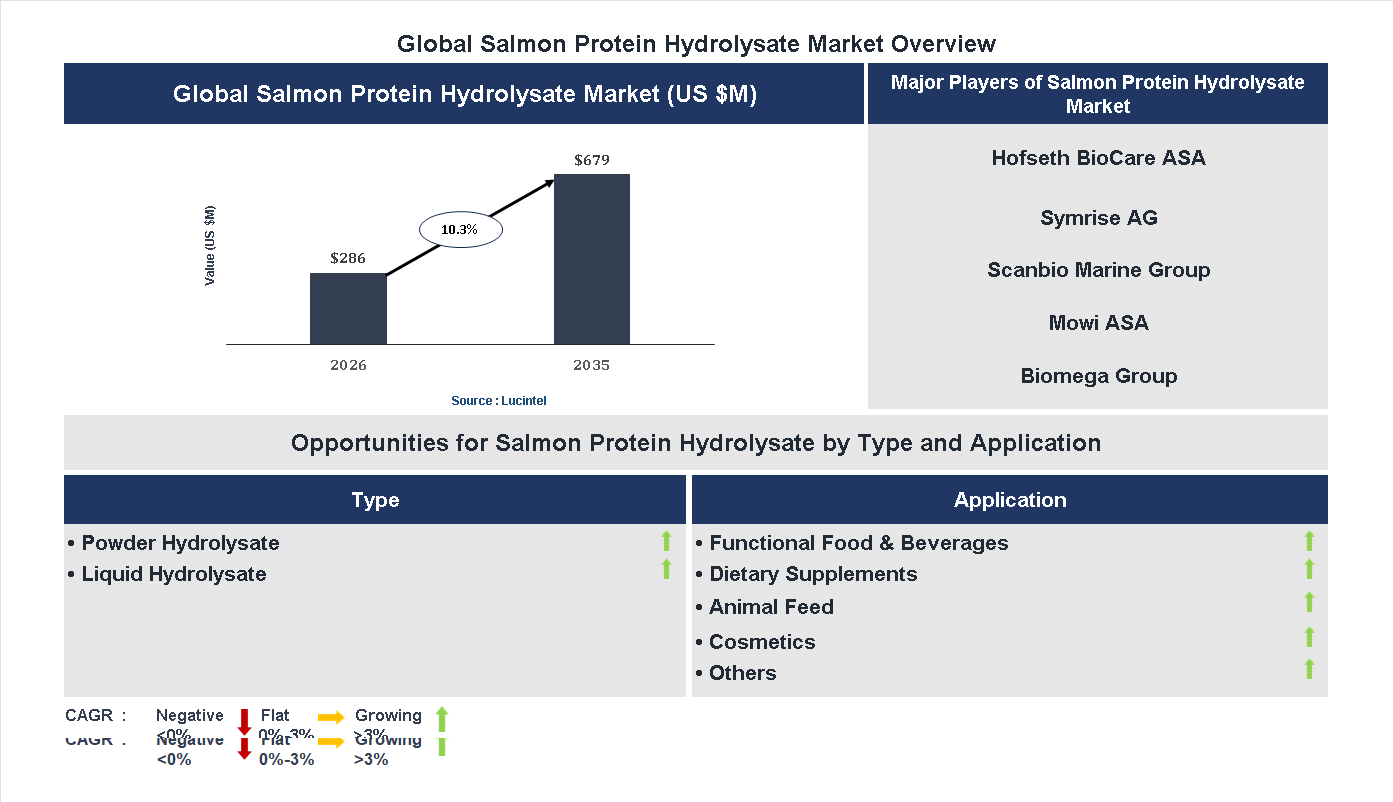
Key data points: The market size in 2035 = $679 million, growth forecast = 10.3% annually for the next 8 years. Scroll below to get more insights. This market report covers trends, opportunities and forecasts in salmon protein hydrolysate market to 2035 by type (powder hydrolysate and liquid hydrolysate), application (functional food & beverages, dietary supplements, animal feed, cosmetics, and others), and region (North America, Europe, Asia Pacific, and the Rest of the World)
We'll send your sample report shortly.
• Lucintel forecasts that, within the type category, powder hydrolysate and liquid hydrolysate is expected to witness higher growth over the forecast period.
• Within the application category, functional food & beverage, dietary supplement, animal feed, and cosmetic is expected to witness the highest growth.
• In terms of region, APAC is expected to witness the highest growth over the forecast period. Gain valuable insights for your business decisions with our comprehensive 150+ page report. Sample figures with some insights are shown below.
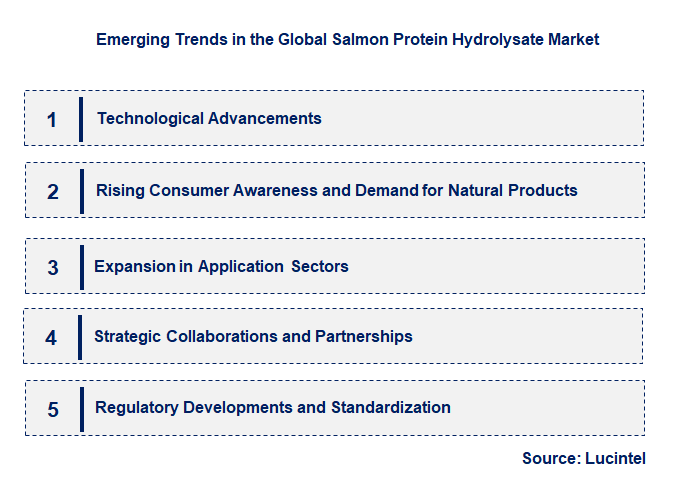
• Technological Advancements: Adoption of innovative extraction and hydrolysis techniques has improved yield and purity of salmon protein hydrolysates. These advancements reduce processing costs and enhance product quality, making them more attractive for various applications. Improved technology also allows for better control over bioactive compound profiles, increasing the functional benefits of the products. As a result, companies can offer more customized solutions, boosting market competitiveness and expanding application scope across nutraceuticals, cosmetics, and animal nutrition sectors.
• Rising Consumer Awareness and Demand for Natural Products: Consumers are increasingly seeking natural, sustainable, and health-enhancing ingredients. Salmon protein hydrolysates are perceived as eco-friendly and rich in bioactive peptides, which support health benefits such as improved immunity, joint health, and skin vitality. This trend drives demand in functional foods, dietary supplements, and personal care products. Companies are leveraging marketing strategies to highlight the natural and sustainable aspects of their products, which significantly influences purchasing decisions and accelerates market growth.
• Expansion in Application Sectors: The market is witnessing diversification beyond traditional nutraceuticals into cosmetics, animal feed, and pet nutrition. Salmon protein hydrolysates are valued for their bioactive properties, such as anti-inflammatory and antioxidant effects, making them suitable for skincare formulations and animal health products. This expansion broadens revenue streams for manufacturers and encourages innovation in product development. As applications grow, the market becomes more resilient to sector-specific fluctuations, fostering sustained growth and new opportunities.
• Strategic Collaborations and Partnerships: Companies are forming alliances with research institutions, biotech firms, and industry players to develop innovative products and improve processing technologies. These collaborations facilitate knowledge sharing, accelerate product development, and enable market entry into new regions. Strategic partnerships also help in scaling production, reducing costs, and enhancing distribution networks. Such collaborations are crucial for staying competitive and responding swiftly to market demands, ultimately driving market expansion and technological progress.
• Regulatory Developments and Standardization: Governments and industry bodies are establishing guidelines and standards for marine-derived ingredients, including salmon protein hydrolysates. Clear regulations ensure product safety, quality, and efficacy, boosting consumer confidence. Standardization also facilitates international trade and market entry, reducing barriers for exporters. As regulatory frameworks evolve, companies are investing in compliance and quality assurance, which enhances credibility and supports sustainable growth. This trend ensures a more transparent and trustworthy market environment, encouraging broader adoption across various industries. These emerging trends are collectively transforming the salmon protein hydrolysate market by enhancing product quality, expanding application areas, and fostering innovation. They are making the market more competitive, sustainable, and aligned with consumer preferences, ultimately reshaping the industry landscape and paving the way for continued growth and diversification.
• Growing Demand for Sustainable Protein Sources: The shift towards eco-friendly and sustainable protein options is boosting the salmon protein hydrolysate market. Consumers and manufacturers seek alternatives to traditional animal proteins, emphasizing environmental benefits and health. Salmon hydrolysates offer high nutritional value, bioactivity, and sustainability, making them attractive for functional foods, dietary supplements, and pet foods. This trend is expected to continue, expanding market reach and encouraging innovation in sustainable protein solutions.
• Advances in Processing Technologies: Innovations in enzymatic hydrolysis and extraction methods are enhancing product quality and yield. These technological improvements reduce production costs, improve bioavailability, and enable customization of hydrolysate profiles for specific applications. As a result, manufacturers can meet diverse consumer needs and regulatory standards more effectively. Enhanced processing also minimizes waste and energy consumption, aligning with sustainability goals, and fostering broader adoption across industries.
• Expansion of Application Sectors: The use of salmon protein hydrolysates is broadening across food, feed, pharmaceutical, and cosmetic sectors. In food and beverages, they serve as functional ingredients promoting health benefits like anti-inflammatory and antioxidant properties. In pet food, they improve nutrition and palatability. Pharmaceutical applications leverage bioactive peptides for therapeutic purposes. This diversification increases market stability and growth potential, as demand arises from multiple industries seeking natural, health-promoting ingredients.
• Rising Consumer Awareness and Health Focus: Increasing awareness of health benefits associated with bioactive peptides in salmon hydrolysates is driving consumer demand. Products targeting immune support, joint health, and anti-aging are gaining popularity. Consumers prefer natural, clean-label ingredients, boosting sales of functional foods and supplements containing salmon hydrolysates. This health-centric trend encourages manufacturers to innovate and expand product lines, further fueling market growth and consumer engagement.
• Regulatory Support and Industry Standards: Governments and industry bodies are establishing guidelines for the safety, quality, and labeling of salmon protein hydrolysates. These regulations facilitate market entry and build consumer trust. Certification programs and quality standards ensure product consistency and safety, encouraging wider adoption. Regulatory support also promotes research and development, fostering innovation and expanding applications, which collectively contribute to a more robust and credible market environment. The overall impact of these developments is a dynamic, expanding market characterized by innovation, diversification, and increased consumer trust. Enhanced processing, sustainability, and health benefits are attracting new customers and industries, positioning the salmon protein hydrolysate market for sustained growth and global competitiveness.
• Expanding Applications in Functional Foods and Nutraceuticals: Salmon protein hydrolysate is increasingly incorporated into functional foods and dietary supplements due to its high digestibility and bioactive properties. The rising consumer focus on health and wellness fuels demand for natural, protein-rich ingredients. Manufacturers are developing innovative products such as protein bars, powders, and beverages that leverage salmon hydrolysate’s benefits, creating new revenue streams. Regulatory approvals and scientific validation further support its integration into mainstream health products, driving market growth.
• Growing Adoption in Animal Feed Industry for Enhanced Nutrition: The animal feed sector is adopting salmon protein hydrolysate as a sustainable, high-quality protein source to improve livestock health and productivity. Its digestibility and bioactive peptides promote growth, immunity, and overall well-being in animals. The shift towards natural and functional feed ingredients, coupled with rising demand for ethically sourced products, boosts adoption. Innovations in feed formulations and increasing awareness of sustainable practices are expected to expand market share within this segment.
• Technological Innovations in Extraction and Processing Methods: Advances in extraction and hydrolysis technologies are enhancing yield, purity, and bioactivity of salmon protein hydrolysate. Novel enzymatic processes and sustainable extraction techniques reduce costs and environmental impact, making products more accessible. These innovations enable tailored bioactive profiles for specific applications, increasing versatility. Continuous R&D efforts are expected to improve product quality, expand application scope, and foster competitive advantages for industry players.
• Rising Demand for Sustainable and Natural Protein Sources: Consumers and industries are shifting towards sustainable, eco-friendly protein options, favoring marine-based ingredients like salmon protein hydrolysate. Its production involves utilizing fish processing by-products, reducing waste and environmental footprint. This aligns with global sustainability goals and regulatory pressures. The increasing preference for natural, clean-label ingredients in food, feed, and nutraceuticals is expected to propel market growth, encouraging investments in sustainable sourcing and processing technologies.
• Strategic Collaborations and Market Expansion Initiatives: Companies are forming strategic alliances, joint ventures, and partnerships to expand their product portfolios and geographic reach. Collaborations with research institutions facilitate innovation and validation of health benefits. Market expansion into emerging regions with growing health consciousness and seafood consumption is a key focus. These initiatives help companies leverage new distribution channels, enhance brand recognition, and accelerate adoption across diverse applications, ultimately strengthening their market position. The overall impact of these growth opportunities is a dynamic, expanding salmon protein hydrolysate market characterized by innovation, sustainability, and diversified applications. As industry players capitalize on technological advancements and shifting consumer preferences, the market is set to experience robust growth, fostering a healthier, more sustainable future for food, feed, and nutraceutical sectors.
• Technological Advancements: The development of innovative extraction and hydrolysis techniques has significantly improved product quality and yield. These advancements enable manufacturers to produce highly bioavailable and functional salmon protein hydrolysates, catering to the growing demand for natural and health-promoting ingredients. Enhanced processing methods also reduce production costs and environmental impact, making the products more accessible. As research continues, new applications in nutraceuticals, functional foods, and animal feed are emerging, further fueling market growth. The ability to customize hydrolysates for specific health benefits is a key driver, attracting both consumers and manufacturers seeking tailored solutions.
• Rising Consumer Health Awareness: Increasing awareness about the health benefits of omega-3 fatty acids, peptides, and bioactive compounds found in salmon protein hydrolysates is a major market driver. Consumers are actively seeking natural, plant-based, and functional ingredients to improve overall wellness, prevent chronic diseases, and support aging populations. This shift in consumer preferences is encouraging food and supplement companies to incorporate salmon hydrolysates into their products. The trend towards clean-label and sustainable ingredients also boosts demand, as consumers prefer products derived from responsibly sourced salmon. Consequently, the market is experiencing rapid growth driven by health-conscious consumers worldwide.
• Regulatory Support and Standards: Governments and regulatory bodies are establishing guidelines and standards for the safety, quality, and labeling of marine-derived ingredients, including salmon protein hydrolysates. These regulations help build consumer trust and facilitate international trade. Compliance with such standards ensures that products meet safety requirements, reducing the risk of contamination and adulteration. Additionally, regulatory incentives for sustainable sourcing and environmentally friendly processing methods encourage manufacturers to adopt responsible practices. Clear regulatory frameworks also enable market players to innovate confidently, expanding product portfolios and entering new markets, thus propelling overall industry growth.
• Growing Applications in Nutraceuticals and Functional Foods: The expanding use of salmon protein hydrolysates in nutraceuticals, dietary supplements, and functional foods is a significant growth driver. Their bioactive peptides and omega-3 fatty acids offer health benefits such as anti-inflammatory, antioxidant, and cardiovascular support properties. As consumers increasingly seek preventive healthcare options, companies are integrating these ingredients into a variety of products, including beverages, bars, and capsules. The versatility and efficacy of salmon hydrolysates make them attractive for product innovation. This trend is supported by scientific research and clinical studies, which validate health claims and boost consumer confidence, further accelerating market expansion.
• Sustainability and Eco-Friendly Sourcing: The emphasis on sustainable fishing practices and eco-friendly processing methods is shaping the salmon protein hydrolysate market. Consumers and regulatory agencies are demanding transparency and responsibility in sourcing marine ingredients. Companies adopting sustainable practices not only meet regulatory requirements but also enhance brand reputation and consumer loyalty. Utilizing by-products from the salmon industry reduces waste and promotes circular economy principles, making the production process more environmentally sustainable. This focus on sustainability attracts environmentally conscious consumers and opens new market opportunities, encouraging industry players to invest in responsible sourcing and eco-friendly innovations. The challenges facing the salmon protein hydrolysate market include:
• Supply Chain Constraints: The availability of high-quality salmon raw material is a critical challenge due to seasonal fluctuations, overfishing concerns, and environmental factors affecting salmon populations. Disruptions in supply chains can lead to increased costs and production delays, impacting market stability. Additionally, the need for sustainable sourcing practices can limit raw material availability, creating bottlenecks. Ensuring a consistent supply of premium salmon for hydrolysate production requires strategic planning and diversification of sourcing regions. These constraints pose significant hurdles for manufacturers aiming to meet rising demand while maintaining quality standards.
• Regulatory and Certification Barriers: Despite supportive regulations, navigating complex and varying international standards remains challenging. Different countries have diverse requirements for marine ingredients, which can hinder market entry and expansion. Obtaining certifications such as GMP, ISO, or organic labels involves rigorous testing and documentation, increasing costs and time-to-market. Regulatory uncertainties related to health claims and labeling can also restrict marketing strategies. These barriers necessitate substantial investments in compliance and quality assurance, which may be prohibitive for smaller players, limiting market competitiveness and innovation.
• Environmental and Ethical Concerns: The environmental impact of salmon farming and wild catch practices raises sustainability issues. Overfishing, habitat destruction, and pollution associated with aquaculture can lead to ecological imbalances and consumer skepticism. Ethical concerns regarding animal welfare and the carbon footprint of production processes further complicate market growth. Addressing these issues requires adopting sustainable farming practices, reducing environmental footprints, and ensuring transparency. Failure to do so could result in reputational damage, regulatory penalties, and decreased consumer trust, ultimately hindering market development. The salmon protein hydrolysate market is driven by technological innovations, increasing health awareness, supportive regulations, expanding applications, and sustainability initiatives. However, supply chain issues, regulatory complexities, and environmental concerns pose significant challenges. The interplay of these factors influences market growth, requiring stakeholders to adopt strategic, sustainable, and compliant approaches. Overall, the market holds promising potential for growth, provided that industry players effectively navigate these drivers and challenges to meet evolving consumer demands and regulatory standards.
• Hofseth BioCare ASA
• Symrise AG
• Scanbio Marine Group
• Mowi ASA
• Biomega Group
• Copalis Sea Solutions
• TripleNine Group
• Pelagia AS
• Sopropeche
• Omega Protein Corp.
• Powder Hydrolysate
• Liquid Hydrolysate
• Functional Food & Beverages
• Dietary Supplements
• Animal Feed
• Cosmetics
• Others
• North America
• Europe
• Asia Pacific
• The Rest of the World
• United States: The US market has seen increased adoption of salmon protein hydrolysates in dietary supplements and functional foods, driven by rising health consciousness. Companies are investing in advanced extraction methods to improve yield and purity, while regulatory agencies are establishing clearer guidelines to ensure product safety. The demand for sustainable ingredients is also encouraging innovation in eco-friendly sourcing practices. Market players are expanding their product portfolios to include customized formulations for specific health benefits, such as joint health and immune support. Overall, the US remains a leading market with strong growth prospects.
• China: China’s salmon protein hydrolysate market is rapidly expanding due to increasing consumer awareness of health and wellness. Local companies are investing in large-scale production facilities to meet domestic demand and reduce reliance on imports. The government’s support for the aquaculture sector and functional food industry is fostering innovation and market growth. Additionally, collaborations with international firms are enhancing product quality and variety. The rising popularity of traditional medicine combined with modern nutraceuticals is creating new opportunities. Market growth is also driven by the expanding middle class seeking premium health products.
• Germany: In Germany, the market is characterized by a focus on high-quality, sustainably sourced salmon protein hydrolysates. Consumer preferences for organic and environmentally friendly products are influencing product development. The food and supplement industries are incorporating these ingredients into a range of products, including sports nutrition and functional foods. Regulatory standards are strict, ensuring safety and transparency, which boosts consumer confidence. German companies are also investing in research to explore new health benefits and applications. The market is expected to grow steadily as awareness of the benefits of marine-based proteins increases among health-conscious consumers.
• India: The Indian salmon protein hydrolysate market is emerging, with increasing interest from nutraceutical and functional food manufacturers. The growing middle class and rising health awareness are driving demand for natural and sustainable ingredients. Local companies are exploring cost-effective extraction techniques to make products more affordable. The government’s focus on promoting the aquaculture sector is supporting industry growth. Additionally, collaborations with international firms are helping improve product quality and expand distribution channels. As awareness of the health benefits of marine proteins grows, India’s market is poised for significant expansion in the coming years.
• Japan: Japan’s market for salmon protein hydrolysates is well-established, with a strong consumer base for health supplements and functional foods. The focus is on high-quality, scientifically validated products that cater to aging populations seeking health maintenance solutions. Japanese companies are investing in research to develop innovative formulations with enhanced bioavailability and targeted health benefits. Regulatory compliance and safety standards are highly prioritized, fostering consumer trust. The market is also witnessing a trend toward personalized nutrition, with products tailored to individual health needs. Overall, Japan remains a key player in the global salmon protein hydrolysate market, with steady growth driven by health-conscious consumers.


• Hofseth BioCare ASA
• Symrise AG
• Scanbio Marine Group
• Mowi ASA
• Biomega Group
• Copalis Sea Solutions
• TripleNine Group
• Pelagia AS
• Sopropeche
• Omega Protein Corp. Q6. Which salmon protein hydrolysate market segment will be the largest in future? Answer: Lucintel forecasts that, within the type category, powder hydrolysate and liquid hydrolysate is expected to witness higher growth over the forecast period. Q7. In salmon protein hydrolysate market, which region is expected to be the largest in next 5 years? Answer: In terms of region, APAC is expected to witness the highest growth over the forecast period. Q8. Do we receive customization in this report? Answer: Yes, Lucintel provides 10% customization without any additional cost.


Choose a license that fits your team. Instant PDF delivery.
Prices exclude taxes. Instant delivery. Custom licensing available on request.
Market Report · July 22, 2026
Market Report · July 22, 2026
Market Report · July 22, 2026
Trusted partner for strategic intelligence and business growth


Receive a complimentary market analysis tailored to your industry. Our analysts will identify key growth opportunities and competitive dynamics specific to your business.

Market size, growth rate, and key trend analysis for your specific sector.

Top competitor positioning and market share analysis.

Strategic recommendations backed by data-driven insights.
Get curated market intelligence and competitive moves straight to your inbox.
By subscribing, you agree to receive our monthly insights. Unsubscribe anytime.
Receive a complimentary market analysis tailored to your industry. Our analysts will identify key growth opportunities and competitive dynamics specific to your business.
Market size, growth rate, and key trend analysis for your specific sector.
Top competitor positioning and market share analysis.
Strategic recommendations backed by data-driven insights.
Get curated market intelligence, emerging trends, and competitive moves straight to your inbox each month.
By subscribing, you agree to receive our monthly insights. Unsubscribe anytime.
We'll send your sample report shortly.