
Market Report · May 18, 2026

This market report covers trends, opportunities, and forecasts in the global safety instrumented systems market to 2031 by technology (sensors, switches, programmable devices, actuators and valves, and others), end use industry (energy & power, pharmaceutical, mining, food and beverage, oil & gas, and others), and region (North America, Europe, Asia Pacific, and the Rest of the World)
We'll send your sample report shortly.
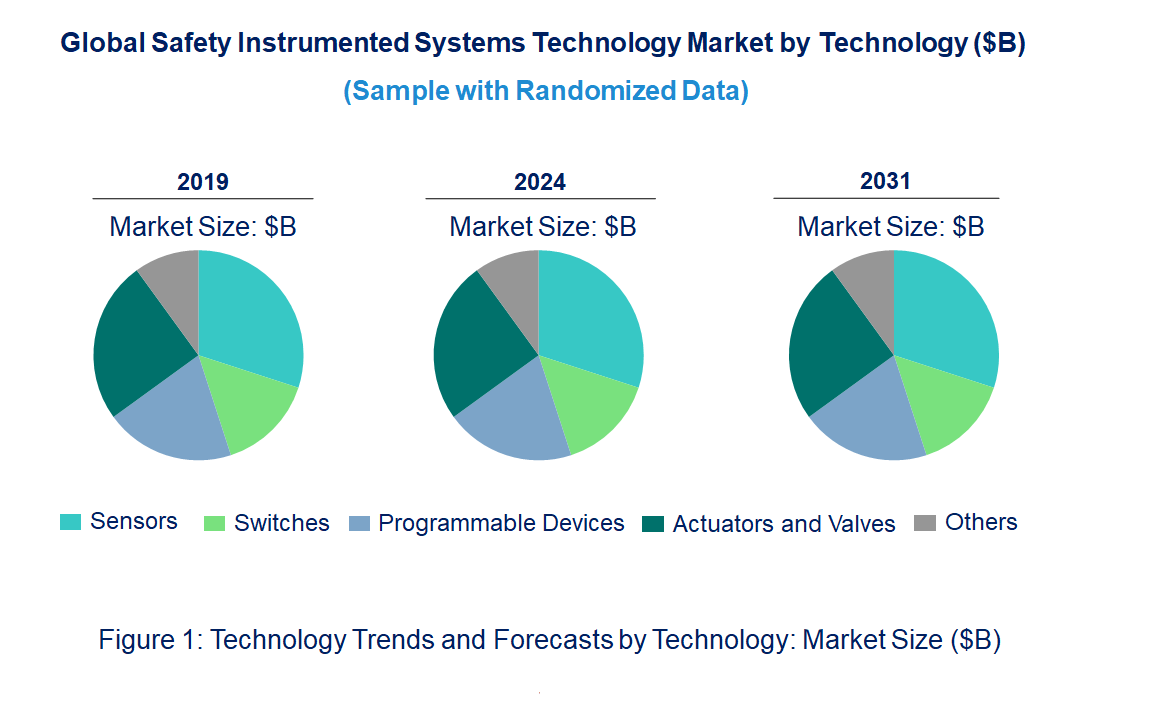
![Safety Instrumented Systems Market Trend and Forecast by End Use Industry [Value from 2019 to 2031]:](https://lucintel.com/images/Safety-Instrumented-Systems-Technology-Market-Segment.png "Safety Instrumented Systems Market Trend and Forecast by End Use Industry [Value from 2019 to 2031]:")
• Integration of Industrial Internet of Things (IIoT): The adoption of IIoT-enabled devices has enhanced SIS capabilities by enabling continuous data collection and real-time monitoring. This trend improves predictive maintenance, ensures faster response times to potential hazards, and enhances system reliability. By connecting sensors and actuators to a network, companies can leverage data for better risk assessment and operational insight.
• Advanced Cybersecurity Measures: With the rise of digital SIS platforms, protecting systems against cyber threats has become paramount. New cybersecurity protocols, such as encryption and secure remote access, are being incorporated to safeguard data integrity and prevent unauthorized access. This trend ensures that safety systems remain resilient to hacking attempts and can function reliably in a connected environment.
• Smart Sensor Technology: The shift from conventional analog sensors to advanced smart sensors is a game-changer. These smart sensors provide higher accuracy, greater data analysis capabilities, and the ability to communicate seamlessly with other systems. This advancement enables real-time risk detection and automated safety responses, improving overall operational safety and efficiency.
• Cloud-Based Safety Management Systems: The use of cloud computing in SIS is enhancing data storage and access. Cloud-based platforms offer scalable solutions for managing large volumes of safety data, allowing for improved collaboration and remote access. This trend supports flexible and cost-effective safety monitoring, enabling organizations to implement comprehensive safety measures without extensive on-site infrastructure.
• AI and Machine Learning Integration: Artificial intelligence (AI) and machine learning (ML) are driving innovations in data analysis and decision-making within SIS. These technologies facilitate predictive analytics, helping operators anticipate and prevent potential safety incidents. By learning from historical data, AI can optimize safety protocols, automate system responses, and improve system learning over time, leading to more robust safety outcomes. The integration of IIoT, enhanced cybersecurity, smart sensors, cloud-based systems, and AI/ML is revolutionizing Safety Instrumented Systems. These technology trends enable real-time monitoring, predictive analytics, and improved data management, contributing to safer and more efficient industrial operations. As these advancements continue, SIS technology will become more resilient, adaptive, and capable of meeting the evolving safety requirements of modern industries.
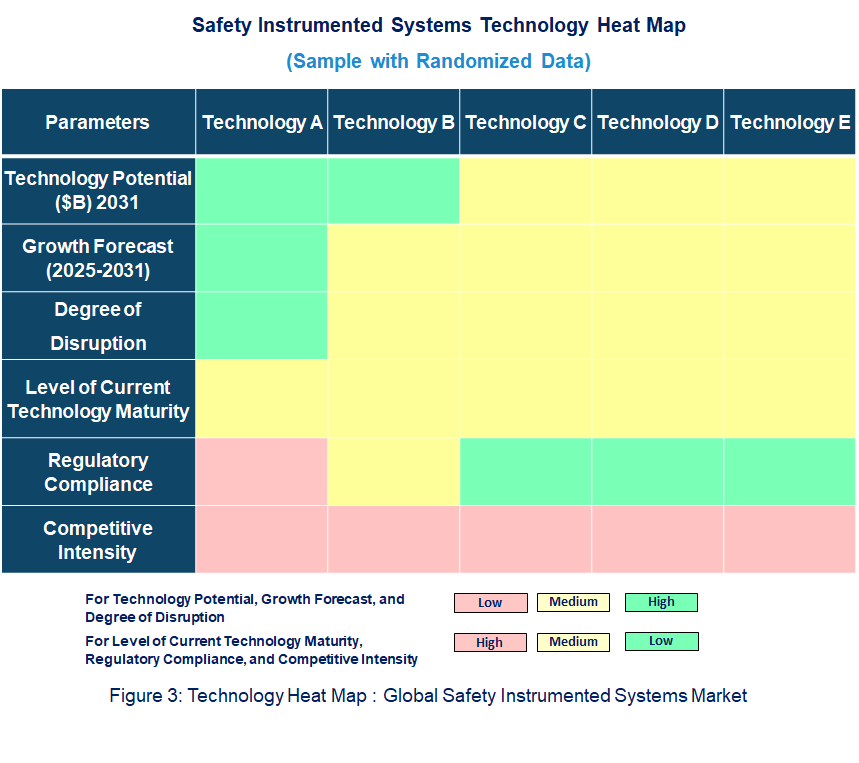
• Technology Potential: The technology potential of SIS lies in enhancing operational safety, minimizing downtime, and supporting compliance with increasingly stringent safety standards. Modern SIS incorporate advanced diagnostics, real-time monitoring, and integration with digital platforms (e.g., IIoT and Industry 4.0), improving their responsiveness and reliability.
• Degree of Disruption: The degree of disruption is moderate, as SIS are evolutionary rather than revolutionary. However, the integration of AI, predictive analytics, and wireless technologies is driving a significant shift in how safety systems are managed and maintained.
• Current Technology Maturity Level: In terms of technology maturity, SIS are well-established, with decades of proven performance. Ongoing innovation is focused on making them smarter, more connected, and easier to maintain.
• Regulatory Compliance: Regulatory compliance is critical. SIS must meet international standards like IEC 61511 and IEC 61508, which define safety lifecycle management, risk reduction, and functional safety requirements. Compliance ensures that SIS installations are both effective and legally sound.
• Emerson Process Management: Emerson’s SIS solutions are equipped with advanced IIoT capabilities. This allows for real-time monitoring and predictive maintenance. The firm’s focus on wireless communication and cloud-based analytics enables much more flexible, scalable, and efficient safety management. This ensures higher system uptime and enhances operational safety, making industries more adaptable to changing conditions.
• Rockwell Automation: The integration of AI and machine learning has further improved the offerings by Rockwell Automation in SIS. These solutions based on data-driven insights can predict certain risks even before they occur, helping organizations to be proactive and ensure enhanced safety performance in the industrial setting.
• Johnson Controls: Johnson Controls has been working to make SIS solutions more interoperable and connected. Its innovations include advanced sensors and cloud-based platforms for real-time monitoring, which enhance the ability to respond quickly and effectively to safety incidents. This supports seamless integration with existing building management and safety systems for holistic facility safety.
• General Electric Company (GE): GE has invested in the digitization of its SIS technologies through digital twins and industrial data analytics. It allows virtual simulation of safety systems that test safety measures under controlled conditions before actual implementation in the real world. This increases reliability, minimizes downtime, and improves safety procedures.
• Yokogawa Electric: Yokogawa Electric has launched more sophisticated safety systems that have intrinsic cybersecurity features and integration capabilities for IIoT. Their solutions focus on secure remote monitoring as well as real-time data analytics, which allow for a better control of safety processes while maintaining robust protection against cyber threats.
• Omron Corporation: Omron has focused on integrating AI-driven smart sensors into its SIS solutions, enhancing the speed and accuracy of hazard detection. This development allows for more responsive and adaptive safety management, which is crucial in fast-paced industrial operations where rapid decision-making is essential.
• Honeywell: Honeywell has been leading the industry by integrating traditional SIS capabilities with modern AI and machine learning into predictive safety management. The solutions include advanced diagnostics, along with remote support capabilities for system performance improvement and reduction in operational risks. Honeywell technologies are aligned with the highest integrity levels of safety, according to international standards.
• ABB: With the incorporation of digitalization and IIoT in its SIS, ABB provides a fully integrated safety solution that offers seamless connectivity across industrial networks. Employing machine learning enables ABB’s systems to continuously monitor and improve safety outcomes through real-time analytics while minimizing human intervention and possible error.
• Tyco International (now part of Johnson Controls): Tyco has concentrated on developing more flexible and fully integrated safety systems that integrate all other building and industrial management applications. Their SIS solutions, for example, feature superior data visualization and communication functionalities to further enhance situational awareness as well as reaction in case of safety incidents.
• Siemens: Siemens is the way ahead in SIS technology via edge computing and cloud integration. Its offerings include a more substantial cyber protection mechanism and adaptable safety management systems for Industry 4.0. Hence, it promotes efficient handling of safety functions with even higher safety integrity standards and with compliance to regulatory aspects. These recent developments point out the emerging trend of the leaders in this industry to include more advanced technologies like IIoT, AI, and enhanced cybersecurity into SIS. This evolution would make safety, efficiency, and adaptability greater in most industries and set a new standard for safety protocols and risk management.
• Advancements in IIoT and Connectivity. Integration of IIoT into SIS enables real-time data collection, analysis, and remote monitoring. This connectivity enhances operation safety and predictive maintenance capabilities while enabling companies to predict potential failures ahead of time and improve system reliability. It results in more powerful safety protocols and reduced operation downtime.
• Increased focus on cybersecurity: As connected systems are increasingly used, cybersecurity has become essential to maintaining system integrity. Investment in advanced cybersecurity solutions helps protect SIS from potential breaches and ensures data safety and compliance with stringent regulations. This increased focus enhances stakeholder confidence and accelerates technology adoption.
• Regulatory Pressure and Safety Standards: The major regulatory standards, IEC 61508 and IEC 61511, demand a superior and compliant SIS. These standards ensure that any safety system is reliable and can offer the required SILs for the process industry. Compliance with these norms ensures a safer workplace as well as reduces risk exposure.
• AI and Machine Learning Integration: Leveraging AI and ML enhances SIS by enabling predictive analytics and automating decision-making processes. This integration helps in analyzing large sets of data, identifying anomalies, and optimizing safety protocols. The result is improved incident prevention, reduced human error, and smarter safety management.
• Cloud-Based Solutions Adoption: Cloud computing provides scalable storage and enhanced data analysis capacities for SIS. As a result, it yields easier data sharing and quicker real-time access from distributed teams. This trend supports the delivery of remote monitoring, faster response times to incidents, and more flexible safety management solutions. Challenges
• High Implementation and Maintenance Costs: Deploying SIS involves a significant upfront investment in specialized hardware, software, and engineering. Maintaining these systems over their lifecycle—including regular testing, compliance audits, and updates—adds to the cost. Smaller companies or facilities with limited budgets may find it difficult to justify or sustain such investments, despite the critical safety benefits.
• Complex Regulatory and Compliance Requirements: SIS must comply with strict international safety standards (e.g., IEC 61511, IEC 61508), which require thorough documentation, validation, and lifecycle management. These growth opportunities are shaping the safety instrumented systems technology market by improving safety, system reliability, and operational efficiency. The combination of IIoT, advanced cyber security measures, regulatory compliance, AI-driven analytics, and cloud computing will further propel more intelligent, adaptive, and secure safety management systems. All these advancements will pave the way for a better future with more connected resilience.
• Emerson Process Management
• Rockwell Automation
• Johnson Controls
• General Electric Company
• Yokogawa Electric
• Omron Corporation
• Technology Readiness by Technology Type: (Sensors, Switches, Programmable Devices, Actuators and Valves, and Others): Sensors are mature, with applications in process monitoring, safety alarms, and environmental sensing, but smart and IoT sensors are gaining traction. Switches are well-established for system control and safety isolation, but new designs improve durability and functionality. Programmable devices such as PLCs and microcontrollers are widely used for automated process control that is now evolving with AI to make better decisions. Actuators and valves are critical for the physical control of machinery and processes, new developments enable remote operation and higher efficiency. Other technologies, such as embedded systems and microprocessors, play important roles in data processing and system integration. Each technology type contributes to safer, more efficient, and automated industrial operations.
• Competitive Intensity and Regulatory Compliance: Sensors, switches, programmable devices, actuators, valves, and others. The competitive intensity in the market is high, with key players competing to improve the performance of technology and meet higher safety and operational demands. Companies are racing to develop sensors with higher accuracy, switches with more durable designs, and programmable devices that support advanced functions like AI and IoT. Innovations are in actuators and valves toward increased precision and remote control. The standards on regulatory compliance are very high, for example, IEC 61508, IEC 61511, industry-specific safety requirements, where the safety integrity level (SIL) must be quite high. More integrated and networked technologies require greater adherence to cybersecurity and data protection laws.
• Disruption Potential by Technology Type: Other types of technology disruptions are sensors, switches, programmable devices, actuators, and valves, among others. The advancements in the safety and control system include disruption potential by innovations in sensors; today’s sensors are smart, wireless, and even IoT-enabled. They support real-time monitoring and enhanced data gathering regarding safety. Programmable devices evolve with integration with AI and enable predictive analysis, making decisions more autonomous. Advances in switches include touchless and digital types that increase the system’s reliability and reduce its wear and tear. There is an advancement of actuators and valves in terms of material and remote control systems, which have improved accuracy and efficiency. Other new components, including microcontrollers and embedded systems, provide power efficiency and reduced size and space. All these aspects are driving industries toward even more integrated, adaptive, and data-driven safety systems.
• Sensors
• Switches
• Programmable Devices
• Actuators and Valves
• Others
• Energy & Power
• Pharmaceutical
• Mining
• Food and Beverage
• Oil & Gas
• Others
• North America
• Europe
• Asia Pacific
• The Rest of the World
• Latest Developments and Innovations in the Safety Instrumented Systems Technologies
• Companies / Ecosystems
• Strategic Opportunities by Technology Type


Choose a license that fits your team. Instant PDF delivery.
Prices exclude taxes. Instant delivery. Custom licensing available on request.
Market Report · May 18, 2026
Market Report · May 18, 2026
Market Report · May 18, 2026
Trusted partner for strategic intelligence and business growth


Receive a complimentary market analysis tailored to your industry. Our analysts will identify key growth opportunities and competitive dynamics specific to your business.

Market size, growth rate, and key trend analysis for your specific sector.

Top competitor positioning and market share analysis.

Strategic recommendations backed by data-driven insights.
Get curated market intelligence and competitive moves straight to your inbox.
By subscribing, you agree to receive our monthly insights. Unsubscribe anytime.
Receive a complimentary market analysis tailored to your industry. Our analysts will identify key growth opportunities and competitive dynamics specific to your business.
Market size, growth rate, and key trend analysis for your specific sector.
Top competitor positioning and market share analysis.
Strategic recommendations backed by data-driven insights.
Get curated market intelligence, emerging trends, and competitive moves straight to your inbox each month.
By subscribing, you agree to receive our monthly insights. Unsubscribe anytime.
We'll send your sample report shortly.