
Market Report · May 18, 2026

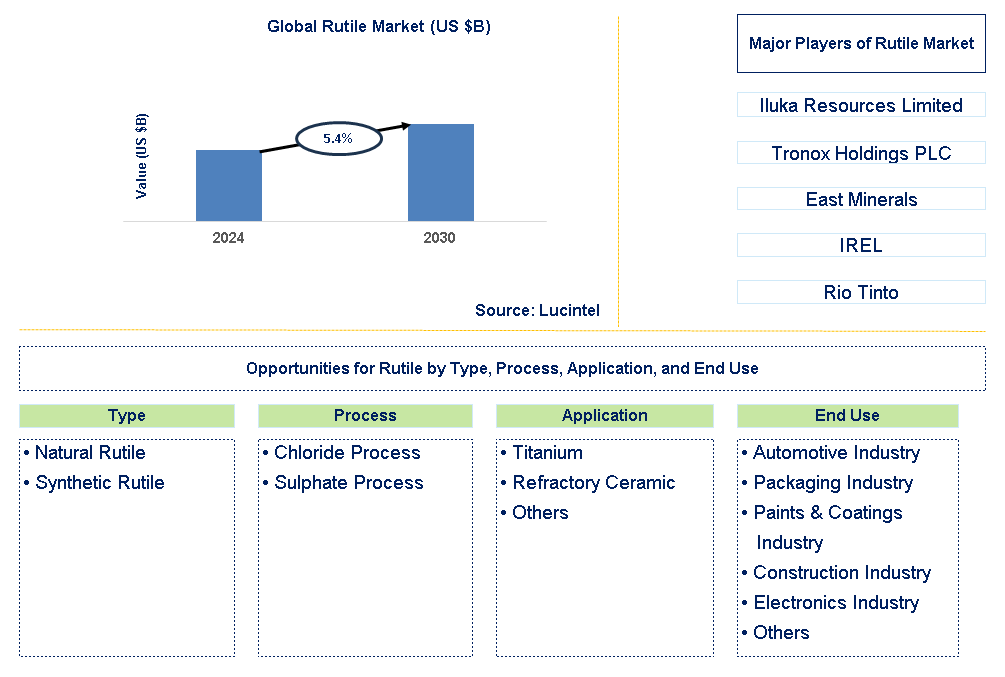
Key data points: The growth forecast = 5.4% annually for the next 6 years. Scroll below to get more insights. This market report covers trends, opportunities, and forecast in the global rutile market to 2030 by type (natural rutile and synthetic rutile), process (chloride process and sulphate process), application (titanium, refractory ceramic, and others), end use (automotive industry, packaging industry, paints & coatings industry, construction industry , electronics industry, and others), and region (North America, Europe, Asia Pacific, and the Rest of the World)
We'll send your sample report shortly.
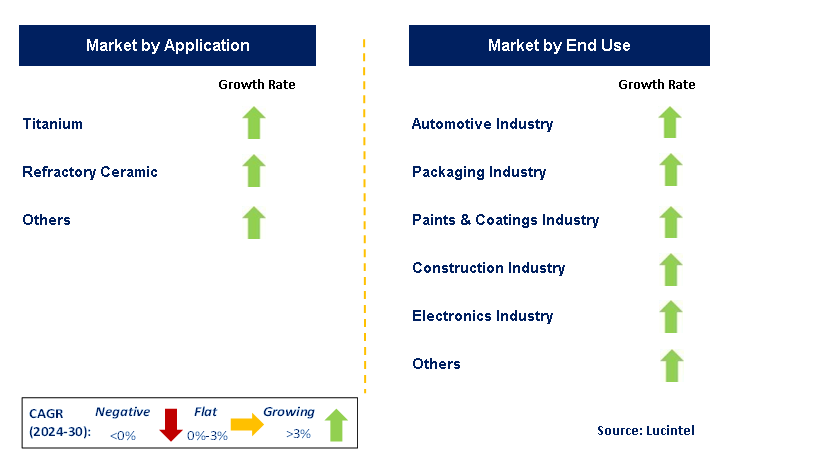
• Lucintel forecasts that, within the application category titanium will remain the larger segment due to the market for titanium dioxide and titanium metal has a significant impact on rutile. The primary factor fueling the demand for rutile is the high percentage of titanium in synthetic rutile.
• Within the end use category, the automotive industry will remain the largest segment due to stricter regulations and heightened environmental awareness, there is significant interest in cars that run on batteries or electricity to reduce gasoline pollution.
• In terms of regions, APAC will remain the largest region due to rapid urbanization and industrial expansion, leading to a surge in construction activities across various sectors like residential, commercial, and infrastructure. A more than 150-page report is developed to help in your business decisions.
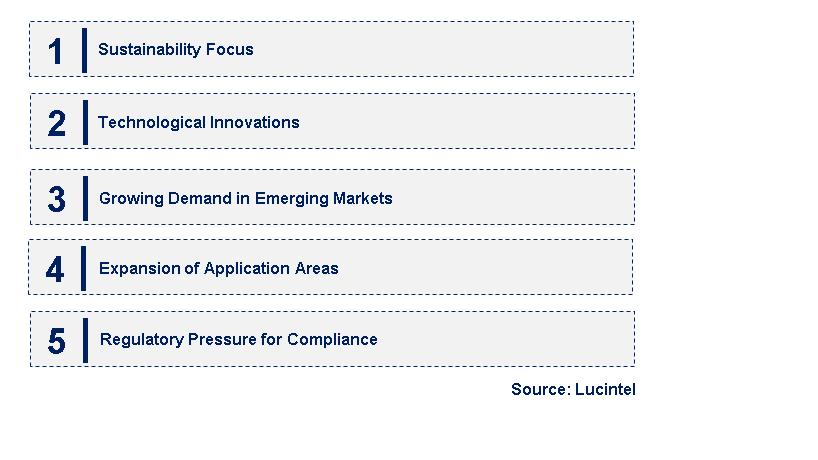
• Sustainability Focus: The push for sustainable materials is driving the rutile market. Manufacturers are increasingly adopting eco-friendly practices, including responsible sourcing and low-impact production methods. This trend enhances brand reputation and aligns with regulatory requirements, catering to environmentally conscious consumers.
• Technological Innovations: Advancements in extraction and processing technologies are significantly improving the quality and efficiency of rutile production. Innovations such as hydrometallurgical techniques reduce waste and energy consumption, allowing manufacturers to optimize resource use and increase profitability.
• Growing Demand in Emerging Markets: The rising demand for titanium dioxide in emerging economies is driving growth in the rutile market. As industrialization accelerates in regions like Asia-Pacific and Africa, the need for high-performance rutile for coatings, plastics, and other applications is increasing, providing lucrative opportunities for manufacturers.
• Expansion of Application Areas: Rutile is finding new applications beyond traditional sectors like paints and coatings. Industries such as electronics, renewable energy, and aerospace are increasingly utilizing rutile-based materials, expanding the market and encouraging innovation in product development.
• Regulatory Pressure for Compliance: Stricter environmental regulations are influencing the rutile market. Companies are focusing on compliance with global standards to avoid penalties and enhance market access. This trend is driving investments in cleaner technologies and sustainable practices, reinforcing the importance of responsible production. These emerging trends are reshaping the rutile market by promoting sustainability, driving technological advancements, and expanding applications. As manufacturers adapt to these changes, the market is poised for growth, catering to the evolving needs of various industries.
• Investment in Sustainable Production: Companies are increasingly investing in sustainable production methods for rutile. This includes the adoption of cleaner extraction techniques and the use of renewable energy sources in processing. These investments not only reduce environmental impact but also align with consumer demand for eco-friendly products.
• Technological Advancements in Processing: Innovations in processing technologies are enhancing the efficiency and quality of rutile production. New methods, such as advanced flotation and leaching techniques, improve yield and reduce waste, allowing manufacturers to optimize their operations and lower costs.
• Increase in Domestic Sourcing: With rising import costs and supply chain disruptions, manufacturers are focusing on sourcing rutile domestically. This trend is promoting local mining operations and enhancing self-sufficiency, reducing reliance on international markets while supporting regional economies.
• Development of Specialty Rutile Products: There is a growing demand for specialty rutile products with enhanced properties for specific applications. Manufacturers are investing in R&D to develop high-performance grades of rutile for industries such as cosmetics, electronics, and advanced materials, driving innovation in the market.
• Collaborations and Partnerships: Strategic collaborations between manufacturers and research institutions are fostering innovation in the rutile market. These partnerships aim to develop new applications, improve production methods, and explore sustainable practices, enhancing competitiveness and market reach. These recent developments are significantly impacting the rutile market by enhancing sustainability, expanding production capabilities, and fostering innovation. As the market evolves, these factors will play a critical role in shaping the industry's future.
• Coatings and Paints: The coatings and paints sector remains a primary growth area for rutile. With increasing demand for high-quality, durable paints, manufacturers can develop advanced rutile grades that improve opacity and weather resistance, catering to both industrial and decorative applications.
• Plastics Industry: The use of rutile in plastics for enhancing durability and UV resistance is gaining traction. As the demand for lightweight and high-performance plastics grows, manufacturers can capitalize on this trend by developing rutile-based additives that enhance the performance of plastic products.
• Cosmetics and Personal Care: The cosmetics industry is increasingly utilizing rutile for its properties in formulations. Manufacturers can explore this opportunity by developing rutile-based products that offer natural color and opacity, appealing to consumers seeking clean beauty products.
• Renewable Energy Applications: Rutile is finding applications in renewable energy sectors, particularly in solar energy technologies. Manufacturers can innovate by developing rutile-based materials for solar panels, supporting the transition toward sustainable energy solutions.
• Advanced Materials and Electronics: The electronics industry presents a significant growth opportunity for rutile, especially in applications requiring high-performance materials. Companies can invest in R&D to develop specialized rutile products for electronic components, enhancing functionality and performance. These strategic growth opportunities in key applications are likely to drive the rutile market forward. By focusing on these areas, manufacturers can innovate, diversify their product lines, and effectively meet the changing demands of various industries.
• Growing Demand for Titanium Dioxide: The increasing demand for titanium dioxide in various industries, particularly paints and coatings, is a significant driver for the rutile market. As industries expand, the need for high-quality rutile continues to rise, providing ample opportunities for manufacturers.
• Sustainability Trends: The emphasis on sustainability is influencing the rutile market, with manufacturers adopting eco-friendly practices and sustainable sourcing. This trend aligns with consumer preferences for environmentally responsible products, enhancing brand loyalty and market competitiveness.
• Technological Innovations: Continuous advancements in extraction and processing technologies are improving rutile production efficiency and quality. These innovations allow manufacturers to optimize operations, reduce costs, and enhance product performance, driving market growth.
• Regulatory Support for Sustainable Practices: Supportive government policies promoting sustainable materials and practices contribute to the growth of the rutile market. Incentives for eco-friendly production and waste management practices enhance competitiveness and market presence.
• Expansion in Emerging Markets: The growth of emerging markets is driving demand for rutile. As industrialization accelerates, particularly in Asia-Pacific and Africa, the need for rutile in various applications is increasing, providing lucrative opportunities for manufacturers. Challenges in the rutile market include:
• Raw Material Price Fluctuations: Volatility in raw material prices can impact production costs for rutile manufacturers. This fluctuation may lead to price increases for consumers and affect profit margins, necessitating effective cost management strategies.
• Environmental Concerns: Despite its sustainable attributes, rutile production faces scrutiny over environmental impacts. Addressing these concerns through responsible sourcing and eco-friendly practices is essential for maintaining market reputation and consumer trust.
• Competition from Alternative Materials: The rutile market faces competition from alternative materials and substitutes, which may offer lower costs or enhanced performance. Manufacturers need to emphasize the unique benefits of rutile to maintain market share and attract customers. These drivers and challenges significantly impact the rutile market. While growing demand and technological innovations drive growth, challenges such as raw material volatility and environmental concerns must be addressed. Balancing these factors will be crucial for the sustainable development of the rutile market.
• Iluka Resources Limited
• Tronox Holdings PLC
• East Minerals
• IREL
• Rio Tinto
• V.V Mineral
• TOR Minerals
• Natural Rutile
• Synthetic Rutile
• Chloride Process
• Sulphate Process
• Titanium
• Refractory Ceramic
• Others
• Automotive Industry
• Packaging Industry
• Paints & Coatings Industry
• Construction Industry
• Electronics Industry
• Others
• North America
• Europe
• Asia Pacific
• The Rest of the World
• United States: In the U.S., recent developments in the rutile market focus on enhancing production efficiency and sustainability. Companies are investing in advanced extraction technologies that minimize environmental impact. The growth of the paint and coatings industry is driving demand for high-quality rutile, with manufacturers prioritizing eco-friendly TiO2 production processes.
• China: China remains the largest consumer and producer of rutile, with ongoing investments aimed at expanding production capacity. The country is increasingly adopting advanced technologies to improve the quality of rutile and reduce production costs. Additionally, the emphasis on green manufacturing practices is driving the development of sustainable rutile sources, aligning with global environmental standards.
• Germany: Germany is focusing on innovation in the rutile market, emphasizing the development of high-performance TiO2 products for coatings and plastics. Recent advancements include the production of specialty rutile grades that offer enhanced opacity and durability. The country’s stringent environmental regulations are prompting manufacturers to adopt cleaner production technologies, positioning them as leaders in sustainable practices.
• India: In India, the rutile market is witnessing growth due to rising demand in the paint and plastics industries. Manufacturers are increasingly exploring domestic sources of rutile to reduce dependency on imports. Investments in processing technologies are enhancing the quality of rutile, allowing local companies to compete effectively in international markets.
• Japan: Japan is leveraging its technological expertise to advance the rutile market, focusing on producing high-quality titanium products. Companies are investing in R&D to develop innovative applications for rutile in electronics and advanced materials. The emphasis on sustainability and compliance with environmental regulations is driving the adoption of eco-friendly practices in rutile production.


• Iluka Resources Limited
• Tronox Holdings PLC
• East Minerals
• IREL
• Rio Tinto
• V.V Mineral
• TOR Minerals Q5. Which rutile market segment will be the largest in the future? Answer: Lucintel forecasts that titanium will remain the larger segment due to the market for titanium dioxide and titanium metal has a significant impact on rutile. The primary factor fueling the demand for rutile is the high percentage of titanium in synthetic rutile. Q6. In the rutile market, which region is expected to be the largest in the next 5 years? Answer: APAC will remain the largest region due to rapid urbanization and industrial expansion, leading to a surge in construction activities across various sectors like residential, commercial, and infrastructure. Q7. Do we receive customization in this report? Answer: Yes, Lucintel provides 10% customization without any additional cost.


Choose a license that fits your team. Instant PDF delivery.
Prices exclude taxes. Instant delivery. Custom licensing available on request.
Market Report · May 18, 2026
Market Report · May 18, 2026
Market Report · March 24, 2026
Trusted partner for strategic intelligence and business growth


Receive a complimentary market analysis tailored to your industry. Our analysts will identify key growth opportunities and competitive dynamics specific to your business.

Market size, growth rate, and key trend analysis for your specific sector.

Top competitor positioning and market share analysis.

Strategic recommendations backed by data-driven insights.
Get curated market intelligence and competitive moves straight to your inbox.
By subscribing, you agree to receive our monthly insights. Unsubscribe anytime.
Receive a complimentary market analysis tailored to your industry. Our analysts will identify key growth opportunities and competitive dynamics specific to your business.
Market size, growth rate, and key trend analysis for your specific sector.
Top competitor positioning and market share analysis.
Strategic recommendations backed by data-driven insights.
Get curated market intelligence, emerging trends, and competitive moves straight to your inbox each month.
By subscribing, you agree to receive our monthly insights. Unsubscribe anytime.
We'll send your sample report shortly.