
Report Feature
Root Zone Heating System Market Trends and Forecast
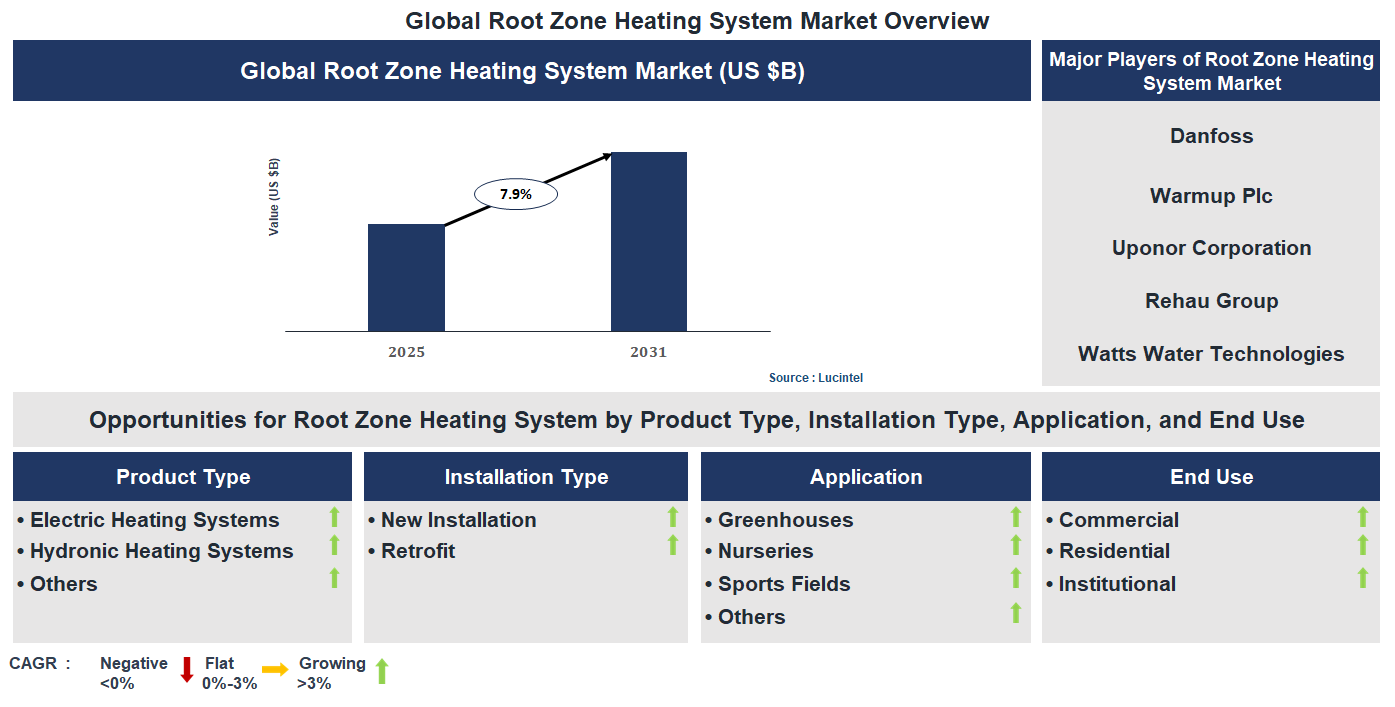
The future of the global root zone heating system market looks promising with opportunities in the commercial, residential, and institutional markets. The global root zone heating system market is expected to grow with a CAGR of 7.9% from 2025 to 2031. The major drivers for this market are the increasing demand for energy-efficient solutions, the rising adoption of sustainable heating methods, and the growing popularity of smart home technologies.• Lucintel forecasts that, within the product type category, electric heating system is expected to witness higher growth over the forecast period.
• Within the end use category, commercial is expected to witness the highest growth.
• In terms of region, Europe is expected to witness the highest growth over the forecast period. Gain valuable insights for your business decisions with our comprehensive 150+ page report. Sample figures with some insights are shown below.
Emerging Trends in the Root Zone Heating System Market
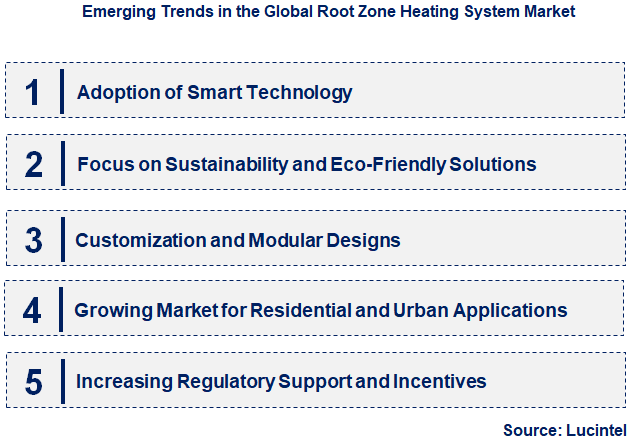
The root zone heating system market is experiencing rapid evolution driven by technological advancements, environmental concerns, and changing consumer preferences. As agriculture and landscaping industries seek more efficient, sustainable, and cost-effective solutions, new trends are emerging that are transforming how root zone heating systems are designed, implemented, and utilized. These developments are not only enhancing operational efficiency but also promoting eco-friendly practices and expanding market opportunities. Understanding these key trends is essential for stakeholders aiming to stay competitive and innovative in this dynamic market landscape.• Adoption of Smart Technology: Integration of IoT and automation is revolutionizing root zone heating systems by enabling real-time monitoring and control. Sensors track soil temperature, moisture levels, and system performance, allowing precise adjustments via connected devices. This enhances energy efficiency, reduces operational costs, and improves crop yields. Smart systems also facilitate predictive maintenance, minimizing downtime and extending equipment lifespan. As technology becomes more affordable, adoption is expected to grow, making systems more user-friendly and customizable for diverse applications.
• Focus on Sustainability and Eco-Friendly Solutions: Increasing environmental awareness is driving demand for sustainable heating options. Manufacturers are developing systems that utilize renewable energy sources such as solar or geothermal power, reducing reliance on fossil fuels. Eco-friendly materials and energy-efficient designs are prioritized to minimize carbon footprints. These sustainable solutions appeal to environmentally conscious consumers and regulatory bodies, encouraging market growth. The shift towards green practices not only benefits the environment but also offers long-term cost savings, making eco-friendly root zone heating systems a competitive advantage.
• Customization and Modular Designs: The market is witnessing a trend toward highly customizable and modular heating systems tailored to specific crop types, soil conditions, and operational scales. Modular designs allow easy expansion or reconfiguration, providing flexibility for growers and landscapers. Customization ensures optimal soil temperature management, improving plant health and productivity. This trend supports diverse applications, from small-scale horticulture to large agricultural operations, and helps meet unique client needs. The ability to adapt systems quickly enhances market appeal and encourages adoption across various sectors.
• Growing Market for Residential and Urban Applications: Traditionally focused on agriculture, the market is expanding into residential and urban landscaping sectors. Homeowners and urban planners seek efficient solutions for green roofs, urban gardens, and private landscapes. Compact, easy-to-install systems are designed to meet these needs, promoting year-round plant growth and extending growing seasons. This diversification broadens the market base, creating new revenue streams for manufacturers. The trend also aligns with urban sustainability initiatives, promoting greener cities and enhancing the quality of life through innovative landscaping solutions.
• Increasing Regulatory Support and Incentives: Governments and regulatory bodies are implementing policies and incentives to promote sustainable heating technologies. Subsidies, tax credits, and grants encourage the adoption of eco-friendly root zone heating systems. Standards for energy efficiency and emissions are becoming more stringent, pushing manufacturers to innovate and improve product offerings. Regulatory support accelerates market growth by reducing financial barriers and fostering innovation. This environment encourages investment in research and development, leading to more advanced, compliant, and market-ready solutions that meet evolving environmental standards. In summary, these emerging trends are reshaping the root zone heating system market by fostering innovation, promoting sustainability, and expanding application areas. The integration of smart technology, eco-friendly solutions, customization options, new market segments, and supportive regulations collectively drives growth and competitiveness. As these trends continue to evolve, they will significantly influence market dynamics, encouraging more sustainable, efficient, and versatile root zone heating solutions worldwide.
Recent Development in the Root Zone Heating System Market
The root zone heating system market has experienced significant growth driven by advancements in technology, increasing demand for energy-efficient solutions, and a shift towards sustainable agriculture practices. As farmers and horticulturists seek innovative ways to optimize crop yields and reduce energy consumption, the market is evolving rapidly. Recent developments reflect a focus on integrating smart technology, expanding application areas, and improving system efficiency. These changes are shaping the future landscape of root zone heating solutions, making them more accessible and effective for various agricultural and horticultural applications. The following key developments highlight the current trajectory of this dynamic market.• Adoption of Smart Technology: Integration of IoT and automation systems has enhanced control and monitoring of root zone temperatures, leading to improved energy efficiency and crop management. This development allows farmers to optimize conditions remotely, reduce operational costs, and increase yields, thereby boosting market growth and technological adoption.
• Expansion into Greenhouse Cultivation: Increasing use of root zone heating systems in greenhouse environments has expanded the market beyond traditional outdoor agriculture. This shift supports year-round cultivation, improves crop quality, and reduces disease risk, making the systems more attractive to commercial growers and boosting market demand.
• Development of Energy-Efficient Systems: Innovations in insulation materials and heating element design have resulted in more energy-efficient systems that consume less power while maintaining optimal soil temperatures. This advancement reduces operational costs for users and aligns with sustainability goals, thereby driving market expansion.
• Growing Focus on Sustainable Agriculture: Rising awareness of environmental impacts has led to increased adoption of eco-friendly heating solutions. Market players are developing systems that utilize renewable energy sources, such as solar power, further enhancing the markets sustainability profile and attracting environmentally conscious consumers.
• Geographic Expansion and Market Penetration: Emerging markets in Asia-Pacific and Latin America are witnessing increased adoption of root zone heating systems due to rising agricultural productivity demands. This geographic expansion is driven by government initiatives and increasing investments, broadening the market scope and creating new growth opportunities. In summary, these developments are significantly impacting the root zone heating system market by enhancing technological capabilities, expanding application areas, and promoting sustainable practices. The market is becoming more efficient, accessible, and environmentally friendly, which is expected to drive continued growth and innovation in the coming years.
Strategic Growth Opportunities in the Root Zone Heating System Market
The root zone heating system market is experiencing rapid growth driven by increasing demand for sustainable agriculture, energy efficiency, and innovative farming techniques. As farmers and horticulturists seek to optimize crop yields and reduce energy consumption, the market is expanding across various applications. Key growth opportunities are emerging in areas that leverage technological advancements and environmental considerations. These opportunities are shaping the future landscape of root zone heating solutions, making them more accessible, efficient, and environmentally friendly. Understanding these developments is crucial for stakeholders aiming to capitalize on the markets potential and drive sustainable growth.• Precision Agriculture: The integration of root zone heating systems with precision agriculture technologies allows for targeted heating, improving crop health and yield. This reduces energy waste and optimizes resource use, leading to higher productivity and sustainability.
• Greenhouse Cultivation: Root zone heating systems enable greenhouses to maintain optimal soil temperatures, extending growing seasons. This results in increased crop diversity, higher yields, and better quality produce, boosting profitability for growers.
• Energy-efficient Solutions: The shift towards renewable energy sources like solar and wind for powering heating systems reduces operational costs and carbon footprint. This aligns with global sustainability goals and appeals to environmentally conscious consumers.
• Smart Monitoring and Control: The deployment of IoT technology allows real-time monitoring and automated control of soil temperatures. This enhances system efficiency, reduces manual intervention, and ensures optimal growing conditions.
• Urban Agriculture: Root zone heating systems are vital for urban farming setups, supporting soil health in confined spaces. This promotes local food production, reduces transportation emissions, and meets the rising demand for fresh produce in urban areas. In summary, these growth opportunities are significantly impacting the root zone heating system market by driving technological innovation, promoting sustainability, and expanding application scopes. They enable growers to achieve higher yields, reduce costs, and meet environmental standards, thereby fostering a more resilient and efficient agricultural sector.
Root Zone Heating System Market Driver and Challenges
The root zone heating system market is influenced by a variety of technological, economic, and regulatory factors that shape its growth and development. Advances in heating technology, increasing demand for sustainable agricultural practices, and supportive government policies are key drivers. Conversely, high installation costs, regulatory hurdles, and technological limitations pose significant challenges. Understanding these drivers and challenges is essential for stakeholders to navigate the market effectively and capitalize on emerging opportunities while addressing potential obstacles. The factors responsible for driving the root zone heating system market include:-• Technological Innovation: The development of energy-efficient and automated heating systems enhances operational efficiency and reduces energy consumption, making them more attractive to growers. Innovations such as smart controls and remote monitoring improve precision and ease of use, encouraging adoption across various agricultural sectors.
• Growing Demand for Sustainable Agriculture: Increasing awareness of environmental impacts and the need for year-round crop production drive the adoption of root zone heating systems. These systems enable farmers to extend growing seasons, improve crop yields, and reduce reliance on chemical inputs, aligning with sustainable practices.
• Government Policies and Incentives: Supportive regulations, subsidies, and grants aimed at promoting energy-efficient and eco-friendly farming practices incentivize farmers to invest in root zone heating solutions. These policies help reduce initial costs and encourage market penetration.
• Rising Urbanization and Controlled Environment Agriculture: The expansion of urban farming and controlled environment agriculture (CEA) necessitates efficient heating solutions. Root zone heating systems facilitate optimal root temperatures, improving plant health and productivity in limited spaces. The challenges facing this root zone heating system market include:-
• High Installation and Maintenance Costs: The initial investment for installing root zone heating systems can be substantial, especially for small-scale farmers. Ongoing maintenance and energy costs further add to the financial burden, potentially limiting adoption among cost-sensitive growers.
• Regulatory and Certification Barriers: Stringent regulations related to energy use, environmental impact, and safety standards can delay project approvals and increase compliance costs. Navigating complex regulatory landscapes poses a significant hurdle for market expansion.
• Technological Limitations and Compatibility Issues: Existing systems may face limitations in scalability, energy efficiency, or integration with other farm management technologies. Compatibility issues can hinder seamless implementation and reduce overall system effectiveness, impacting user confidence and adoption rates. In summary, the root zone heating system market is driven by technological advancements, sustainability trends, supportive policies, and urban agriculture growth. However, high costs, regulatory challenges, and technological limitations present notable obstacles. These factors collectively influence market dynamics, requiring stakeholders to innovate and adapt strategies to foster sustainable growth and overcome barriers. The markets future will depend on balancing these drivers and challenges to unlock its full potential.
List of Root Zone Heating System Companies
Companies in the market compete on the basis of product quality offered. Major players in this market focus on expanding their manufacturing facilities, R&D investments, infrastructural development, and leverage integration opportunities across the value chain. With these strategies root zone heating system companies cater increasing demand, ensure competitive effectiveness, develop innovative products & technologies, reduce production costs, and expand their customer base. Some of the root zone heating system companies profiled in this report include-• Danfoss
• Warmup Plc
• Uponor Corporation
• Rehau Group
• Watts Water Technologies
• Emerson Electric Co.
• Pentair Plc
• Robert Bosch GmbH
• Siemens AG
• Nexans S.A.
Root Zone Heating System Market by Segment
The study includes a forecast for the global root zone heating system market by product type, installation type, application, end use, and region.Root Zone Heating System Market by Product Type [Value from 2019 to 2031]:
• Electric Heating Systems
• Hydronic Heating Systems
• Others
Root Zone Heating System Market by Installation Type [Value from 2019 to 2031]:
• New Installation
• Retrofit
Root Zone Heating System Market by Application [Value from 2019 to 2031]:
• Greenhouses
• Nurseries
• Sports Fields
• Others
Root Zone Heating System Market by End Use [Value from 2019 to 2031]:
• Commercial
• Residential
• Institutional
Root Zone Heating System Market by Region [Value from 2019 to 2031]:
• North America
• Europe
• Asia Pacific
• The Rest of the World
Country Wise Outlook for the Root Zone Heating System Market
The root zone heating system market has experienced significant growth driven by increasing demand for energy-efficient agricultural practices, advancements in technology, and the need for sustainable crop production. Countries are adopting innovative solutions to optimize plant growth, reduce energy consumption, and improve yields. The markets evolution reflects a focus on eco-friendly and cost-effective heating systems tailored to diverse climatic conditions. As global agriculture faces climate challenges, these developments are crucial for ensuring food security and sustainable farming practices worldwide.• United States: The U.S. market has seen rapid adoption of smart, energy-efficient root zone heating systems, driven by technological innovation and a focus on sustainable agriculture. Major players are investing in IoT-enabled solutions for precise temperature control, enhancing crop yields, and reducing energy costs. Government incentives and increasing awareness of eco-friendly farming practices further boost market growth. Additionally, the integration of renewable energy sources with heating systems is gaining traction, promoting sustainability.
• China: China is experiencing substantial growth in the root zone heating system market due to its expanding agricultural sector and government initiatives promoting modern farming techniques. The focus is on affordable, scalable solutions to support large-scale greenhouse farming. Innovations include the use of solar-powered heating systems and automation technologies to improve efficiency. The government’s emphasis on food security and rural development is a key driver, alongside increasing investments from domestic companies in advanced heating solutions.
• Germany: Germany’s market is characterized by a strong emphasis on energy efficiency and environmental sustainability. The adoption of high-performance, eco-friendly root zone heating systems is driven by strict regulations and a commitment to reducing carbon emissions. The country is also investing in research and development to improve system durability and performance. The integration of renewable energy sources, such as biomass and solar, with heating systems is a notable trend, aligning with Germany’s broader sustainability goals.
• India: The Indian market is witnessing rapid growth due to increasing adoption of greenhouse farming and a rising focus on year-round crop production. Cost-effective and energy-efficient heating solutions are in high demand to support small and medium-sized farms. Innovations include the use of solar-powered systems and locally manufactured heating units to reduce costs. Government schemes promoting sustainable agriculture and rural development are significant factors driving market expansion, alongside rising awareness of the benefits of controlled environment agriculture.
• Japan: Japan’s market is characterized by advanced technological integration and a focus on precision agriculture. The adoption of automated, sensor-based root zone heating systems is increasing, aimed at optimizing energy use and crop quality. The country’s emphasis on sustainable farming practices and energy conservation influences market trends. Investments in research for innovative materials and system designs are ongoing, with a focus on reducing environmental impact and enhancing system efficiency in various climatic conditions.

Features of the Global Root Zone Heating System Market
Market Size Estimates: Root zone heating system market size estimation in terms of value ($B). Trend and Forecast Analysis: Market trends (2019 to 2024) and forecast (2025 to 2031) by various segments and regions. Segmentation Analysis: Root zone heating system market size by various segments, such as by product type, installation type, application, end use, and region in terms of value ($B). Regional Analysis: Root zone heating system market breakdown by North America, Europe, Asia Pacific, and Rest of the World. Growth Opportunities: Analysis of growth opportunities in different product type, installation type, application, end use, and regions for the root zone heating system market. Strategic Analysis: This includes M&A, new product development, and competitive landscape of the root zone heating system market. Analysis of competitive intensity of the industry based on Porter’s Five Forces model.
FAQ
Q1. What is the growth forecast for root zone heating system market? Answer: The global root zone heating system market is expected to grow with a CAGR of 7.9% from 2025 to 2031. Q2. What are the major drivers influencing the growth of the root zone heating system market? Answer: The major drivers for this market are the increasing demand for energy-efficient solutions, the rising adoption of sustainable heating methods, and the growing popularity of smart home technologies. Q3. What are the major segments for root zone heating system market? Answer: The future of the root zone heating system market looks promising with opportunities in the commercial, residential, and institutional markets. Q4. Who are the key root zone heating system market companies? Answer: Some of the key root zone heating system companies are as follows:• Danfoss
• Warmup Plc
• Uponor Corporation
• Rehau Group
• Watts Water Technologies
• Emerson Electric Co.
• Pentair Plc
• Robert Bosch GmbH
• Siemens AG
• Nexans S.A. Q5. Which root zone heating system market segment will be the largest in future? Answer: Lucintel forecasts that, within the product type category, electric heating system is expected to witness higher growth over the forecast period. Q6. In root zone heating system market, which region is expected to be the largest in next 5 years? Answer: In terms of region, Europe is expected to witness the highest growth over the forecast period. Q7. Do we receive customization in this report? Answer: Yes, Lucintel provides 10% customization without any additional cost.
Table of Contents
List of Figures
List of Tables
Methodology
- In-depth interviews of the major players in this market
- Detailed secondary research from competitors’ financial statements and published data
- Extensive searches of published works, market, and database information pertaining to industry news, company press releases, and customer intentions
- A compilation of the experiences, judgments, and insights of Lucintel’s professionals, who have analyzed and tracked this market over the years.


Buy Now
Choose a license that fits your team. Instant PDF delivery.
Prices exclude taxes. Instant delivery. Custom licensing available on request.
Key Questions
- • What are some of the most promising, high-growth opportunities for the root zone heating system market by product type (electric heating systems, hydronic heating systems, and others), installation type (new installation and retrofit), application (greenhouses, nurseries, sports fields, and others), end use (commercial, residential, and institutional), and region (North America, Europe, Asia Pacific, and the Rest of the World)?
- • Which segments will grow at a faster pace and why?
- • Which region will grow at a faster pace and why?
- • What are the key factors affecting market dynamics? What are the key challenges and business risks in this market?
- • What are the business risks and competitive threats in this market?
- • What are the emerging trends in this market and the reasons behind them?
- • What are some of the changing demands of customers in the market?
- • What are the new developments in the market? Which companies are leading these developments?
- • Who are the major players in this market? What strategic initiatives are key players pursuing for business growth?
- • What are some of the competing products in this market and how big of a threat do they pose for loss of market share by material or product substitution?
- • What M&A activity has occurred in the last 5 years and what has its impact been on the industry? For any questions related to Root Zone Heating System Market, Root Zone Heating System Market Size, Root Zone Heating System Market Growth, Root Zone Heating System Market Analysis, Root Zone Heating System Market Report, Root Zone Heating System Market Share, Root Zone Heating System Market Trends, Root Zone Heating System Market Forecast, Root Zone Heating System Companies, write Lucintel analyst at email: helpdesk@lucintel.com. We will be glad to get back to you soon.


