
Market Report · July 29, 2026

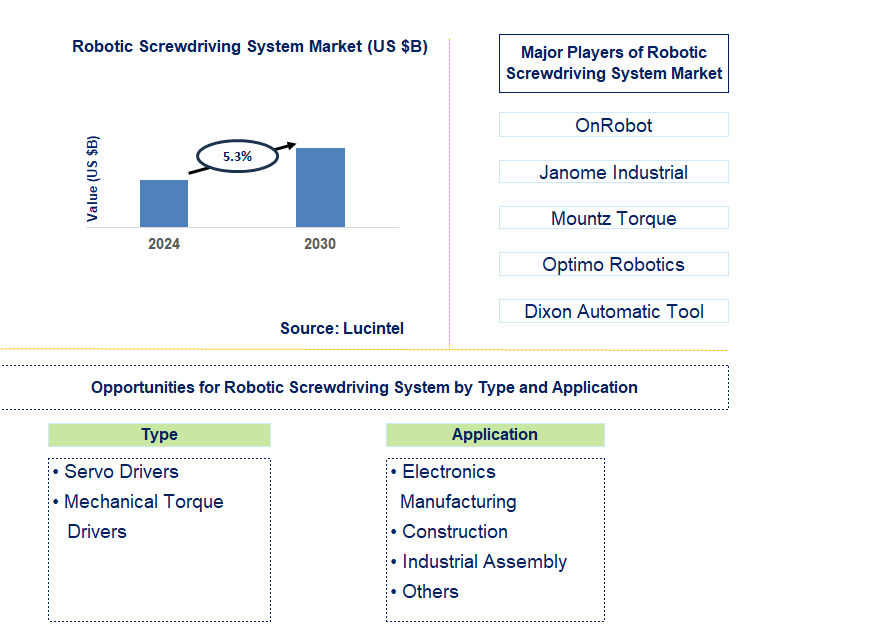
Key data points: The growth forecast = 5.3% annually next 7 years. Scroll below to get more insights. This market report covers trends, opportunities, and forecast in the global robotic screwdriving system market to 2030 by type (servo drivers and mechanical torque drivers), application (electronics manufacturing, construction, industrial assembly, and others), and region (North America, Europe, Asia Pacific, and the Rest of the World)
We'll send your sample report shortly.
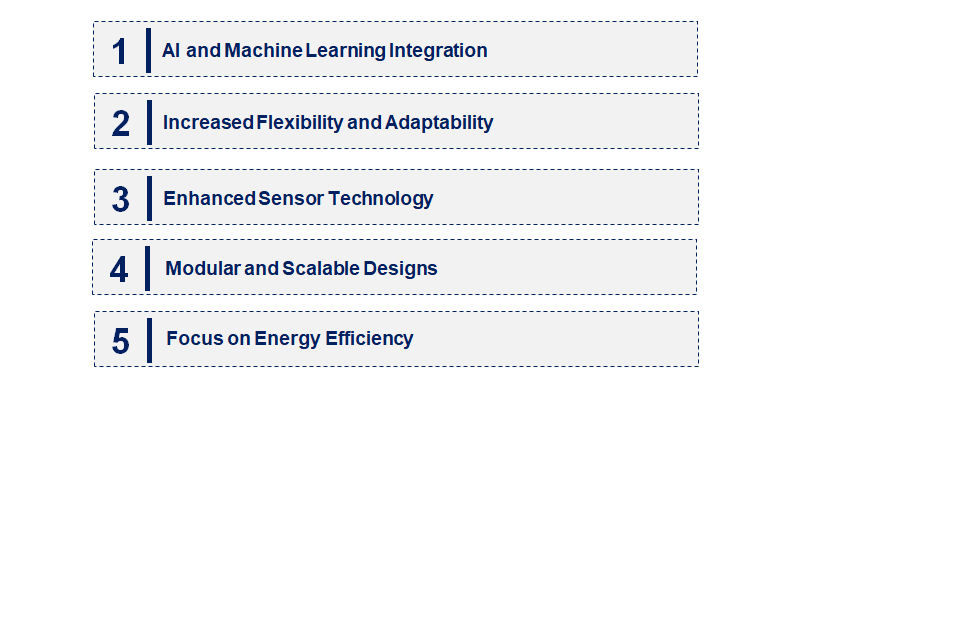
• AI and Machine Learning Integration: To attain good precision, adaptability to variable tasks or improved decision-making process has led to use of AI and machine learning algorithms thereby making these robots incorporate such algorithms. This implies that robots can learn how to optimize screw-driving activities over time.
• Increased Flexibility and Adaptability: The modern systems cater for a greater range of screw sizes, types and materials. This allows for quick reconfiguration as well as customization according to various production requirements thus availing more flexible robots.
• Enhanced Sensor Technology: Improvements in sensor technology have helped improve accuracy and reliability during screw-driving operations. These sensors give real-time feedback on torque, alignment as well as position thereby ensuring uniformity while reducing errors.
• Modular and Scalable Designs: With this trend towards modularization along with scalability increase in this sector, one can easily customize his or her robotized screwdriver system as well as expand it later if needed. Furthermore, it supports integration into several manufacturing environments while also backing scale-up assembly lines.
• Focus on Energy Efficiency: The new designs should focus on components that save energy when operational hence minimizing power consumption costs. This particular interest aligns with broader ambitions regarding environmental sustainability whereby producers can reduce their carbon footprints. The transformation of robotic screwdriving systems industry may be traced to these trends that are related to their flexibility, precision, and efficiency. These changes are being driven by AI integration, advanced sensors, modular design as well as focus on energy use.
• AI Driven Automation: By bringing artificial intelligence into play robot systems can achieve accuracy process parameters during the real time operation as well as predict working conditions based on machine learning. In fact, using AI algorithms allows for dynamic modeling of different types of robots leading to increased production output.
• Enhanced Real-Time Monitoring: This includes more advanced sensors and feedback loops which ensures precise screwing with an immediate catch for cases where there is any anomaly or deviation from default values.
• Improved User Interfaces: Recent developments also feature intuitive user interfaces that simplify programming and operation thereby making them attractive even to nonexperts. This facilitates easy setup and maintenance thus making robot technology available to those who would like using it.
• Compact and Flexible Designs: They have become more compact and flexible so that they can fit in tighter spaces or change different types of production lines upon necessity. Such versatility makes them applicable across multiple industries including electrical engineering and food processing plants.
• Sustainable Manufacturing: Growing concerns regarding environment-friendly business operations have also seen development of energy conservative robots which reduce carbon emissions due to too much power consumption by these devices. The ability of these robotic screwdriving systems has been improved through automation, real-time monitoring, user interfaces, design flexibility, sustainability among others featured in these key developments. These modifications have consequently resulted in higher productivity as well as a more adaptive manufacturing system.
• Automotive Industry: The automotive sector provides lucrative avenues for expansion due to growing complexities involved in vehicle assembly. Interiors, engines, and electronics are some elements that will predominantly benefit from improved precision and efficiency through robotic screwdriving systems.
• Electronics Manufacturing: Screw tightening must be carried out with high levels of accuracy because electrical/electronic products are getting more complex each day. This technology is able to operate at such speeds hence it is applied in all zones that demand delicate touches during assembly processes.
• Consumer Goods: In consumer goods businesses, robot-based screw driving resulting in improved assembly line efficiency and uniformity is common place. They are most often used when making household appliances other than gadgets that people purchase daily.
• Medical Devices: Accurate positioning and assembling of critical components can only be done by automated systems, especially when it comes to medical devices. Such use helps produce high-quality specialized medical equipment that requires specific tolerances during its production cycle. The role of automatic screwing systems across industries, such as automotive, electronics, consumer goods, medical devices and aerospace is growing and strategic growth opportunities in these sectors highlight the importance of robotic screwdriving. By concentrating on these applications businesses can take advantage of market trends hence driving the industry’s progress.
• OnRobot
• Janome Industrial Equipment
• Mountz Torque
• Optimo Robotics
• Dixon Automatic Tool
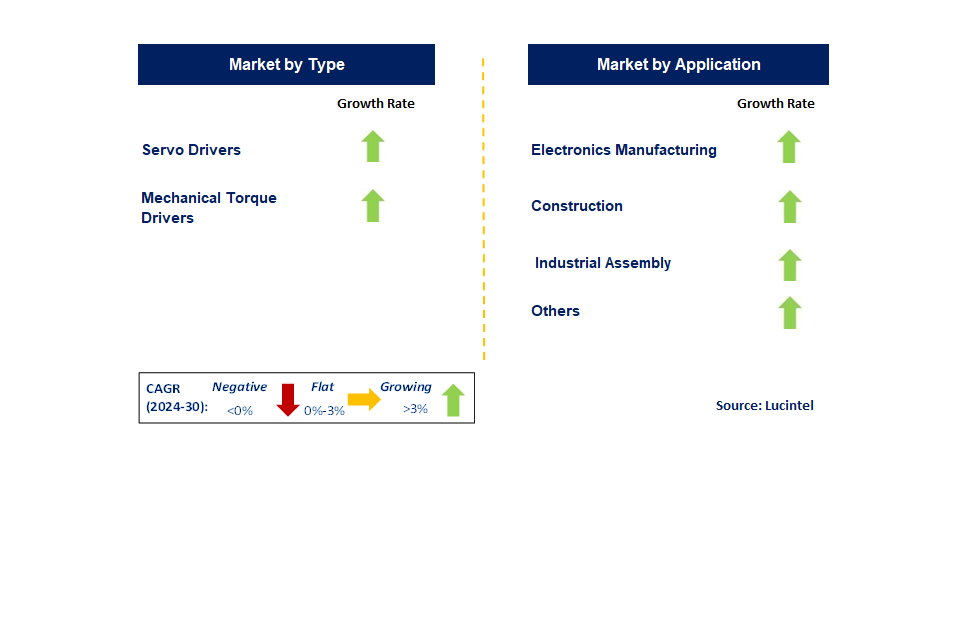
• Servo Drivers
• Mechanical Torque Drivers
• Electronics Manufacturing
• Construction
• Industrial Assembly
• Others
• North America
• Europe
• Asia Pacific
• The Rest of the World
• United States: In the U.S., there have been some recent advances such as integrating AI as well as machine learning into robot screwdriving systems; technologies that improve accuracy and adaptability enabling robots to handle complicated tasks of screwdriving with minimal human involvement. Moreover, increased emphasis has been placed on improving system integration with Industry 4.0 standards to facilitate better data analytics and process optimization.
• China: China’s developments have focused on cost efficiency together with mass production in robotic screwdriving systems. Local manufacturers have introduced low-cost solutions featuring increased flexibility and speed. Hardware and software improvements are turning these systems into many different applications ranging from electronics to automotive parts that cater for this country’s expanding industrial base.
• Germany: Precision and modularity are highlighted by Germany’s approach. Their new systems employ sophisticated sensors as well as real-time feedback mechanisms ensuring high accuracy during screwdriving operations. In addition, it is highly customizable allowing for its integration into various manufacturing setups, all while adhering to Germany’s strict quality guidelines.
• India: Affordability is one aspect that was emphasized upon while developing robotic screwdrivers at India. The latest development trends aim at simplifying user interfaces while also bringing down the overall cost of using a robot for screwing purposes. This approach aims at making automation affordable for small business owners and thereby increasing acceptance across all sectors.
• Japan: Japan’s developments are characterized by integration of complex robotics as well as automation techniques. Recent developments include improved dexterity and speed hence ability of these robots carry out complex screw-driving jobs very precisely. Japanese manufactures are also reducing machine footprints while optimizing energy consumption.
• OnRobot
• Janome Industrial Equipment
• Mountz Torque
• Optimo Robotics
• Dixon Automatic Tool Q5. Which robotic screwdriving system market segment will be the largest in future? Answer: Lucintel forecasts that servo drivers is expected to witness higher growth over the forecast period due to higher efficiency and productivity. Q6. In robotic screwdriving system market, which region is expected to be the largest in next 5 years? Answer: APAC is expected to witness highest growth over the forecast period due to significantly growing e-commerce and consumer electronic industries and rising government initiatives supporting technological advancements in the region. Q7. Do we receive customization in this report? Answer: Yes, Lucintel provides 10% customization without any additional cost.


Choose a license that fits your team. Instant PDF delivery.
Prices exclude taxes. Instant delivery. Custom licensing available on request.
Market Report · July 29, 2026
Market Report · July 20, 2026
Market Report · July 20, 2026
Trusted partner for strategic intelligence and business growth


Receive a complimentary market analysis tailored to your industry. Our analysts will identify key growth opportunities and competitive dynamics specific to your business.

Market size, growth rate, and key trend analysis for your specific sector.

Top competitor positioning and market share analysis.

Strategic recommendations backed by data-driven insights.
Get curated market intelligence and competitive moves straight to your inbox.
By subscribing, you agree to receive our monthly insights. Unsubscribe anytime.
Receive a complimentary market analysis tailored to your industry. Our analysts will identify key growth opportunities and competitive dynamics specific to your business.
Market size, growth rate, and key trend analysis for your specific sector.
Top competitor positioning and market share analysis.
Strategic recommendations backed by data-driven insights.
Get curated market intelligence, emerging trends, and competitive moves straight to your inbox each month.
By subscribing, you agree to receive our monthly insights. Unsubscribe anytime.
We'll send your sample report shortly.