
Market Report · July 22, 2026

Key data points: The market size in 2030 = $1.7 billion, growth forecast = 14.3% annually for the next 6 years. Scroll below to get more insights. This market report covers trends, opportunities, and forecasts in the global robotic-assisted imaging technologies market to 2030 by imaging modalities (X-Ray, CT, Ultrasound, MRI, and Others), mobility (stationary and portable), application (diagnosis & imaging and treatment), end use industry (hospitals, ambulatory surgery centers, and others), and region (North America, Europe, Asia Pacific, and the Rest of the World)
We'll send your sample report shortly.
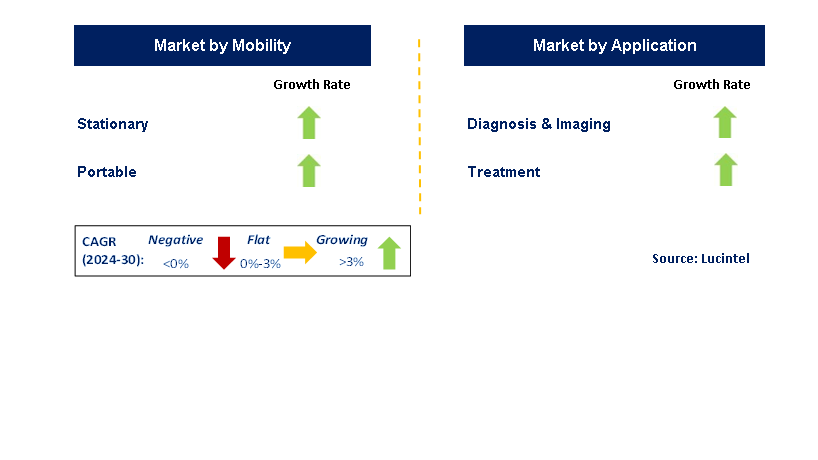
• Lucintel forecasts that, within the mobility category, stationary is expected to witness higher growth over the forecast period.
• Within the application category, diagnosis & imaging will remain the larger segment.
• In terms of regions, North America is expected will remain the largest segment over the forecast period due to the growing research and development activities and presence of many companies in the U.S.
Gain valuable insights for your business decisions with our comprehensive 150+ page report.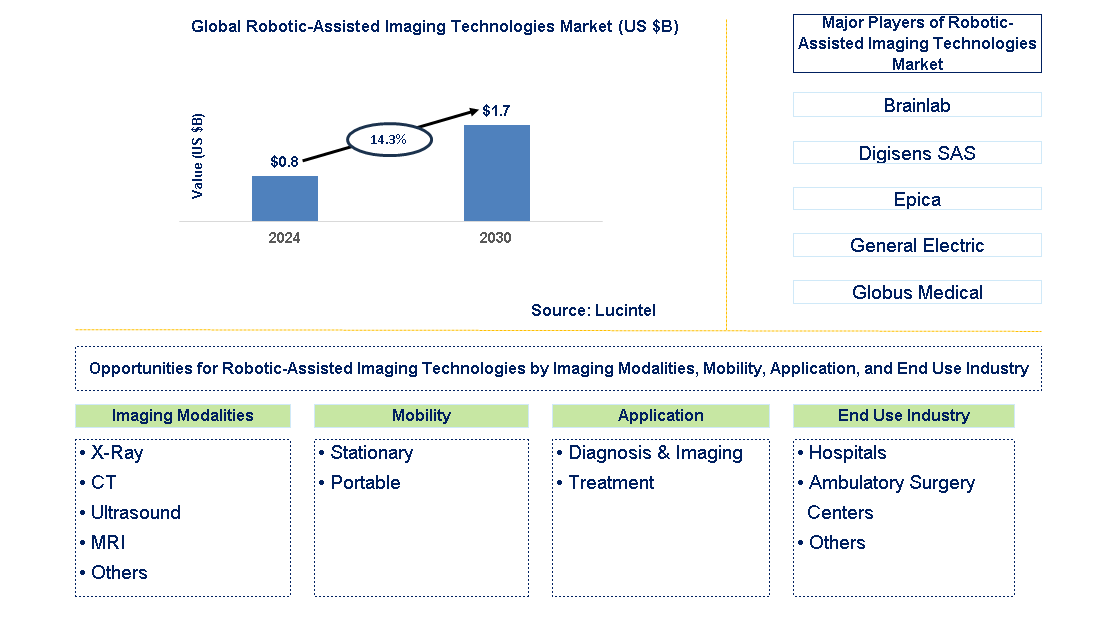
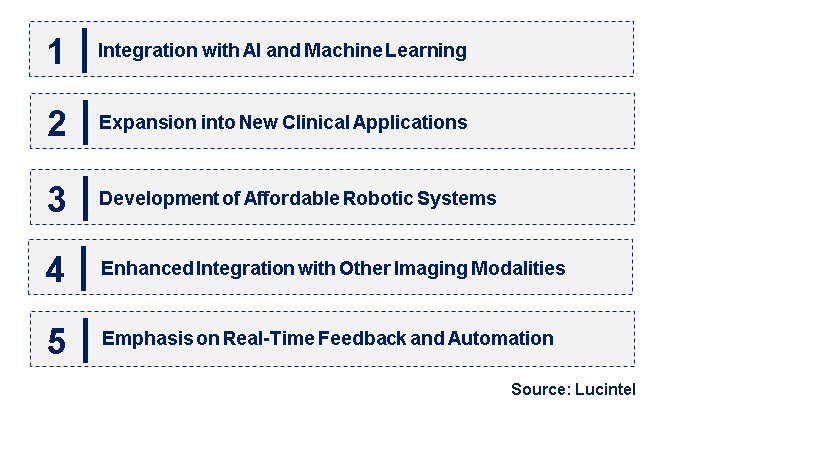
• Integration with AI and Machine Learning: Robotic-assisted imaging systems are increasingly integrating with AI and machine learning technologies. This integration enhances image analysis, automation, and diagnostic accuracy, enabling more precise and efficient procedures. AI-driven algorithms improve real-time decision-making and predictive capabilities, leading to better patient outcomes.
• Expansion into New Clinical Applications: The application of robotic-assisted imaging is expanding beyond traditional areas. New applications include complex surgical interventions, real-time imaging during minimally invasive procedures, and enhanced diagnostic capabilities in various medical fields. This trend broadens the scope of robotic imaging technology and increases its utility in clinical practice.
• Development of Affordable Robotic Systems: There is a growing focus on developing cost-effective robotic-assisted imaging systems. Advances in technology and manufacturing are aimed at reducing costs while maintaining high performance. This trend is making robotic systems more accessible, particularly in resource-limited settings, and promoting wider adoption.
• Enhanced Integration with Other Imaging Modalities: Robotic-assisted imaging is increasingly being integrated with other imaging modalities, such as MRI and CT. This integration provides comprehensive diagnostic information and improves the precision of both imaging and intervention. Enhanced system compatibility and data fusion capabilities are driving this trend.
• Emphasis on Real-Time Feedback and Automation: The emphasis on real-time feedback and automation is growing. Robotic systems are incorporating advanced sensors and feedback mechanisms to provide real-time data during procedures. Automation features reduce the need for manual intervention and enhance the efficiency and accuracy of imaging and diagnostic processes.
• Integration with AI and Machine Learning: Integration of AI and machine learning with robotic-assisted imaging systems is a significant development. AI algorithms enhance image analysis and decision-making, improving diagnostic accuracy and procedural efficiency. This development enables more precise and automated procedures, leading to better patient outcomes.
• Advanced Real-Time Feedback Systems: Advancements in real-time feedback systems are enhancing robotic-assisted imaging. New systems incorporate advanced sensors and data analytics to provide real-time information during procedures. This development improves procedural precision and enables immediate adjustments, enhancing overall performance and patient safety.
• Expansion into Minimally Invasive Procedures: Robotic-assisted imaging systems are increasingly used in minimally invasive procedures. The technology allows for high precision and real-time imaging during complex surgeries, reducing recovery times and improving patient outcomes. This development is expanding the clinical applications of robotic imaging systems.
• Affordable Robotic Imaging Systems: The development of cost-effective robotic imaging systems is a key trend. Advances in technology and manufacturing processes are reducing costs while maintaining high performance. This development makes robotic systems more accessible, particularly in developing regions and smaller healthcare facilities.
• Enhanced Integration with Existing Imaging Modalities: Enhanced integration with existing imaging modalities, such as MRI and CT, is improving the capabilities of robotic-assisted imaging systems. This development allows for comprehensive diagnostic information and better procedural planning, leading to more accurate and effective treatments.
• Surgical Robotics: Surgical robotics with robotic assistants enhance the preciseness and speed of complicated procedures in various imaging modalities. Surgeons can conduct minimally invasive surgeries with much improved precision, reducing recovery time for patients and minimizing complications. Integration of imaging modalities and robotic systems in real time allows surgeons to enjoy enhanced navigation and decision-making during surgery. This is especially beneficial for sensitive operations, such as neurosurgery and cardiac procedures, and promises to increase the uptake of these technologies in operating theatres worldwide.
• Diagnostics: Robotic-assisted imaging has been a game-changer in early disease detection and diagnosis accuracy in diagnostics. Automated systems with advanced imaging technologies, such as AI-powered MRI and CT scans, provide quicker and more accurate readings to allow for earlier interventions. This is particularly effective in oncology, where detecting conditions well in advance increases positive patient outcomes significantly. Precise and reliable technologies are extending their use to even routine diagnostic processes, further increasing market demand.
• Interventional Radiology: Applications in interventional radiology include robotic-assisted imaging technologies that open the door to more precise, less invasive procedures. These systems provide real-time imaging guidance during procedures such as catheter placements and biopsies, lowering complication rates and enhancing patient safety. Enhanced precision through robotic systems decreases procedure times and increases the success rate of interventions, thus driving growth in this area.
• Telemedicine: Another important domain in which robotic-assisted imaging technologies are marking a niche is in telemedicine. These technologies enable remote diagnosis and consultations, allowing specialists to assess patients and monitor progress without physically meeting with them. This proves especially useful in areas with limited access to specialized healthcare, particularly in rural or underserved areas. The combination of real-time imaging and telemedicine is expanding the reach of quality healthcare while making it more accessible and effective.
• Rehabilitation: Robotic-assisted imaging technologies are becoming increasingly important in rehabilitation, offering more personalized and precise therapy to help patients recover. Such systems provide detailed imaging of musculoskeletal conditions and allow customized rehabilitation protocols that optimize recovery times. Robotic systems can also be integrated into physical therapy exercises, offering real-time feedback and adjustments. This combination of imaging and robotics in rehabilitation is improving patient outcomes and reducing long-term care costs.
• Technological advancements: Technological advancements, including AI integration and improved robotics, are major drivers. Innovations in imaging systems, automation, and real-time feedback enhance diagnostic accuracy and procedural efficiency, driving market growth and expanding applications.
• Growing demand for precision medicine: The increasing demand for precision medicine drives the adoption of robotic-assisted imaging. These systems offer high precision and detailed imaging, enabling personalized treatment plans and better patient outcomes, contributing to market growth.
• Expansion of minimally invasive procedures: The expansion of minimally invasive procedures is fueling market growth. Robotic-assisted imaging systems provide precise imaging and control during complex procedures, reducing recovery times and improving patient outcomes, which drives adoption.
• Increased healthcare investment: Increased investment in healthcare technology supports the development and adoption of robotic-assisted imaging systems. Funding for research and development enhances system capabilities and promotes innovation, driving market expansion.
• Rising incidence of chronic diseases: The rising incidence of chronic diseases increases the demand for advanced diagnostic tools. Robotic-assisted imaging systems offer improved diagnostic capabilities and treatment planning, addressing the needs of patients with chronic conditions and driving market growth.
• High costs: The high costs of robotic-assisted imaging systems can limit adoption, particularly in resource-limited settings. Expensive equipment and maintenance costs may hinder widespread implementation and market growth.
• Technical complexity: The technical complexity of robotic-assisted imaging systems requires specialized training and expertise. This complexity can limit the adoption of these systems and affect their utilization in clinical practice.
• Regulatory and approval hurdles: Regulatory and approval hurdles can impact the introduction of new robotic-assisted imaging technologies. Navigating the regulatory process can be time-consuming and costly, potentially delaying market entry and affecting innovation.
• Brainlab
• Digisens SAS
• Epica
• General Electric
• Globus Medical
• Medirob
• Medtronic
• Neocis
• Novasignal Corporation
• Perfint Healthcare
• X-Ray
• CT
• Ultrasound
• MRI
• Others
• Stationary
• Portable
• Diagnosis & Imaging
• Treatment
• Hospitals
• Ambulatory Surgery Centers
• Others
• North America
• Europe
• Asia Pacific
• The Rest of the World
• United States: In the United States, robotic-assisted imaging technology is advancing with the integration of AI and machine learning to enhance diagnostic accuracy and efficiency. New systems are being developed to offer improved precision in procedures such as biopsies and surgeries. Additionally, there is a focus on expanding robotic systems' capabilities to handle a broader range of imaging modalities, which is expected to increase their adoption in both research and clinical settings.
• China: China is making significant strides in robotic-assisted imaging, with increased investment in R&D and domestic production. The country is focusing on developing cost-effective robotic imaging systems to improve healthcare access and efficiency. Recent advancements include the implementation of robotic systems in routine diagnostic procedures and surgical planning, aiming to enhance precision and reduce procedural errors. China is also working on integrating these systems with AI technologies.
• Germany: Germany is at the forefront of innovation in robotic-assisted imaging, with a strong emphasis on integrating robotics with advanced imaging technologies. Recent developments include the introduction of sophisticated robotic systems that offer enhanced imaging resolution and real-time feedback during procedures. German institutions are also exploring the use of robotics in complex surgical interventions and diagnostic imaging, aiming to improve patient outcomes and streamline healthcare processes.


• Brainlab
• Digisens SAS
• Epica
• General Electric
• Globus Medical
• Medirob
• Medtronic
• Neocis
• Novasignal Corporation
• Perfint Healthcare
Q6. Which robotic-assisted imaging technologies market segment will be the largest in future?

Choose a license that fits your team. Instant PDF delivery.
Prices exclude taxes. Instant delivery. Custom licensing available on request.
Market Report · July 22, 2026
Market Report · July 22, 2026
Market Report · July 22, 2026
Trusted partner for strategic intelligence and business growth


Receive a complimentary market analysis tailored to your industry. Our analysts will identify key growth opportunities and competitive dynamics specific to your business.

Market size, growth rate, and key trend analysis for your specific sector.

Top competitor positioning and market share analysis.

Strategic recommendations backed by data-driven insights.
Get curated market intelligence and competitive moves straight to your inbox.
By subscribing, you agree to receive our monthly insights. Unsubscribe anytime.
Receive a complimentary market analysis tailored to your industry. Our analysts will identify key growth opportunities and competitive dynamics specific to your business.
Market size, growth rate, and key trend analysis for your specific sector.
Top competitor positioning and market share analysis.
Strategic recommendations backed by data-driven insights.
Get curated market intelligence, emerging trends, and competitive moves straight to your inbox each month.
By subscribing, you agree to receive our monthly insights. Unsubscribe anytime.
We'll send your sample report shortly.