
Market Report · July 22, 2026

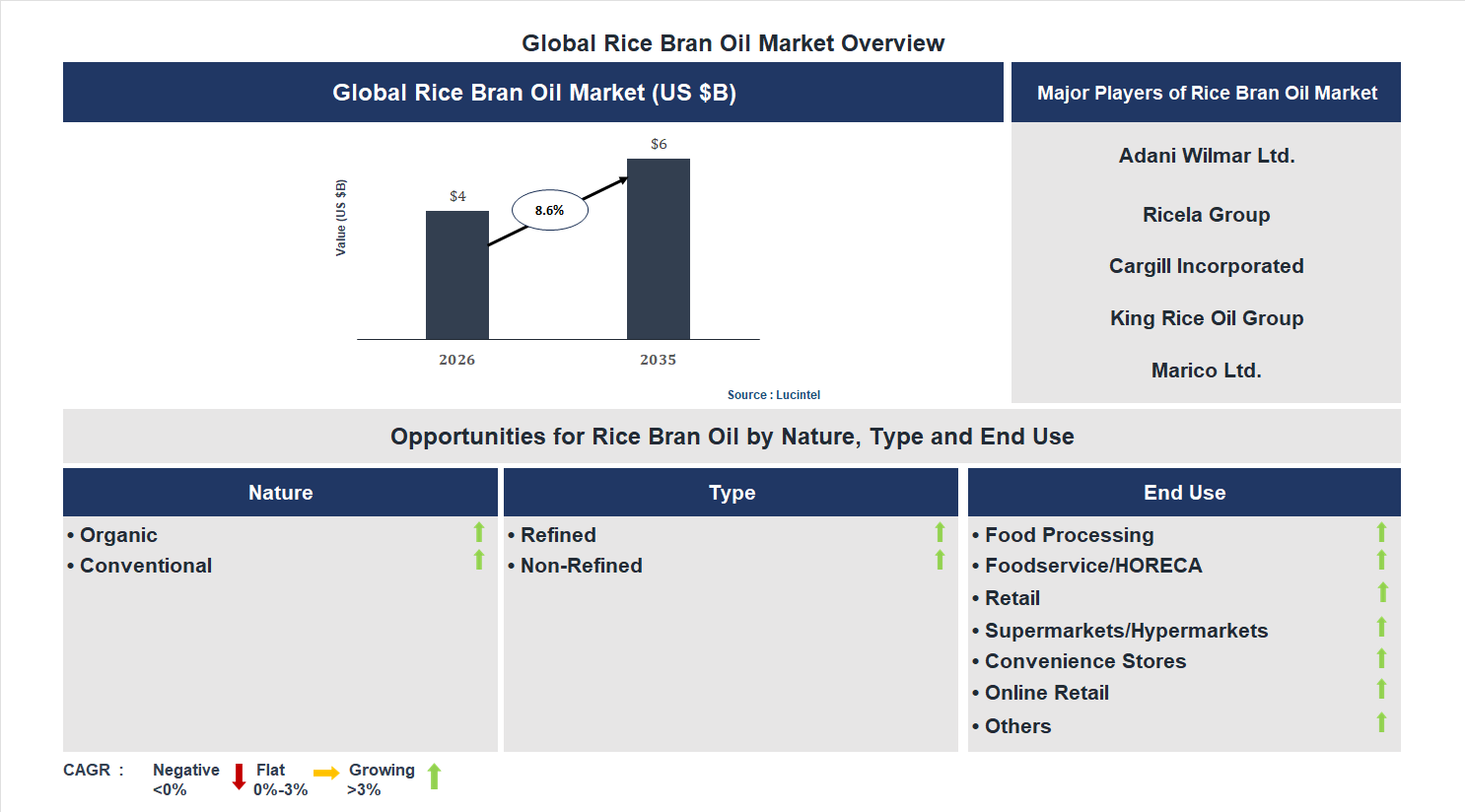
Key data points: The market size in 2035 = $6 billion, growth forecast = 8.6% annually for the next 8 years. Scroll below to get more insights. This market report covers trends, opportunities and forecasts in rice bran oil market to 2035 by nature (organic and conventional), type (refined and non-refined), end use (food processing, foodservice/HORECA, retail, supermarkets/hypermarkets, convenience stores, online retail, and others), and region (North America, Europe, Asia Pacific, and the Rest of the World)
We'll send your sample report shortly.
• Lucintel forecasts that, within the nature category, organic is expected to witness higher growth over the forecast period.
• Within the end use category, food processing is expected to witness the highest growth.
• In terms of region, APAC is expected to witness the highest growth over the forecast period. Gain valuable insights for your business decisions with our comprehensive 150+ page report. Sample figures with some insights are shown below.
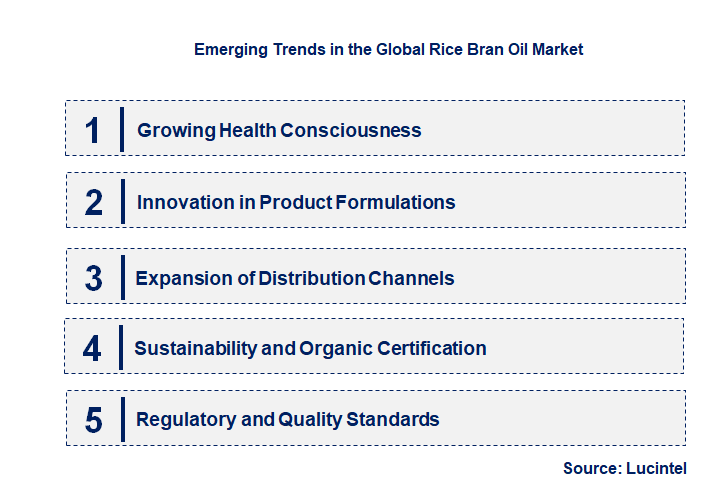
• Growing Health Consciousness: Consumers are increasingly prioritizing health and wellness, leading to higher demand for natural, nutrient-rich oils like rice bran oil. Its perceived health benefits, such as high antioxidant content and heart health support, are driving consumption. This trend encourages producers to emphasize the oil’s nutritional profile and promote its benefits through marketing campaigns. As health awareness continues to rise, rice bran oil is becoming a preferred choice over less healthy alternatives, expanding its market reach globally.
• Innovation in Product Formulations: Companies are developing new product variants, including organic, cold-pressed, and flavored rice bran oils, to cater to diverse consumer preferences. These innovations enhance product appeal and allow brands to differentiate themselves in a competitive market. Additionally, functional formulations infused with vitamins or antioxidants are gaining popularity. This trend fosters product diversification, enabling manufacturers to target niche markets and premium segments, thereby increasing overall market size and consumer engagement.
• Expansion of Distribution Channels: The rise of e-commerce platforms and health-focused retail outlets is broadening the availability of rice bran oil. Online sales channels provide convenience and access to a wider customer base, especially in emerging markets. Retail partnerships with supermarkets and specialty stores also enhance visibility and accessibility. This expansion of distribution channels is crucial for market growth, enabling brands to reach urban and rural consumers alike, and supporting the adoption of rice bran oil as a staple cooking ingredient across different regions.
• Sustainability and Organic Certification: Increasing environmental awareness is prompting producers to adopt sustainable sourcing and manufacturing practices. Organic certification and eco-friendly packaging are becoming key differentiators. Consumers are willing to pay a premium for sustainably produced rice bran oil, which aligns with their eco-conscious values. This trend encourages transparency in supply chains and promotes responsible production, ultimately fostering consumer trust and loyalty while supporting the market’s long-term growth.
• Regulatory and Quality Standards: Governments and industry bodies are implementing stricter regulations and quality standards to ensure product safety and authenticity. Certification processes and labeling requirements are becoming more rigorous, helping to combat adulteration and misinformation. These standards improve consumer confidence and facilitate international trade. Compliance with evolving regulations is essential for market players to maintain credibility and access global markets, thereby fostering a more transparent and trustworthy industry environment. These trends are collectively reshaping the rice bran oil market by emphasizing health benefits, product innovation, expanded distribution, sustainability, and regulatory compliance. They are driving increased consumer demand, fostering innovation, and promoting sustainable practices, which together are positioning rice bran oil as a key player in the global healthy oils sector. This evolution is expected to sustain market growth and open new opportunities for stakeholders across the supply chain.
• Growing Health Consciousness: Increased awareness of health benefits associated with rice bran oil, such as high antioxidant content and heart health, is driving consumer demand. This shift encourages producers to emphasize nutritional advantages, leading to product innovation and marketing strategies focused on wellness. As a result, the market is expanding into new demographics, including health-conscious consumers and aging populations, fostering growth in retail and specialty stores.
• Expansion in Food Industry Applications: Rice bran oil is increasingly used in cooking, frying, and processed foods due to its high smoke point and neutral flavor. Food manufacturers are adopting it for healthier product formulations, which enhances product appeal and meets consumer demand for clean-label ingredients. This trend boosts sales in packaged foods, snacks, and restaurant sectors, creating opportunities for suppliers to develop customized blends and functional variants.
• Rising Use in Cosmetics and Personal Care: The oils antioxidant properties and skin-nourishing benefits are making it popular in cosmetics and skincare products. Brands are incorporating rice bran oil into creams, lotions, and sunscreens to capitalize on its natural, nourishing qualities. This diversification into personal care expands market reach, attracts new consumer segments, and encourages R&D investments in bioactive compounds, thereby strengthening the overall market position.
• Technological Innovations in Extraction: Advances in cold-pressing, solvent extraction, and enzymatic methods improve yield, quality, and sustainability of rice bran oil production. These innovations reduce environmental impact and lower costs, making the product more competitive. Enhanced extraction techniques also enable the development of specialty oils with specific health benefits, catering to niche markets and increasing overall market profitability.
• Regional Market Growth and Investment: Emerging markets in Asia-Pacific and Africa are witnessing increased investments in rice bran oil production facilities due to rising demand and agricultural development. Government initiatives and favorable policies support local industry growth, creating employment and boosting exports. This regional expansion diversifies supply chains, stabilizes prices, and opens new avenues for international trade, significantly impacting the global market landscape. The overall impact of these developments is a robust, diversified, and sustainable rice bran oil market. Increased consumer awareness, technological progress, and regional investments are driving growth, expanding applications, and strengthening competitiveness. These factors collectively contribute to a dynamic market environment with promising prospects for stakeholders worldwide.
• Growing Demand For Healthy Cooking Oils: The rising consumer focus on health and wellness is boosting demand for rice bran oil, known for its high antioxidant content and heart-healthy properties. Its versatility in cooking, frying, and baking makes it a preferred choice among health-conscious consumers. The increasing awareness of its nutritional benefits, such as vitamin E and oryzanol, is expanding its adoption in households and foodservice sectors, driving market growth globally.
• Expansion Of Cosmetic And Personal Care Applications: Rice bran oil’s antioxidant and anti-aging properties are increasingly utilized in cosmetics and skincare products. Its ability to improve skin elasticity and provide deep moisturization makes it attractive for creams, lotions, and anti-aging serums. The rising demand for natural and organic ingredients in personal care products is encouraging manufacturers to incorporate rice bran oil, opening new revenue streams and expanding its application scope.
• Innovations In Extraction Technologies Enhance Market Penetration: Advanced extraction methods like cold-pressing and solvent-free processes improve oil quality and yield, reducing environmental impact. These innovations enable producers to meet strict quality standards and cater to organic and clean-label markets. As extraction technology advances, the cost of production decreases, making rice bran oil more accessible and appealing to a broader consumer base, thereby fueling market expansion.
• Increasing Use In Industrial Applications Such As Lubricants And Biofuels: Rice bran oil’s properties make it suitable for industrial uses, including biodegradable lubricants and biofuels. The shift towards sustainable and eco-friendly industrial products is creating new opportunities for rice bran oil in these sectors. Its renewable nature and compatibility with existing industrial processes are driving adoption, especially in regions with supportive environmental policies, contributing to diversification of the market.
• Rising Regional Market Penetration In Emerging Economies: Developing countries in Asia-Pacific, Africa, and Latin America are witnessing increased rice bran oil consumption due to urbanization, changing dietary habits, and rising disposable incomes. Strategic partnerships, local production, and distribution channels are expanding market reach. These regions offer significant growth potential, with government initiatives promoting healthier food options and sustainable agriculture, further boosting rice bran oil’s market presence and revenue opportunities. These growth opportunities collectively enhance the rice bran oil market’s potential by diversifying applications, improving production techniques, and expanding regional reach. As consumer preferences shift towards health, sustainability, and natural ingredients, the market is positioned for sustained growth. Strategic innovation and regional expansion will be crucial for market players to capitalize on emerging opportunities, ensuring competitive advantage and long-term success in this evolving landscape.
• Increasing Health Awareness and Consumer Preference: Growing awareness of the health benefits associated with rice bran oil, such as its high antioxidant content and heart-healthy properties, has significantly boosted consumer demand. As consumers become more health-conscious, they prefer natural and nutritious cooking oils, which has led to increased adoption of rice bran oil in both developed and developing regions. This trend is further supported by the rising prevalence of lifestyle-related health issues, prompting consumers to seek healthier alternatives. Manufacturers are also innovating with fortified and organic variants to cater to this demand, thereby expanding market penetration and driving sales growth.
• Technological Advancements in Extraction and Refining: Innovations in extraction techniques, such as cold-pressing and solvent extraction, have enhanced the efficiency and yield of rice bran oil production. Improved refining processes ensure higher purity, better flavor, and longer shelf life, making the product more appealing to consumers. These technological improvements reduce production costs and enable manufacturers to meet increasing demand while maintaining quality standards. Additionally, advancements in packaging technology help preserve the oils nutritional properties, further boosting consumer confidence and market growth.
• Growing Urbanization and Changing Lifestyles: Rapid urbanization across emerging economies has led to increased demand for convenient, healthy cooking options. Urban consumers are more exposed to global culinary trends and are willing to experiment with different cooking oils, including rice bran oil. The busy lifestyles of urban dwellers also favor the adoption of versatile oils suitable for various cooking methods. This shift in consumer behavior has expanded the market beyond traditional regions, encouraging manufacturers to scale up production and distribution networks to meet the rising demand.
• Expansion of Retail and E-commerce Channels: The proliferation of modern retail outlets, supermarkets, and online platforms has made rice bran oil more accessible to a broader consumer base. E-commerce channels facilitate direct-to-consumer sales, offering convenience and a wider variety of products, including organic and specialty variants. Retail expansion also enhances brand visibility and consumer trust through in-store promotions and sampling. This omnichannel approach enables manufacturers to reach diverse demographic segments, increase market penetration, and respond swiftly to changing consumer preferences, thereby fueling market growth.
• Increasing Focus on Sustainable and Organic Production: Growing environmental concerns and consumer demand for organic products are driving the adoption of sustainable farming and eco-friendly manufacturing practices in the rice bran oil industry. Certification standards for organic and sustainable products are gaining importance, influencing production methods and supply chain management. Companies investing in sustainable practices not only meet regulatory requirements but also appeal to environmentally conscious consumers, creating a competitive advantage. This focus on sustainability is expected to shape future market dynamics, encouraging innovation and responsible sourcing. The challenges facing the rice bran oil market include:
• Fluctuating Raw Material Prices: The price volatility of rice bran, the primary raw material, poses a significant challenge for manufacturers. Factors such as seasonal variations, crop yields, and global supply-demand dynamics influence raw material costs. Price fluctuations can impact profit margins and lead to increased product prices, potentially reducing consumer demand. Manufacturers need to develop effective procurement strategies and diversify sourcing to mitigate risks associated with raw material price instability, which remains a persistent challenge in maintaining consistent supply and profitability.
• Stringent Regulatory Standards: Evolving food safety, labeling, and quality standards imposed by regulatory authorities across different regions create compliance challenges for market players. Meeting these standards often requires significant investments in quality control, testing, and certification processes. Non-compliance can result in penalties, product recalls, and damage to brand reputation. Navigating complex regulatory landscapes demands continuous monitoring and adaptation, which can increase operational costs and hinder rapid market expansion, especially for small and medium-sized enterprises.
• Competition from Alternative Oils: The rice bran oil market faces intense competition from other vegetable oils such as soybean, sunflower, and palm oil, which often have lower production costs and established supply chains. Consumer preferences may also shift toward these alternatives due to price advantages or regional familiarity. Additionally, concerns over the sustainability and environmental impact of certain oils influence consumer choices. To maintain market share, rice bran oil producers must differentiate their products through quality, health benefits, and sustainability initiatives, which can be resource-intensive and challenging in a competitive landscape. The rice bran oil market is driven by increasing health consciousness, technological innovations, urbanization, retail expansion, and sustainability focus. However, it faces challenges such as raw material price volatility, regulatory complexities, and stiff competition from other oils. These factors collectively influence market dynamics, requiring stakeholders to innovate, adapt, and strategize effectively. The interplay of these drivers and challenges will determine the future growth trajectory, with opportunities for expansion balanced by the need to address operational and regulatory hurdles. Overall, the markets evolution will depend on how well companies can leverage technological advancements and consumer trends while managing risks associated with raw material costs and regulatory compliance.
• Adani Wilmar Ltd.
• Ricela Group
• Cargill Incorporated
• King Rice Oil Group
• Marico Ltd.
• Emami Agrotech Ltd.
• Modi Naturals Ltd.
• AP Solvex Ltd.
• 3F Industries Ltd.
• Zhejiang Delekang Food Co. Ltd.
• Organic
• Conventional
• Refined
• Non-Refined
• Food Processing
• Foodservice/HORECA
• Retail
• Supermarkets/Hypermarkets
• Convenience Stores
• Online Retail
• Others
• North America
• Europe
• Asia Pacific
• The Rest of the World
• United States: The US market has seen a surge in organic rice bran oil products, driven by consumer demand for clean-label and non-GMO options. Major food companies are investing in sustainable sourcing and innovative packaging. There is also increased research on health benefits, leading to expanded product lines in health stores and supermarkets. Regulatory agencies are emphasizing quality standards, boosting consumer confidence. The market is also witnessing growth in foodservice applications, especially in health-conscious restaurants and cafes.
• China: China remains the largest consumer and producer of rice bran oil, with recent developments focusing on modernization of extraction techniques and quality improvements. The government promotes sustainable agriculture practices, encouraging local farmers to adopt eco-friendly methods. The market is expanding into premium segments, with increased exports to neighboring countries. E-commerce platforms are playing a vital role in distribution, making rice bran oil more accessible to urban consumers. Additionally, Chinese companies are investing in branding and marketing to enhance product visibility.
• Germany: The German rice bran oil market is characterized by a strong preference for organic and vegan products. Innovations in cold-pressing and refining processes have improved oil quality and shelf life. The focus on sustainability is evident through certifications and eco-friendly packaging. The market is also driven by the food industry’s demand for functional ingredients, including antioxidants and vitamins. Consumer awareness campaigns about health benefits have contributed to steady growth, with a notable increase in specialty stores and online sales channels.
• India: India is witnessing rapid growth in rice bran oil consumption, fueled by health awareness and government initiatives promoting edible oils with better nutritional profiles. Local manufacturers are adopting advanced extraction technologies to improve yield and quality. The market is expanding into rural areas through organized retail and e-commerce. There is a rising trend of branded products emphasizing purity and health benefits. The government’s focus on reducing import dependency and promoting domestic production is also boosting the industry’s development.
• Japan: The Japanese market emphasizes high-quality, minimally processed rice bran oil, with a focus on traditional health benefits. Innovations include the development of fortified oils with added nutrients like omega-3 fatty acids. The market is driven by health-conscious consumers and aging populations seeking functional foods. Japanese companies are investing in research to enhance antioxidant properties and extend shelf life. Eco-friendly packaging and sustainable sourcing are gaining importance. The market also sees growth in premium and specialty products, often sold through specialty stores and online platforms.


• Adani Wilmar Ltd.
• Ricela Group
• Cargill Incorporated
• King Rice Oil Group
• Marico Ltd.
• Emami Agrotech Ltd.
• Modi Naturals Ltd.
• AP Solvex Ltd.
• 3F Industries Ltd.
• Zhejiang Delekang Food Co. Ltd. Q6. Which rice bran oil market segment will be the largest in future? Answer: Lucintel forecasts that, within the nature category, organic is expected to witness higher growth over the forecast period. Q7. In rice bran oil market, which region is expected to be the largest in next 5 years? Answer: In terms of region, APAC is expected to witness the highest growth over the forecast period. Q8. Do we receive customization in this report? Answer: Yes, Lucintel provides 10% customization without any additional cost.


Choose a license that fits your team. Instant PDF delivery.
Prices exclude taxes. Instant delivery. Custom licensing available on request.
Market Report · July 22, 2026
Market Report · July 22, 2026
Market Report · July 22, 2026
Trusted partner for strategic intelligence and business growth


Receive a complimentary market analysis tailored to your industry. Our analysts will identify key growth opportunities and competitive dynamics specific to your business.

Market size, growth rate, and key trend analysis for your specific sector.

Top competitor positioning and market share analysis.

Strategic recommendations backed by data-driven insights.
Get curated market intelligence and competitive moves straight to your inbox.
By subscribing, you agree to receive our monthly insights. Unsubscribe anytime.
Receive a complimentary market analysis tailored to your industry. Our analysts will identify key growth opportunities and competitive dynamics specific to your business.
Market size, growth rate, and key trend analysis for your specific sector.
Top competitor positioning and market share analysis.
Strategic recommendations backed by data-driven insights.
Get curated market intelligence, emerging trends, and competitive moves straight to your inbox each month.
By subscribing, you agree to receive our monthly insights. Unsubscribe anytime.
We'll send your sample report shortly.