
Market Report · July 29, 2026

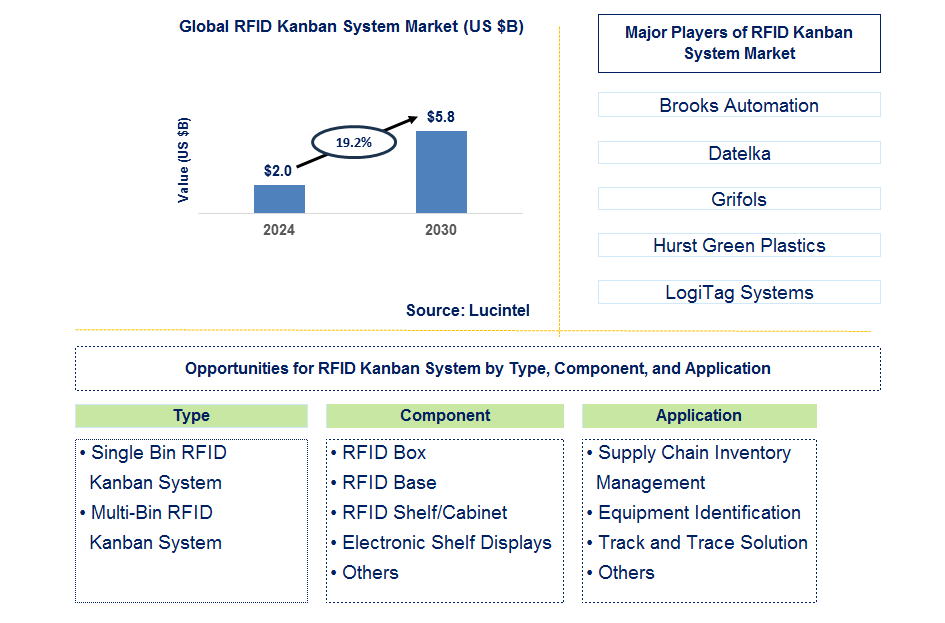
Key data points: The market size in 2030 = $5.8 billion, growth forecast = 19.2% annually for the next 6 years. Scroll below to get more insights. This market report covers trends, opportunities, and forecasts in the global rfid kanban system market to 2030 by type (single bin RFID kanban system and multi-bin RFID kanban system), component (RFID box, RFID base, RFID shelf/cabinet, electronic shelf displays, others), application (supply chain inventory management, equipment identification, track and trace solution, and others), and region (North America, Europe, Asia Pacific, and the Rest of the World)
We'll send your sample report shortly.
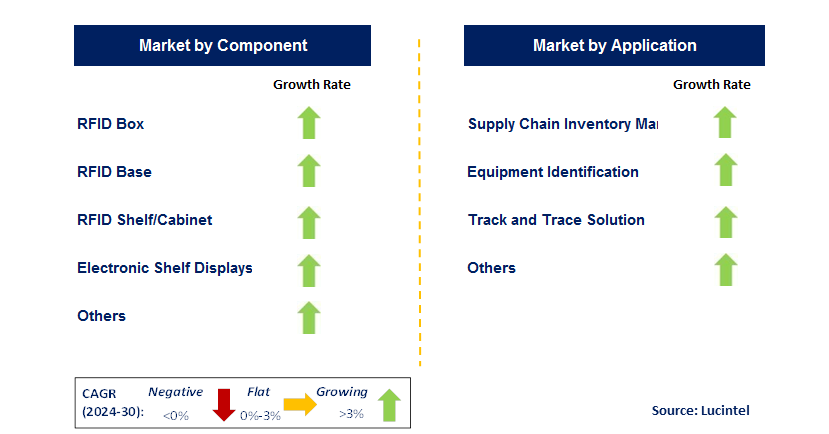
• Lucintel forecasts that, within the type category, RFID box is expected to witness the highest growth over the forecast period due to its growing use in manufacturing supply chains give to its easy integration with warehouse management systems and digital infrastructures of organizations.
• In terms of region, North America is expected to witness the highest growth over the forecast period due to growing demand for process optimization among various sectors, rapid economical growth, and presence of key players in the region. Gain valuable insights for your business decisions with our comprehensive 150+ page report.
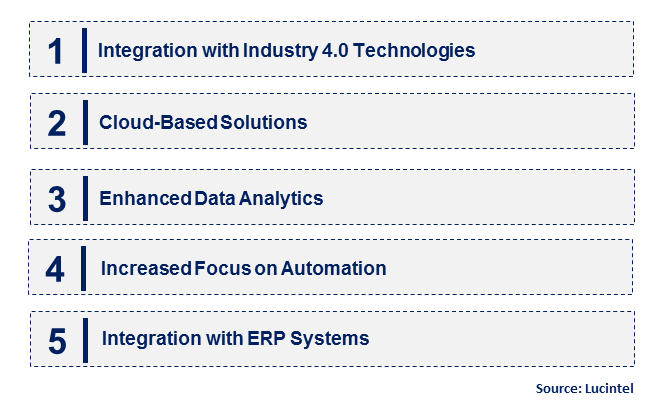
• Integration with Industry 4.0 Technologies: The inclusion of IoT and AI into RFID Kanban systems is making these platforms more automated and analytics-oriented. These developments allow for real-time monitoring and predictive analytics, thereby improving inventory management and production efficiency.
• Cloud-Based Solutions: There is a rise in the use of cloud-based RFID Kanban systems that are flexible and scalable, which can be used to manage inventory and supply chains. These cloud platforms offer real-time updates, centralized data access, and improved cross-division collaboration.
• Enhanced Data Analytics: Advanced data analytics are being incorporated into RFID Kanban systems to provide deeper insights into inventory levels, production processes, and supply chain performance. This helps organizations make informed judgments needed for optimization.
• Increased Focus on Automation: In an effort to reduce manual intervention and streamline process flows within RFID Kanban systems, there is an increased focus on automation. For instance, automated guided vehicles (AGVs) and robotics have been integrated to enhance accuracy and efficiency.
• Integration with ERP Systems: The goal is to integrate enterprise resource planning (ERP) systems with RFID Kanban systems to create seamless information flow throughout the entire supply chain. This facilitates better coordination between stock control functions and other aspects of commerce.
• Advancements in RFID Technology: With respect to the evolution of RFID Kanban systems, advanced radio frequency identification (RFID) techniques, such as improvements in tag functionality and superior reader performance, are being developed. These advancements facilitate the collection of more accurate and faster data.
• Focus on Sustainability: Sustainable practices are gaining traction in the context of RFID Kanban systems. Some of these measures include reducing energy consumption during manufacturing processes and using environmentally friendly materials for making tags. These trends, which enhance automation, data analytics, and other technology integrations, are reshaping the market for RFID Kanban systems. The shift towards cloud-based solutions, coupled with a greater focus on sustainability, triggers innovation, thereby improving operational efficiencies. The integration of Industry 4.0 technologies and improved capabilities through RFID technology contributes to the development of sophisticated and dependable systems, enabling continuous growth within the market.
• Advanced Integration with Industry 4.0: The incorporation of the Internet of Things (IoT) and Artificial Intelligence (AI) into RFID Kanban systems has led to improved real-time monitoring and prediction. This results in accurate management of inventory levels and simplified production processes.
• Cloud-Based Deployment: The trend toward cloud-based RFID Kanban solutions offers businesses flexibility and scalability for their inventory management and supply chains. Collaboration is enhanced across departments, while decision-making becomes faster with centralized data access on cloud platforms.
• Improved Data Analytics: By incorporating advanced data analytics into RFID Kanban systems, businesses gain more insight into their inventory levels and production processes. Therefore, through these analytics, business operations can be optimized via informed decision-making.
• Automation Enhancements: The integration of robotics and automated guided vehicles (AGVs) within RFID Kanban systems has enabled this focus on automation. As a result, accuracy is enhanced, operations are faster, and manual intervention in stock control and production processes is reduced.
• ERP System Integration: Currently, there has been an increase in the number of organizations integrating their ERPs with their RFID Kanban systems to ensure a seamless flow of information throughout the supply chain. This leads to better connections between goods control and other organizational activities, such as sales forecasting.
• Technological Advancements in RFID: Despite these technological advances, the near future will see the advent of RFID Kanban systems with improved tag performance and better reader capabilities. These developments enable more effective data capture and processing.
• Sustainability Initiatives: Sustainability concerns have spurred the development of RFID Kanban systems focused on environmentally friendly materials, waste reduction, and lower energy consumption. This trend is consistent with broader industry objectives of environmental responsibility. Consequently, massive strides have been made in the RFID Kanban system market. This means that Industry 4.0 technologies, cloud-based solutions, and automation ensure an increased level of accuracy and efficiency. With sophisticated data analytics and ERP integration, businesses can make more informed decisions about their operations. In short, technological advancements and sustainability initiatives are driving innovation and growth in the market for RFID Kanban systems, thereby shaping its future direction.
• Informed Inventory Management: This section discusses prospective areas for developing advanced RFIDs that improve on current practices by enabling real-time inventory management with a higher level of accuracy than before. It also takes into account up-to-the-minute information from improved technology and data analysis, allowing companies to determine stock levels best suited for reducing stock-outs and improving supply chain processes.
• Smart Manufacturing Integration: Opportunities arise when integrating smart manufacturing technologies using RFID-Kanban systems. When done properly, this integration leads to improvements in production processes along with workflow automation. Real-time monitoring, predictive maintenance, and efficient utilization of resources can be achieved through this kind of integration when carried out appropriately.
• Cloud-Based Solutions Expansion: Cloud-based RFID-Kanban solutions have significant potential due to their scalability and ability to provide effective inventory and supply chain management systems. Growth in this segment is driven by centralized access to data, real-time updates, and improved collaboration, among other factors.
• ERP System Integration: There are opportunities for integrating RFID Kanban with enterprise resource planning (ERP) systems to enhance supply chain visibility and coordination across all business processes. Seamless data flow ensures better decision-making.
• Sustainability and Green Initiatives: For example, there are opportunities to develop RFID Kanban systems that align with sustainability goals by using eco-friendly materials, as well as reducing waste and energy consumption. Environmentally conscious businesses prefer this kind of focus on sustainability, which also supports wider industry aims. Therefore, these growth opportunities have been catalysts for innovation in the RFID Kanban system market. Better inventory management, smarter manufacturing integration, and cloud-based solutions are enhancing operational efficiency and scalability. The needs of the industry are fulfilled through ERP system integration and sustainability programs. These trends shape the future of RFID Kanban systems and drive market expansion.
• Technological Advancements: The adoption of RFID Kanban systems is driven by technological advancements, including improved tag performance and reader capabilities in RFID technology. This allows for more accurate and reliable data capture, enhancing inventory management and process efficiency.
• Increased Demand for Automation: The adoption of RFID Kanban systems is guided by the increasing reliance on automation in manufacturing and supply chain management. Robotics and automated guided vehicles (AGVs) have been incorporated into RFID solutions to streamline operations and reduce manual intervention.
• Cloud Computing Growth: Cloud-based RFID Kanban solutions have grown due to the expansion of cloud computing. These platforms enable organizations to manage their inventories and supply chains with flexibility through centralized access to information at any time.
• Focus on Data Analytics: Data analytics has emerged as one of the key growth drivers in recent times, driven by the increased usage of this technique in RFID Kanban systems. It aids in making decisions based on a better understanding of stock levels, production processes, and supply chain performance, leading to optimization.
• Regulatory Compliance: The need to comply with industry laws and regulations has led several companies to adopt RFID Kanban systems. These systems help meet traceability requirements, assure quality control, and manage inventory, among other compliance issues. Challenges in the RFID Kanban system market include:
• High Implementation Costs: The high cost associated with implementing sophisticated RFID Kanban systems can be prohibitive for firms, especially smaller ones. High initial capital expenditure on technology and infrastructure may affect uptake rates.
• Integration Complexity: Businesses face complexities ranging from compatibility issues to seamless integration when combining their ERP software with existing infrastructures involving RFIDs. Full benefits cannot be realized unless these aspects are managed appropriately.
• Data Security Concerns: Among the critical challenges faced by RFID Kanban systems are data security threats raised by privacy considerations. Protecting confidential data while mitigating potential cyber threats remains crucial for compliance and trustworthiness. Growth in the RFID Kanban system market is driven by technological advancements, automation, cloud computing, data analytics, and regulatory compliance. Nonetheless, these challenges must be addressed, as they hinder successful adoption due to implementation costs, integration complexity, and data security issues. Market dynamics are influenced by these factors, leading to strategic decisions within the industry.
• Brooks Automation
• Datelka
• Grifols
• Hurst Green Plastics
• LogiTag Systems
• MATTTEO
• metraTec
• Palex Medical
• Pepperl+Fuchs
• Scan Modul
• Single Bin RFID Kanban System
• Multi-Bin RFID Kanban System
• RFID Box
• RFID Base
• RFID Shelf/Cabinet
• Electronic Shelf Displays
• Others
• Supply Chain Inventory Management
• Equipment Identification
• Track and Trace Solution
• Others
• North America
• Europe
• Asia Pacific
• The Rest of the World
• United States: In the USA, there is increasing adoption of RFID kanban systems to improve inventory accuracy and supply chain efficiency. These systems range from advanced analytics to cloud-based platforms that enable real-time visibility and insights into inventory levels and workflow processes. American companies are also concentrating on ensuring system scalability and interoperability with existing enterprise resource planning (ERP) systems. The increased demand for automation in the manufacturing sector is fostering the growth of RFID kanban solutions in the US.
• Chinese: China has seen significant growth in RFID kanban system adoption due to its large manufacturing sector and emphasis on Industry 4.0 technologies. For instance, there have been recent advances, such as the implementation of RFID systems to automate inventory management and production scheduling in high-volume manufacturing environments found within Chinese businesses. Moreover, Chinese firms are investing heavily in AI-supported, IoT-enabled RFID kanban systems to improve predictive maintenance tools alongside process optimization capabilities.
• Germany: Germany uses RFID kanban systems to increase efficiency and traceability within its advanced manufacturing sector. Over the past couple of years, German firms have embraced the use of RFID technology integrated into Industry 4.0 technologies, providing real-time tracking and process optimization through RFID solutions.
• Indian: RFID kanban systems are becoming popular in India as organizations seek to enhance supply chain management and operational efficiency. These systems include deploying RFID technology in industries like automotive and electronics, which support inventory automation while reducing manual errors.
• Japan: Japan leads in innovation related to RFID kanban systems because of its advanced industrial sector and focus on operational excellence. This includes the use of robots and automation technologies that boost accuracy and productivity through integration with RFID systems. There is also a growing trend among Japanese companies to use RFID kanban systems to improve supply chain visibility through just-in-time practices.


• Brooks Automation
• Datelka
• Grifols
• Hurst Green Plastics
• LogiTag Systems
• MATTTEO
• metraTec
• Palex Medical
• Pepperl+Fuchs
• Scan Modul Q6. Which RFID kanban system market segment will be the largest in future? Answer: Lucintel forecasts that RFID box is expected to witness highest growth over the forecast period due to its growing use in manufacturing supply chains give to its easy integration with warehouse management systems and digital infrastructures of organizations. Q7. In RFID kanban system market, which region is expected to be the largest in next 5 years? Answer: North America is expected to witness highest growth over the forecast period due to growing demand for process optimization among various sectors, rapid economical growth, and presence of key players in the region. Q.8 Do we receive customization in this report? Answer: Yes, Lucintel provides 10% customization without any additional cost.


Choose a license that fits your team. Instant PDF delivery.
Prices exclude taxes. Instant delivery. Custom licensing available on request.
Market Report · July 29, 2026
Market Report · July 20, 2026
Market Report · July 20, 2026
Trusted partner for strategic intelligence and business growth


Receive a complimentary market analysis tailored to your industry. Our analysts will identify key growth opportunities and competitive dynamics specific to your business.

Market size, growth rate, and key trend analysis for your specific sector.

Top competitor positioning and market share analysis.

Strategic recommendations backed by data-driven insights.
Get curated market intelligence and competitive moves straight to your inbox.
By subscribing, you agree to receive our monthly insights. Unsubscribe anytime.
Receive a complimentary market analysis tailored to your industry. Our analysts will identify key growth opportunities and competitive dynamics specific to your business.
Market size, growth rate, and key trend analysis for your specific sector.
Top competitor positioning and market share analysis.
Strategic recommendations backed by data-driven insights.
Get curated market intelligence, emerging trends, and competitive moves straight to your inbox each month.
By subscribing, you agree to receive our monthly insights. Unsubscribe anytime.
We'll send your sample report shortly.