
Market Report · May 18, 2026

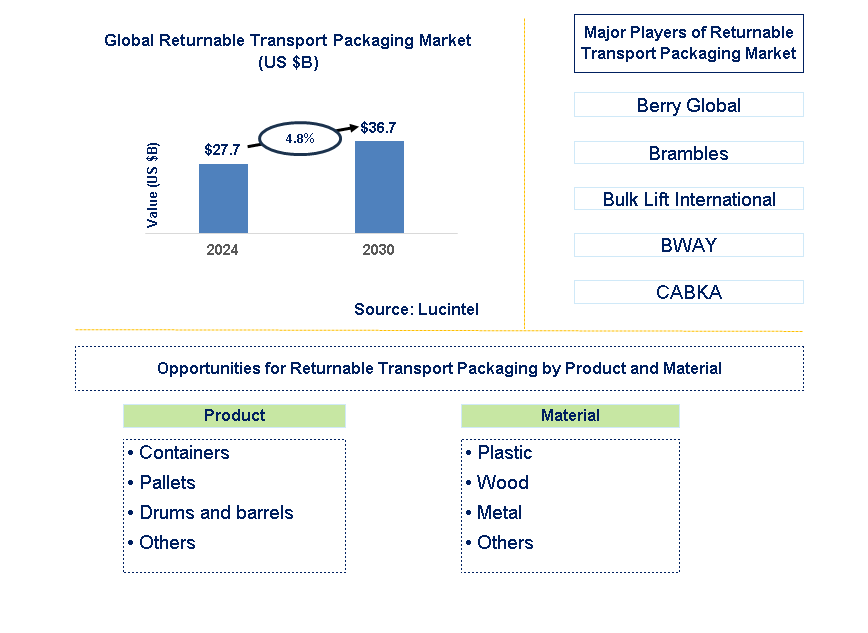
Key data points: The market size in 2030 = $36.7 billion, growth forecast = 4.8% annually next 6 years. Scroll below to get more insights. This market report covers trends, opportunities, and forecast in the global returnable transport packaging market to 2030 by product (containers, pallets, drums and barrels, and others), material (plastic, wood, metal, and others), and region (North America, Europe, Asia Pacific, and the Rest of the World)
We'll send your sample report shortly.
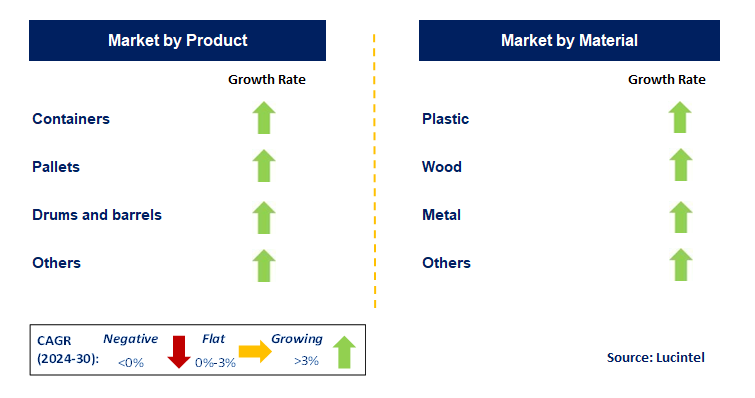
• Lucintel forecasts that, within the product category, container is expected to witness the highest growth over the forecast period.
• Within this material category, plastic is expected to witness the highest growth.
• In terms of regions, APAC is expected to witness the highest growth over the forecast period. A more than 150-page report is developed to help in your business decisions.
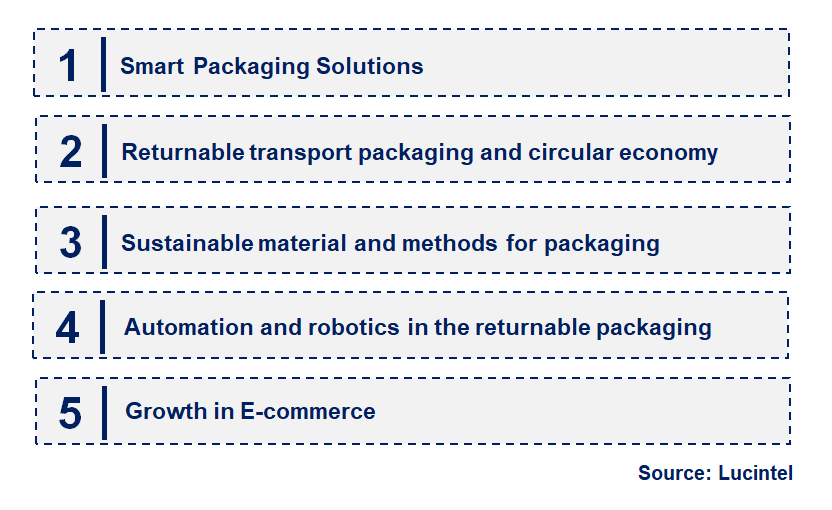
• Smart packaging solutions: Smart packaging technologies like RFID tags and IoT sensors are increasingly being integrated into reusable packaging (Coyle et al., 2017). They help track all packages throughout supply chains, thus improving inventory control while reducing losses in processes and making them more efficient. Smart solutions provide detailed information about the whereabouts and condition of packages for sound decision-making and operational optimization in the industry.
• Returnable transport packaging and the circular economy: Returnable transport packaging is seeing applications in circular economy practices, which are becoming the new norm. This involves designing packaging that can be reused, recycled, or repurposed to minimize waste and its environmental impacts, while supporting sustainability goals and aligning with regulatory pressures for eco-friendly solutions. These approaches also enhance the economic value of packaging by elongating its life cycle.
• Sustainable materials and methods for packaging: Innovations in material science have resulted in more durable and sustainable materials for packaging. Returnable packaging solutions are made using advanced plastics, biodegradable materials, and reinforced composites that improve their performance while reducing environmental footprints. These materials achieve a lower impact on the environment, lower weight, and increased strength, making them better suited for improved and more sustainable packaging systems.
• Automation and robotics in the returnable packaging industry: The integration of automation and robotics into returnable transport packaging processes has transformed this market segment. Automated systems improve the handling, sorting, and processing of returnable containers, thus increasing operational efficiency and saving on labor costs. Robotics enhance accuracy and speed, facilitating enhanced demand for efficient solutions that can easily scale up.
• Growth in e-commerce: The rise of e-commerce has led to a higher demand for durable and reusable packaging solutions that can withstand the rigors of shipping and handling. The global market for returnable transport packaging is characterized by smart packaging solutions, circular economy practices, advanced material development, and automation trends. These factors are shaping the market towards increased efficiency, sustainability, and functionality, positioning this industry for future growth with expanded eco-economic operations.
• Integration of Smart Technologies: Smart technology has taken over the transportation business, with the returnable transport packaging market following suit. Global firms have even gone to the extent of embedding RFID tags and IoT devices to help them track their merchandise in transit. This is important for accurate inventory management, as it helps reduce supply chain losses through easy identification of where a material is packaged or its state. These technologies also enhance operational efficiency and decision-making.
• Circular Economy Initiatives: Returnable transport packaging companies are now designing packaging that is reusable, recyclable, repurposable, and conforms to sustainability objectives across the globe. This has been necessitated by regulatory pressure together with consumer demand for eco-friendly alternatives. It is also a creative way for companies to cope with waste reduction principles and environmental friendliness, thus optimizing economic value from their packages.
• Material Science Advancements: Innovations in material science continuously improve the durability and sustainability aspects of returnable transport packaging. These include advanced plastics and biodegradable composites, which are strong yet lightweight materials that consider environmental friendliness among other factors applicable to functional packaging solutions that meet the increasing need for sustainable packaging alternatives.
• Automation and Robotics in Packaging: The use of robots and automation has brought about major changes in returnable transit packing operations. The implementation of automated sorting systems would streamline many tasks associated with redistribution, cleaning, and sorting of these containers. In addition, the deployment of robots ensures accuracy, improves efficiency, reduces labor costs, and offers scalable tools required when handling reverse flow logistics systems during today’s world of just-in-time supply chains. This supports growth by increasing operational capabilities and meeting rising demand.
• Enhanced Recycling and Refurbishment Processes: Efficiency in returnable transport packaging systems is being improved by the development of recycling and refurbishment techniques. Advanced waste management programs and better methods of redoing things increase the recovery and reusability of packaging materials. These upgrades help meet sustainability targets as well as save expenses by lengthening the lifespan of reusable containers. Companies adopting these mechanisms will easily comply with environmental requirements while also meeting customer needs. Recent developments in the returnable transport packaging sector show progress made in smart technologies, circular economy practices, material science, automation, and recycling processes. Such advancements are driving improvements in efficiency, sustainability, and performance, thus shaping the future of this market and supporting its growth.
• Expansion of Circular Economy Practices: There are growth possibilities linked to embracing circular economies by businesses involved in the returnable transport packaging market segment. This segment seeks to develop sustainable solutions for packages used during distribution activities and storage that can be reused or recycled when they can no longer serve their purpose, in accordance with regulatory requirements covering sustainable goals. Organizations based on circular principles will distinguish themselves from other suppliers, thereby attracting customers whose values align with ecological consciousness.
• Development of Advanced Materials: Opportunities exist for developing advanced materials for reusable transport packaging. Companies can improve the durability of their packaging through the use of novel substances like biodegradable plastics and reinforced composites. They should ensure that they are at the forefront of material science, as this will enable them to offer cutting-edge packaging solutions that are sustainable and help them capture market share.
• Integration of Automation and Robotics: Packaging processes can be automated using machines or robots, a strategy with great potential for growth. This way, sorting, cleaning, and handling of returnable packages can be done more quickly. When companies automate these operations, they become better positioned to scale up their production levels and meet the increasing demand for efficient packaging solutions.
• Enhancement of Recycling and Refurbishment Infrastructure: Improving recycling facilities and refurbishment infrastructure helps achieve strategic growth objectives. Consequently, recycling technologies will need enhancement while refurbishment procedures may require upgrades to improve recovery rates for reuse and utilization of package materials. Therefore, cost reduction is one way by which firms can align themselves with sustainability goals while also adhering to regulatory requirements. The strategic growth opportunities within the returnable transport packaging market lie in the adoption of smart technologies, circular economy applications, advanced materials development, automation incorporation, and recycling infrastructure improvement. All these innovations lead to product improvements that include sustainability aspects, which are very important for success in this business sector.
• Growing Environmental Awareness: The quest for ecological balance has resulted in a rise in demand for containers that can be reused after being returned to their owners from consumer disposal sites or other places where people no longer find them useful. This has led companies seeking alternative packing options to replace single-use plastics while aligning with global sustainability goals. Such a green push promotes the growth of returnable packaging systems and encourages their uptake.
• Cost Efficiency: Returnable transport packaging offers an opportunity for savings compared to disposable alternatives. The reuse and refurbishment of packing materials cut overall expenses for firms. Market growth is attributable to this cost efficiency as firms aim to optimize their packaging budgets.
• Regulatory Support: The regulatory framework should support the adoption of returnable packaging solutions. Laws promoting recycling, waste reduction, and sustainability can drive the market toward more sustainable packaging options. These regulations offer incentives to businesses that adhere to them, enabling such companies to maintain a competitive advantage.
• Technological Advancements: Smart packaging and automated systems are technological advances in the field of packaging that boost market growth. They enhance efficiency, improve tracking, and streamline operations, making returnable packing options desirable among entrepreneurs.
• Increased Focus on Supply Chain Efficiency: Returnable transport packaging is being adopted because supply chain management needs to be efficient. Companies looking for ways to improve their supply chains appreciate products that reduce logistics costs and increase inventory controls for enhanced performance. Challenges in the returnable transport packaging market are:
• Initial Investment Costs: There may be high upfront costs associated with implementing returnable transport packaging systems, such as new materials, technology, and infrastructure, which could hinder adoption, especially by small businesses.
• Logistics and Management Complexity: Managing the logistics associated with returnable packaging, such as collection, cleaning, and redistribution, can be complex. Additionally, effective systems must be developed for returning reusable packages, a process known as reverse logistics, which may prove complex and resource-intensive.
• Material Durability and Quality: Ensuring the durability and quality of returnable packaging materials is critical since these packages must go through numerous cycles before being regarded as spent. Integrity must remain intact throughout their life cycle. Companies need to source good materials from reliable suppliers who conduct extensive testing to address this problem.
• Regulatory Compliance: The challenge lies in navigating regulatory requirements related to the reuse of containers. Failure to comply could attract penalties or loss of consumer confidence due to lack of adherence, particularly regarding information dissemination affecting market credibility and penalties involving non-compliance with these standards.
• Consumer Acceptance: It can be difficult to gain consumer acceptance of returnable packaging. Therefore, there is a need for education and awareness campaigns aimed at addressing hygiene concerns, convenience in using such packages, and the general effectiveness of reusable packages. Cost efficiency, environmental consciousness, regulatory support, technological advancements, and supply chain efficiency are key drivers shaping the returnable transport packaging market. Major challenges include initial investment costs, logistics complexity, material durability, regulatory compliance, and consumer acceptance. Addressing these factors is essential for the market to grow and succeed.
• Berry Global
• Brambles
• Bulk Lift International
• BWAY
• CABKA
• CORDSTRAP BV
• Craemer
• Containers
• Pallets
• Drums and barrels
• Others
• Plastic
• Wood
• Metal
• Others
• North America
• Europe
• Asia Pacific
• The Rest of the World
• United States: The returnable transport packaging market is strengthening in America, given its growing emphasis on environmental sustainability (Wolfson & Ligozat, 2016). Companies are now adopting returnable packaging solutions that help reduce waste and minimize environmental impact (Patalas-Maliszewska et al., 2015). There has been an introduction of innovative technologies that improve efficiency and reusability, such as advanced plastic recycling technologies and modular design improvements. Moreover, digital tracking systems are being integrated to optimize supply chains, especially regarding the management of returnable assets.
• China: China has intensified efforts toward automation and smart packaging technology in the returnable transport packaging segment (Halldorsson et al., 2019). The country is also moving toward regulations around packaging waste, hence driving the adoption of reusable materials for packing purposes (Roos & Salmi-Mukkala, 2014). Through extensive collaborations between manufacturers and logistics companies, there is now improved efficiency in the logistics of returnable packaging systems, reducing costs and minimizing environmental impact.
• Germany: Economically, Germany leads in the returnable transport packaging segment by being environmentally conscious and embracing circular economy principles (Carter & Ellram, 1998). The nation promotes the use of eco-friendly materials and invests in biodegradable plastics as well as reusable packaging systems (Golicic et al., 2002). Returnable packages are made possible by strict recyclability standards that push for sustainable supply chains rather than one-way delivery solutions.
• India: The market for returnable transport packaging has been growing in India due to the need by companies for a cost-effective and environmentally friendly approach. In recent times, the automotive and consumer goods industries have seen an increased use of plastic and metal returnables. Furthermore, there is more focus on enhancing infrastructure that supports the collection and redistribution of used packages, resulting from growing awareness about environmental conservation requirements, among other factors.
• Japan: Japan’s returnable transport packaging market continues to evolve as technology integration and efficiency become paramount (Kaplinsky & Morris, 2000). Smart package solutions, such as Radio Frequency Identification devices (RFID) and Internet of Things (IoT) enabled containers, have been introduced to enable better management through improved record-keeping techniques. Investment in material development and design innovation will enhance functional attributes along with durability goals, leading to less waste.


• Berry Global
• Brambles
• Bulk Lift International
• BWAY
• CABKA
• CORDSTRAP BV
• Craemer Q6. Which returnable transport packaging market segment will be the largest in the future? Answer: Lucintel forecasts that container is expected to witness the highest growth over the forecast period. Q7. In the returnable transport packaging market, which region is expected to be the largest in the next 5 years? Answer: APAC is expected to witness the highest growth over the forecast period. Q.8 Do we receive customization in this report? Answer: Yes, Lucintel provides 10% customization without any additional cost.


Choose a license that fits your team. Instant PDF delivery.
Prices exclude taxes. Instant delivery. Custom licensing available on request.
Market Report · May 18, 2026
Market Report · May 18, 2026
Market Report · May 18, 2026
Trusted partner for strategic intelligence and business growth


Receive a complimentary market analysis tailored to your industry. Our analysts will identify key growth opportunities and competitive dynamics specific to your business.

Market size, growth rate, and key trend analysis for your specific sector.

Top competitor positioning and market share analysis.

Strategic recommendations backed by data-driven insights.
Get curated market intelligence and competitive moves straight to your inbox.
By subscribing, you agree to receive our monthly insights. Unsubscribe anytime.
Receive a complimentary market analysis tailored to your industry. Our analysts will identify key growth opportunities and competitive dynamics specific to your business.
Market size, growth rate, and key trend analysis for your specific sector.
Top competitor positioning and market share analysis.
Strategic recommendations backed by data-driven insights.
Get curated market intelligence, emerging trends, and competitive moves straight to your inbox each month.
By subscribing, you agree to receive our monthly insights. Unsubscribe anytime.
We'll send your sample report shortly.