
Market Report · May 18, 2026

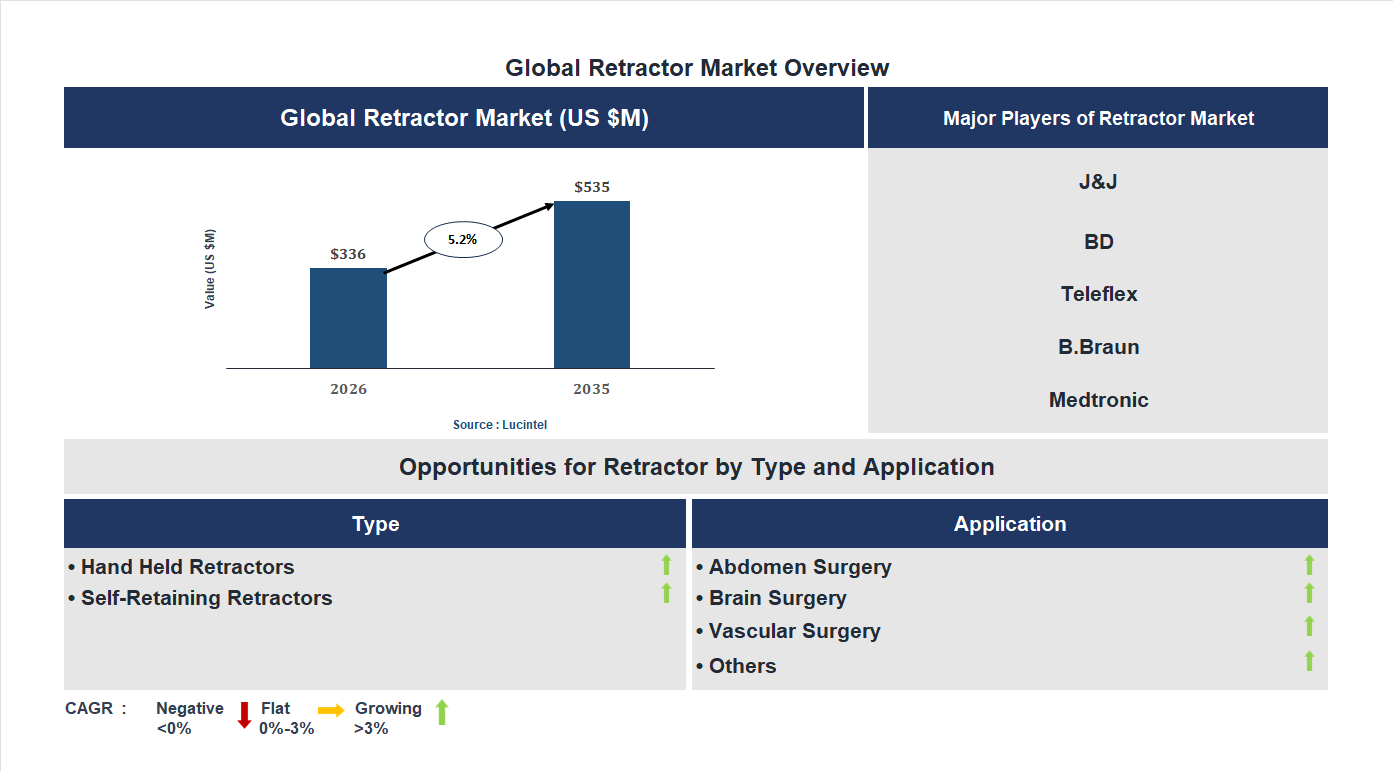
Key data points: The market size in 2035 = $535 million, growth forecast = 5.2% annually for the next 8 years. Scroll below to get more insights. This market report covers trends, opportunities and forecasts in retractor market to 2035 by type (hand held retractors and self-retaining retractors), application (abdomen surgery, brain surgery, vascular surgery, and others), and region (North America, Europe, Asia Pacific, and the Rest of the World)
We'll send your sample report shortly.
• Lucintel forecasts that, within the type category, self-retaining retractor is expected to witness higher growth over the forecast period.
• Within the application category, abdomen surgery is expected to witness the highest growth.
• In terms of region, APAC is expected to witness the highest growth over the forecast period. Gain valuable insights for your business decisions with our comprehensive 150+ page report. Sample figures with some insights are shown below.
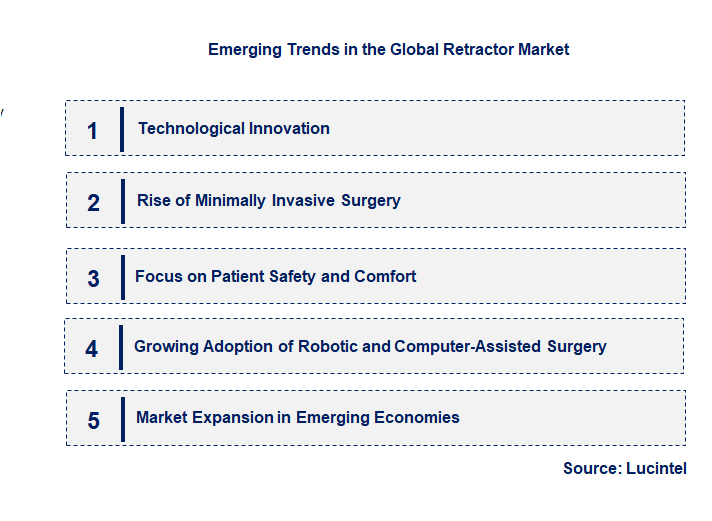
• Technological Innovation: The market is witnessing the adoption of innovative materials such as high-grade stainless steel, titanium, and composite polymers that offer enhanced durability, flexibility, and biocompatibility. Advanced design features, including ergonomic handles and modular components, improve ease of use and precision during surgeries. These innovations reduce tissue trauma, improve visibility, and facilitate quicker procedures, ultimately leading to better patient outcomes. The focus on lightweight, sterilizable, and reusable retractors is also driving product development, making surgical tools more efficient and cost-effective.
• Rise of Minimally Invasive Surgery: The increasing preference for minimally invasive surgeries (MIS) is fueling demand for smaller, more precise retractors. These retractors enable surgeons to access hard-to-reach areas with minimal tissue disruption, reducing postoperative pain and recovery time. The development of specialized retractors for laparoscopic, endoscopic, and robotic surgeries is expanding the scope of procedures that can be performed minimally invasively. This trend is driven by technological advancements and patient demand for less invasive options, leading to a significant shift in surgical practices and a broader market for specialized retractors.
• Focus On Patient Safety And Comfort: Patient safety and comfort are paramount, prompting manufacturers to develop ergonomic retractors that reduce surgeon fatigue and improve handling. Additionally, retractors with easy-to-clean, sterilizable designs are gaining popularity to prevent infections and ensure compliance with strict hygiene standards. Features such as cushioned blades and adjustable tension mechanisms enhance patient comfort during procedures. This trend emphasizes the importance of safety protocols and hygiene standards, influencing product design and manufacturing processes, and ultimately improving surgical outcomes and patient satisfaction.
• Growing Adoption Of Robotic And Computer-Assisted Surgery: The integration of robotics and computer-assisted systems into surgical procedures is creating a demand for smart retractors equipped with sensors and automation features. These retractors can provide real-time feedback, precise positioning, and controlled tissue retraction, enhancing surgical accuracy. The adoption of such advanced tools is particularly prominent in complex surgeries like neurosurgery and cardiovascular procedures. This trend is driven by technological progress and the need for higher precision, leading to increased investment in R&D and the development of intelligent retraction systems that improve surgical efficiency and safety.
• Market Expansion In Emerging Economies: Emerging economies are witnessing rapid growth in healthcare infrastructure, leading to increased adoption of advanced surgical tools, including retractors. Rising healthcare expenditure, government initiatives, and a growing awareness of minimally invasive techniques are expanding market opportunities. Local manufacturers are also entering the market, offering cost-effective solutions tailored to regional needs. This expansion is contributing to a broader customer base, increased competition, and innovation in product offerings. As healthcare access improves, the market for retractors is expected to grow significantly, driven by both demand and technological adoption in these regions. These trends are collectively reshaping the retractor market by fostering innovation, expanding application areas, and improving safety and efficiency. The integration of advanced materials and technology, coupled with a shift towards minimally invasive and patient-centric procedures, is creating a more dynamic and competitive landscape. As emerging economies develop their healthcare infrastructure, the market is poised for sustained growth, driven by technological advancements and evolving surgical practices.
• Growing Demand for Minimally Invasive Surgeries: The shift towards minimally invasive procedures is boosting the retractor market. Surgeons prefer advanced retractors that facilitate better access and visibility with minimal tissue trauma. This trend is driven by patient preferences for quicker recovery and reduced complications. As a result, manufacturers are developing specialized retractors tailored for laparoscopic and endoscopic surgeries, expanding market opportunities and improving surgical precision.
• Technological Innovations in Retractor Design: Innovations such as adjustable, lightweight, and ergonomic retractors are transforming the market. These advancements enhance surgeon comfort and procedural efficiency. The integration of materials like titanium and composites improves durability and reduces weight. Such innovations lead to better patient outcomes, lower complication rates, and increased adoption of advanced retractors across various surgical disciplines, thereby expanding market reach and competitiveness.
• Rising Adoption in Cardiac and Neurosurgical Procedures: The increasing prevalence of cardiovascular and neurological disorders is driving demand for specialized retractors. These procedures require precise and stable retraction to ensure safety and effectiveness. The development of high-performance retractors tailored for these complex surgeries is opening new market segments. This trend supports growth by addressing unmet clinical needs and enabling surgeons to perform intricate procedures with greater confidence.
• Expansion of Surgical Applications and Markets: The retractor market is expanding beyond traditional surgeries to include orthopedic, gynecological, and bariatric procedures. This diversification is fueled by technological advancements and increasing surgical volumes worldwide. The growing number of hospitals and surgical centers, especially in emerging economies, further propels market growth. This expansion offers manufacturers opportunities to develop versatile retractor solutions suitable for various surgical environments and patient populations.
• Impact of Regulatory Approvals and Strategic Collaborations: Regulatory approvals for innovative retractor designs and materials are accelerating market growth. Collaborations between medical device companies and healthcare providers foster product development and commercialization. These partnerships facilitate access to new markets and enhance product offerings. Additionally, stringent safety and efficacy standards drive innovation, ensuring high-quality retractors that meet clinical needs, ultimately boosting market confidence and adoption rates. These developments are significantly impacting the retractor market by fostering innovation, expanding application areas, and improving surgical outcomes. The market is poised for continued growth as technological advancements and increasing surgical demands drive demand for more efficient, safe, and versatile retractor solutions. This evolution benefits healthcare providers, patients, and manufacturers alike, shaping a dynamic and expanding industry landscape.
• Increasing Adoption of Minimally Invasive Surgeries: The shift towards minimally invasive surgeries is a key driver for retractor market growth. These procedures require specialized retractors that provide better access, visibility, and patient comfort. Surgeons prefer advanced retractors that reduce tissue trauma and improve recovery times. The rising prevalence of conditions like cancer, hernias, and orthopedic issues further fuels demand. Technological innovations are enabling the development of ergonomic, lightweight, and versatile retractors, making minimally invasive techniques more feasible and widespread.
• Technological Innovations in Retractor Design and Materials: Continuous advancements in materials such as titanium, stainless steel, and composites are enhancing retractor durability, flexibility, and biocompatibility. Innovative designs incorporate features like adjustable blades, ergonomic handles, and integrated lighting, improving surgical precision and ease of use. These innovations reduce tissue damage, improve visualization, and shorten operative times. As research progresses, the integration of smart technologies and disposable options is expected to further revolutionize retractor functionality, expanding their application scope.
• Growing Demand in Cardiac and Neurosurgical Procedures: The increasing complexity and volume of cardiac and neurosurgical interventions are propelling the need for specialized retractors. These procedures demand high precision and minimal tissue disruption, making advanced retractors essential. Manufacturers are developing purpose-built retractors with enhanced stability, fine control, and compatibility with imaging systems. The rising incidence of cardiovascular diseases and neurological disorders globally supports sustained growth in this segment, encouraging product innovation and market expansion.
• Expansion of Healthcare Infrastructure in Emerging Markets: Rapid development of healthcare facilities in regions like Asia-Pacific, Latin America, and Africa presents significant growth opportunities. Increasing healthcare expenditure, rising awareness, and government initiatives are improving access to advanced surgical care. Local manufacturers are entering the market, offering cost-effective retractor solutions tailored to regional needs. This expansion is expected to boost sales, foster local innovation, and diversify the product landscape, ultimately broadening the market reach and adoption of retractor technologies.
• Strategic Collaborations and Product Launches by Market Players: Leading companies are engaging in strategic partnerships, acquisitions, and collaborations to enhance their product portfolios and technological capabilities. Launching innovative retractor models with improved ergonomics, functionality, and safety features helps capture market share. These collaborations also facilitate access to new markets and customer segments. Continuous investment in research and development, along with marketing efforts, is driving competitive advantage and market growth, ensuring the availability of cutting-edge retractor solutions worldwide. The overall impact of these opportunities is set to significantly accelerate market growth, foster innovation, and improve surgical outcomes. As technological and infrastructural developments continue, the retractor market is poised for sustained expansion, benefiting healthcare providers and patients globally.
• Technological Innovation: The continuous development of advanced retractor designs, including ergonomic features and improved materials, enhances surgical outcomes. Innovations like reusable retractors and integration with imaging systems increase efficiency and reduce costs. These technological advancements attract healthcare providers seeking better patient care and operational efficiency, thereby expanding the market size. Moreover, automation and smart retractor systems are expected to revolutionize surgical procedures, further fueling demand.
• Rising Prevalence of Chronic Diseases and Surgical Procedures: The increasing incidence of chronic conditions such as cancer, cardiovascular diseases, and obesity necessitates more complex surgical interventions. As a result, the demand for reliable retractors that facilitate minimally invasive and open surgeries is growing. This trend is particularly prominent in aging populations worldwide, leading to a sustained increase in surgical procedures and, consequently, retractor sales.
• Growing Adoption of Minimally Invasive Surgeries: The shift towards minimally invasive techniques, including laparoscopic and robotic surgeries, requires specialized retractors designed for limited access. These procedures offer benefits like reduced recovery time and lower infection risk, making them preferable. The development of specialized retractors compatible with advanced surgical tools is driving market growth, especially in developed regions with high healthcare standards.
• Increasing Healthcare Expenditure and Infrastructure Development: Rising healthcare budgets and investments in medical infrastructure enable hospitals and clinics to procure advanced surgical equipment, including retractors. Governments and the private sector are investing in modernizing healthcare facilities, which boosts demand for high-quality retractors. This economic support facilitates market expansion, especially in emerging economies seeking to improve surgical outcomes. The challenges facing the market include:-
• High Product Costs and Reprocessing Expenses: Advanced retractor systems often involve significant initial investment and maintenance costs. Reusable retractors require sterilization and reprocessing, adding to operational expenses. These costs can limit adoption, especially in resource-constrained healthcare settings, hindering market growth. Additionally, price sensitivity among healthcare providers may restrict access to the latest retractor technologies.
• Stringent Regulatory Approvals and Compliance: The medical device industry faces rigorous regulatory standards across different regions, including FDA approval in the U.S. and CE marking in Europe. Lengthy approval processes and compliance requirements delay product launches and increase costs for manufacturers. Navigating these complex regulatory landscapes can be challenging, impacting market entry and innovation.
• Supply Chain Disruptions and Raw Material Shortages: The global supply chain has been strained due to geopolitical tensions, pandemics, and logistical issues. Shortages of raw materials like medical-grade stainless steel and plastics can delay manufacturing and distribution. These disruptions lead to product shortages, increased costs, and reduced market availability, adversely affecting growth prospects. The retractor market is driven by technological advancements, increasing surgical procedures, and economic investments, which collectively foster growth. However, high costs, regulatory hurdles, and supply chain issues pose significant challenges. Balancing innovation with affordability and regulatory compliance will be crucial for sustained market expansion. Overall, the markets future depends on strategic adaptation to these dynamic drivers and challenges, ensuring improved surgical outcomes and broader accessibility.
• J&J
• BD
• Teleflex
• B.Braun
• Medtronic
• MTS
• Thompson Surgical
• CooperSurgical
• Mediflex
• SENKO MEDICAL INSTRUMENT
• Hand Held Retractors
• Self-Retaining Retractors
• Abdomen Surgery
• Brain Surgery
• Vascular Surgery
• Others
• North America
• Europe
• Asia Pacific
• The Rest of the World
• United States: The US retractor market has seen substantial growth due to the rising adoption of minimally invasive surgeries and technological innovations. Key advancements include the development of ergonomic, lightweight retractors with enhanced visibility features. Major companies are investing in R&D to create versatile retractors suitable for various surgical procedures. Regulatory approvals for new products have streamlined market entry, and partnerships between healthcare providers and device manufacturers are increasing. The focus remains on improving patient outcomes and reducing surgical complications, driving demand for advanced retractor systems.
• China: Chinas retractor market is rapidly expanding, fueled by increasing healthcare infrastructure and a growing number of surgical procedures. Local manufacturers are innovating with cost-effective, durable retractors tailored to regional needs. The government’s support for medical device development and rising healthcare expenditure are key drivers. Recent developments include the introduction of reusable retractors and the integration of advanced materials to improve performance. The market also benefits from rising awareness of minimally invasive techniques, leading to increased adoption of specialized retractors in hospitals and clinics.
• Germany: Germanys retractor market is characterized by high-quality, precision-engineered products driven by stringent regulatory standards and a focus on patient safety. Innovations include the development of ergonomic designs that reduce surgeon fatigue and improve surgical accuracy. The market is also witnessing a trend toward customizable retractors for specific procedures. Collaborations between medical device companies and research institutions are fostering technological advancements. Germany’s emphasis on sustainable and environmentally friendly products is influencing new product development, ensuring compliance with EU regulations, and enhancing market competitiveness.
• India: The Indian retractor market is experiencing rapid growth due to increasing healthcare access, rising surgical volumes, and a shift toward minimally invasive procedures. Local manufacturers are expanding their product portfolios with affordable, durable retractors suitable for diverse surgical settings. Recent developments include the adoption of lightweight, ergonomic designs and the integration of advanced materials to improve usability. Government initiatives to promote medical device manufacturing and the growing presence of international players are further boosting market growth. The focus remains on providing cost-effective solutions to meet the needs of a large and diverse patient population.
• Japan: Japan's retractor market is driven by technological innovation and an aging population requiring complex surgical interventions. Recent advancements include the development of compact, highly maneuverable retractors with enhanced visualization capabilities. Japanese companies are investing in R&D to create ergonomic, user-friendly products that reduce surgeon fatigue. The market also emphasizes minimally invasive surgical tools, with a focus on precision and safety. Regulatory standards are strict, encouraging high-quality, innovative products. Collaborations between industry and academia are fostering new technologies, ensuring Japan remains at the forefront of retractor development in the region.


• J&J
• BD
• Teleflex
• B.Braun
• Medtronic
• MTS
• Thompson Surgical
• CooperSurgical
• Mediflex
• SENKO MEDICAL INSTRUMENT Q5. Which retractor market segment will be the largest in future? Answer: Lucintel forecasts that, within the type category, self-retaining retractor is expected to witness higher growth over the forecast period. Q6. In retractor market, which region is expected to be the largest in next 5 years? Answer: In terms of region, APAC is expected to witness the highest growth over the forecast period. Q7. Do we receive customization in this report? Answer: Yes, Lucintel provides 10% customization without any additional cost.


Choose a license that fits your team. Instant PDF delivery.
Prices exclude taxes. Instant delivery. Custom licensing available on request.
Market Report · May 18, 2026
Market Report · May 18, 2026
Market Report · May 18, 2026
Trusted partner for strategic intelligence and business growth


Receive a complimentary market analysis tailored to your industry. Our analysts will identify key growth opportunities and competitive dynamics specific to your business.

Market size, growth rate, and key trend analysis for your specific sector.

Top competitor positioning and market share analysis.

Strategic recommendations backed by data-driven insights.
Get curated market intelligence and competitive moves straight to your inbox.
By subscribing, you agree to receive our monthly insights. Unsubscribe anytime.
Receive a complimentary market analysis tailored to your industry. Our analysts will identify key growth opportunities and competitive dynamics specific to your business.
Market size, growth rate, and key trend analysis for your specific sector.
Top competitor positioning and market share analysis.
Strategic recommendations backed by data-driven insights.
Get curated market intelligence, emerging trends, and competitive moves straight to your inbox each month.
By subscribing, you agree to receive our monthly insights. Unsubscribe anytime.
We'll send your sample report shortly.