
Market Report · July 31, 2026

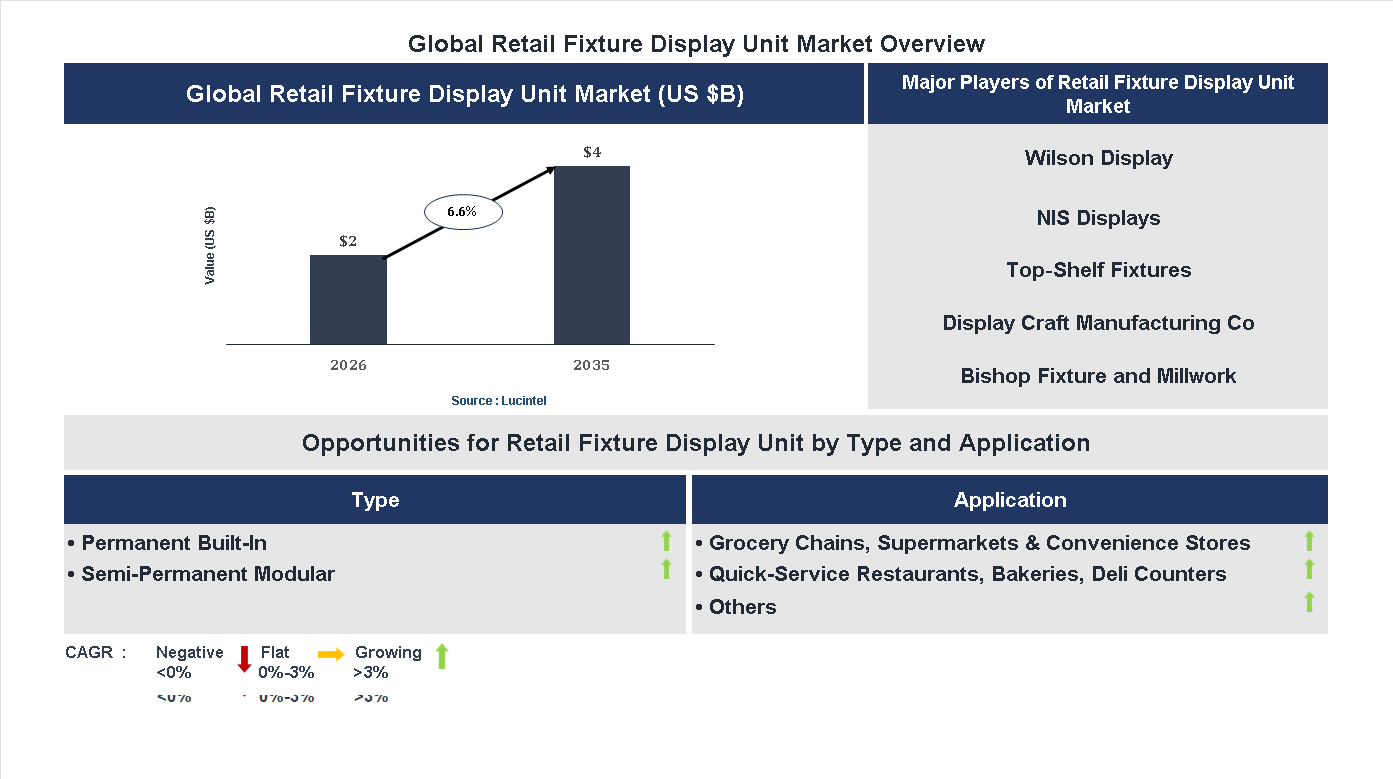
Key data points: The market size in 2035 = $4 billion, growth forecast = 6.6% annually for the next 8 years. Scroll below to get more insights. This market report covers trends, opportunities and forecasts in retail fixture display unit market to 2035 by type (permanent built-in and semi-permanent modular), application (grocery chains, supermarkets & convenience stores, quick-service restaurants, bakeries, deli counters, and others), and region (North America, Europe, Asia Pacific, and the Rest of the World)
We'll send your sample report shortly.
• Lucintel forecasts that, within the type category, semi-permanent modular is expected to witness higher growth over the forecast period.
• Within the application category, quick-service restaurant, bakery, and deli counter is expected to witness higher growth.
• In terms of region, APAC is expected to witness the highest growth over the forecast period. Gain valuable insights for your business decisions with our comprehensive 150+ page report. Sample figures with some insights are shown below.
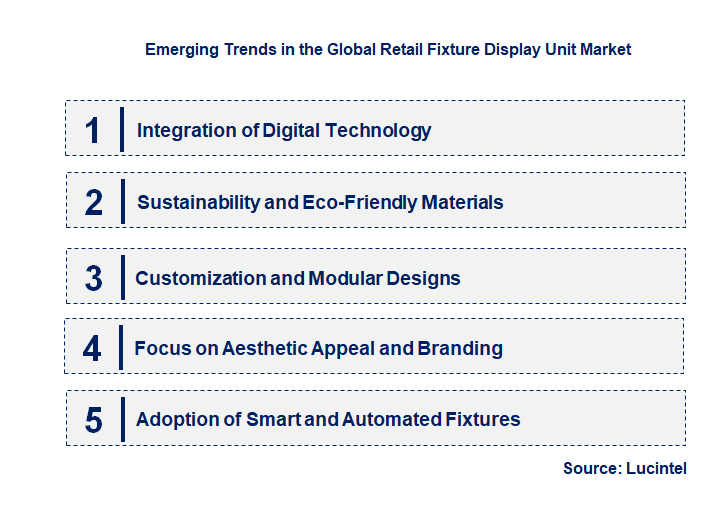
• Integration of Digital Technology: The adoption of digital displays, interactive screens, and augmented reality is transforming traditional retail fixtures. These technologies enhance customer engagement by providing dynamic content, product information, and immersive experiences. Digital integration allows retailers to update displays easily, personalize shopping experiences, and gather valuable consumer data. This trend is driven by advancements in digital hardware and software, making it more affordable and accessible. As a result, physical displays are becoming more interactive and engaging, leading to increased foot traffic and improved sales conversion rates.
• Sustainability and Eco-Friendly Materials: There is a growing emphasis on environmentally sustainable retail fixtures. Retailers are opting for fixtures made from recycled, biodegradable, or sustainably sourced materials to reduce their carbon footprint. This trend aligns with consumers’ increasing preference for eco-conscious brands and products. Sustainable fixtures not only appeal to environmentally aware customers but also help retailers meet regulatory standards and corporate social responsibility goals. The shift towards eco-friendly materials is prompting manufacturers to innovate and develop new sustainable solutions, which are gaining popularity across various retail sectors.
• Customization and Modular Designs: The demand for flexible, customizable display units is rising as retailers seek to adapt quickly to changing product lines and promotional campaigns. Modular fixtures allow for easy reconfiguration, reducing setup time and costs. Customization options enable brands to create unique in-store experiences that reflect their identity and target audience. This trend supports a more agile retail environment, where displays can be tailored to specific campaigns or seasonal needs. The proliferation of lightweight, easy-to-assemble modular units is empowering retailers to maintain fresh, engaging displays with minimal effort.
• Focus on Aesthetic Appeal and Branding: Visual appeal and brand consistency are increasingly prioritized in retail fixture design. Attractive, well-branded displays help create memorable shopping experiences and reinforce brand identity. Retailers are investing in high-quality materials, innovative designs, and cohesive themes to attract customers and differentiate themselves from competitors. This trend emphasizes the importance of aesthetics in influencing consumer behavior and driving sales. As branding becomes more sophisticated, fixtures are evolving into key marketing tools that communicate brand values and enhance overall store ambiance.
• Adoption of Smart and Automated Fixtures: The integration of automation and smart technology is streamlining retail operations and enhancing customer experience. Automated fixtures can include features like sensor-based lighting, inventory tracking, and self-service kiosks. These innovations improve efficiency, reduce labor costs, and provide real-time data for inventory management. Smart fixtures also enable personalized shopping experiences through data-driven insights. As IoT (Internet of Things) technology advances, more retailers are adopting automated solutions to create seamless, efficient, and engaging retail environments that meet modern consumer expectations. These emerging trends are fundamentally reshaping the retail fixture display unit market by fostering innovation, sustainability, and enhanced customer engagement. The integration of digital and smart technologies, coupled with a focus on eco-friendly materials and flexible design, is enabling retailers to create more dynamic, personalized, and sustainable shopping environments. These developments are not only improving operational efficiency but also elevating the overall shopping experience, positioning the market for continued growth and transformation in the coming years.
• Technological Integration in Display Units: Adoption of digital screens and interactive features is revolutionizing retail displays. These smart fixtures attract customers through engaging content, personalized experiences, and real-time product information. The impact includes increased customer dwell time, higher conversion rates, and enhanced brand visibility. Retailers benefit from data collection capabilities, enabling targeted marketing strategies. This integration is particularly prominent in electronics, fashion, and grocery sectors, where immersive experiences influence purchasing decisions.
• Sustainable and Eco-Friendly Materials: The shift toward environmentally sustainable display units is gaining momentum. Manufacturers are using recycled, biodegradable, and low-impact materials to meet consumer demand for eco-conscious products. This development reduces carbon footprint and aligns with corporate social responsibility goals. The impact is a positive brand image, compliance with regulations, and appeal to environmentally aware consumers. Sectors like cosmetics, organic foods, and apparel are leading adopters, emphasizing sustainability as a key differentiator.
• Modular and Customizable Display Solutions: The demand for flexible, adaptable display units is rising to accommodate changing product lines and store layouts. Modular designs allow retailers to reconfigure displays easily, reducing costs and increasing efficiency. Customization options enable brands to tailor displays to specific marketing campaigns or seasonal themes. The impact includes improved store aesthetics, faster setup times, and enhanced customer engagement. This trend benefits sectors such as electronics, footwear, and luxury goods, where branding and presentation are critical.
• E-commerce and Omnichannel Integration: Retail fixture displays are increasingly integrating with online shopping platforms to create seamless omnichannel experiences. Digital kiosks and QR codes link physical displays to e-commerce sites, enabling instant product access and purchase. This integration boosts sales, enhances customer convenience, and provides valuable data insights. The impact is a more connected shopping journey, higher conversion rates, and increased customer loyalty. Retailers in fashion, electronics, and home goods are leveraging this trend to stay competitive.
• Innovative Lighting and Visual Effects: Advanced lighting solutions and visual effects are enhancing the appeal of retail displays. LED lighting, dynamic lighting, and projection mapping create eye-catching presentations that draw customer attention. These effects improve product visibility and create immersive environments. The impact includes increased foot traffic, longer store visits, and higher sales. Sectors like jewelry, cosmetics, and luxury brands benefit significantly from visually striking displays, which reinforce brand identity and elevate the shopping experience. These developments are significantly transforming the retail fixture display unit market by enhancing customer engagement, promoting sustainability, and integrating technology. The adoption of innovative, flexible, and eco-friendly solutions is enabling retailers to create more attractive and efficient store environments. As a result, market growth accelerates, competition intensifies, and consumer expectations evolve. Overall, these opportunities are shaping a more dynamic, sustainable, and technologically advanced retail landscape, driving long-term industry expansion.
• Increasing Adoption of Modular and Customizable Display Units: Modular and customizable display units allow retailers to adapt quickly to changing product lines and store layouts. These flexible fixtures enable brands to create eye-catching displays that attract customers and improve shopping experiences. The ability to reconfigure displays reduces costs and enhances store aesthetics, making them highly attractive for supermarkets, convenience stores, and specialty retailers seeking versatile solutions to meet diverse merchandising needs.
• Growing Demand for Eco-Friendly and Sustainable Materials: Consumers and retailers are prioritizing sustainability, prompting a shift toward eco-friendly display units made from recyclable, biodegradable, or renewable materials. These sustainable fixtures help brands meet environmental regulations and appeal to eco-conscious shoppers. The adoption of biodegradable plastics, recycled wood, and other green materials is expected to drive market growth, especially in regions with strict environmental standards, fostering innovation in sustainable retail display solutions.
• Integration of Digital and Interactive Display Technologies: The incorporation of digital screens, augmented reality, and interactive elements into display units enhances customer engagement and provides immersive shopping experiences. Retailers leverage these technologies to showcase product features, offer personalized recommendations, and gather consumer data. The integration of digital displays is particularly prominent in electronics, fashion, and luxury segments, creating opportunities for premium and experiential retail environments that attract tech-savvy consumers.
• Expansion of Retail Chains and E-Commerce Integration: The growth of retail chains and the rise of omnichannel strategies are fueling demand for display units that seamlessly integrate online and offline shopping experiences. Retailers are investing in innovative fixtures that support click-and-collect, in-store pickup, and digital signage. These display solutions help create cohesive brand experiences across channels, improve inventory management, and enhance customer convenience, especially in hypermarkets, department stores, and specialty outlets.
• Development of Smart and IoT-Enabled Display Units: Smart fixtures equipped with IoT technology enable real-time inventory tracking, automated restocking, and data collection on customer interactions. These advanced display units improve operational efficiency and provide valuable insights for merchandising strategies. The deployment of IoT-enabled fixtures is particularly advantageous in high-traffic retail environments, enabling dynamic pricing, targeted promotions, and personalized shopping experiences, thereby driving sales and customer satisfaction. The overall market is poised for substantial growth as these opportunities foster innovation, sustainability, and enhanced customer engagement, transforming retail environments and strengthening competitive positioning across the industry.
• Technological Innovation: The integration of advanced manufacturing processes and digital display technology enhances product appeal and customization, attracting retailers seeking innovative solutions. This drives market growth by enabling more engaging and efficient displays, reducing production costs, and improving turnaround times. As technology continues to evolve, retailers are increasingly adopting these fixtures to stand out in competitive environments, fueling demand across various retail sectors.
• Growing Retail Sector: The expansion of retail outlets, including supermarkets, hypermarkets, and specialty stores, directly boosts demand for display fixtures. As retail chains aim to improve visual merchandising and customer experience, they invest heavily in attractive, durable, and versatile display units. This economic growth in retail infrastructure supports sustained market expansion, especially in emerging markets where retail development is accelerating.
• E-commerce Integration: The rise of online shopping has prompted retailers to adopt hybrid display solutions that blend physical and digital experiences. Interactive fixtures with digital screens and augmented reality features enhance customer engagement and provide immersive shopping experiences. This trend encourages innovation in display units, creating new opportunities for manufacturers to develop multifunctional fixtures that cater to modern retail needs.
• Sustainability and Regulatory Compliance: Increasing emphasis on eco-friendly materials and sustainable manufacturing practices influences market offerings. Retailers are seeking display units made from recyclable, biodegradable, or low-impact materials to meet regulatory standards and consumer expectations. This shift promotes the development of green fixtures, fostering market growth while addressing environmental concerns and compliance requirements. The challenges facing the retail fixture display unit market are:-
• Supply Chain Disruptions: Global supply chain issues, including shortages of raw materials and transportation delays, hinder timely production and delivery of display units. These disruptions increase costs and lead to inventory shortages, affecting retailers ability to update or expand their visual merchandising. Overcoming these challenges requires strategic sourcing and inventory management, which can be resource-intensive.
• Rising Material Costs: Fluctuations in the prices of raw materials such as metals, plastics, and wood significantly impact manufacturing costs. As material costs rise, manufacturers face pressure to either absorb the costs or pass them onto consumers, potentially reducing profit margins or increasing retail prices. This economic pressure can slow down innovation and limit market expansion.
• Regulatory and Environmental Standards: Stringent regulations related to safety, environmental impact, and product recyclability impose additional compliance costs on manufacturers. Navigating complex regulatory landscapes requires investments in R&D and certification processes, which can delay product launches and increase overall expenses. Non-compliance risks also threaten brand reputation and market access. The retail fixture display unit market is shaped by technological advancements, retail sector growth, and sustainability initiatives, which collectively drive innovation and demand. However, supply chain issues, rising costs, and regulatory hurdles present significant challenges that could hinder growth. The interplay of these factors necessitates strategic adaptation by market participants to capitalize on opportunities while managing risks. Overall, the markets future will depend on how effectively stakeholders address these drivers and challenges to sustain competitive advantage and meet evolving retail needs.
• Wilson Display
• NIS Displays
• Top‑Shelf Fixtures
• Display Craft Manufacturing Co
• Bishop Fixture and Millwork
• Paladin Industries
• S‑CUBE Retail Fixtures
• Ardent Displays
• Showbest
• iYubo Custom
• Permanent Built-In
• Semi-Permanent Modular
• Grocery Chains, Supermarkets & Convenience Stores
• Quick-Service Restaurants, Bakeries, Deli Counters
• Others
• North America
• Europe
• Asia Pacific
• The Rest of the World
• United States: The US market has seen a surge in smart display units integrating digital screens and interactive features to attract consumers. Retailers are increasingly adopting sustainable materials and modular designs for flexibility. E-commerce integration with physical displays is also gaining traction, enhancing omnichannel shopping experiences. Major brands are investing in eco-friendly fixtures to meet consumer demand for sustainability. Additionally, automation and robotics are being incorporated into manufacturing processes, reducing costs and lead times.
• China: China’s retail fixture display market is rapidly expanding, driven by a booming retail sector and technological advancements. Smart displays with augmented reality (AR) and digital signage are becoming commonplace in malls and stores. Local manufacturers are focusing on cost-effective, customizable fixtures to cater to diverse retail formats. E-commerce giants are experimenting with innovative in-store displays to blend online and offline shopping. Sustainability is gaining importance, with a shift toward eco-friendly materials and energy-efficient solutions. The market is also benefiting from government initiatives supporting retail modernization.
• Germany: Germany’s market emphasizes high-quality, durable fixtures with a focus on sustainability and design. There is a growing trend toward eco-friendly materials and energy-efficient lighting solutions. Retailers are investing in modular and adaptable display units to accommodate changing product lines. Digital integration, such as interactive screens and digital price tags, is increasingly prevalent. The market benefits from advanced manufacturing techniques and a strong emphasis on craftsmanship. Retailers are also exploring innovative display concepts to enhance customer experience and brand differentiation.
• India: The Indian retail fixture display unit market is experiencing rapid growth due to expanding retail chains and increasing consumer spending. There is a rising demand for affordable, customizable fixtures that suit diverse retail formats, from traditional stores to modern malls. The adoption of eco-friendly materials and energy-efficient lighting is gradually increasing. Local manufacturers are innovating with modular and portable display units to meet the needs of small and medium-sized enterprises. Digital integration is emerging, with some retailers experimenting with digital signage and interactive displays. The market is poised for significant expansion as retail infrastructure develops.
• Japan: Japan’s market is characterized by a focus on precision, quality, and innovative design. Retail fixtures often incorporate advanced materials and technology, such as touchscreens and LED lighting. Sustainability is a key concern, with a shift toward eco-friendly and recyclable materials. Retailers are adopting flexible, space-saving display units to optimize store layouts. Digital integration, including augmented reality and interactive displays, is increasingly common. The Japanese market emphasizes craftsmanship and aesthetic appeal, with a strong inclination toward minimalist and functional designs. The ongoing trend toward automation and smart fixtures continues to shape the industry landscape.


• Wilson Display
• NIS Displays
• Top‑Shelf Fixtures
• Display Craft Manufacturing Co
• Bishop Fixture and Millwork
• Paladin Industries
• S‑CUBE Retail Fixtures
• Ardent Displays
• Showbest
• iYubo Custom Q6. Which retail fixture display unit market segment will be the largest in future? Answer: Lucintel forecasts that, within the type category, semi-permanent modular is expected to witness higher growth over the forecast period. Q7. In retail fixture display unit market, which region is expected to be the largest in next 5 years? Answer: In terms of region, APAC is expected to witness the highest growth over the forecast period. Q8. Do we receive customization in this report? Answer: Yes, Lucintel provides 10% customization without any additional cost.


Choose a license that fits your team. Instant PDF delivery.
Prices exclude taxes. Instant delivery. Custom licensing available on request.
Market Report · July 31, 2026
Market Report · July 31, 2026
Market Report · July 31, 2026
Trusted partner for strategic intelligence and business growth


Receive a complimentary market analysis tailored to your industry. Our analysts will identify key growth opportunities and competitive dynamics specific to your business.

Market size, growth rate, and key trend analysis for your specific sector.

Top competitor positioning and market share analysis.

Strategic recommendations backed by data-driven insights.
Get curated market intelligence and competitive moves straight to your inbox.
By subscribing, you agree to receive our monthly insights. Unsubscribe anytime.
Receive a complimentary market analysis tailored to your industry. Our analysts will identify key growth opportunities and competitive dynamics specific to your business.
Market size, growth rate, and key trend analysis for your specific sector.
Top competitor positioning and market share analysis.
Strategic recommendations backed by data-driven insights.
Get curated market intelligence, emerging trends, and competitive moves straight to your inbox each month.
By subscribing, you agree to receive our monthly insights. Unsubscribe anytime.
We'll send your sample report shortly.