
Market Report · July 16, 2026

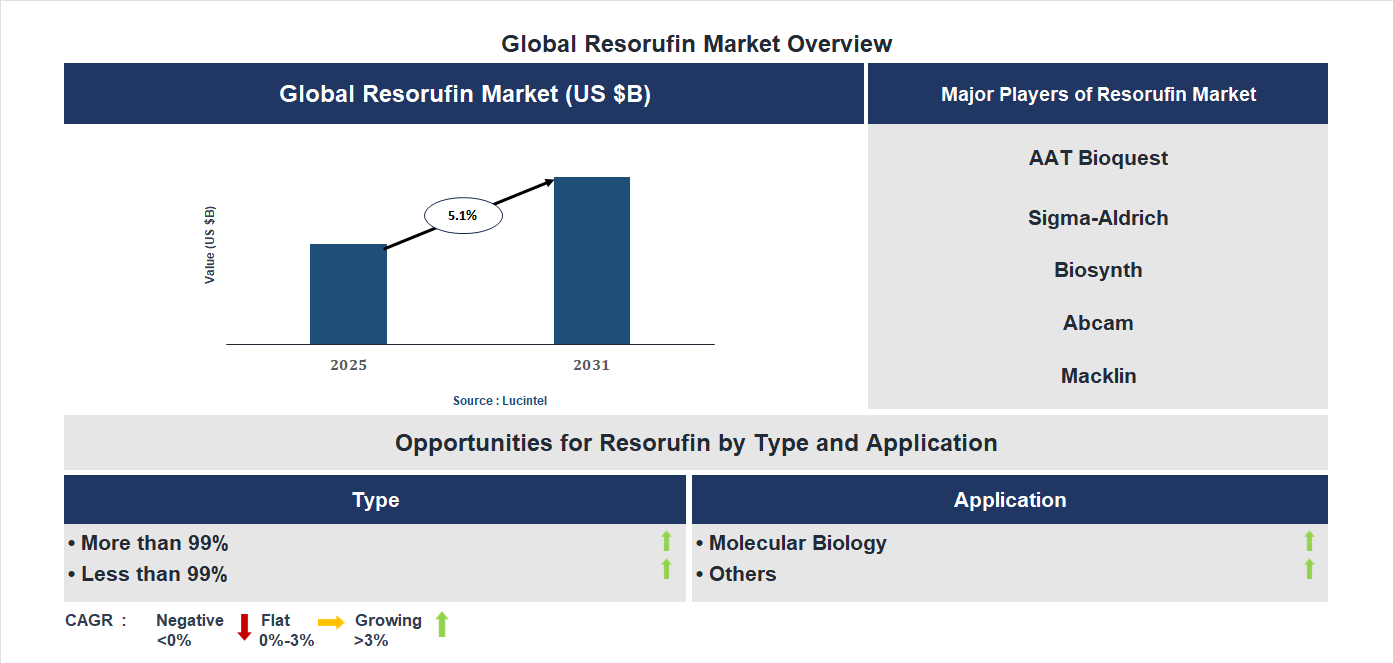
Key data points: The growth forecast = 5.1% annually for the next 7 years. Scroll below to get more insights. This market report covers trends, opportunities and forecasts in resorufin market to 2031 by type (more than 99% and less than 99%), application (molecular biology and others), and region (North America, Europe, Asia Pacific, and the Rest of the World)
We'll send your sample report shortly.
• Lucintel forecasts that, within the type category, more than 99% is expected to witness higher growth over the forecast period.
• Within the application category, molecular biology is expected to witness higher growth.
• In terms of region, APAC is expected to witness the highest growth over the forecast period. Gain valuable insights for your business decisions with our comprehensive 150+ page report. Sample figures with some insights are shown below.
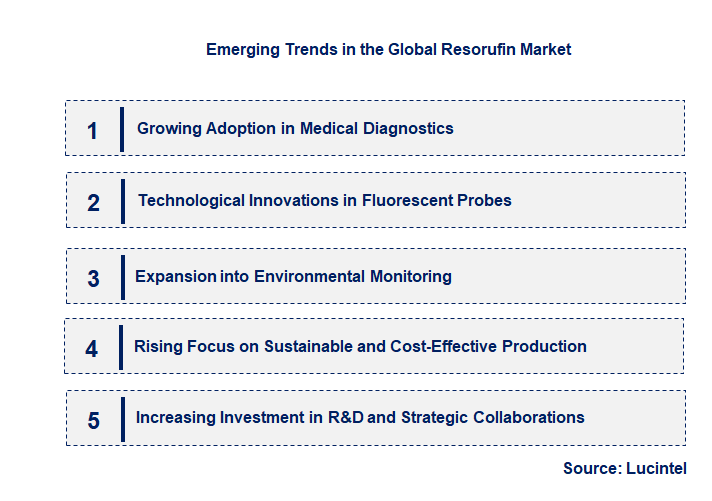
• Growing Adoption in Medical Diagnostics: The increasing use of resorufin in diagnostic assays is driven by its high sensitivity and specificity. It is widely employed in enzyme activity assays, cell viability tests, and fluorescence-based detection methods. This trend is fueled by the rising prevalence of chronic diseases and the need for rapid, accurate diagnostic tools. As healthcare providers seek more reliable and cost-effective solutions, the demand for resorufin-based diagnostics is expected to grow, expanding its market reach globally.
• Technological Innovations in Fluorescent Probes: Advances in nanotechnology and molecular engineering are leading to the development of more sophisticated fluorescent probes incorporating resorufin. These innovations improve signal stability, brightness, and multiplexing capabilities, enabling more precise biological imaging and detection. Such technological progress enhances the utility of resorufin in research and clinical settings, fostering new applications and increasing its market penetration.
• Expansion into Environmental Monitoring: Resorufins properties make it suitable for detecting environmental contaminants, such as pollutants and toxins. Its application in water quality testing and pollutant detection is gaining traction due to its high sensitivity and ease of use. This trend reflects a broader shift towards sustainable practices and regulatory compliance, opening new avenues for market growth beyond traditional biomedical applications.
• Rising Focus on Sustainable and Cost-effective Production: Manufacturers are increasingly adopting greener synthesis methods and optimizing production processes to reduce costs and environmental impact. This shift is driven by regulatory pressures and consumer demand for sustainable products. Cost-effective production enhances market competitiveness and makes resorufin more accessible across various sectors, including research, healthcare, and environmental monitoring.
• Increasing Investment in R&D and Strategic Collaborations: The market is witnessing heightened investment in research and development to discover new applications and improve existing formulations of resorufin. Collaborations between biotech firms, academic institutions, and pharmaceutical companies are accelerating innovation. These efforts are crucial for expanding the product portfolio, enhancing performance, and maintaining competitive advantage in a rapidly evolving market landscape. In summary, these trends are collectively reshaping the resorufin market by fostering innovation, expanding application areas, and emphasizing sustainability. They are driving growth, improving product efficacy, and opening new markets, ultimately positioning resorufin as a versatile and essential component in diagnostics, environmental monitoring, and research.
• Technological Advancements: Development of more stable and highly fluorescent resorufin derivatives has improved assay sensitivity and reliability, enabling more accurate detection in medical diagnostics and environmental testing, thus expanding market applications and increasing demand.
• Growing Adoption in Medical Diagnostics: The rising prevalence of chronic diseases and the need for early, precise diagnosis have led to increased use of resorufin-based fluorescence assays, boosting market growth and encouraging innovation in diagnostic tools.
• Expansion in Environmental Testing: Increasing environmental regulations and pollution monitoring requirements have driven the adoption of resorufin in detecting contaminants, leading to a broader market scope and higher demand for sensitive detection methods.
• Strategic Collaborations and Partnerships: Major companies are forming alliances with research institutions to develop novel resorufin derivatives and applications, accelerating product development and market penetration, which enhances competitive positioning.
• Regulatory Approvals and Standardization: The approval of resorufin-based assays by regulatory bodies and the establishment of standardized testing protocols have increased trust among end-users, facilitating wider adoption and market stability. The recent developments in the resorufin market are significantly enhancing its growth prospects by improving product performance, expanding application areas, and fostering innovation. These factors are driving increased adoption across healthcare, environmental, and industrial sectors, positioning the market for sustained expansion and technological leadership.
• Pharmaceutical Research and Development: The use of resorufin in drug discovery accelerates high-throughput screening processes, enabling rapid identification of potential therapeutics. This enhances R&D efficiency, reduces costs, and shortens time-to-market for new drugs, ultimately boosting market growth.
• Clinical Diagnostics: Resorufins high sensitivity and specificity make it ideal for diagnostic assays, particularly in detecting enzyme activity and biomarkers. Its application improves diagnostic accuracy, leading to better patient outcomes and expanding its use in clinical laboratories.
• Environmental Monitoring: Resorufin-based assays are increasingly employed to detect pollutants and toxins in water, soil, and air samples. This application supports regulatory compliance and environmental protection efforts, opening new revenue streams for market players.
• Food Safety Testing: The market benefits from resorufins role in detecting contaminants, pathogens, and spoilage indicators in food products. Its use enhances food safety standards, helping manufacturers meet stringent regulations and consumer expectations.
• Biotechnology and Life Sciences: Resorufin is widely used in enzyme activity assays, cell viability tests, and metabolic studies. Its application facilitates research and development in biotechnology, fostering innovation and expanding market opportunities. In summary, these growth opportunities are significantly impacting the resorufin market by driving innovation, expanding application scope, and increasing demand across multiple sectors. This diversification is fostering market resilience and positioning resorufin as a vital component in analytical and diagnostic solutions worldwide.
• Technological Advancements: The development of innovative analytical techniques and high-throughput screening methods has significantly enhanced the utility of resorufin compounds. These advancements enable more precise, rapid, and cost-effective diagnostic and research applications, thereby expanding market potential. Improved fluorescence detection technologies and automation have further increased efficiency, attracting pharmaceutical and biotech companies to adopt resorufin-based assays. As technology continues to evolve, the market is expected to benefit from increased adoption in clinical diagnostics, environmental testing, and drug discovery, fueling overall growth.
• Increasing Healthcare Expenditure: Rising healthcare spending across developed and developing countries is a key driver for the resorufin market. Governments and the private sector are investing heavily in diagnostic tools and research to improve healthcare outcomes. The demand for sensitive and specific diagnostic reagents like resorufin-based assays is growing, especially in disease detection and monitoring. This economic trend supports increased R&D activities and the adoption of advanced diagnostic solutions, thereby expanding the market. Moreover, the growing prevalence of chronic diseases such as cancer and cardiovascular conditions necessitates reliable diagnostic reagents, further propelling market growth.
• Growing Prevalence of Chronic Diseases: The increasing incidence of chronic diseases worldwide is a significant factor driving demand for diagnostic reagents, including resorufin-based compounds. Early and accurate detection of diseases like cancer, diabetes, and cardiovascular disorders relies heavily on fluorescence-based assays. As these diseases become more prevalent due to aging populations and lifestyle changes, the need for sensitive diagnostic tools intensifies. Resorufin’s high sensitivity and stability make it ideal for such applications, leading to increased market demand. This trend underscores the importance of continuous innovation and expansion of resorufin-based diagnostic solutions.
• Expansion in Pharmaceutical and Biotechnology Sectors: The pharmaceutical and biotech industries are increasingly utilizing resorufin compounds for drug discovery, screening, and research purposes. The demand for high-throughput screening assays to identify potential drug candidates has surged, with resorufin-based fluorescence assays playing a vital role. This expansion is driven by the need for efficient, reliable, and scalable testing methods. As these sectors grow, so does the demand for resorufin reagents, fostering market expansion. Additionally, collaborations between research institutions and industry players further accelerate the adoption of resorufin-based technologies, contributing to sustained market growth.
• Rising Adoption of Fluorescence-Based Assays: Fluorescence-based assays are favored for their high sensitivity, specificity, and rapid results. The increasing adoption of these assays across clinical laboratories, research institutions, and environmental testing facilities is a major driver for the resorufin market. Resorufin’s excellent fluorescent properties make it a preferred choice for various applications, including enzyme activity measurement and cell viability testing. The trend towards miniaturization and automation of diagnostic platforms further boosts demand. As awareness of fluorescence assay benefits grows, the market is expected to witness continued expansion driven by technological improvements and broader application scopes. The challenges facing this resorufin market include:
• Regulatory and Safety Concerns: Stringent regulatory frameworks governing chemical safety, environmental impact, and clinical use pose significant hurdles for market players. Compliance with evolving standards requires substantial investment in safety testing, quality assurance, and documentation, which can delay product launches and increase costs. Additionally, concerns over the toxicity and environmental effects of chemical reagents like resorufin may restrict their use in certain applications or regions. Navigating complex regulatory landscapes demands expertise and resources, potentially limiting market entry for smaller companies and slowing overall growth.
• Environmental Impact and Sustainability Issues: The environmental footprint of manufacturing and disposing of chemical reagents, including resorufin, presents notable challenges. Waste management regulations and increasing emphasis on sustainability compel companies to adopt greener production methods and eco-friendly disposal practices. Failure to address these concerns can lead to regulatory penalties, reputational damage, and reduced market acceptance. Developing biodegradable or less toxic alternatives is essential but may require significant R&D investment, which could hinder short-term market expansion.
• Market Competition and Price Pressures: The resorufin market faces intense competition from alternative fluorescent dyes and detection reagents. Price competition among manufacturers can lead to reduced profit margins and pressure to innovate continuously. Additionally, the entry of generic or lower-cost substitutes may threaten market share for established players. This competitive landscape necessitates ongoing R&D investments to improve product performance and differentiate offerings. Market saturation in certain regions and applications can further limit growth opportunities, requiring strategic diversification and cost management to sustain profitability. In summary, the resorufin market is shaped by technological innovations, economic growth, and increasing disease prevalence, which collectively drive demand. However, regulatory hurdles, environmental concerns, and competitive pressures pose significant challenges. The interplay of these factors influences market dynamics, requiring stakeholders to adapt strategies accordingly. Embracing technological advancements while addressing safety and sustainability issues will be crucial for sustained growth. Overall, the market holds promising potential, provided companies navigate challenges effectively and leverage emerging opportunities to meet evolving customer needs.
• AAT Bioquest
• Sigma-Aldrich
• Biosynth
• Abcam
• Macklin
• Biotium
• Cayman Chemical
• Glentham Life Sciences
• Eurogentec
• Chemodex
• More than 99%
• Less than 99%
• Molecular Biology
• Others
• North America
• Europe
• Asia Pacific
• The Rest of the World
• United States: The US market for Resorufin has seen significant growth due to increased adoption in clinical diagnostics and research laboratories. Advances in high-throughput screening and automation have improved testing efficiency. Regulatory approvals for new diagnostic applications have accelerated market expansion. Additionally, collaborations between biotech firms and academic institutions are fostering innovation. The rising prevalence of metabolic disorders and cancer has further driven demand for Resorufin-based assays. The US government’s investment in healthcare innovation and precision medicine continues to support market growth, making it a leading region globally.
• China: China’s resorufin market is rapidly expanding, driven by government initiatives to modernize healthcare infrastructure and promote biotech innovation. The country is witnessing increased adoption of advanced diagnostic tools in hospitals and research centers. Local manufacturers are investing in R&D to develop cost-effective and efficient Resorufin products. The rising burden of chronic diseases and infectious illnesses has heightened demand for sensitive diagnostic reagents. Additionally, regulatory reforms are streamlining approval processes, facilitating faster market entry for new products. The growing healthcare expenditure and expanding biotech sector position China as a key player in this market.
• Germany: Germany’s resorufin market benefits from its strong healthcare system and emphasis on research and development. The country is a hub for pharmaceutical and biotech innovation, with numerous collaborations between academia and industry. The adoption of automated diagnostic platforms has increased, improving testing accuracy and throughput. Germany’s stringent regulatory standards ensure high-quality products, fostering trust among users. The aging population and rising chronic disease prevalence have boosted demand for advanced diagnostic reagents. Furthermore, government funding for medical research and innovation initiatives supports ongoing development in the Resorufin sector, maintaining Germany’s position as a significant market player in Europe.
• India: The Indian resorufin market is experiencing rapid growth due to expanding healthcare infrastructure and increasing awareness of diagnostic testing. The government’s focus on improving healthcare access and affordability has led to increased adoption of diagnostic reagents in public and private labs. Local manufacturers are expanding their product portfolios to include innovative Resorufin-based assays. The rising incidence of infectious diseases, diabetes, and cancer has driven demand for sensitive diagnostic tools. Additionally, collaborations with international firms are facilitating technology transfer and product development. The market’s growth is further supported by rising healthcare expenditure and a large, underserved population requiring advanced diagnostic solutions.
• Japan: Japan’s resorufin market is characterized by high technological adoption and a focus on precision diagnostics. The country’s aging population has increased demand for early and accurate disease detection, boosting the use of Resorufin-based assays. Japan’s strong regulatory framework ensures product safety and efficacy, encouraging innovation. The integration of automation and digital health technologies in laboratories has improved testing efficiency. Government initiatives promoting healthcare innovation and aging care further support market expansion. Japanese companies are investing in R&D to develop novel diagnostic reagents, maintaining the country’s competitive edge in the global resorufin market.


• AAT Bioquest
• Sigma-Aldrich
• Biosynth
• Abcam
• Macklin
• Biotium
• Cayman Chemical
• Glentham Life Sciences
• Eurogentec
• Chemodex Q5. Which resorufin market segment will be the largest in future? Answer: Lucintel forecasts that, within the type category, more than 99% is expected to witness higher growth over the forecast period. Q6. In resorufin market, which region is expected to be the largest in next 5 years? Answer: In terms of region, APAC is expected to witness the highest growth over the forecast period. Q7. Do we receive customization in this report? Answer: Yes, Lucintel provides 10% customization without any additional cost.


Choose a license that fits your team. Instant PDF delivery.
Prices exclude taxes. Instant delivery. Custom licensing available on request.
Market Report · July 16, 2026
Market Report · July 15, 2026
Market Report · July 15, 2026
Trusted partner for strategic intelligence and business growth


Receive a complimentary market analysis tailored to your industry. Our analysts will identify key growth opportunities and competitive dynamics specific to your business.

Market size, growth rate, and key trend analysis for your specific sector.

Top competitor positioning and market share analysis.

Strategic recommendations backed by data-driven insights.
Get curated market intelligence and competitive moves straight to your inbox.
By subscribing, you agree to receive our monthly insights. Unsubscribe anytime.
Receive a complimentary market analysis tailored to your industry. Our analysts will identify key growth opportunities and competitive dynamics specific to your business.
Market size, growth rate, and key trend analysis for your specific sector.
Top competitor positioning and market share analysis.
Strategic recommendations backed by data-driven insights.
Get curated market intelligence, emerging trends, and competitive moves straight to your inbox each month.
By subscribing, you agree to receive our monthly insights. Unsubscribe anytime.
We'll send your sample report shortly.